Egypt's gaming industry is booming, with young people driving a digital revolution across the country, but at the same time industry leaders warn that a lack of investment and a widening talent drain could undercut the sector's potential, even as artificial intelligence reshapes how games are made and played.
There has been a surge in electronic gaming across North Africa as more young people join the field each year. The market reached over 912 million U.S. dollars in 2025 and is projected to nearly double to 1.8 billion dollars by 2034, according to IMARC estimates cited by Egypt's Cabinet Information and Decision Support Center.
Maged Farrag is creative and managing partner at 5dVR, an Egyptian technology and business services company specializing in augmented reality (AR) and virtual reality (VR) and immersive tech, and he also co-founded UBR, a VR multiplayer location-based entertainment game. He is among local innovators who recognized the opportunity early and began tapping into a market where youth make up two-thirds of the North African region's largest population.
"We started developing multimedia applications using touch screens. That was pre-internet. We founded our first game studio in 2011. In 2023 I founded another company. It's a multiplayer free roaming gaming experience. What they call location-based entertainment. We have been working on that for three years now. We have an extensive library of shooter games. And we're also proud to have our first escape room set in ancient Egypt. That's actually featured and being present at the Grand Egyptian Museum," he said.
According to the Egyptian E-Sports Federation, about 40 million Egyptians are active players, averaging 2 million hours a day, with total spending exceeding 800 million U.S. dollars, making the country the leader in the North African region. There is tech talent in Egypt and locally produced games are hitting the market. However, there aren't many gaming companies, mostly efforts by self-taught individuals, according to Farrag.
"There's a growing community, but of course, lacking the investment, lacking the exposure, lacking the attention. This game industry is fighting against all odds without finance as we're talking, no VCs, no funding from the government. Even the taxes. For example, like running an entertainment venue in the UK and Europe, they don't get to pay taxes as VAT and so on. They give an incentive because you are entertaining people. Here, we have to pay almost 36 percent [in tax] if you run a location with a game or entertainment," he said.
There is also the worry of a brain drain to neighboring rich Gulf Arab countries, especially Saudi Arabia, which has recently been recruiting top gaming tech talent from around the globe.
There is a glimmer of hope, however, as a number of universities in Egypt have included electronic gaming in their educational curricula to expand its exposure. And with AI taking over the tech world, industry experts believe that it's an opportunity for Egyptian e-sports companies seeking more growth.
Meanwhile, the country's digital strategy for cross-border services and its national AI strategy in the coming years provide frameworks for skills development and startup support that could benefit game developers, according to government reports.
"The gaming industry is shifting a lot and with the usage of AI right now, it's very important that we start doing our own games that are more focused about the cultural heritage of Egypt, the fun parts of it and also the awareness part. With the technology that we have right now we can definitely [export] it and make it a global thing that everyone can join and play with those games," said Rania Zakaria, commercial director at 5dVR.
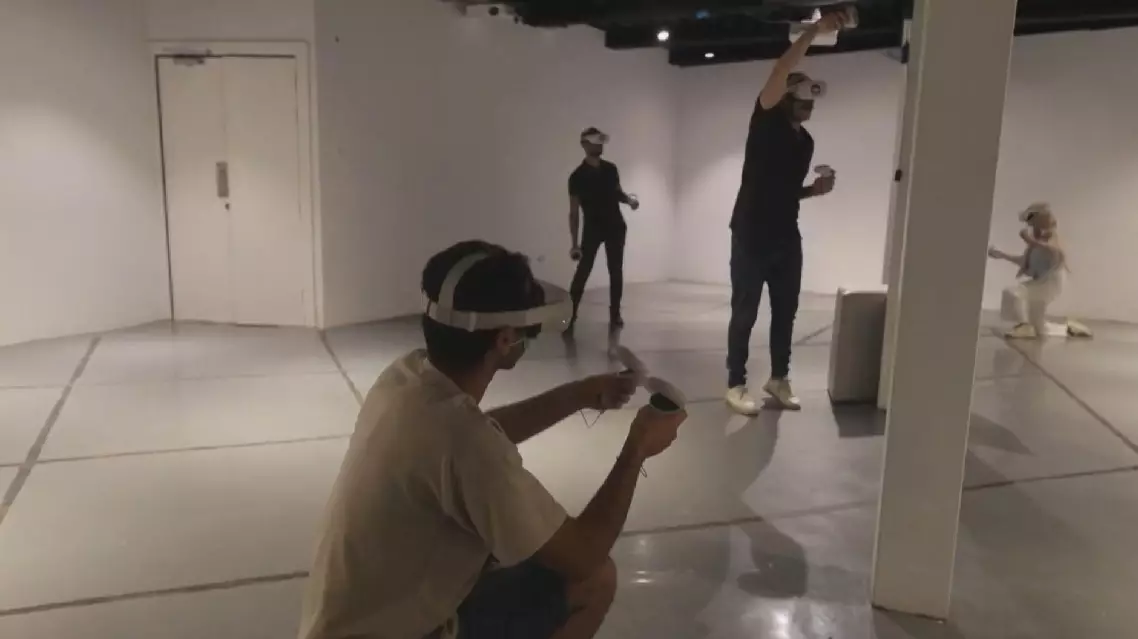
Egypt's youth-driven gaming sector face investment, talent gaps as AI reshapes industry landscape