Tanzanian-grown eucheuma seaweed, used in cosmetics and food production, is just one of the products at the 2026 China International Import Expo (CIIE) that shows the deepening economic and trade relations between China and African nations.
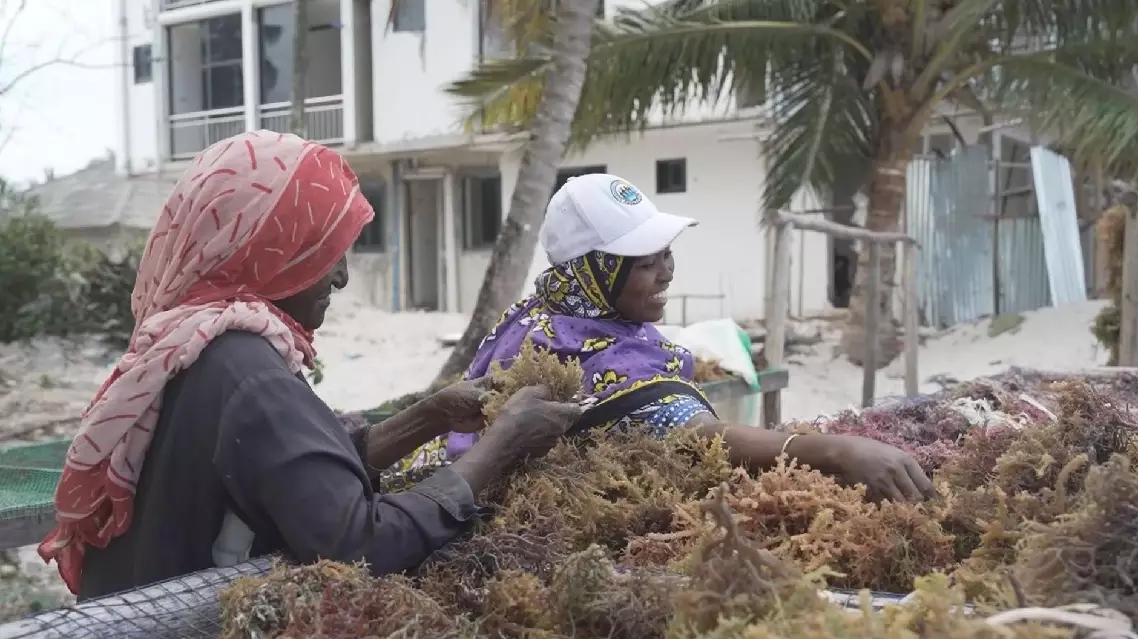
The island of Zanzibar, off Tanzania's Indian Ocean coast, is a major seaweed producer, a mainstay of Tanzania's oceanic economy and a significant component of the country's aquaculture exports.
Eucheuma, which is processed to make carrageenan for food stuffs and other consumer products, is the highest-yielding seaweed variety grown on Zanzibar and has been supporting coastal communities for decades.
"Seaweed needs 45 to 60 days to grow, after which it can be harvested and sent to drying sites," said Pavu Hamisi, a Tanzanian seaweed grower.
Tanzania's seaweed industry, worth an estimated 7.1 million U.S. dollars last year, also helps empower local women who make up 80 per cent of the workforce, with 32,000 families benefitting economically from seaweed production.
"There are about 65 to 70 people growing seaweed at our farm, the vast majority of them women. The output depends on how much we can plant. The more we plant, the more we harvest. Each harvest now yields about 100 to 150 kilograms," Hamisi said.
On May 1 this year, China implemented a historic zero-tariff policy for all 53 African nations with diplomatic ties, creating new opportunities for Tanzanian seaweed in the vast Chinese market.
"The implementation of zero-tariff by the government of China to Tanzanian, I mean to African, products provides an opportunity for the seaweed company to import seaweed from Africa to China, and especially from Zanzibar to China. As we know, Zanzibar is the largest exporter of seaweed for Africa. The Chinese companies (can) use this opportunity to buy more seaweed from Zanzibar and Tanzania," said Masoud Rashid Mohammed, general manager of Zanzibar Seaweed Cooperation.
Tanzanian seaweed export highlights China-Africa trade cooperation