Russia and Ukraine continued to strike each other as a new round of trilateral talks among the two sides and the United States began in Abu Dhabi, the capital city of the United Arab Emirates (UAE), on Tuesday.
The Russian Defense Ministry said in a statement on Tuesday that Russia continued to hit energy infrastructure supporting Ukraine's military enterprises, as well as ships transporting military and civilian supplies.
The ministry also said that Russia's air force intercepted and destroyed Ukraine's 155 fixed-wing drones over Novgorod, Bryansk, Belgorod, Kursk, Kaluga, Oryol, Smolensk and Krasnodar regions over the past night.
Meanwhile, the Ukrainian Ministry of Energy said in a social media post on Tuesday that Russia continued to strike Ukraine's energy system, hitting substations, thermal power plants, and oil and gas infrastructure in many places, adding that most regions in Ukraine had implemented rolling blackout measures and industrial power rationing.
Oleksandr Hanza, head of the Dnipropetrovsk Regional Military Administration, said on Tuesday that Russian forces attacked a key infrastructure facility in Dnipro on the same day, resulting in two deaths and at least four injuries.

Russia, Ukraine continue to strike each other amid ongoing trilateral talks
U.S. stocks ended lower on Tuesday as a hotter-than-anticipated consumer inflation report cemented expectations for further Federal Reserve interest rate hikes.
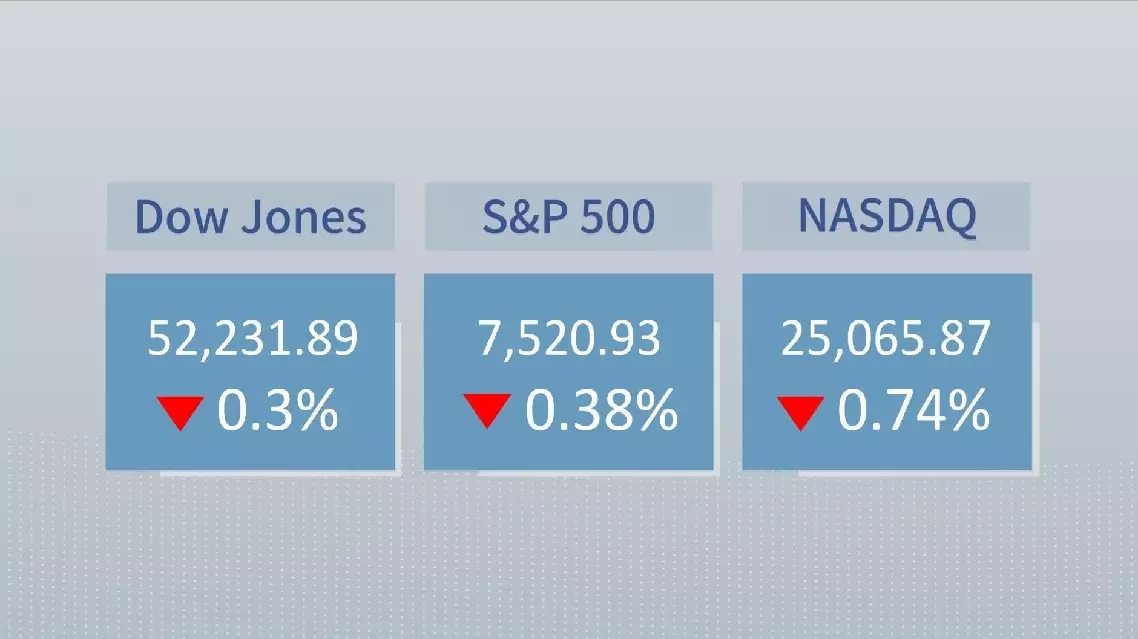
The Dow Jones Industrial Average fell 157.86 points, or 0.3 percent, to 52,231.89. The benchmark S&P 500 sank 29.01 points, or 0.38 percent, to 7,520.93, while the tech-heavy Nasdaq Composite Index shed 187.26 points, or 0.74 percent, to 25,065.87.
Six of the 11 primary S&P 500 sectors closed in negative territory. Technology and materials led the laggards, sliding 1.4 percent and 0.55 percent, respectively. Bucking the downward trend, financials and consumer discretionary led the gainers, advancing 0.49 percent and 0.46 percent, respectively.
Market sentiment was pressured by October consumer price data, which showed headline and core inflation remaining stubbornly elevated. The consumer price index rose 0.4 percent in October after climbing 0.6 percent in September, the U.S. Bureau of Labor Statistics reported on Tuesday, exceeding the 0.3 percent economists expected.
The core index, which excludes food and energy, rose 0.3 percent, matching the gains in both August and September, above forecasts of 0.2 percent. A third consecutive monthly gain of that size leaves core prices rising at an annualized pace of roughly 3.6 percent, well above the Federal Reserve's 2 percent target.
Following the report, financial markets firmly priced in a 25-basis-point interest rate increase at the Federal Reserve's December policy meeting, with a growing cohort of traders assigning higher odds to a 50-basis-point adjustment. Tightening bets were also reinforced by hawkish remarks from Federal Reserve Governor Christopher Waller, who noted that persistent price pressures keep a larger half-point move under consideration.
Corporate turbulence in the semiconductor space compounded losses. Nvidia dropped 5.53 percent, extending a 4 percent decline from the prior session as investors monitored an internal board inquiry involving its Chief Executive Officer Jensen Huang.
Elsewhere in technology, artificial intelligence developer Anthropic officially commenced its investor roadshow and released an amended regulatory filing for its initial public offering, seeking a valuation of 1.4 trillion U.S. dollars despite recent market swings across tech equities.
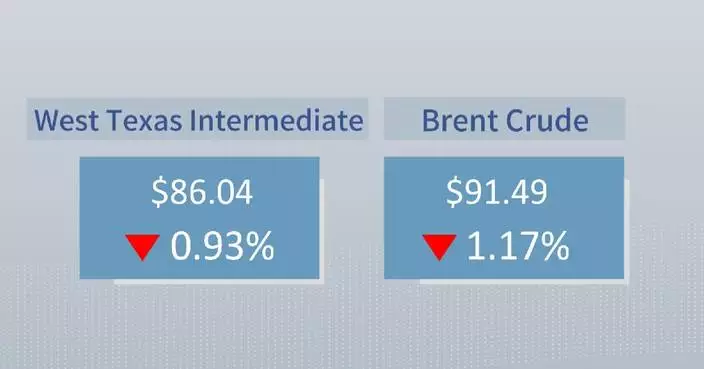
Crude oil futures extended their recent pullback on Tuesday. West Texas Intermediate crude for December delivery declined 81 cents, or 0.93 percent, to settle at 86.04 dollars a barrel on the New York Mercantile Exchange. Brent crude for January delivery lost 1.08 dollars, or 1.17 percent, to close at 91.49 dollars a barrel on the London ICE Futures Exchange.
With the bulk of the third-quarter corporate reporting cycle concluded, market participants are watching for after-the-bell quarterly results from specialized cloud infrastructure provider CoreWeave, alongside quantum computing firms D-Wave Quantum and Rigetti Computing.
U.S. stocks fall as sticky inflation, Nvidia slump weigh on Wall Street