LUJÁN, Argentina (AP) — Pope Leo XIV closed an emotional and politically charged visit to Argentina on Wednesday with an appeal for unity and reconciliation, as he offered a parting message of hope to the polarized homeland of his predecessor.
Leo spent his final morning in Argentina ministering to inmates at a prison that served as a clandestine torture center during a military junta of the 1970s and 80s and then celebrating Mass at the national shrine, the Basilica of Our Lady of Luján. The Vatican estimated that around 2 million people turned out for the Mass, the latest of the record-setting crowds who have welcomed Leo on the first papal visit to Argentina in nearly four decades.
After subtly pushing back against President Javier Milei’s austerity agenda for three days — defending the dignity of disabled people, the rights of workers and the church’s social justice teaching — Leo offered final words of consolation and peace.
“We are likewise called to receive God’s grace and to undergo processes of forgiveness and reconciliation that renew peace, hope and charity within us,” Leo told pilgrims at the Luján liturgy.
Leo closed his homily by borrowing the apostle Peter’s words to a man disabled from birth, recasting the biblical miracle as a call to a battered nation: “Argentina, rise up and walk!”
Wearing vestments in the blue and white of the Argentine flag, Leo prayed to the Virgin of Luján to help Argentines “build bridges of charity and networks of solidarity” and to “inspire in them the desire to continue along paths of reconciliation, communion and mission.”
While the appeal was an uplifting finale, the true emotional highlight of Leo’s South American trip is expected later Wednesday, when he returns to his adopted homeland of Peru.
A massive national party awaits the Chicago-born Leo, who spent more than two decades as a missionary priest and bishop in Peru and holds dual citizenship in the United States and Peru. He’s known to Peruvians as Padre Robert and is beloved for ministering to poor communities, especially in times of crisis.
Leo’s opening remarks to Milei, urging him to put people’s needs over economic agendas, and his symbolic visit to a home for people with disabilities have resonated deeply with Argentines suffering under Milei’s social spending cuts and gutting of the federal bureaucracy.
Many of those who attended Leo’s Mass in Luján took his appeals to heart and hoped that his preaching might tone down the political rhetoric and polarization that many believe kept Pope Francis from returning home during his 12-year pontificate.
“They’re all very aggressive, starting with the president,” said Natalia Bosco, a 42-year-old volunteer at the Mass who isn’t Catholic but decided to participate in the pope’s visit. “We can’t tell our children, ‘Don’t insult others,’ and then see the president doing the same thing. I hope the pope’s message of unity doesn’t just fall on deaf ears.”
The Luján basilica hosts one of Argentina’s largest displays of faith. Each October, pilgrims walk about 60 kilometers (37 miles) from the capital, Buenos Aires, and nearby towns to give thanks or make requests to the Virgin of Luján, a small statue of Mary venerated as Argentina’s patron saint. As archbishop of Buenos Aires, Francis often celebrated Mass for pilgrims there. This year, despite persistent rain, more than 2.8 million people took part, a record for the shrine, municipal authorities said.
“I know it’s hard to move politicians,” said Enrique González, 47, who coordinates Hogar de Cristo addiction recovery centers in Patagonia and was on hand for the Mass. “But I think the pope strikes a chord on both sides, and that starts to change something.”
Leo opened his day by visiting Devoto Prison, where Francis often ministered as archbishop of Buenos Aires, celebrating Mass, visiting cellblocks that housed inmates with AIDS and washing prisoners’ feet in the annual Holy Week ritual.
In 1978, during Argentina’s last military dictatorship (1976–1983), 65 inmates held on ordinary criminal charges died at Devoto in what became known as the Seventh Pavilion Massacre, which the junta covered up as a riot. Last year, a federal court ruled that the inmates died in a fire that broke out as guards violently cracked down on prisoners. It sentenced two former prison chiefs, both in their 90s, to 25 years.
The prison, inaugurated in 1927, is now closing, with its more than 1,000 inmates moving to a new penitentiary complex. Human rights lawyers want the building, designated a site of memory in 2012, preserved until investigations into crimes against humanity there are finished.
Only about 75 prisoners attended Leo’s visit, chosen mainly for their involvement in religious programs, said the prison chaplain, the Rev. Matías De Martini.
Wearing identical white uniform shirts, they sat in rows in the gymnasium, facing a stage bearing the flags of Argentina and the Holy See and a statue of the Virgin of Luján that Francis had gifted the prison.
Harsh fluorescent light glinted off worn bars in dank corridors, where guards stood at attention, some holding plastic riot shields.
Leo heard stories from inmates of lives marked by drug addiction, crime and homelessness. He acknowledged the “troubling realities” many of them had lived: “The sense of omnipotence produced by drugs, the false power that comes from easy money, the cowardly sense of security that comes from inflicting violence upon the weakest, and the impunity that results from corruption.”
He urged them to see their time behind bars as a chance for redemption and reconciliation.
“This means that even amid the evil, pain and deepest failures you may have experienced or caused, your present circumstances can become an opportunity to begin your lives anew,” he said.
The pope didn’t mention the prison’s past, though his words on impunity and corruption seemed aimed not only at the inmates before him but at abuses once committed there.
Leo has carried on Francis’ practice of visiting inmates on his foreign trips, reminding them that they remain beloved children of God. His last such visit, to a prison in Equatorial Guinea, produced some of the most chilling moments of his pontificate, when inmates were forced to sing and dance for him in pouring rain.
For Francis, that ministry began at Devoto, De Martini said.
“As pope, you’ll remember he sometimes said, ‘Whenever I walk into a prison, I always think, why them and not me?’” he said. “Well, that’s what he always said here. Everything he talked about as pope, he lived in this prison.”
DeBre contributed from Buenos Aires.
Associated Press religion coverage receives support through the AP’s collaboration with The Conversation US, with funding from Lilly Endowment Inc. The AP is solely responsible for this content.
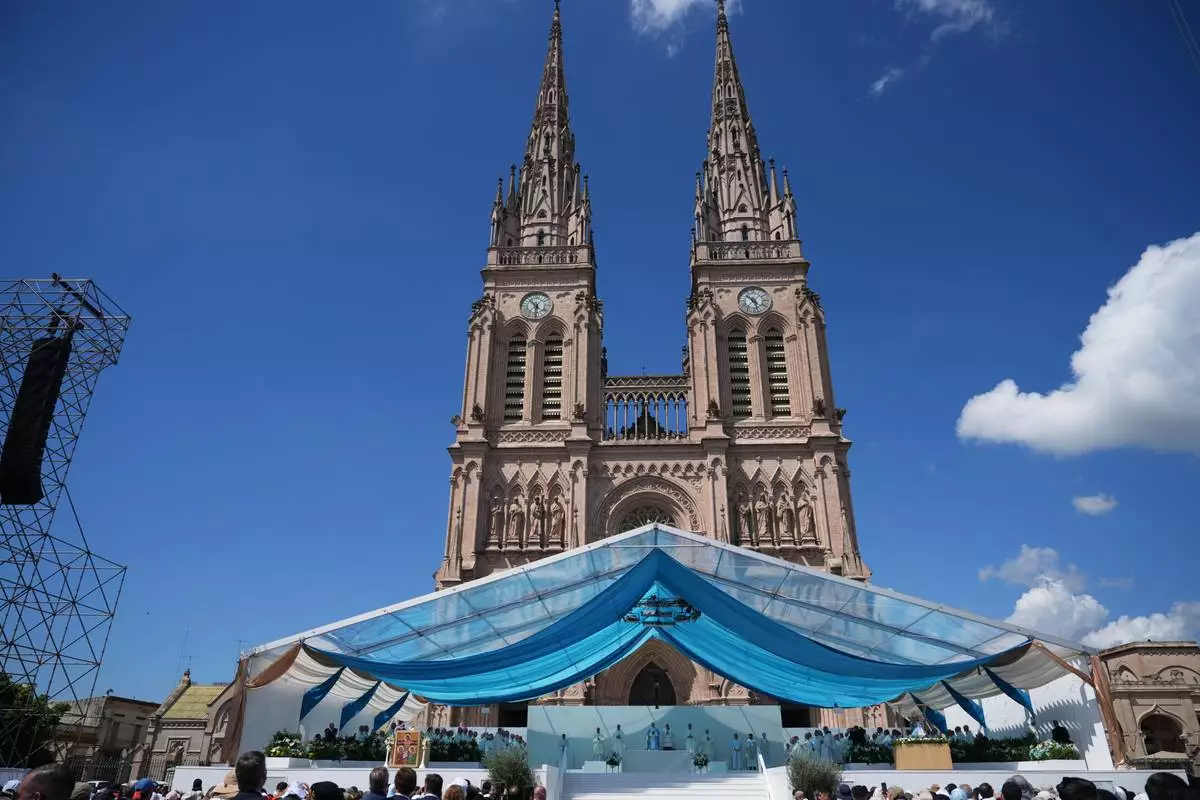
Pope Leo XIV presides over Mass at the plaza in front of the Basilica of Our Lady of Lujan in Lujan, Argentina, on the sixth day of his twelve-day apostolic journey to South America, Wednesday, Nov. 11, 2026. (AP Photo/Andrew Medichini)
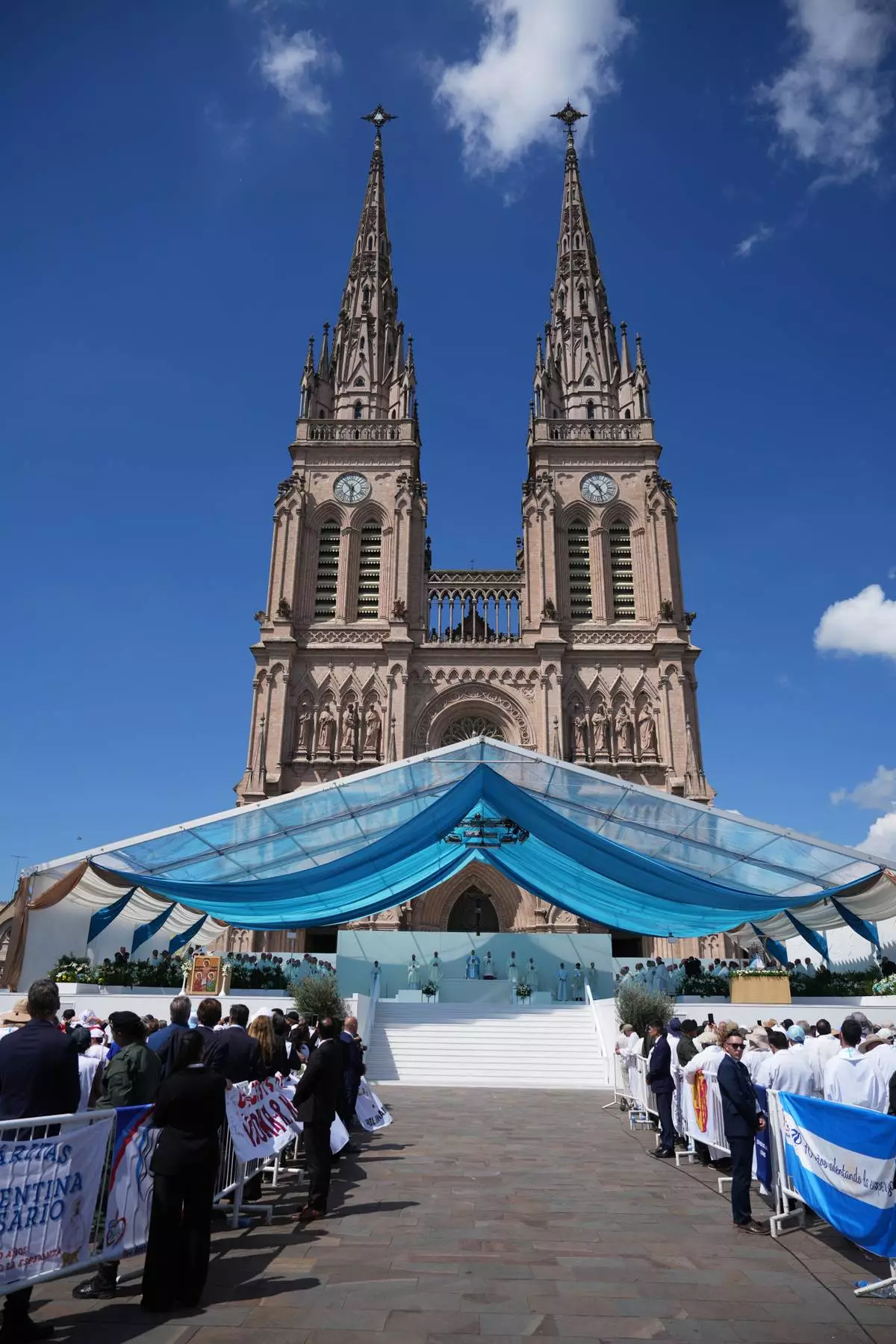
Pope Leo XIV presides over Mass at the plaza in front of the Basilica of Our Lady of Lujan in Lujan, Argentina, on the sixth day of his twelve-day apostolic journey to South America, Wednesday, Nov. 11, 2026. (AP Photo/Andrew Medichini)
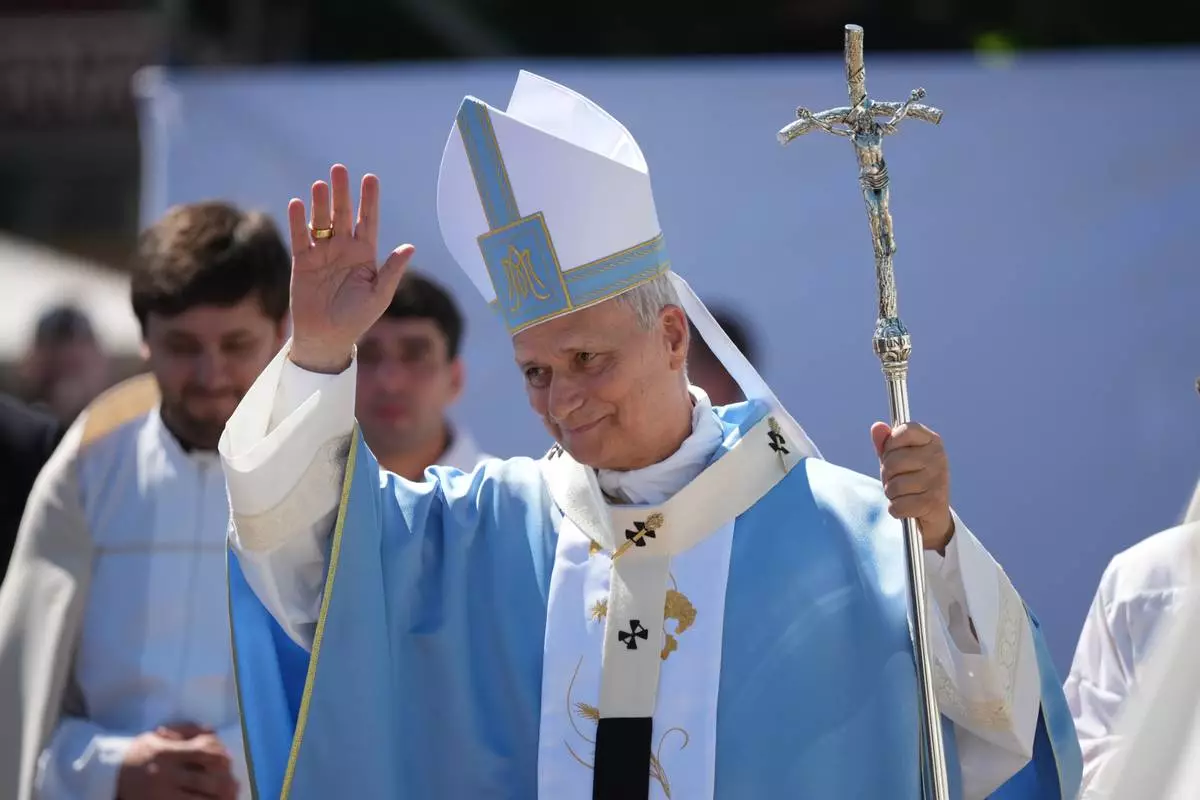
Pope Leo XIV arrives in procession to preside over Mass at the plaza in front of the Basilica of Our Lady of Lujan in Lujan, Argentina, on the sixth day of his twelve-day apostolic journey to South America, Wednesday, Nov. 11, 2026. (AP Photo/Andrew Medichini)
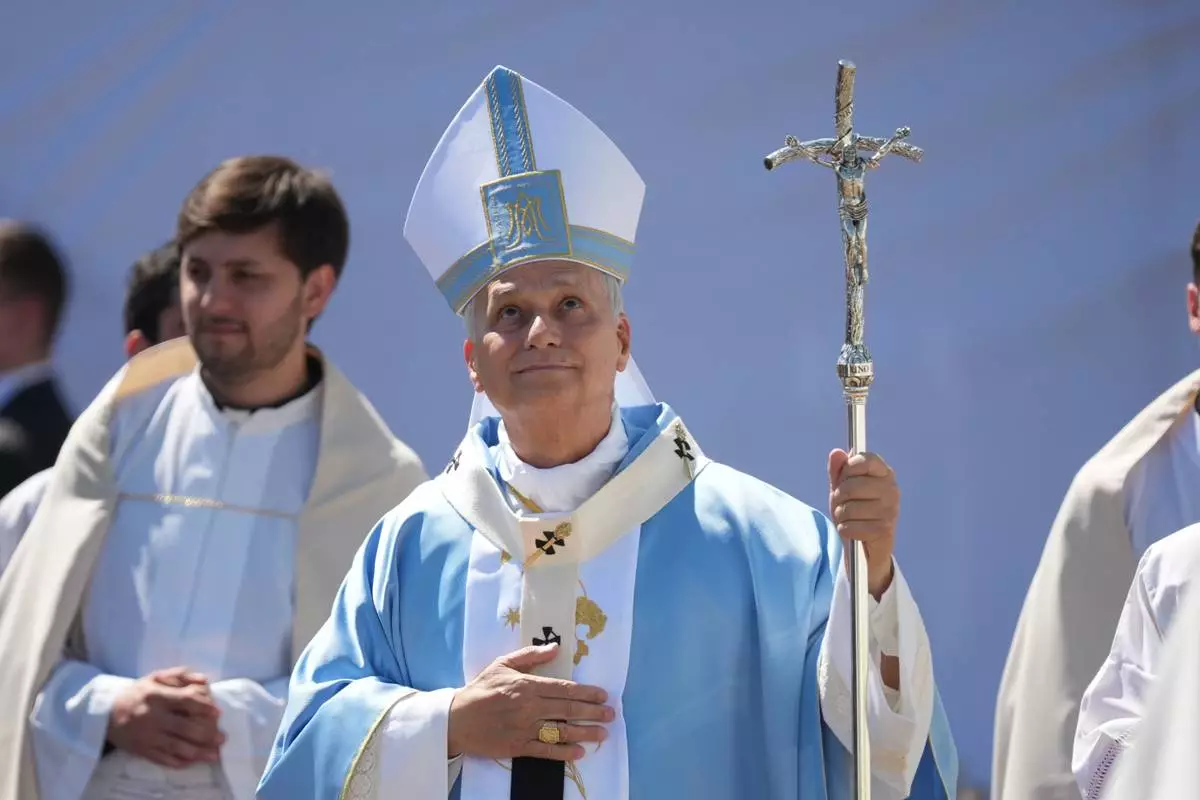
Pope Leo XIV arrives in procession to preside over Mass at the plaza in front of the Basilica of Our Lady of Lujan in Lujan, Argentina, on the sixth day of his twelve-day apostolic journey to South America, Wednesday, Nov. 11, 2026. (AP Photo/Andrew Medichini)
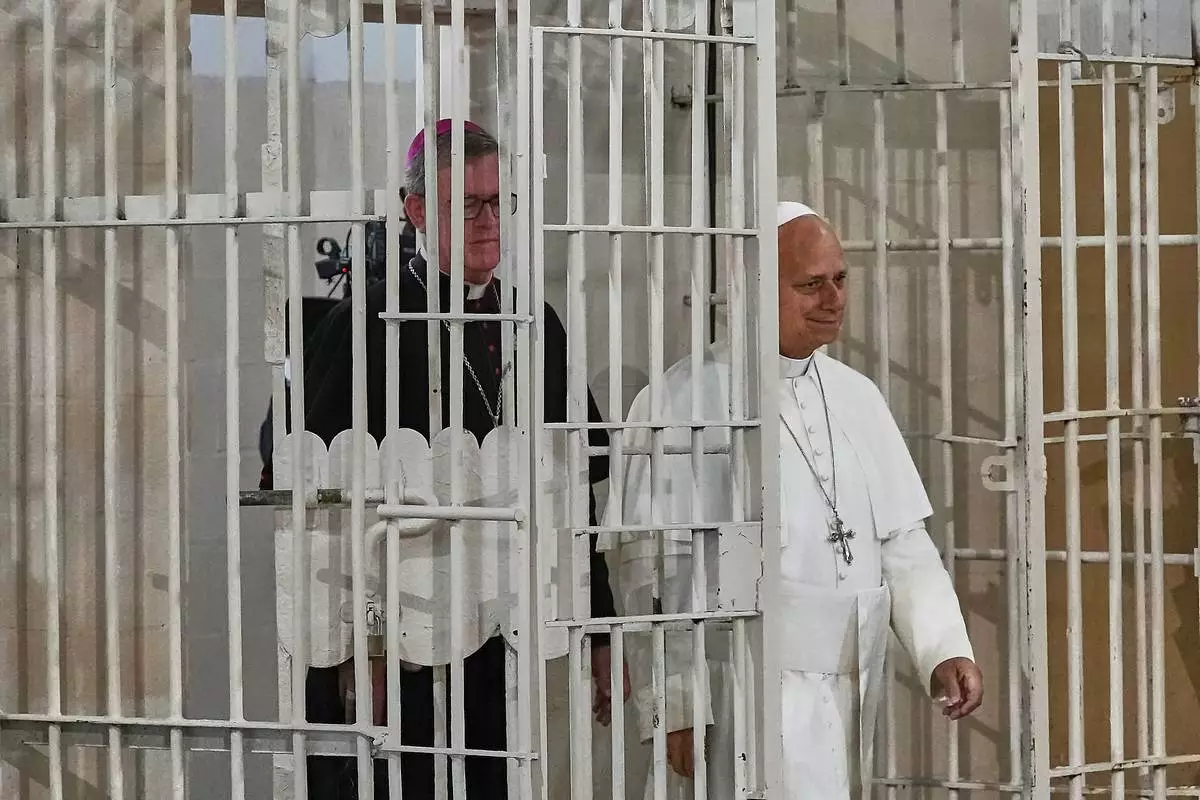
Pope Leo XIV, accompanied by Buenos Aires Archbishop Jorge Ignacio Garcia Cuerva, visits the federal prison complex in Buenos Aires, on the sixth day of his twelve-day apostolic journey to South America, Wednesday, Nov. 11, 2026. (AP Photo/Andrew Medichini)
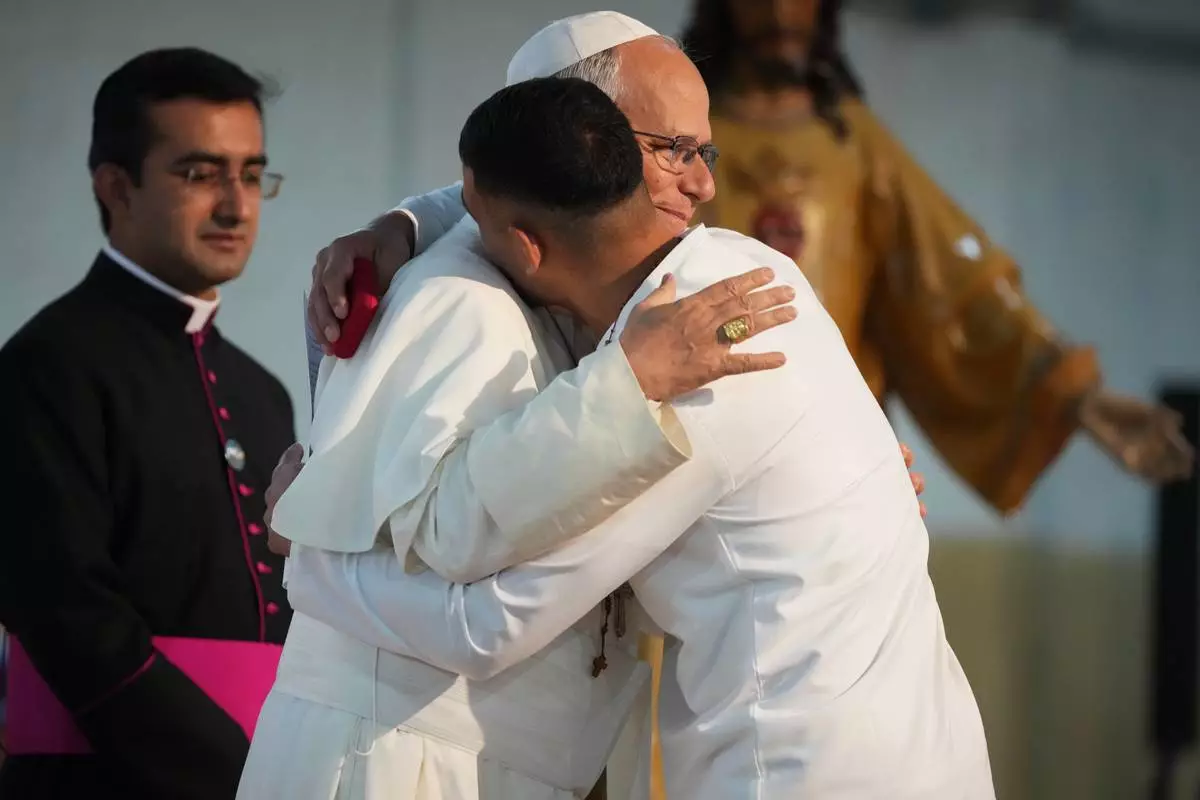
Pope Leo XIV hugs an inmate during his visit to the federal prison complex in Buenos Aires, on the sixth day of his twelve-day apostolic journey to South America, Wednesday, Nov. 11, 2026. (AP Photo/Andrew Medichini)
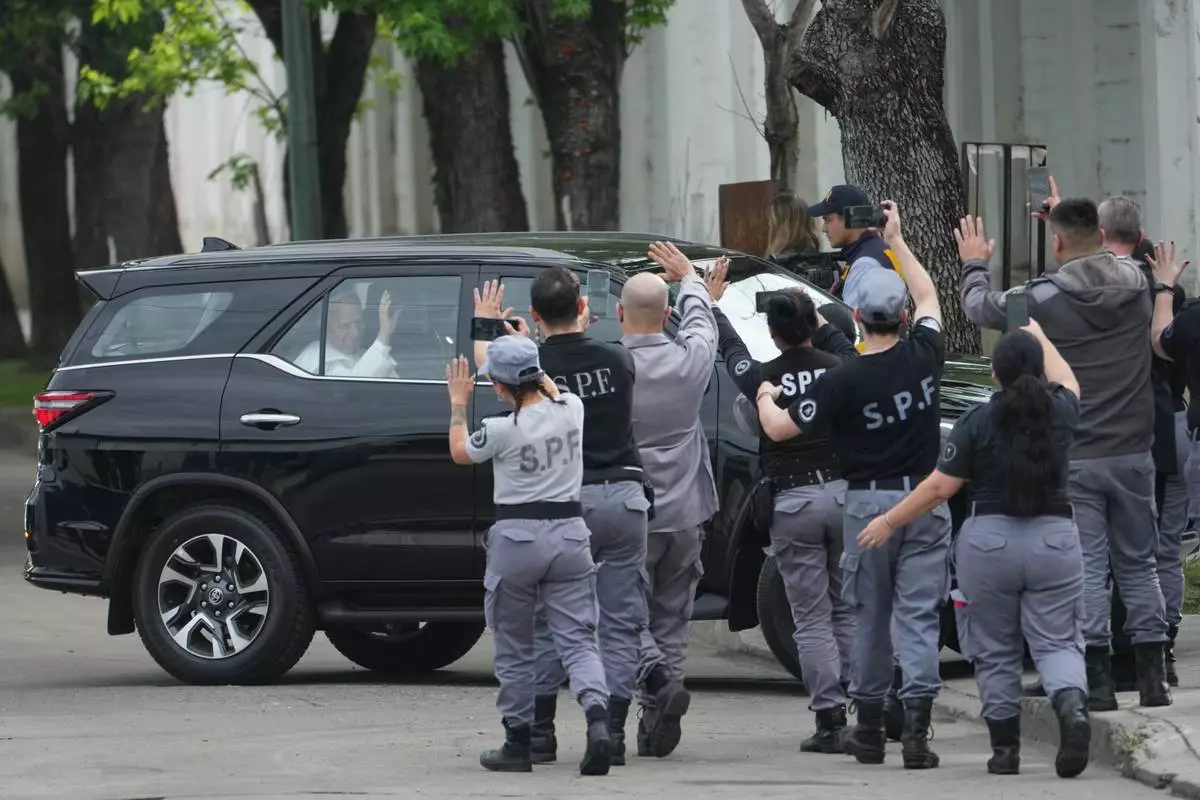
Pope Leo XIV arrives to visit the Devoto federal prison complex in Buenos Aires, Argentina, Wednesday, Nov. 11, 2026. (AP Photo/Rodrigo Abd)
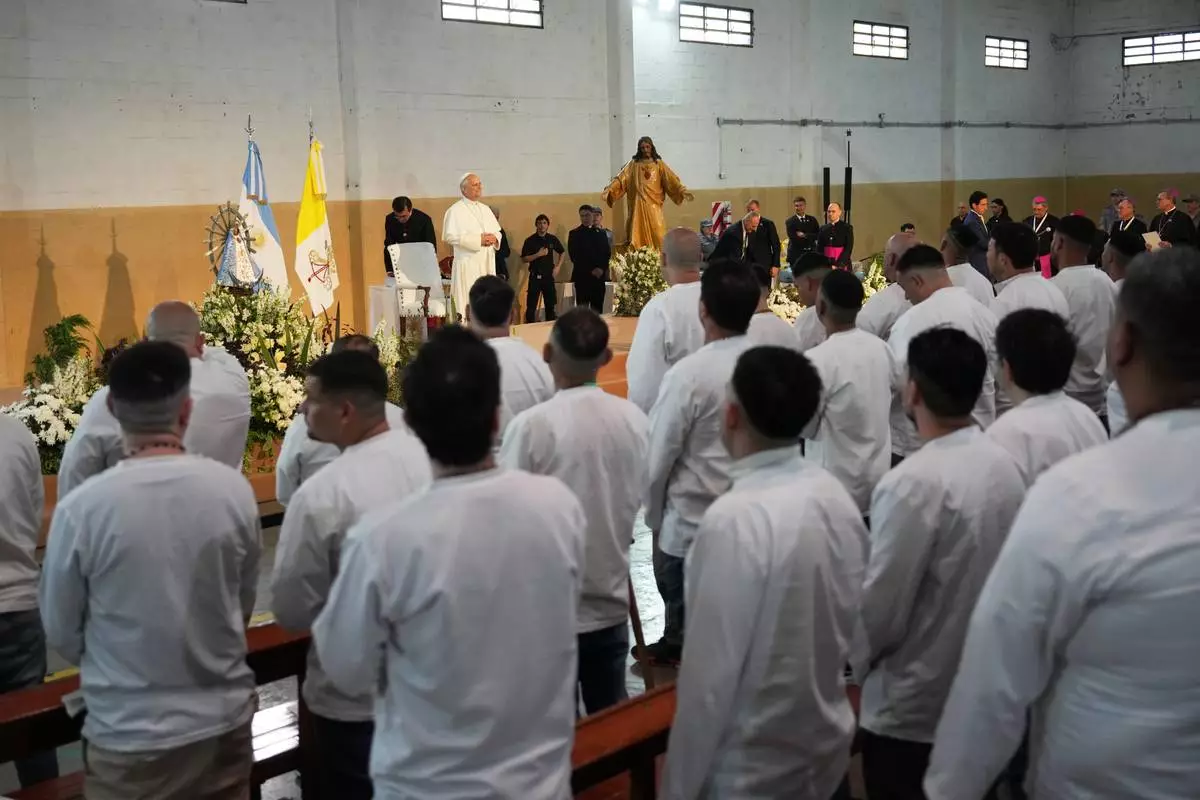
Pope Leo XIV meets inmates during his visit to the federal prison complex in Buenos Aires, on the sixth day of his twelve-day apostolic journey to South America, Wednesday, Nov. 11, 2026. (AP Photo/Andrew Medichini)
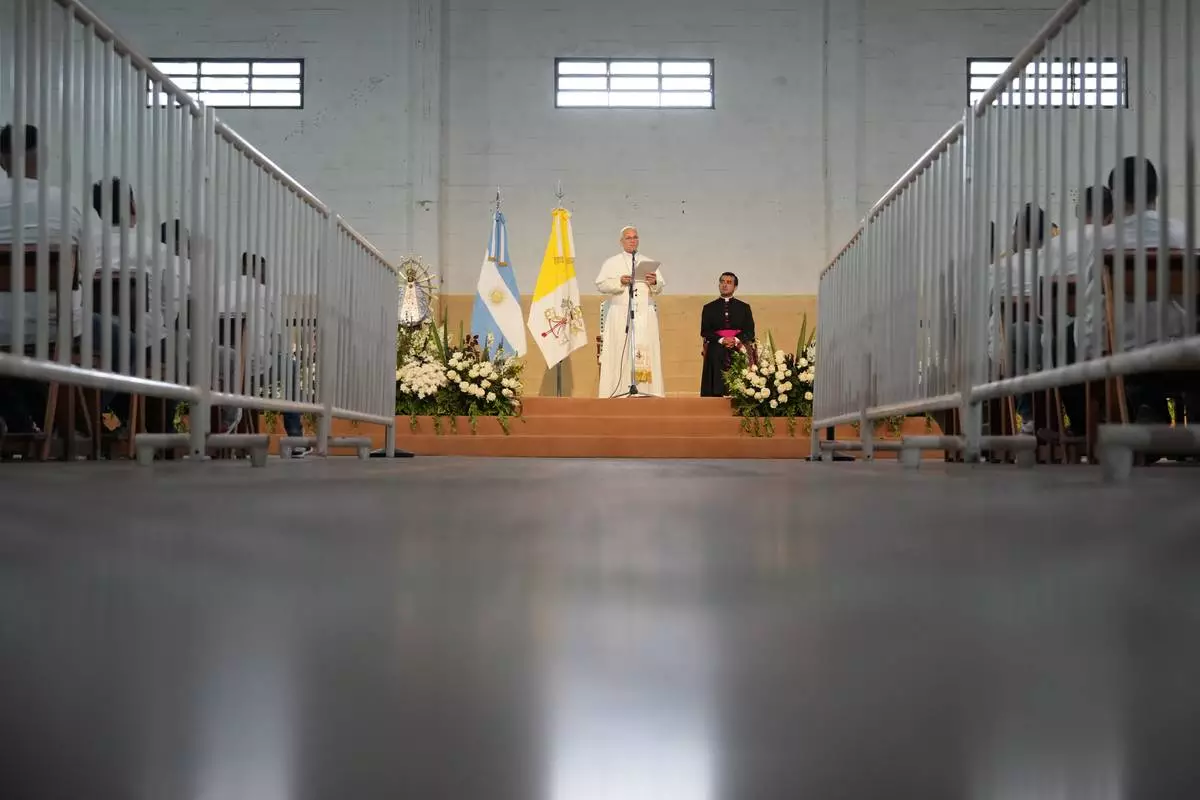
Pope Leo XIV delivers his speech during his visit to the federal prison complex in Buenos Aires, on the sixth day of his twelve-day apostolic journey to South America, Wednesday, Nov. 11, 2026. (AP Photo/Andrew Medichini)
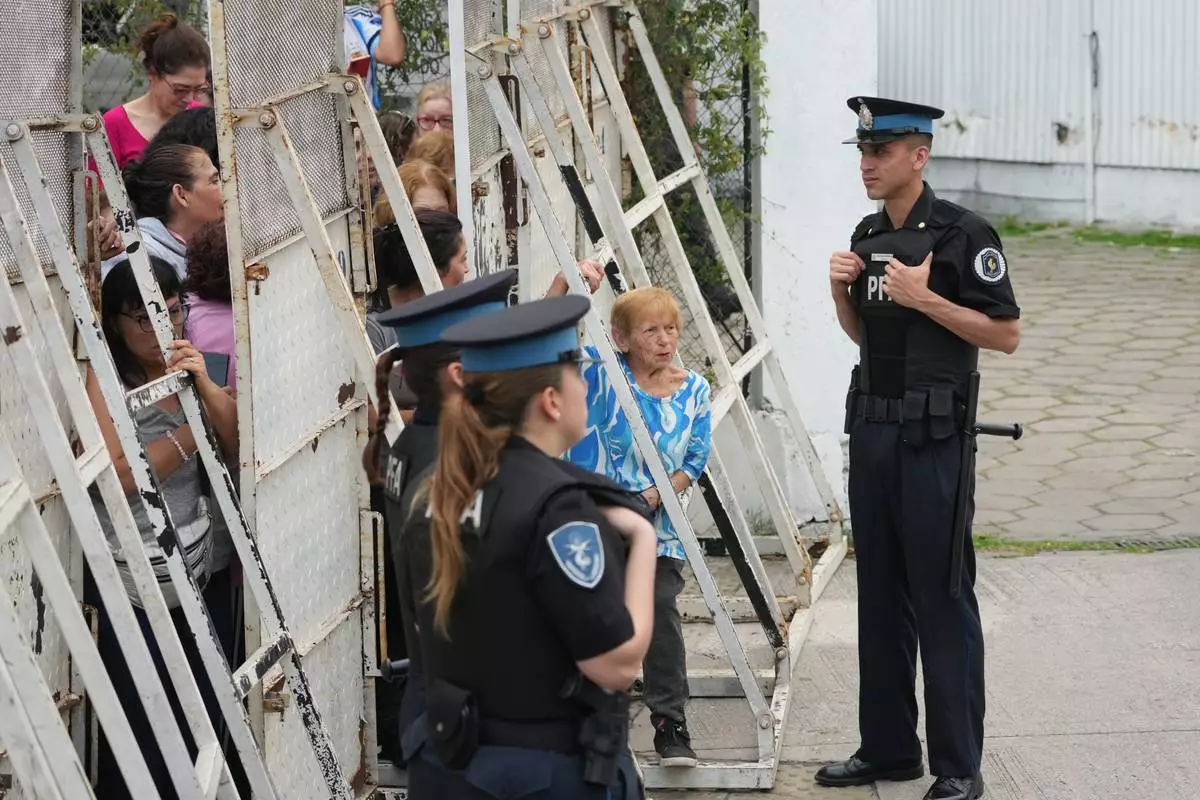
People gather outside the Devoto federal prison complex during Pope Leo XIV's visit in Buenos Aires, Argentina, Wednesday, Nov. 11, 2026. (AP Photo/Rodrigo Abd)
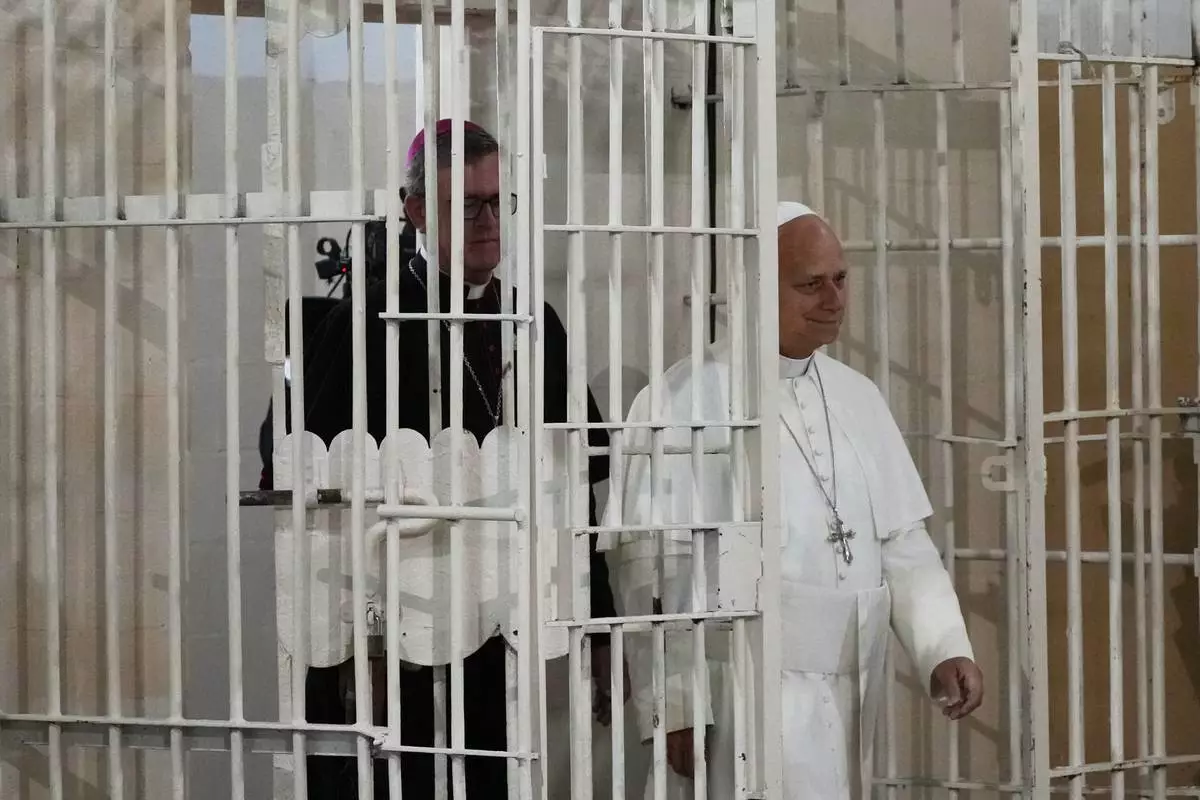
Pope Leo XIV, accompanied by Buenos Aires Archbishop Jorge Ignacio Garcia Cuerva, visits the federal prison complex in Buenos Aires, on the sixth day of his twelve-day apostolic journey to South America, Wednesday, Nov. 11, 2026. (AP Photo/Andrew Medichini)
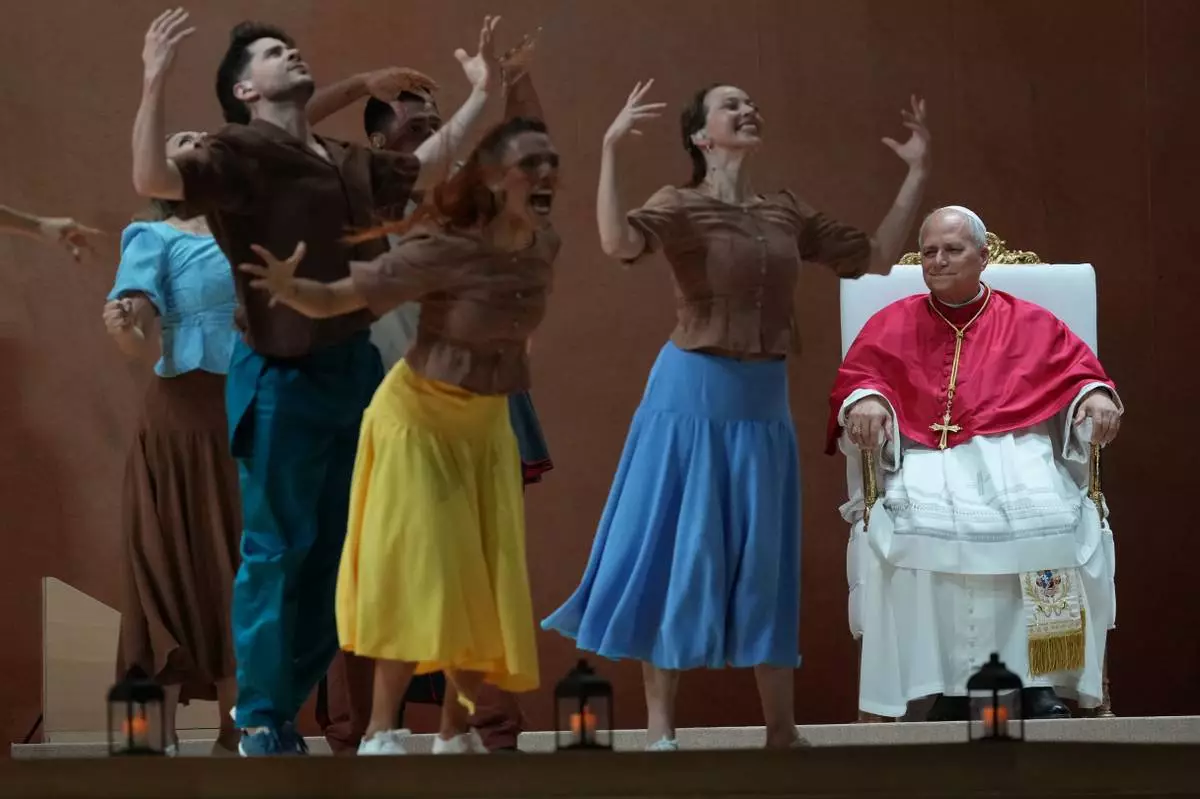
Pope Leo XIV watches folk dancers during a youth prayer vigil at Monumento de los Españoles in Buenos Aires, on the fifth day of his twelve-day apostolic journey to South America, Tuesday, Nov. 10, 2026. (AP Photo/Andrew Medichini)
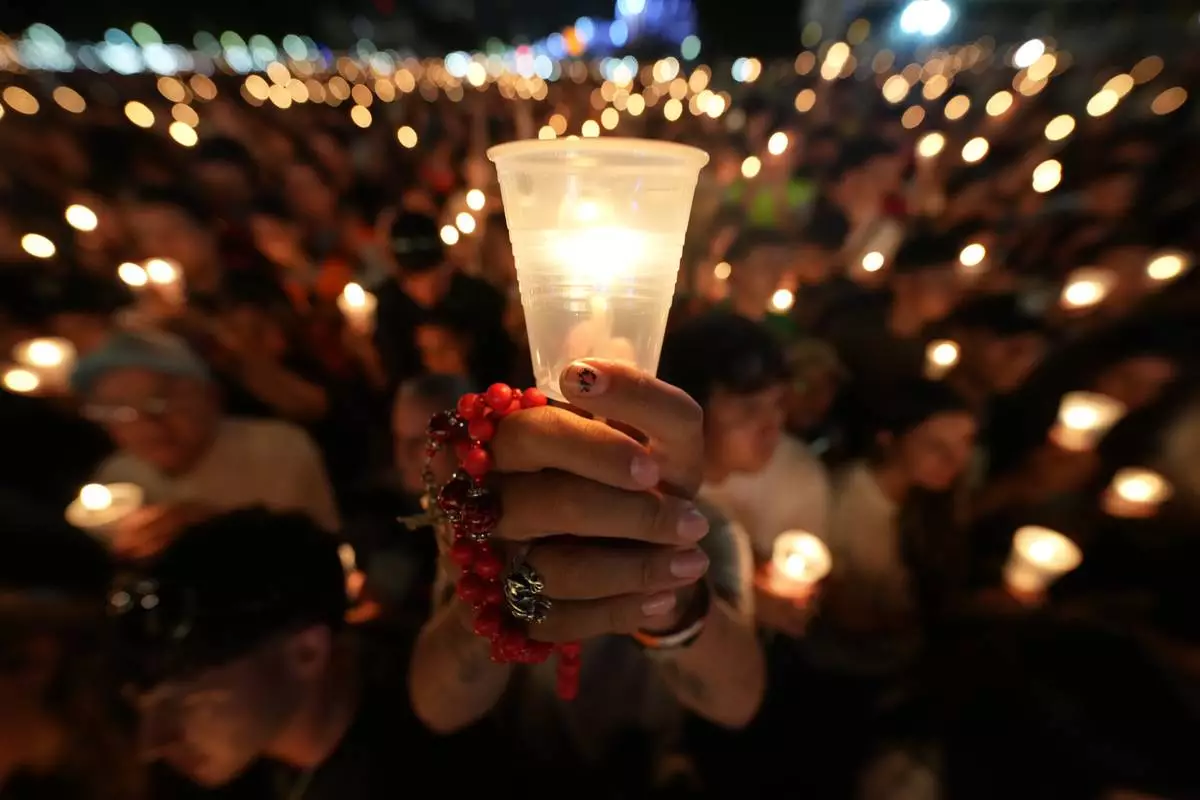
Faithful hold candles and rosary beads during a youth prayer vigil with Pope Leo XIV at Monumento de los Españoles in Buenos Aires, on the fifth day of his twelve-day apostolic journey to South America, Tuesday, Nov. 10, 2026. (AP Photo/Andrew Medichini)
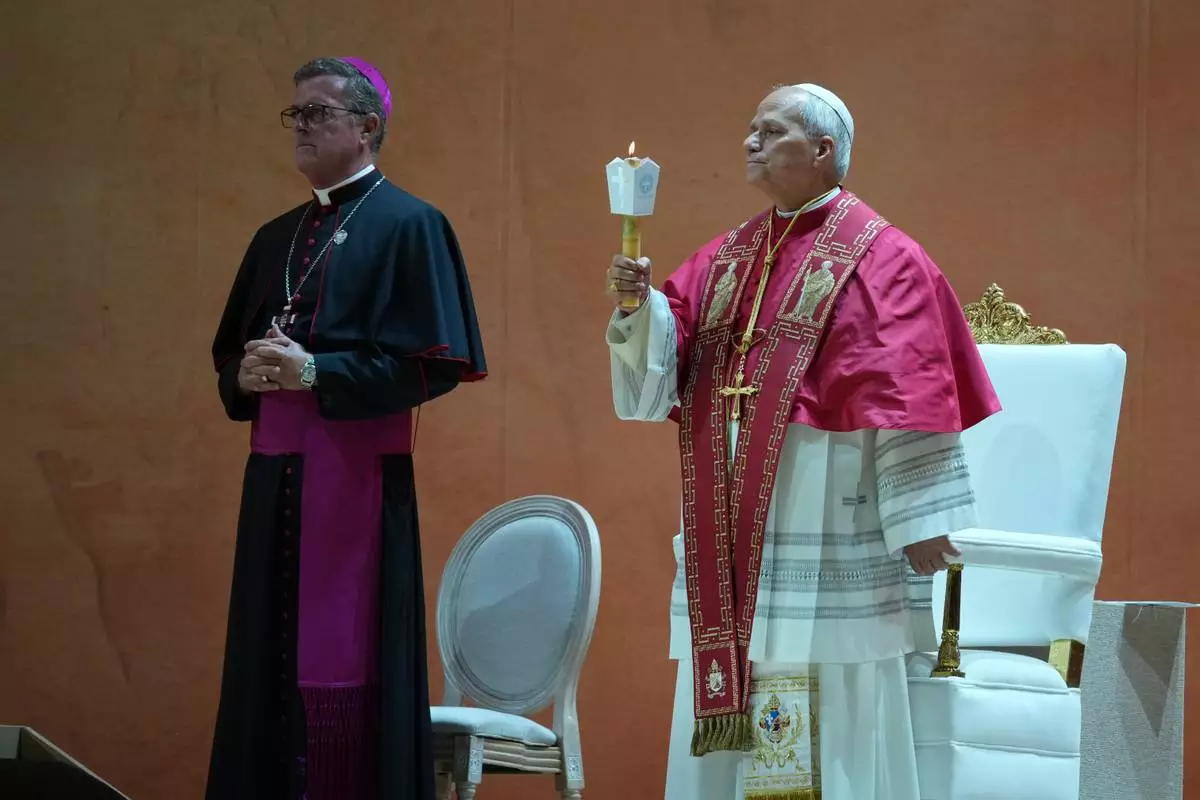
Pope Leo XIV, flanked by Buenos Aires Archbishop Jorge Ignacio García Cuerva, left, holds a candle during a youth prayer vigil at Monumento de los Españoles in Buenos Aires, on the fifth day of his twelve-day apostolic journey to South America, Tuesday, Nov. 10, 2026. (AP Photo/Andrew Medichini)
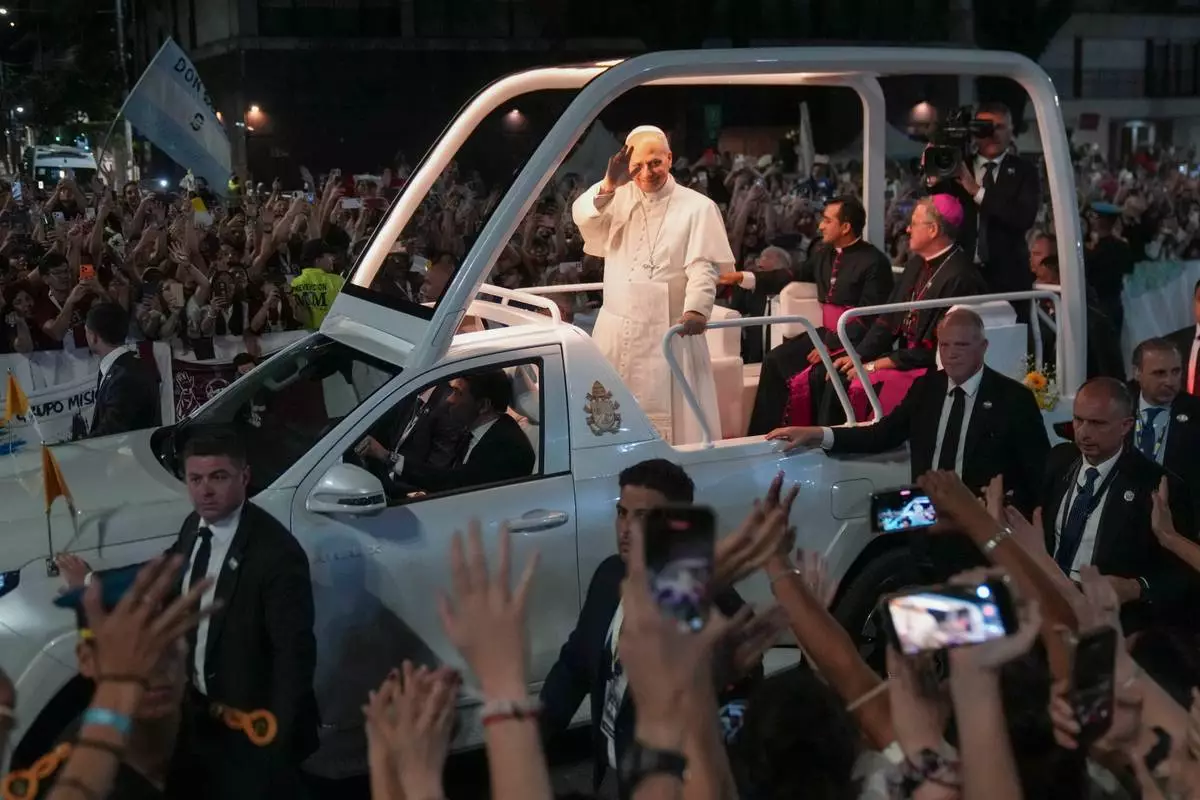
Pope Leo XIV waves to faithful as he arrives to lead a youth prayer vigil in Buenos Aires, Argentina, Tuesday, Nov. 10, 2026. (AP Photo/Rodrigo Abd)