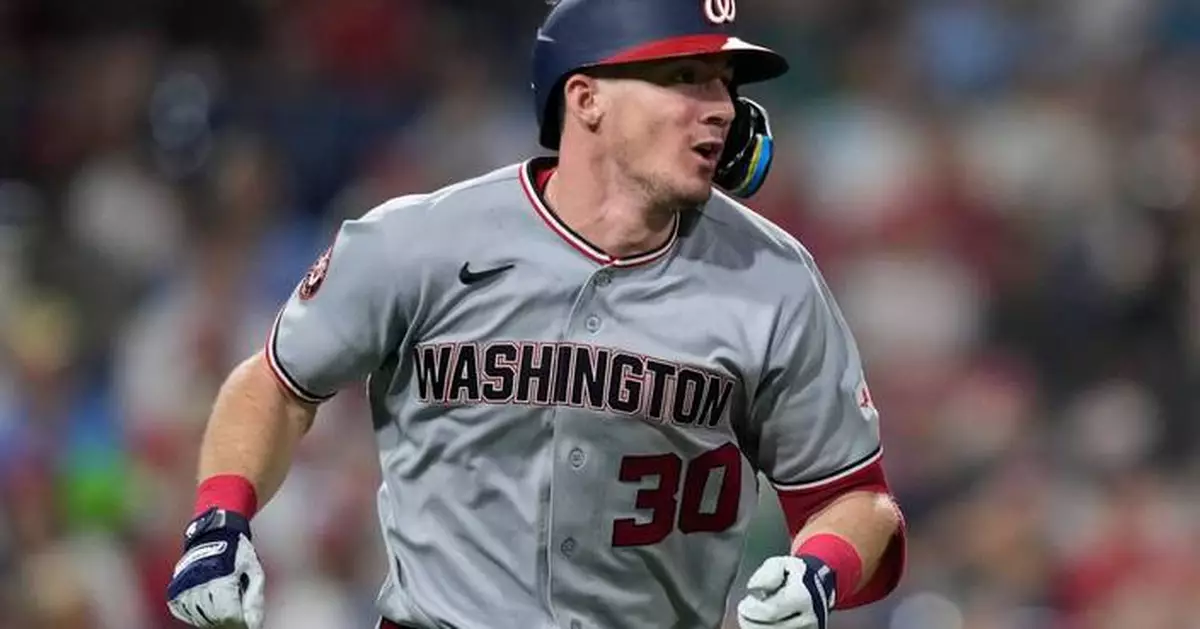
LAS VEGAS (AP) — Outfielder Jacob Young and the Washington Nationals finalized a $23 million, four-year contract on Wednesday, a deal that includes a $6 million signing bonus shielded from a lockout.
Young's signing bonus is payable in $1.5 million annual installment each Dec. 1 from 2026-29.
He gets salaries of $1 million next season, $5 million each in 2028 and 2029, and $6 million in 2030.
Washington has an $8 million team option for 2031 with no buyout. The option price would escalate by $500,000 if he finishes among the top 15 in any Most Valuable Player vote from 2027-30, with a maximum increase of $500,000.
Young would receive a one-time $2 million assignment bonus if traded.
He had been eligible for salary arbitration this offseason after earning $794,200 this year.
“Already one of the top defenders in Major League Baseball, we all saw the significant step forward Jacob took offensively in 2026 and we anticipate continued development in the years to come,” Nationals president of baseball operations Paul Toboni said in a statement. "He is a tremendous representative of the organization and we are excited to have him in the fold for the next several years.”
Young, who turned 27 in late July, set a career high with 10 home runs and 50 RBIs this year while batting .252. He entered the season with five home runs in 1,006 big league plate appearances.
He finished third among NL center fielders in outs above average and runs prevented. He was a Gold Glove Award finalist in 2024 and '25.
The contract was announced three weeks before owners are expected to lock out players after the collective bargaining agreement expires on Dec. 1, a decision that would put next season in jeopardy.
See AP’s full MLB coverage here
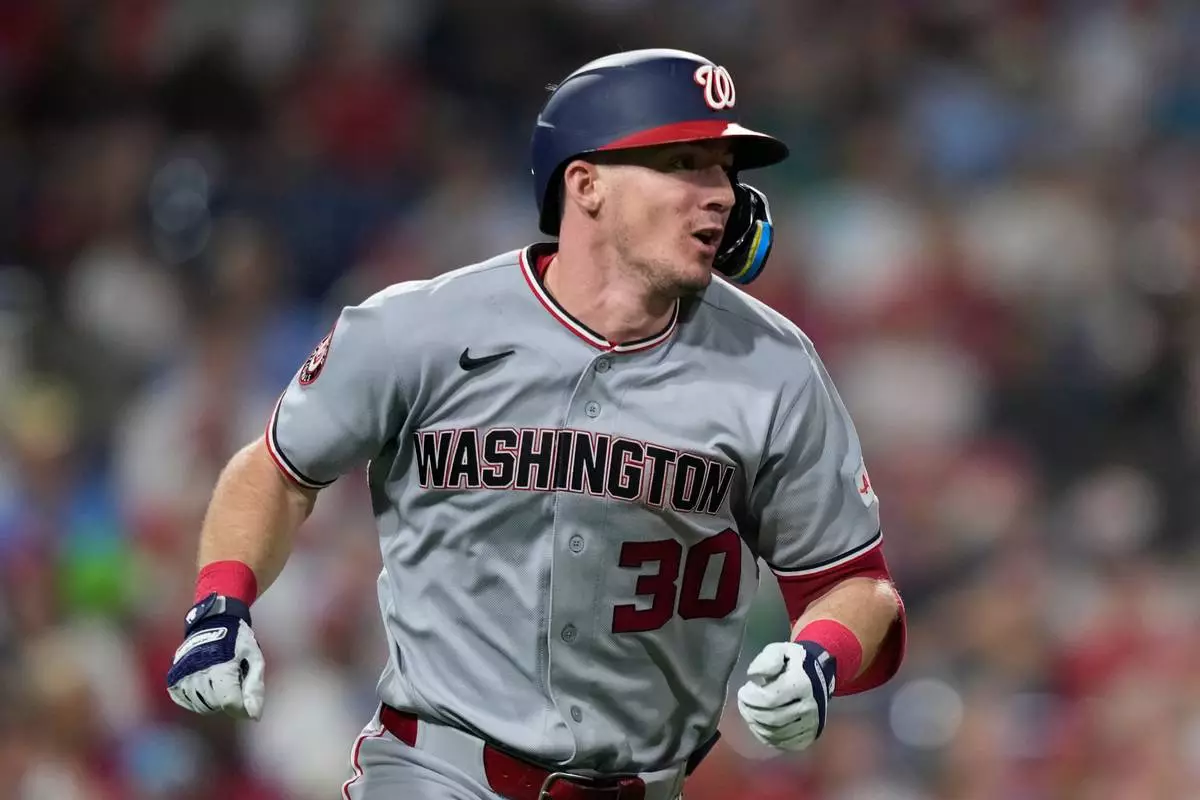
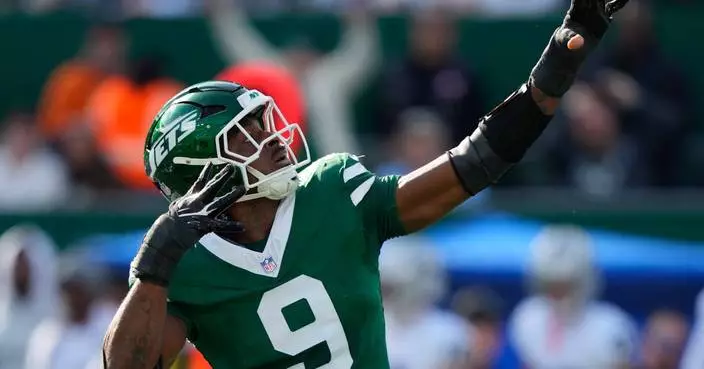
FILE - Washington Nationals' Jacob Young plays during a baseball game on Aug. 5, 2026, in Philadelphia. (AP Photo/Matt Slocum, File)
LIMA, Peru (AP) — Pope Leo XIV arrived in his second homeland of Peru on Wednesday, returning to the place that he credits with teaching him how to be a pastor and where a nationwide party awaits to welcome their beloved “Padre Robert” home.
The visit to Peru marks the final leg of Leo’s three-nation South America tour and its emotional highlight, given the more than two decades that the former Robert Prevost spent in Peru as a missionary priest and later bishop. As a dual citizen of the United States and Peru, he’s the first pope from each country.
Leo’s charter plane touched down at a Lima-area air base, where he was welcomed by President Keiko Fujimori and an crowd that waved flags of Peru and the Vatican.
“My heart is so excited that it makes me want to cry with joy,” said Zuly Castillo, who served as Leo’s secretary when he was bishop of the northern city of Chiclayo near the Pacific Coast. Across from her office, a life-size cardboard cutout of the pope now welcomes visitors to his former residence.
“Peru is the crown of the trip, the homecoming of the first Peruvian pope, no matter where he was born,” said Gustavo Morello, an associate professor of sociology at Boston College and the author of “Lived Religion in Latin America.”
“This is a return to his origins without any doubt,” Morello said.
In preparation for the pope’s visit, a huge 46-foot (14-meter) statue of the pontiff was unveiled in the port of El Callao. Baristas in Lima, the capital, were offering cappuccinos decorated with the image of the pope.
With hands raised and voices lifted in song, hundreds awaited the pope’s arrival in Lima in front of the presidential palace, where a stage and giant screens had been set up amid tight security.
“Long live Christ!” the crowd sang, following a Catholic choir on the stage.
“It’s so beautiful and so moving," said Anni Marino, 52, who enthusiastically joined the singing. “I hold it in my heart because he’s the representative of God.”
Popemania also hit Chiclayo. Leo is painted in colorful murals, emblazoned on T-shirts, baseball hats, and even bobblehead dolls and ice creams.
Leo will celebrate Mass in all his old stomping grounds including at the nearby sanctuary of St. Turibius of Mogrovejo in Zaña, a city that is a hub of Afro-Peruvian culture, and where the pope often visited to pray to the saint of his devotion.
Since Leo knows his adopted country so well, his speeches will be closely watched, especially one he’ll deliver from the square in front of Lima’s cathedral “on the challenges and hopes for the future of the Peruvian people.”
Peru, a nation of 34 million people, is overwhelmed by challenges, among them the looming arrival of nature’s chaotic climatic agent of El Niño, violent crime and income inequality. In 2025, 25.7% of the Peruvian population was living in monetary poverty.
“A small elite has GDP levels comparable to some U.S. states,” Morello said, adding that while the macroeconomy “is doing well, most Peruvians live in structural poverty and economic insecurity.”
“This could help build stability in the political system. Without any doubt, Peru is better now than 30 years ago, when Shining Path was still a threat,” he said about the rebel movement that terrorized Peru in the 1980s and 1990s when Leo was a young Augustinian missionary.
“His return, now as pope, inspires great hope among a large segment of Peruvian society that still perceives and feels the abandonment of the state,” said Rolando Pérez, a professor at the Pontifical Catholic University of Peru.
“Deeply etched in the public consciousness is the image of a shepherd who stood by the people, helping to bring into the public agenda their demands and their cry for justice,” he said.
The pope will honor Peru’s Indigenous peoples by traveling to Pucallpa, in Peru’s Amazon, to celebrate Mass. Illegal gold mining and the cultivation of coca leaves, the raw material used to produce cocaine, are affecting Peru’s Indigenous peoples.
“The Amazon is a place where critical issues affecting development -- such as the environmental crisis, the exclusion of Indigenous peoples, various forms of violence, and extreme poverty-- all intersect,” said Pérez.
Leo will also meet with popular groups of faithful and representatives of local traditions in Cusco — the capital of the Inca empire, an important city of Spanish colonial rule and an important cultural destination, including the nearby ruins at Machu Picchu.
The pope will celebrate Mass in Cusco’s main square, where in 1781 the Indigenous hero Túpac Amaru II was killed following the most significant rebellion against the Spanish during the colonial era.
Conservative President Fujimori came to power in July on promises of restoring order to a nation plagued by extortion and homicide, which have nearly doubled, reaching 10.7 per 100,000 inhabitants -- up from 5.8 five years ago.
Peruvians will welcome the pope at a time when many feel disappointed with authorities following a decade of political instability that has seen a revolving door of nine presidents since July 2016. Many Peruvians are also battered by rising insecurity and the increasing cost of food.
“There’s no sign of a reaction, no strategy,” from Fujimori’s government, he said.
As a result, many hope for a message from Leo that will prompt a response from those in power.
“There’s a profound sense of weariness regarding politics and corruption,” said Véronique Lecaros, head of the department of theology at the Pontifical Catholic University of Peru.
In contrast, she said the Catholic church enjoys a level of credibility that surpasses any other Peruvian institution.
Huge crowds are expected to turn out to welcome Leo home, even though Peru has seen Catholicism fall in recent years. According to the Pew Research Center, the Catholic population was at 76% in 2013-2014, but now stands at around 67%.
That stands in line with trends around the world where many continue to join the growing ranks of the religiously unaffiliated. Known as the “nones,” they identify as atheists, agnostics, spiritual but not religious, or simply, nothing in particular. But Lecaros says this doesn’t mean Peruvians have lost their faith, and most still consider themselves to be religious.
“They’ll listen to the pope, and some inspired by his example, will renew their interest in the church," she said. "In the end though, it will depend on how Catholic lay and clerical leaders choose to behave.”
Associated Press writer Franklin Briceño contributed to this report.
Associated Press religion coverage receives support through the AP’s collaboration with The Conversation US, with funding from Lilly Endowment Inc. The AP is solely responsible for this content.
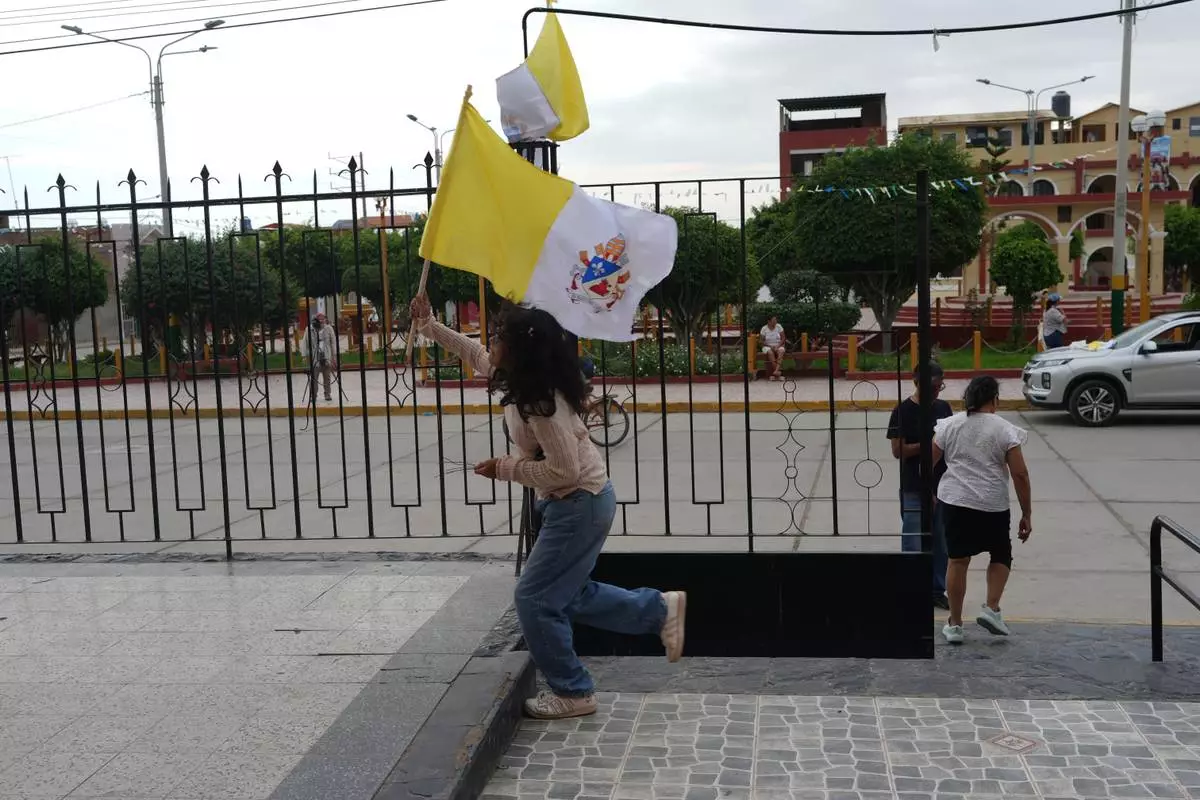
A girl runs with a Vatican City flag on the steps of the Saint Turibius of Mogrovejo Catholic church as the community prepares for the return of Pope Leo XIV to Zaña, Peru, Friday, Nov. 6, 2026. (AP Photo/Luis Andres Henao)
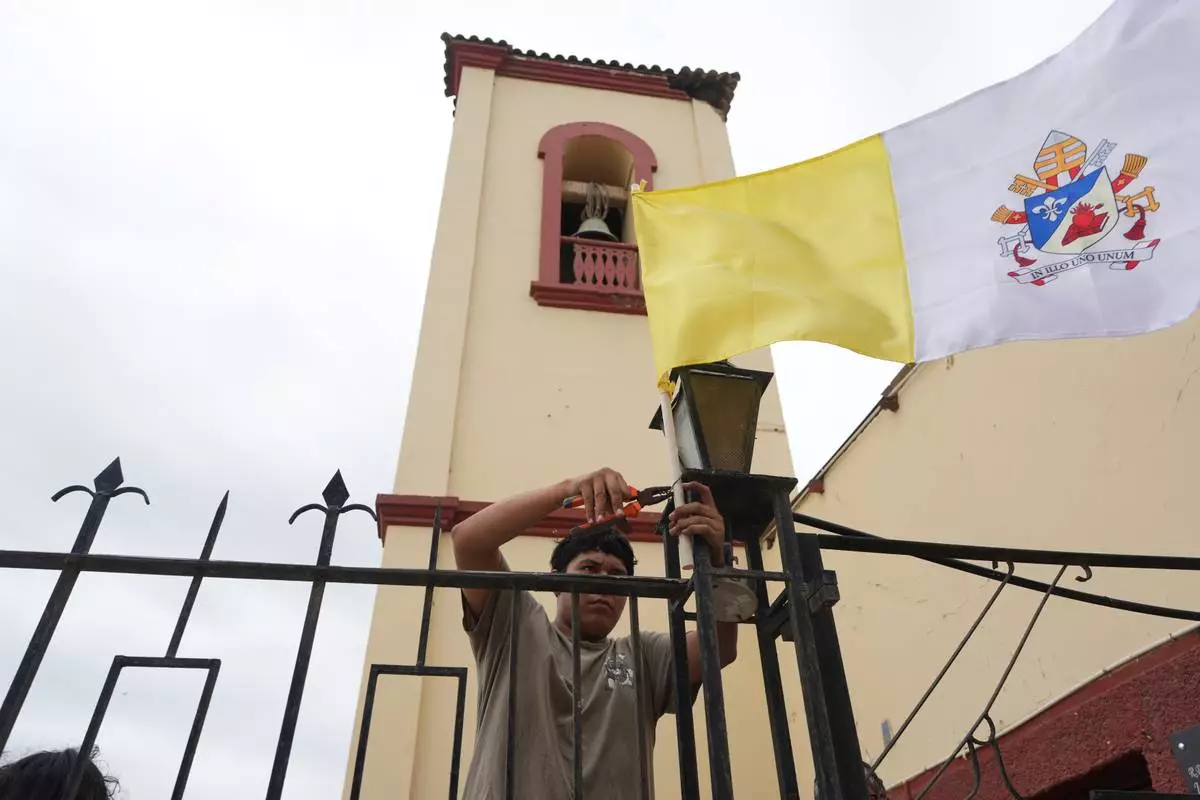
A person attaches a Vatican City flag to the railings outside Saint Turibius of Mogrovejo Catholic church ahead of Pope Leo XIV's visit on Friday, Nov. 6, 2026, in Zaña, Peru. (AP Photo/Luis Andres Henao)
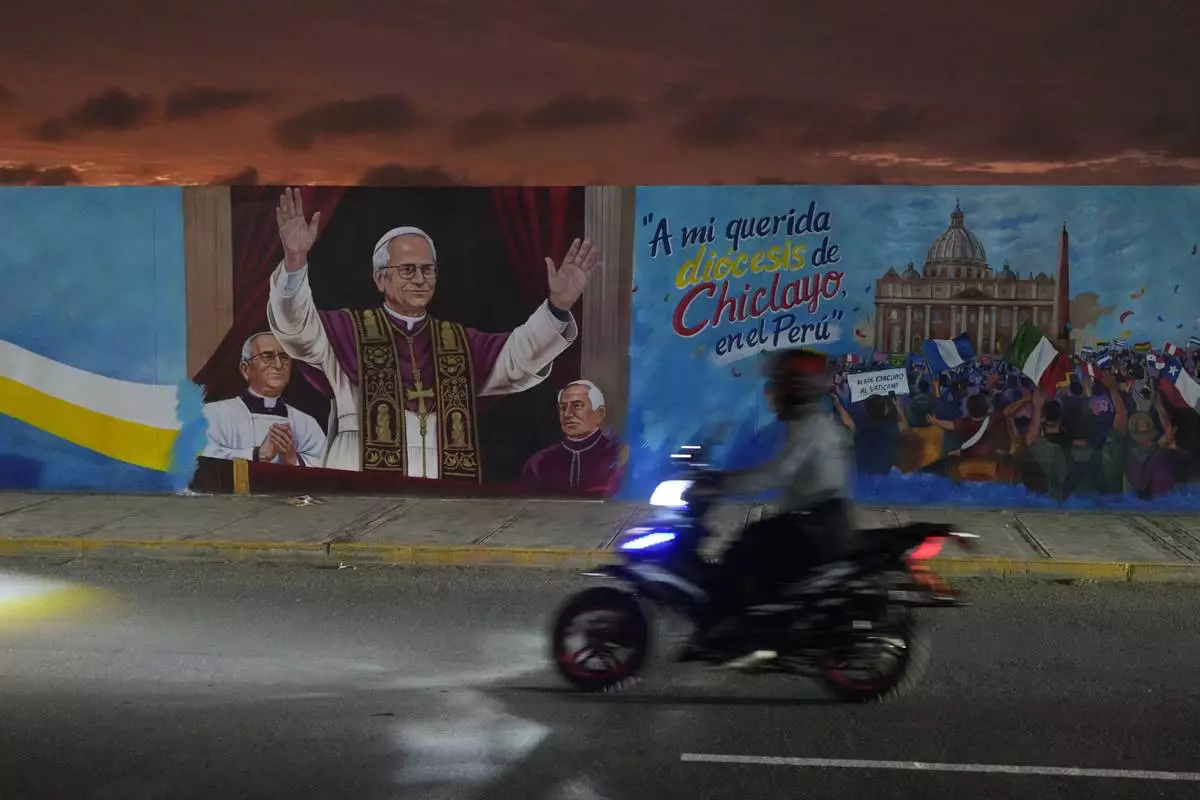
A motorcyclist drives past a mural of Pope Leo XIV in the city of Chiclayo, Peru, Saturday, Nov. 7, 2026. (AP Photo/Luis Andres Henao)