Trilateral talks involving Russia, the United States and Ukraine concluded on Wednesday in Abu Dhabi, with Russia and Ukraine agreeing on a large-scale prisoner exchange.
Vladimir Medinsky, head of the Russian delegation at the talks on the Ukraine crisis, told a press conference that details of the exchange would be announced soon and that negotiations would continue.
He said the delegations had discussed humanitarian issues, with the future of European security being a central focus of the U.S.-mediated talks.
Medinsky added that parties had reached understandings on some issues, without providing further details.
Meanwhile, Jared Kushner, a member of the U.S. negotiating team, told reporters that the discussions were thorough and covered all major issues.
He noted that the prisoner exchange deal was one of the positive outcomes of the negotiations, with the exact number of prisoners to be finalized on Thursday.
Kushner said the discussions were very substantive, describing them as a good first step forward.
He also said that he and U.S. special envoy Steve Witkoff had planned to travel to Moscow to meet Russian President Vladimir Putin for further discussions on ending the Ukraine conflict, before traveling to Dublin, Ireland, to meet Ukrainian President Volodymyr Zelensky.
In a post on X, Ukraine's chief negotiator Rustem Umerov said that despite "significant differences" between the parties, there are opportunities to continue the negotiation process.
Compared with the previous talks, the scope of topics discussed at this meeting was expanded. It is worth noting that Europe's security architecture was at the heart of the Russia-U.S.-Ukraine trilateral talks.
"As stated by Medinsky, an aide to the Russian president and head of the Russian delegation, the Russian delegation has been expanded this time and, as he himself noted, has become more professional. Why is that? Because the Russian delegation now consists of five members and six experts. Among the five members, two are Russian deputy foreign ministers, one of whom is [Sergei] Ryabkov, who is joining the negotiating team for the first time. Prior to the negotiations, the U.S. side also indicated that this meeting would address not only Ukraine but also the security of all of Europe, which is precisely the concept of security guarantees for Russia that Ryabkov proposed in 2021. Therefore, his inclusion also underscores the level of these negotiations, as well as the increasingly broad range of issues that the three parties can discuss," said Sorokina Alina, a reporter with RT.
Analysts say although no agreement was announced on a ceasefire, territorial disputes or long-term security guarantees, the talks could pave the way for progress on practical issues.
"They're the first talks to happen in the last nine months in a very polarized political and international atmosphere. So having these talks to begin with in itself is a breakthrough. Moving from actually talking about humanitarian mediation to an actual security structure of Europe is a breakthrough in itself. It means we're moving from important topics still to topics that are even more important to hopefully solve this issue once and for all. And that movement himself, from humanitarian talks, from humanitarian peace talks or the trade of prisoners, to a circle that talks about the security structure of the European region as a whole, is in itself a breakthrough toward the correct direction, hopefully solving this matter that has been going on for the past years," said Abdulaziz Al-Shehhi, a senior researcher with TRENDS Research and Advisory, an Abu Dhabi-based think tank.
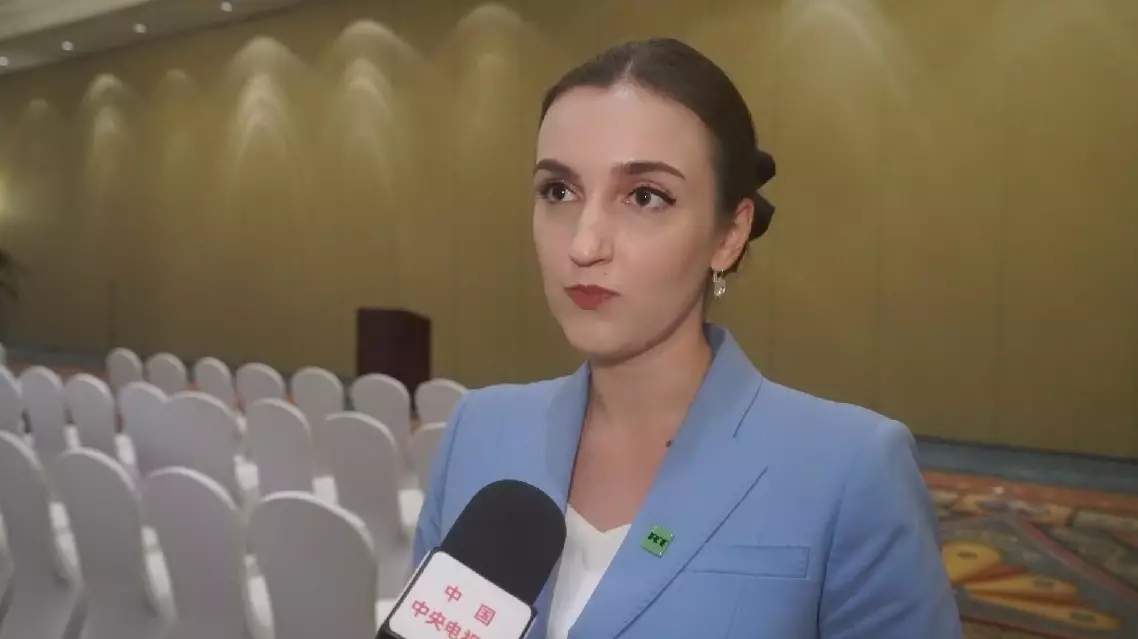
Russia, Ukraine conclude Abu Dhabi talks with prisoner exchange as negotiations set to continue
Russia, Ukraine conclude Abu Dhabi talks with prisoner exchange as negotiations set to continue
Russia, Ukraine conclude Abu Dhabi talks with prisoner exchange as negotiations set to continue