Experts in China are urging Japan to squarely face its atrocities during World War II and speed up the destruction and disposal process of the chemical weapons it abandoned in China.
Since this year, the Exhibition Hall of Evidences of Crime Committed by Unit 731 of the Japanese Imperial Army in northeast China's Harbin City has released a series of historical artifacts and documents.
The materials document the Japanese Imperial Army's use of horrific bacteriological and chemical warfare in China, as well as its subsequent efforts to destroy evidence of those crimes.
Unit 731 was a top-secret biological and chemical warfare research base established as the nerve center for Japanese biological warfare in China and Southeast Asia during WWII.
At least 3,000 people were used in human experiments conducted by Unit 731, and more than 300,000 people in China were killed by Japan's biological weapons.
"The 1949 Khabarovsk Trial brought Unit 731's crimes against humanity to public attention for the first time. However, as historical sources were limited, Japan has historically merely acknowledged the unit's existence while covering up its atrocities. One reason is that the international community has not been sufficiently aware of the need to hold Japan accountable for its use of biological weapons," said Gong Wenjing, director of the international research center for Unit 731 issues at the Harbin Academy of Social Sciences.
Chinese researchers have also reviewed the archives of the Khabarovsk Trial declassified by Russia, and released findings on the confession process of war criminals from the infamous Unit 731. The Khabarovsk Trial was a public trial conducted by the Soviet Union in December 1949 on Japan's germ-warfare crimes.
"The discovery of these materials helps piece together a clear chain of events. For instance, they shed light on how the Japanese military carried out bacteriological warfare and later destroyed evidence of it. Furthermore, testimony from former unit members mention that they engaged in large-scale destruction and arson during their retreat. These findings serve to strengthen the conclusions we had already reached," said Xu Chi, an associate research fellow at the Institute of Law under the Chinese Academy of Social Sciences.
In addition to conducting human experimentation and germ warfare, during World War II, Japanese militarists also developed chemical weapons on a large scale and deployed them in China and elsewhere in Asia.
During their war of aggression against China, in blatant violation of international law, Japanese militarists used a large number of chemical weapons, causing over 200,000 Chinese military and civilian casualties.
To cover up its crime after being defeated, the Japanese side abandoned a large number of chemical weapons on Chinese territory, poisoning over 2,000 people. These chemical weapons continue to jeopardize the safety of Chinese people's life and property and harm the environment.
Japan should have completed the destruction and disposal process of these chemical weapons by 2007 in accordance with the Chemical Weapons Convention and the memorandum of understanding between the two countries' governments.
However, due to insufficient sincerity and input, the Japanese side failed to complete the destruction four times, in 2007, 2012, 2016 and 2022.
"Japan has repeatedly failed to commit sufficient funding, technology and human resources to this matter. More importantly, there is a profound lack of awareness across Japanese society, as well as a glaring absence of serious attention at the national level. This has led to an infuriating reversal of responsibility: the perpetrators -- those who committed the crimes -- are effectively relieved of any burden of proof. This amounts to a second injury to China," said Jin Ying, director of the history research office at the Institute of Japanese Studies under the Chinese Academy of Social Sciences.
"Only by facing history squarely and confronting its responsibilities can Japan secure better development for itself, and foster positive relations with its neighbors, including China," Jin added.
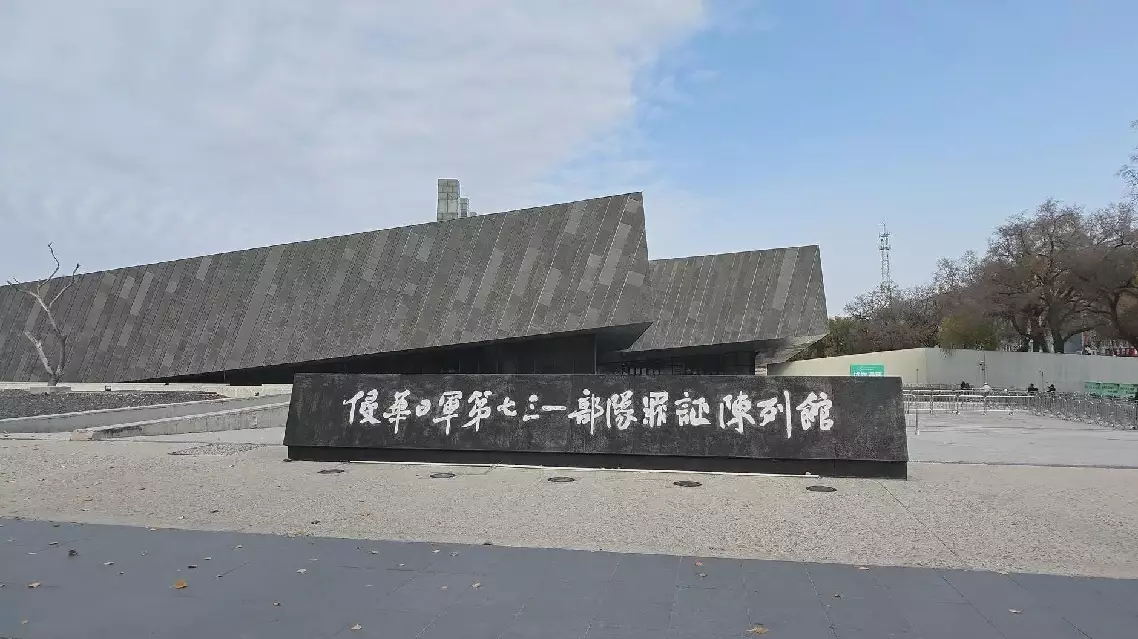
Chinese researchers urge Japan to squarely face wartime atrocities, destroy abandoned chemical weapons