BEIRUT (AP) — For more than a century, the Tabbara family has been serving up falafel to Beirut’s residents.
Their business, which predates Lebanon’s founding, has survived two world wars and a series of local conflicts in the small Mediterranean nation.
Click to Gallery
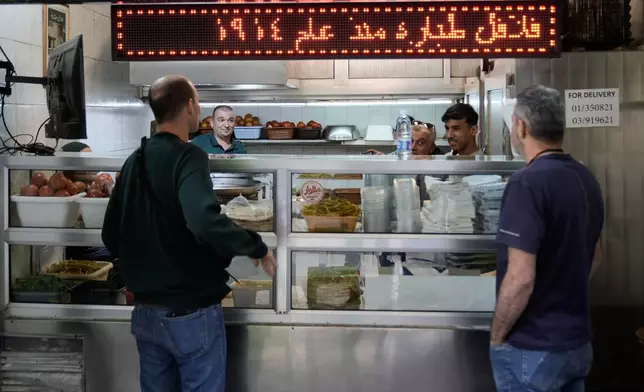
Customers wait to be served at the Tabarra family's falafel shop in Beirut's Hamra district, Lebanon, Wednesday, Nov. 11, 2026. (AP Photo/Bilal Hussein)
Ziad Tabarra holds an uncooked, sesame-coated falafel patty made with finely ground fava beans at his family's shop in Beirut's Hamra district, Lebanon, Wednesday, Nov. 11, 2026. (AP Photo/Bilal Hussein)
Falafel patties made from finely ground fava beans, are fried in a large pan at the Tabarra family's shop in Beirut's Hamra district, Lebanon, Wednesday, Nov. 11, 2026. (AP Photo/Bilal Hussein)
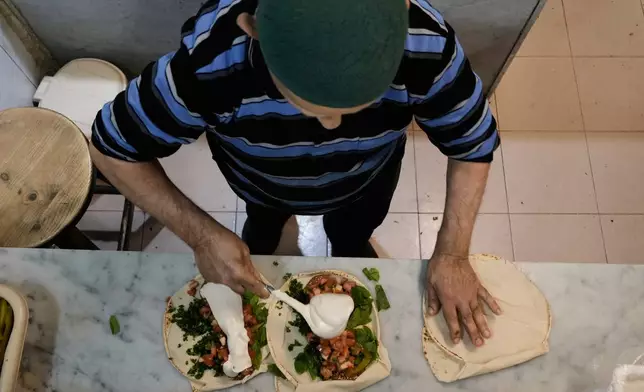
Mohammed Tabarra prepares falafel sandwiches made with finely ground fava beans at his family's shop in Beirut's Hamra district, Lebanon, Wednesday, Nov. 11, 2026. (AP Photo/Bilal Hussein)
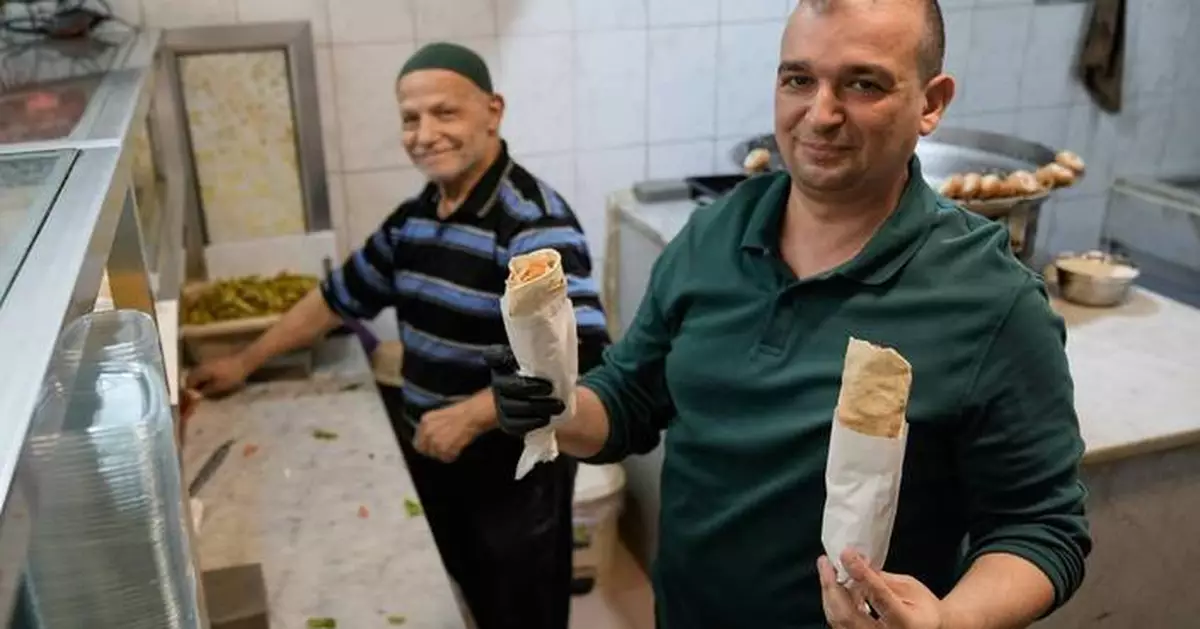
Ziad Tabarra, right, holds falafel sandwiches made with finely ground fava beans at his family's shop in Beirut's Hamra district, Lebanon, Wednesday, Nov. 11, 2026. (AP Photo/Bilal Hussein)
Now, a fourth generation is getting ready to take over the modest shop, where customers can get $3 sandwiches of small, doughnut-shaped patties of deep-fried ground fava beans wrapped in flat Lebanese bread with pickled cucumber, tomatoes, parsley, thick tahini sauce and homemade dark red-hot pepper paste for the spice lovers.
“I have clients spread all over the world,” 82-year-old Mohammed Tabbara said as a European customer waited for a sandwich in Beirut’s busy Hamra district that's packed with cafes, clothing shops and two major universities.
“They all come to eat falafel because they know the flavor and the taste,” Tabbara added.
He is passing down the culinary craft to his 40-year-old son, Ziad Tabbara, a former accountant who has spent the last six years working full time with his dad.
“This is a flavor that made history and heritage passed down through generations,” said Ziad Tabbara, who as a child helped his father in the shop during summer vacations.
Ziad has no children of his own to pass on the tradition to — a sore point with his father who wants to see him married with children.
Beirut was still part of the Ottoman Empire when Ziad's great-grandfather Kamel Tabbara opened the family’s first falafel shop in the city’s central Bab Idriss district in 1914. It would be six years before the state of Greater Lebanon was established after World War I.
Kamel passed the business to his son Ahmad. Since 1950, the business has been mostly run by Kamel’s grandson Mohammed. It was around that time that the family moved its business from central Beirut. The current shop in a narrow street has been in place since 1979.
“I have been through 40 wars,” Mohammed Tabbara said, referring to two civil wars, Israel's 1982 invasion of Lebanon, multiple Israel-Hezbollah wars, and several conflicts involving Palestinian groups and the Syrian army.
Mohammed Tabbara, who began working with his dad at the shop when he was just 6 years old, still mans the counter, taking orders from clients and assembling sandwiches. Always smiling, Mohammed knows many customers by name. Some have been getting falafel there for decades.
Beirut is known throughout the Middle East for its cuisine, from fine restaurants to street food.
Small falafel spots can be found throughout Lebanon. A sandwich is a filling, affordable meal for people in a nation that's been experiencing a historic economic meltdown since 2019, rooted in decades of corruption and mismanagement.
Mohammed Tabbara's shop is decorated with two photos of him: A black-and-white one taken in 1966 and another taken two years ago in which he wears his trademark skull cap.
He takes pride in the shop's cleanliness. They change the cooking oil every day and wash the vegetables with vinegar and salt.
Jean Matta, 60, works in the neighborhood and has been eating falafel at Tabbara since 1992. “It’s crunchy, tasty and clean,” Matta said.
Ziad has learned his father's special secret recipe for falafel, which is made of Australian fava beans, soaked in water the night before, then ground before being mixed with salt and an array of spices, including coriander. Mohammed said chickpeas, used in many falafel recipes, are heavier and take more time to digest than fava beans alone. He also said he was the first in Lebanon to introduce a falafel patty covered with sesame seeds and with a hole in the middle, making it well-cooked inside and crunchy on the outside.
“The sandwich you take from here is light and 100% healthy,” Mohammed said as he wrapped a sandwich while his son dropped falafel patties into a giant frying pot.
“God willing, I will continue to offer the same flavor,” Ziad said.
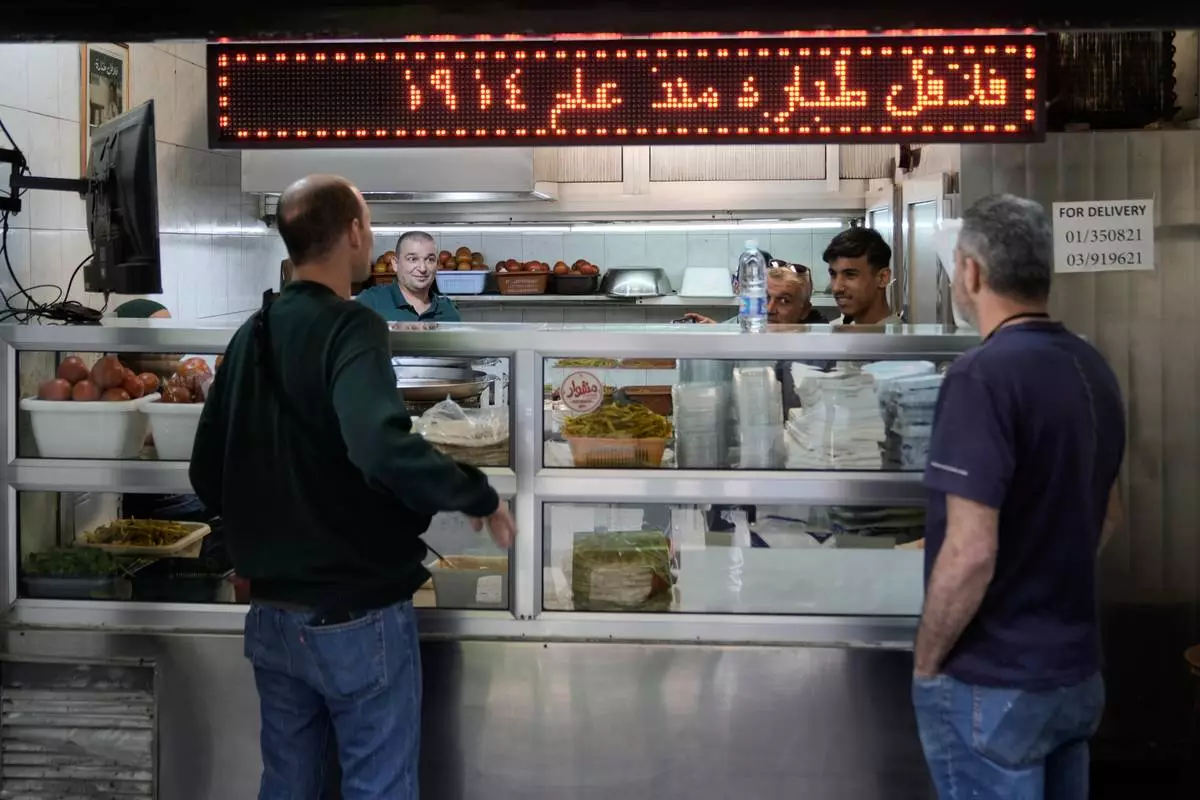
Customers wait to be served at the Tabarra family's falafel shop in Beirut's Hamra district, Lebanon, Wednesday, Nov. 11, 2026. (AP Photo/Bilal Hussein)

Ziad Tabarra holds an uncooked, sesame-coated falafel patty made with finely ground fava beans at his family's shop in Beirut's Hamra district, Lebanon, Wednesday, Nov. 11, 2026. (AP Photo/Bilal Hussein)

Falafel patties made from finely ground fava beans, are fried in a large pan at the Tabarra family's shop in Beirut's Hamra district, Lebanon, Wednesday, Nov. 11, 2026. (AP Photo/Bilal Hussein)
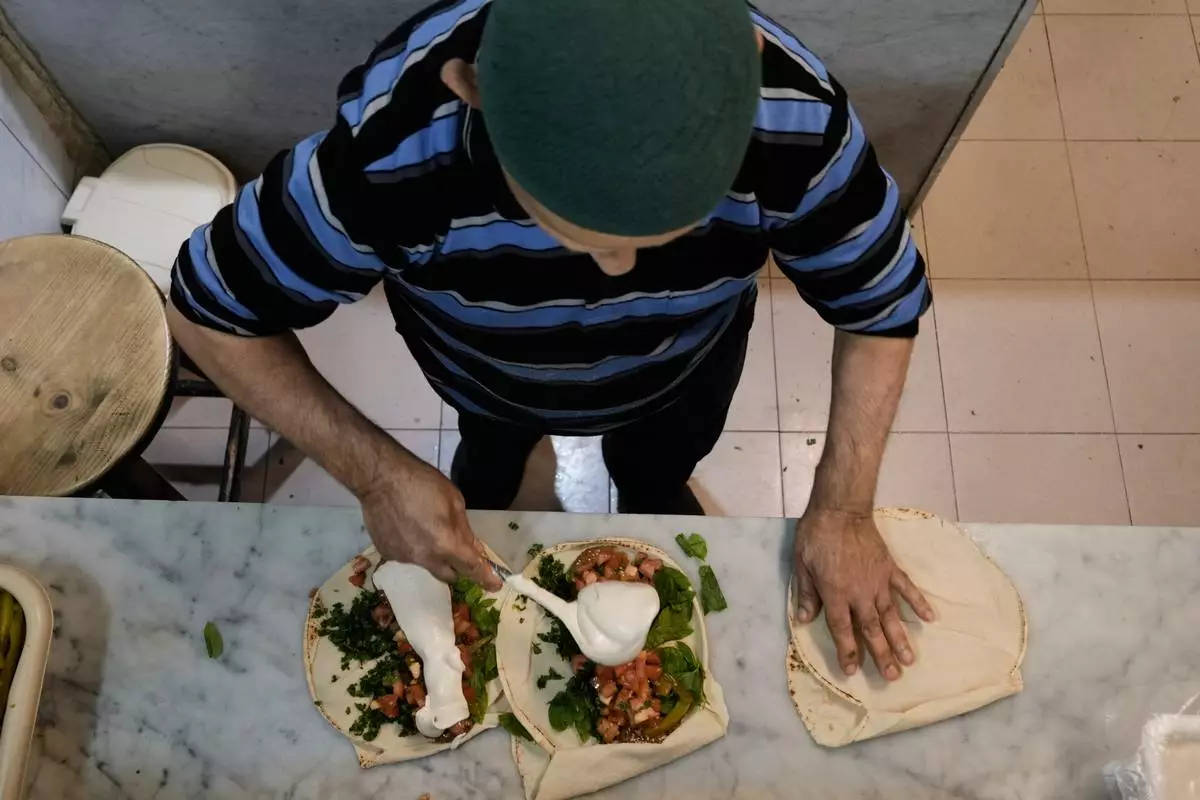
Mohammed Tabarra prepares falafel sandwiches made with finely ground fava beans at his family's shop in Beirut's Hamra district, Lebanon, Wednesday, Nov. 11, 2026. (AP Photo/Bilal Hussein)
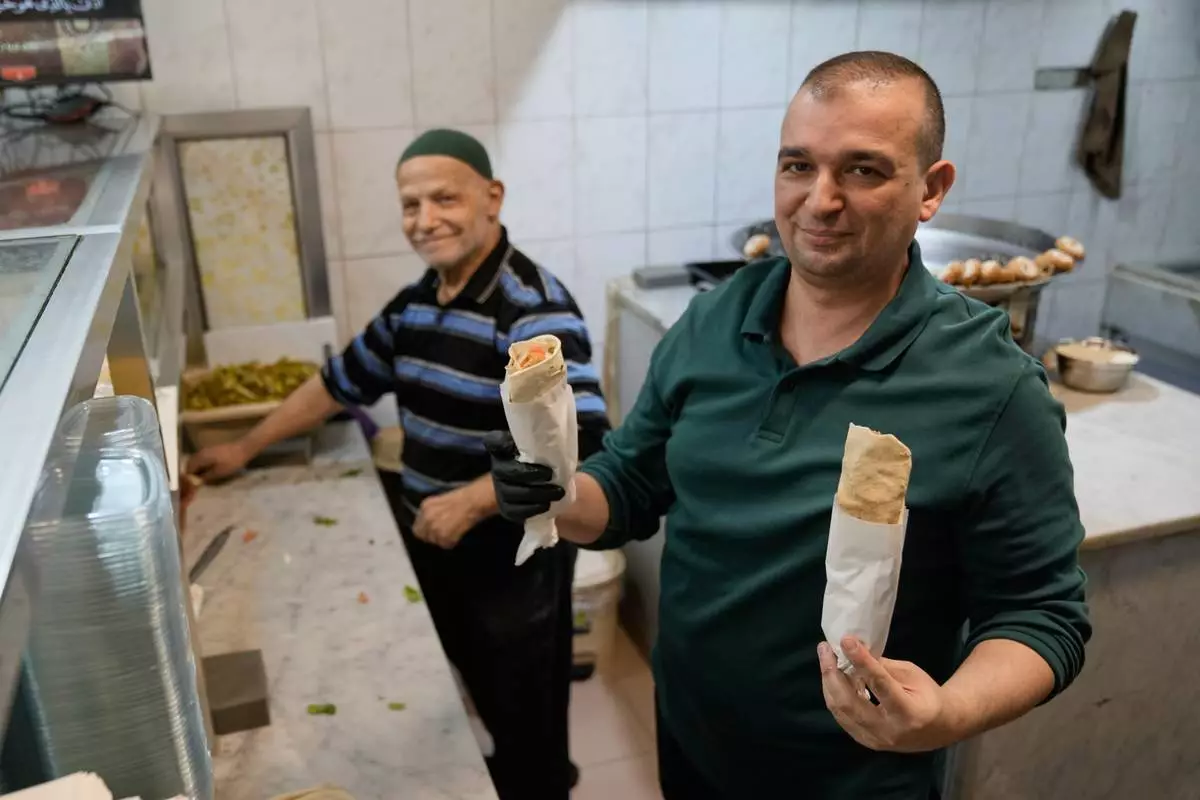
Ziad Tabarra, right, holds falafel sandwiches made with finely ground fava beans at his family's shop in Beirut's Hamra district, Lebanon, Wednesday, Nov. 11, 2026. (AP Photo/Bilal Hussein)
KYIV, Ukraine (AP) — Matvii Yermolenko is 2, but he already knows the words for siren and air defense. This winter, his mother decided to take him out of Kyiv.
“There is sadness, but even stronger is the understanding of what I have to do — leave,” Matvii’s mother, Kateryna Tsvihun, said, adding that they will come back in spring. “I cannot live without Kyiv and Ukraine. I am rooted here, my child is Ukrainian, and my husband is fighting for this.”
Ukrainians are bracing for what many expect to be the hardest winter of the war. Last year, heating disruptions left thousands of people in freezing apartments in Kyiv. Now, officials and analysts say, the badly damaged energy system is increasingly struggling to withstand attacks, putting the country’s resilience to another test. With no end to the war in sight, many people are thinking only about getting through the coming months.
Kyiv is already under strain. Since Aug. 22, not a single day has passed in the capital without an air raid threat, often followed by drone attacks during the day and missiles at night. Some residents have moved to other parts of the country or abroad for the winter. While it's impossible to calculate how many people left the capital, changes in the rental market offer a possible clue.
“In September, we saw that the number of flats available to rent was increasing in Kyiv, whilst it was decreasing in a number of western cities," Liudmyla Kiriukhina, the head of the statistics department at LUN, a Ukrainian real estate platform, said. “This could have indicated that tenants were moving from the capital to the west of the country.”
Exploiting its advantage in jet-powered drones and ballistic missiles, Russia has expanded its targets in the city to include gas stations, data centers, warehouses, big-box stores and bridges that are crucial for civilian transport in a city divided by the Dnipro River. Electricity disruptions have caused problems on the subway, Kyiv’s main transport artery, while water supply issues are increasingly common. Some residents have also criticized local authorities' winter preparations.
But leaving costs money, and many more are staying, stocking up on power banks, water containers and portable gas stoves.
Kateryna Tsvihun, 41, found last winter very difficult. She could not bear the thought of her son going through more power outages, let alone possibly losing heating as well. So she told her husband, a soldier since 2022, that she wanted to spend this winter elsewhere.
She could not find a suitable option in Ukraine, but a Facebook group for mothers who like to travel led her to one in Albania.
“The birth of a child is the ultimate game-changer,” she said. “Before, no matter how scared I was, I stayed in Kyiv and did not even think about leaving.”
Russia recently struck an area near a subway station where she and Matvii often go for walks. “It’s a bit scary to stay,” she said. “But it’s still our home, so we will come back this spring.”
She gave her portable power station, power banks and rechargeable lamps to relatives staying in the capital. For the trip, she bought a large, light-blue suitcase, packing only with practical things and a few of Matvii’s small toys.
“I see it as an opportunity to exhale, because the tiredness and pressure have been piling up over these years of war, the lonely waiting for my husband, and the attacks,” she said.
Ukraine’s Energy Ministry said Wednesday that Russia had continued to attack power generation facilities and substations. “Attacks on the energy sector are not stopping,” it said in a statement.
“The situation in Kyiv is especially difficult right now: People and businesses are facing many hours of electricity and water outages,” President Volodymyr Zelenskyy said. Repeated strikes and constant air raid alerts are making repairs take much longer, he said.
“This winter could be just as hard, or even harder than the last one,” Andrii Tkachov, acting head of the Kyiv City Military Administration, said. “The enemy will keep striking critical infrastructure and trying to disrupt residents’ heating and water supply.”
He said Russia's aim is to create a crisis and humanitarian and social tensions in the capital, Ukraine's most populous city and the seat of its main state institutions.
“The enemy understands that attacks on Kyiv will affect the morale of the entire country. The main goal is to break Kyiv,” Tkachov said. “But, as we say, Kyiv rests on three pillars: air defense, our utility and energy workers, and the self-organization of its residents.”
As of Nov. 1, the number of active rental listings in Kyiv had risen by 87% compared with Aug. 1, according to LUN. In September, the number of flats offered for rent during the month rose in Kyiv but fell in several western cities, including Uzhhorod, Lviv, Chernivtsi and Ivano-Frankivsk. According to LUN, this could point to tenants moving west from the capital, but more time was needed to study the changes.
Kateryna Tymoshenko, 39, brought her two children to an Oct. 17 rally demanding the resignation of Kyiv Mayor Vitalii Klitschko. Civic groups, activists and veterans organized the protest, accusing city authorities of poor winter preparation, a shortage of shelters, corruption and misuse of budget funds. Klitschko has called the criticism and the rally part of a campaign to discredit him.
“His direct call was to leave. … I don’t have the money to leave,” Tymoshenko said in response to the mayor’s call earlier in October.
She considered moving to central or western Ukraine, but high demand has driven up prices, and she could not find affordable housing. Her husband is also at the front, so the winter preparations fell on her shoulders.
“I expect it to be worse than it was, precisely because of the psychological state,” she said. “I hope there will at least be heating and sewage.” Otherwise, she said, even people like her ready for harsh conditions would consider leaving.
Tymoshenko has power banks, and the family has already moved to a first-floor apartment.
“Everything depends on our partners,” she said. “Despite the resilience of our people, I am ready to endure for as long as possible. But we have no money, we have no weapons, we have no Patriots (anti-missile batteries). So we are forced to explain, to beg, to plead.”
“Well, this is the life we have,” she said. “We didn’t choose it.”
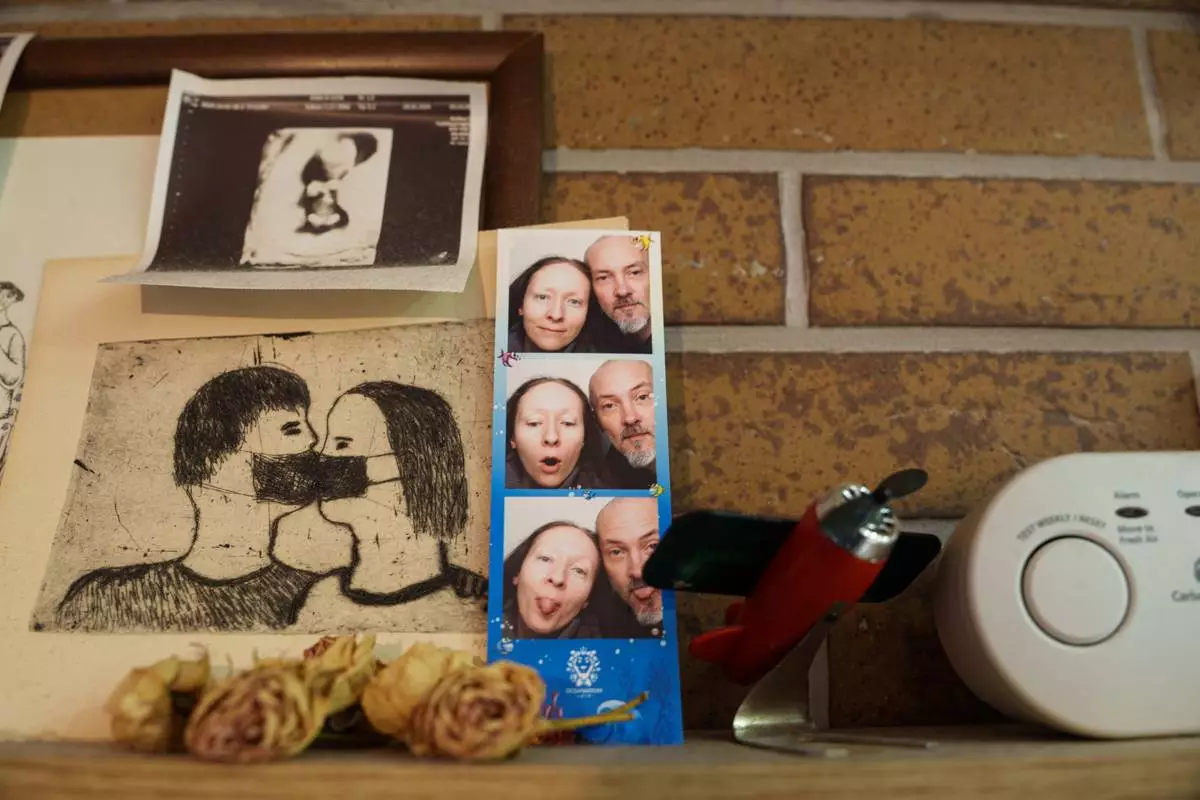
A photo strip of Kateryna Tsvihun, 41, and her husband, Serhii Yermolenko, is displayed on a shelf in their apartment in Kyiv, Ukraine, Oct. 22, 2026. (AP Photo/Evgeniy Maloletka)
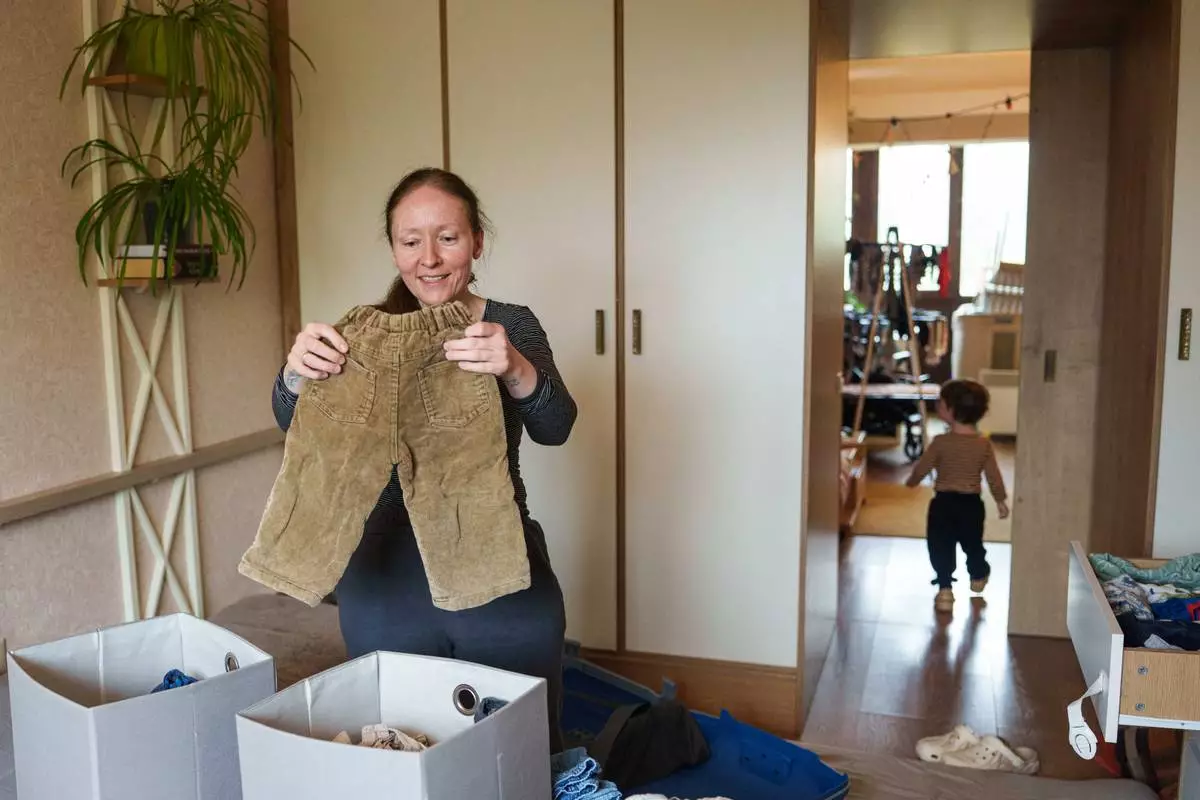
Kateryna Tsvihun, 41, gathers children's clothes in her apartment in Kyiv, Ukraine, Oct. 22, 2026. (AP Photo/Evgeniy Maloletka)
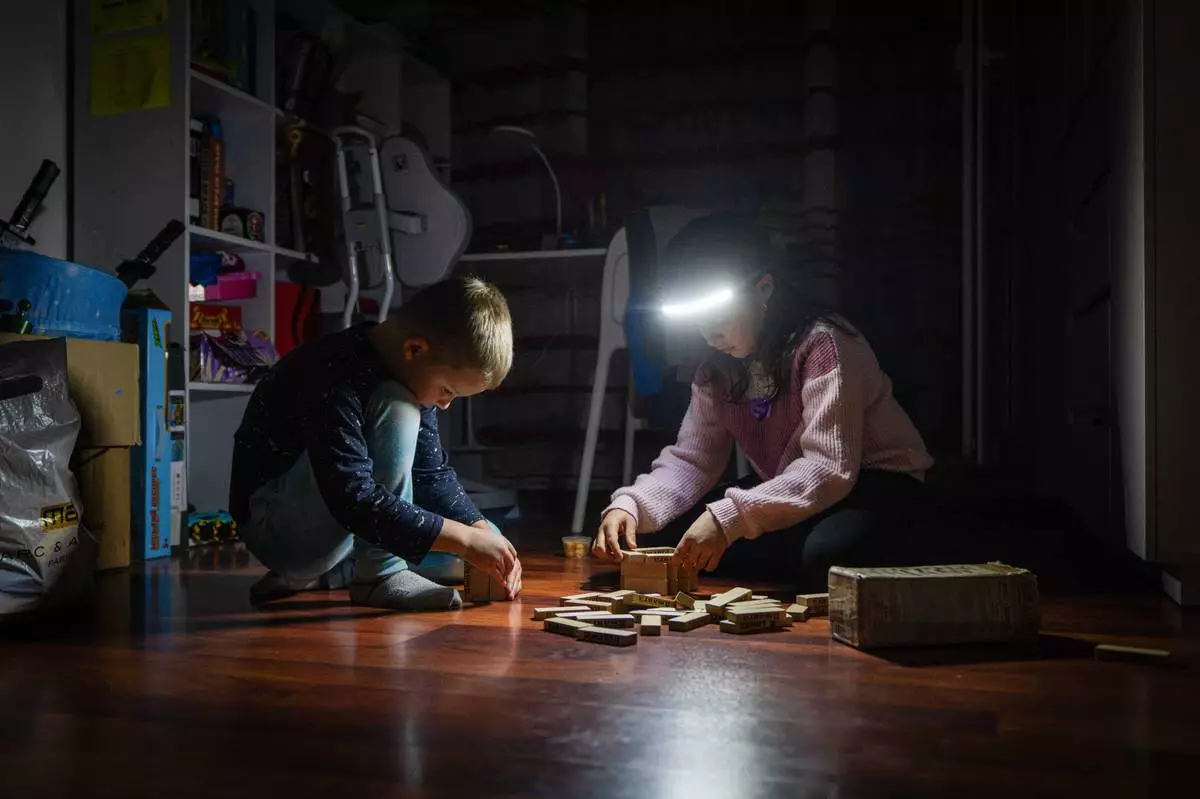
Andrii Tymoshenko, left, and Polina Tymoshenko stack wooden blocks on the floor by the light of Polina's headlamp during a blackout caused by Russian strikes on energy infrastructure in Kyiv, Ukraine, Monday, Nov. 9, 2026. (AP Photo/Dan Bashakov)
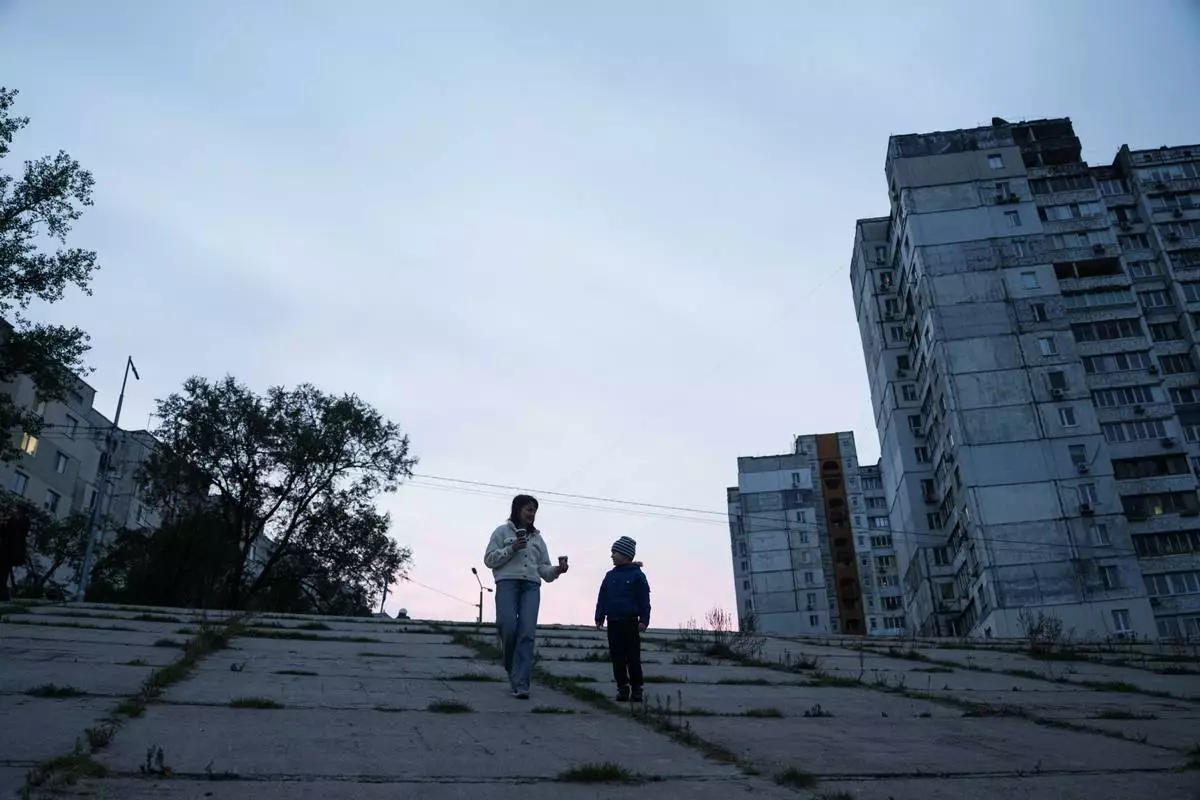
Kateryna Tymoshenko, 39, with her son Andrii walk towards a Dnipro river in Kyiv, Ukraine, Oct. 25, 2026. (AP Photo/Evgeniy Maloletka)
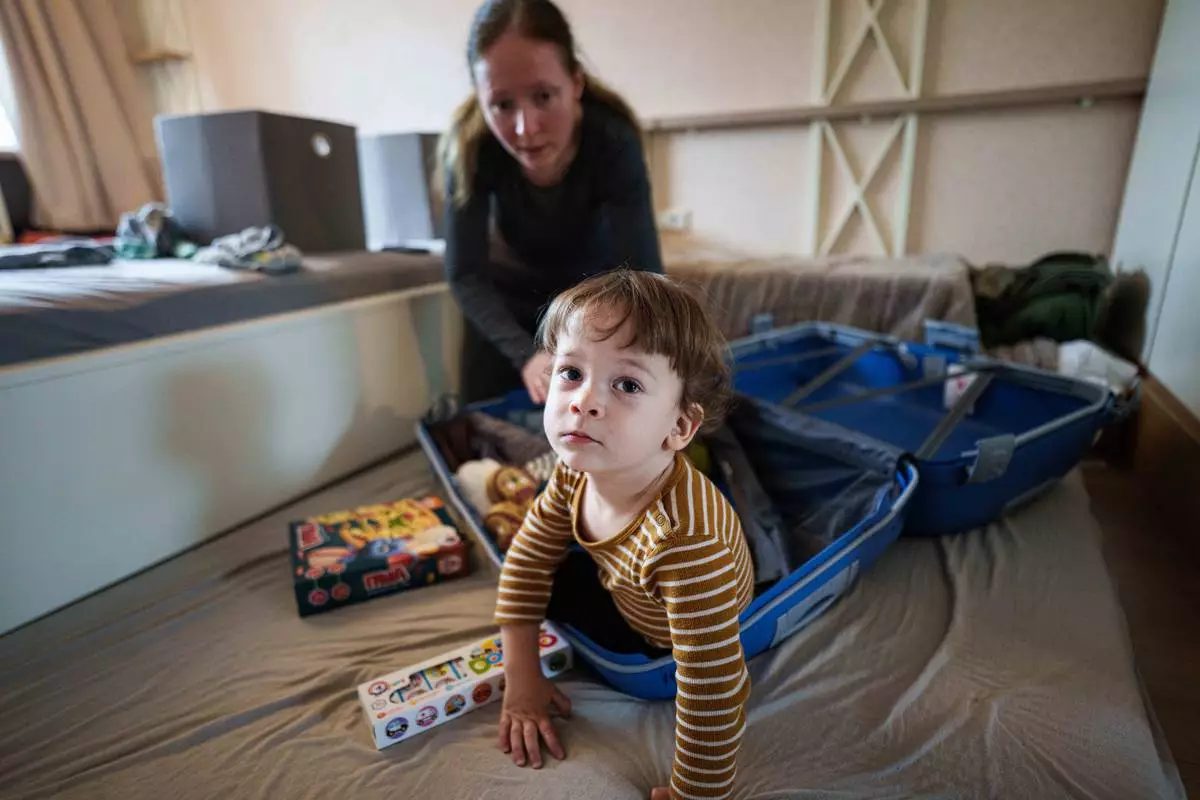
Matvii Yermolenko, 2, sits in an open suitcase as his mother, Kateryna Tsvihun, 41, gathers children's clothes in their apartment in Kyiv, Ukraine, Thursday, Oct. 22, 2026. (AP Photo/Evgeniy Maloletka)