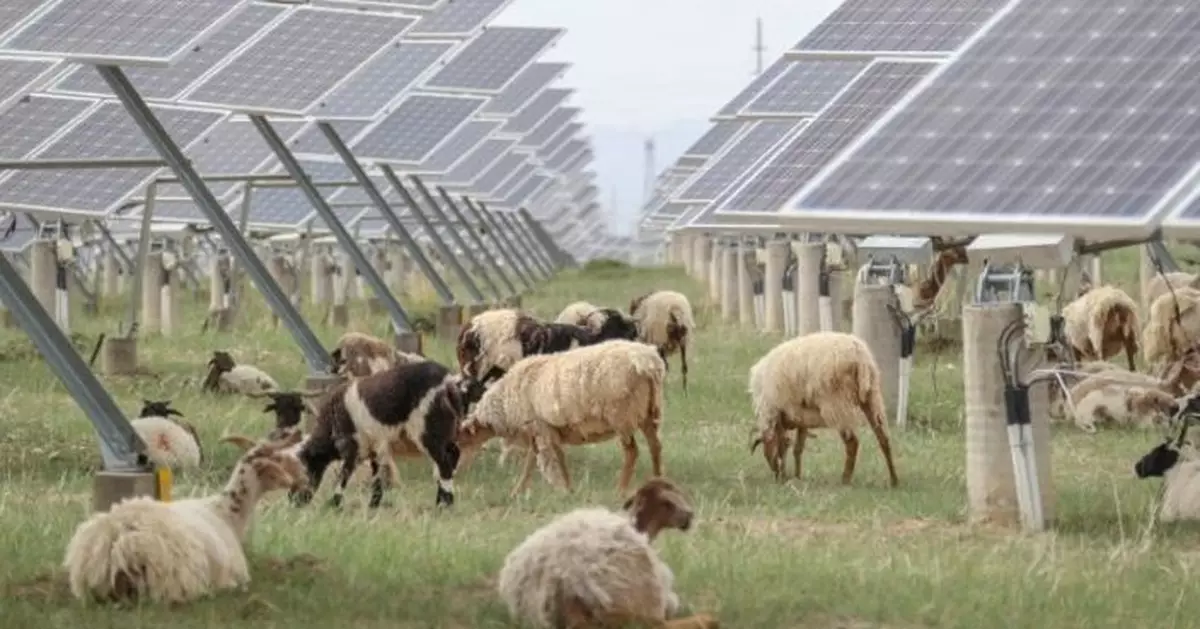
In Talatan, Qinghai Province, 609 square kilometers of Gobi terrain were once described by locals as a place where "wind blows stones across the ground and not a blade of grass grows," suffering from a 98.5% desertification rate. Today, over seven million photovoltaic (PV) panels stretch across the plateau—forming the world's largest solar park by installed capacity.
Yet what captured global social media attention was a flock of sheep: as wild grasses flourished beneath the shade of the solar arrays, local herders moved their flocks into the park to graze. Images of this "solar-grazing" (agrivoltaic) synergy went viral overseas—and were soon reposted by a Chinese Foreign Ministry spokesperson, drawing millions of views worldwide.
Click to Gallery
Sheep grazing peacefully beneath rows of solar panels in Qinghai. (Source: CNR photo)
A panoramic view of Talatan's "solar sheep," showing the sharp boundary between blue solar arrays and restored green grassland. (Source: Hainan Tibetan Autonomous Prefecture Government photo)
A fleet of pure-electric buses operating along Shenzhen's avenues. (Source: Sohu photo)
A row of BYD electric taxis lined up at an urban fast-charging hub. (Source: Didi Chuxing photo)
Three Gorges Group hoists a 123-meter offshore wind turbine blade into place—an industrial spectacle over open waters. (Source: Tencent News photo)
Delegates at the China Pavilion during COP31 commend China's green transition and climate action initiatives. (Source: CGTN video screenshot)
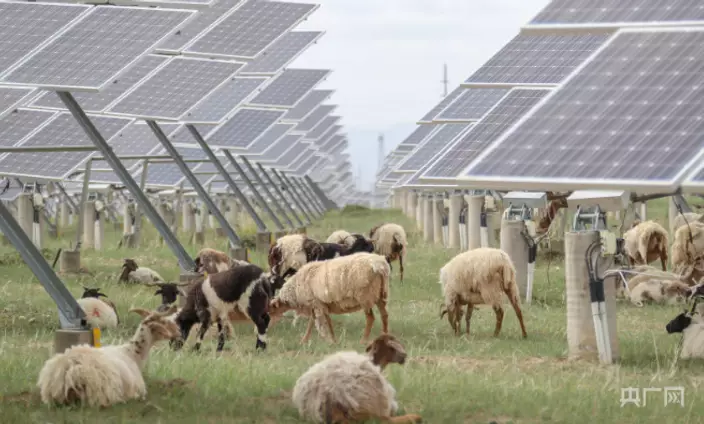
Sheep grazing peacefully beneath rows of solar panels in Qinghai. (Source: CNR photo)
The ecological metrics are equally striking: the massive solar arrays reduced local wind speeds by 50% and cut soil moisture evaporation by 30%, allowing vegetation coverage to rebound to 80% within three years. The barren desert transformed into a thriving pasture—so lush that local sheep reportedly required scheduled grazing limits to avoid overeating. This represents the greenest chapter of the "Chinamaxxing" narrative: international observers are captivated not just by the visual novelty, but by an integrated framework uniting ecological security with economic livelihoods.
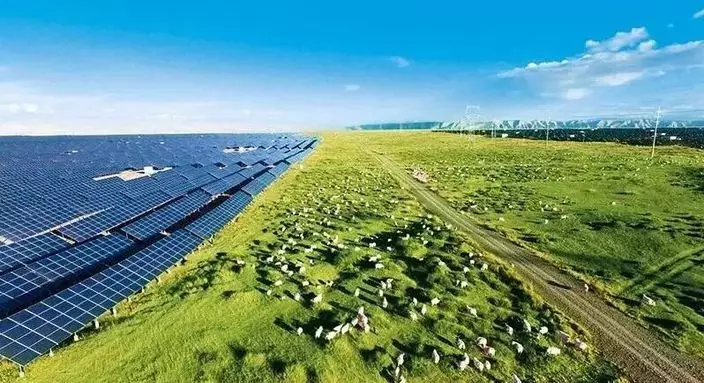
A panoramic view of Talatan's "solar sheep," showing the sharp boundary between blue solar arrays and restored green grassland. (Source: Hainan Tibetan Autonomous Prefecture Government photo)
Green Living Through Foreign Eyes: From City Streets to Offshore Winds
For international visitors, this green shift begins in everyday urban life. Shenzhen—the world's first megacity to achieve 100% electrification of its public bus and taxi fleets—operates roughly 16,000 pure-electric buses, cutting carbon dioxide emissions by 440,000 metric tons annually. The World Bank distributed Shenzhen's transit electrification case study to its 189 member states as a blueprint for developing economies. When foreign travelers step onto Shenzhen's streets, every taxi they hail is electric—demonstrating that low-carbon living is not a showroom exhibit, but the default factory setting of modern Chinese cities.
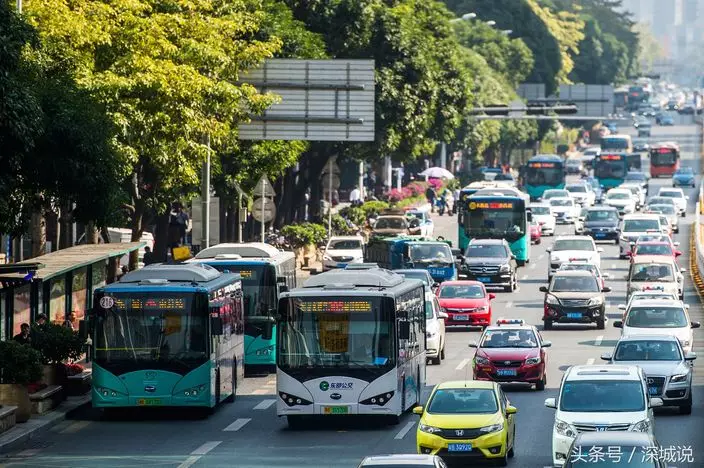
A fleet of pure-electric buses operating along Shenzhen's avenues. (Source: Sohu photo)
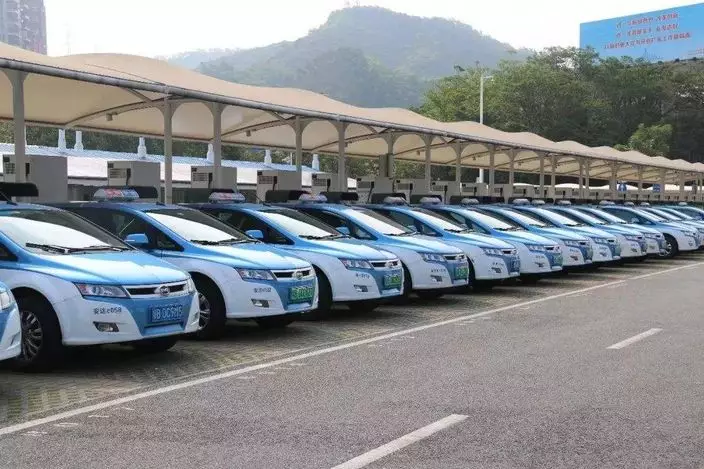
A row of BYD electric taxis lined up at an urban fast-charging hub. (Source: Didi Chuxing photo)
Market adoption data underscores this scale: in 2025, global New Energy Vehicle (NEV) sales reached 23.542 million units, with China accounting for 70.3%. By comparison, annual EV penetration stood at 9.6% in the US and just over 20% in Europe. During the first three quarters of 2026, more than one in every two new passenger vehicles registered on Chinese roads bore a green license plate.
The other half of this energy transformation rises offshore as a "white forest" of wind turbines. Spanning 18,000 kilometers of coastline and over 3 million square kilometers of maritime territory, China is building the world’s largest offshore wind fleet, featuring massive 100-meter-class turbine blades that repeatedly break engineering records—including 102-meter and 123-meter blades hoisted into position high above open waters. By the end of 2025, China's cumulative wind power capacity reached 640 GW (640 million kW). Combined with solar capacity, total wind and solar installations hit 1,840 GW (1.84 TW)—historically surpassing coal-dominated thermal power capacity for the first time.
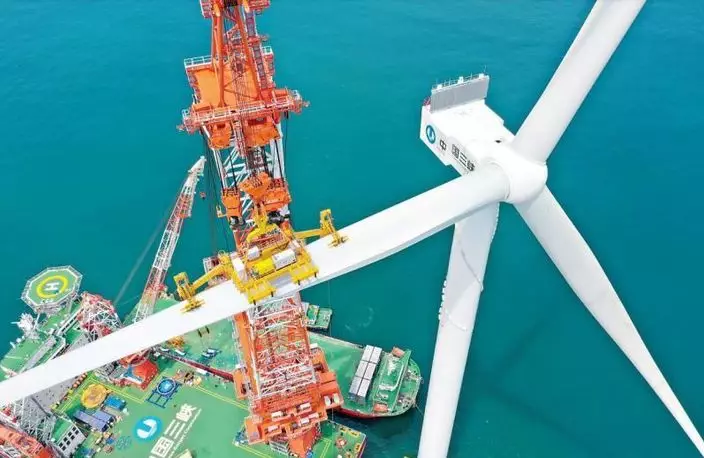
Three Gorges Group hoists a 123-meter offshore wind turbine blade into place—an industrial spectacle over open waters. (Source: Tencent News photo)
Ecological Security: Nearly 4 in Every 10 Kilowatt-Hours Are Green
This transformation rests on newly released national energy figures. According to the National Energy Administration, China added 452 GW (452 million kW) of renewable energy capacity in 2025—a 21% year-on-year increase representing 83% of all new power generation capacity nationwide. By year-end, total renewable capacity reached 2,340 GW (2.34 TW), accounting for roughly 60% of the country's entire power grid.
Even more notable is the structural shift in consumption: nearly four out of every ten kilowatt-hours consumed across Chinese society now come from clean energy, and 100% of the incremental growth in national electricity demand was met by newly added renewable generation. Behind these figures lies a binding national roadmap: raising non-fossil energy's share of total primary energy consumption to roughly 25% by 2030, and exceeding 80% by 2060—treating carbon neutrality not as an abstract pledge, but as an operational schedule.
The Dual Impact of China’s Green Calling Card
The strategic value of this green transition lies in solving two challenges simultaneously. Domestically, it turns carbon constraints into industrial competitiveness: clean-tech sectors—spanning photovoltaics, wind turbines, EVs, and grid storage—accounted for 6.6% of China's total exports in the first half of 2026. Internationally, Chinese clean-energy engineering offers developing nations a pathway to energy autonomy—from the Karawang solar plant powering 112,000 households in Indonesia to the RMB 13.962 billion ($1.92 billion) integrated solar-plus-storage megaproject in Abu Dhabi, UAE.
This commitment drew international recognition at the UN Climate Change Conference (COP31), which opened on November 9 in Antalya, Türkiye, gathering delegates from nearly 200 countries and regions under the theme "From Goals to Delivery." On opening day, Stelios Pesmajoglou, Director of the Mitigation Division at the UN Framework Convention on Climate Change (UNFCCC), addressed the Guangdong session at the China Pavilion. He praised green innovation in the Guangdong-Hong Kong-Macao Greater Bay Area (GBA) as a "forward-looking and truly inspiring commitment," commending Guangdong's steady progress in carbon market infrastructure, carbon footprint tracking, and climate finance, while encouraging the region to contribute further "Bay Area solutions" to the global green transition. Former Turkish Foreign Minister Mevlüt Çavuşoğlu echoed this sentiment: "China not only contributes to the international community; domestically, every measure it takes in green energy and related fields represents a monumental contribution to addressing global climate change."

Delegates at the China Pavilion during COP31 commend China's green transition and climate action initiatives. (Source: CGTN video screenshot)
Ecological security clears China's skies, while clean electricity fortifies its industrial supply chains. When viral clips of "solar sheep" win admiration abroad and electric taxis in Shenzhen form the quiet everyday backdrop for visiting travelers, China’s green calling card achieves its most effective outreach: relying not on slogans, but on grass thriving beneath solar panels and quiet, low-emission cities—allowing the world to draw its own conclusions.
Chinamaxxing
** 博客文章文責自負,不代表本公司立場 **
BENGALURU, India (AP) — With the United Nations climate talks underway, India has set an ambitious goal of installing enough clean power to supply more than 1 billion homes by 2035, and has approved nearly $20 billion in power grid upgrades to ease bottlenecks that prevent some solar and wind energy from reaching consumers.
The world's most populous country and one of the biggest carbon polluters is also among the fastest to expand clean power. Accelerating the shift away from fossil fuels is a key goal of this year’s climate talks, known as COP31, in Turkey.
India announced the 900-gigawatt goal in late September. It covers nonfossil power sources, including solar, wind, hydropower and nuclear energy. It is nearly twice India’s existing target of 500 gigawatts of clean power by 2030. India's current clean power capacity of just over 300 gigawatts ranks it third behind China and the United States.
Experts say meeting the target could lower electricity costs, curb coal construction and accelerate the transition to clean energy.
The push comes as India struggles to use all the renewable electricity it can generate because of inadequate transmission infrastructure. The new goal refers to installed generating capacity, rather than the amount of electricity actually produced.
“If the grid doesn’t catch up, then there is no way India can meet this target,” Nikit Abhyankar from the India Energy and Climate Center at the University of California, Berkeley, said. “A robust and innovative transmission grid is an absolute must.”
The government also approved nearly $20 billion in funding for transmission infrastructure and battery storage under its Green Energy Corridor plan.
Economist Ajay Shah of the Mumbai-based XKDR Forum described the transition as the emergence of an Indian “electrostate,” in which electricity increasingly replaces coal and petroleum products.
“So now in India you have two assets — not only do you have cheap labor, you also have cheap energy,” Shah said.
The shift mirrors a global trend toward cleaner power, even as fossil fuel energy remains a key energy source amid rising electricity demand. Brazil, which ranks close behind India in clean energy capacity, projects renewables will supply nearly 90% of its electricity in the next decade, even as it expands oil and gas production. In the United States, where President Donald Trump supports fossil fuels, electricity demand is expected to grow by 40%, with natural gas remaining a major source.
India’s clean energy expansion could help industries replace costly imported fossil fuels with domestically produced electricity. Abhyankar said solar and wind power, even when combined with battery storage, are increasingly cost-competitive with power from coal, oil and natural gas.
Lower generation costs could eventually translate into cheaper electricity for households, though utilities also factor in transmission costs and other expenses.
However, India’s continued dependence on coal presents a major challenge to its clean energy transition. Coal generated about 71% of the country’s electricity in 2025, according to energy think tank Ember.
India’s power planners remain concerned about meeting growing demand and maintaining reliable electricity when solar and wind output fluctuates. Ghanshyam Prasad, chair of the Central Electricity Authority, said earlier this month that India could need as much as 150 gigawatts of additional coal-fired generating capacity by 2035.
Ember energy analyst Neshwin Rodrigues said coal will remain important for years, particularly until large-scale batteries can store solar energy to reliably meet demand when the sun isn't shining.
Existing coal plants also pose operational challenges. Many cannot quickly reduce output when renewable electricity becomes available, making it difficult for the grid to accommodate growing solar and wind power.
Researchers at Berkeley estimate that beyond approximately 35 gigawatts of coal capacity already under construction, additional coal plants would not be economically necessary under the country's new clean energy goals. Berkeley's Abhyankar warned that newly built coal plants could become stranded assets if the government meets its renewable energy targets.
Meeting the 2035 target requires more than building more renewable power plants. Their electricity must be able to reach consumers.
India’s rapid clean energy expansion is already testing the grid's limits. Although clean power accounted for 55% of installed power capacity by September, it generated about a third of the country’s electricity in the preceding three months, according to government data.
Over the past 16 months, India curtailed enough solar generation to power about 10 million homes because the grid could not accommodate it, according to government data and Ember.
The Green Energy Corridor plan aims to help states accommodate up to 135 gigawatts of renewable energy by 2033 by adding thousands of kilometers (miles) of transmission lines. The plan also includes additional battery storage.
But analysts question whether that's enough. The Berkeley researchers estimate that India needs as much as 250 gigawatts of energy storage to integrate renewable electricity over the next decade.
“You either have more transmission to get the power out and transfer it. Or if you cannot get the power out, you store it and then transfer it during some other hours,” Ember's Rodrigues said.
Shah, the economist, said two types of government policy could discourage investment in renewable energy: requirements that businesses pay higher rates to subsidize other consumers, and restrictions on electricity producers selling directly to private buyers.
He said India needs to allow electricity prices to rise and fall based on supply and demand, and make it easier for foreign investors to fund power projects. Domestic financing alone would not be enough to meet the country’s growing energy needs, he said.
“Currently, the government is a man in the middle, trying to interfere in a transaction between a private generator and a private buyer,” which creates a “choke point,” Shah said.
Battery supply chains pose another challenge, particularly India’s dependence on imported battery cells, mainly from China. Abhyankar said expanding domestic battery manufacturing could help India capture more economic benefits from the transition.
Despite those challenges, Abhyankar said India has already overtaken the United States in annual renewable energy growth, and its experience in expanding clean energy could be a model for other developing countries.
“What India is doing can be replicated in many countries in the Global South and can help these countries make the energy transition in an economically affordable manner," he said.
Sibi Arasu can be followed on X at @sibi123. Reach him at sarasu@ap.org.
The Associated Press’ climate and environmental coverage receives financial support from multiple private foundations. AP is solely responsible for all content. Find AP’s standards for working with philanthropies, a list of supporters and funded coverage areas at AP.org.
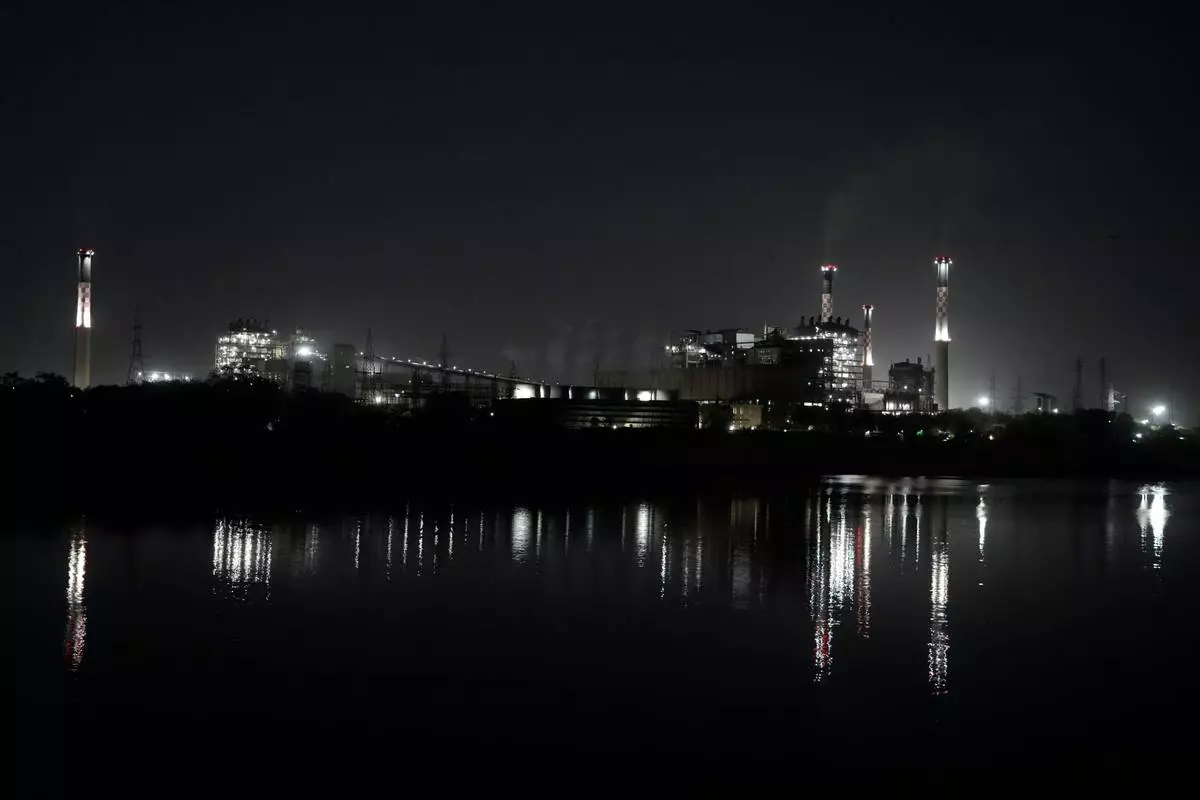
FILE - Lights are reflected in the Sabarmati River from the coal-based AMGEN power plant of Torrent Power in Ahmedabad, India, March 27, 2023. (AP Photo/Ajit Solanki, File)
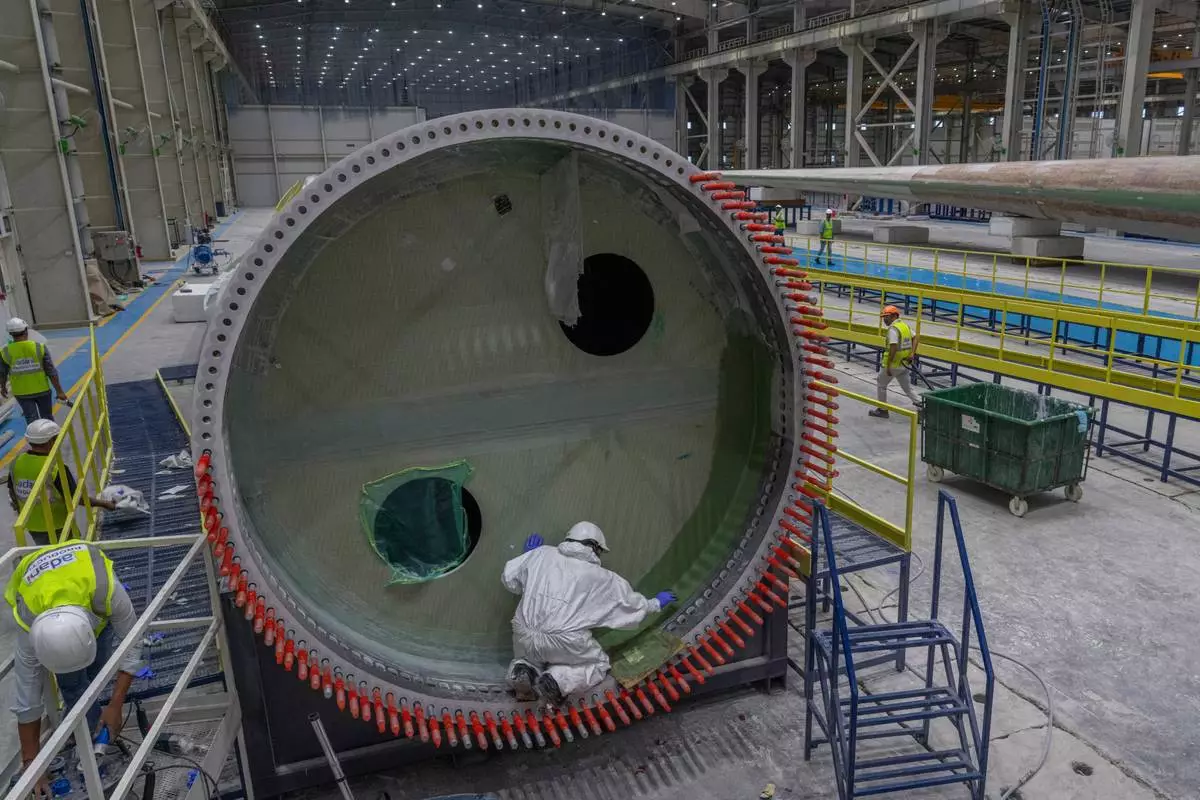
FILE - Employees work on a wind turbine blade at the Adani New Industries Limited in the port town of Mundra in Western India's Gujarat state, India, Sept. 20, 2023. (AP Photo/Rafiq Maqbool, File)
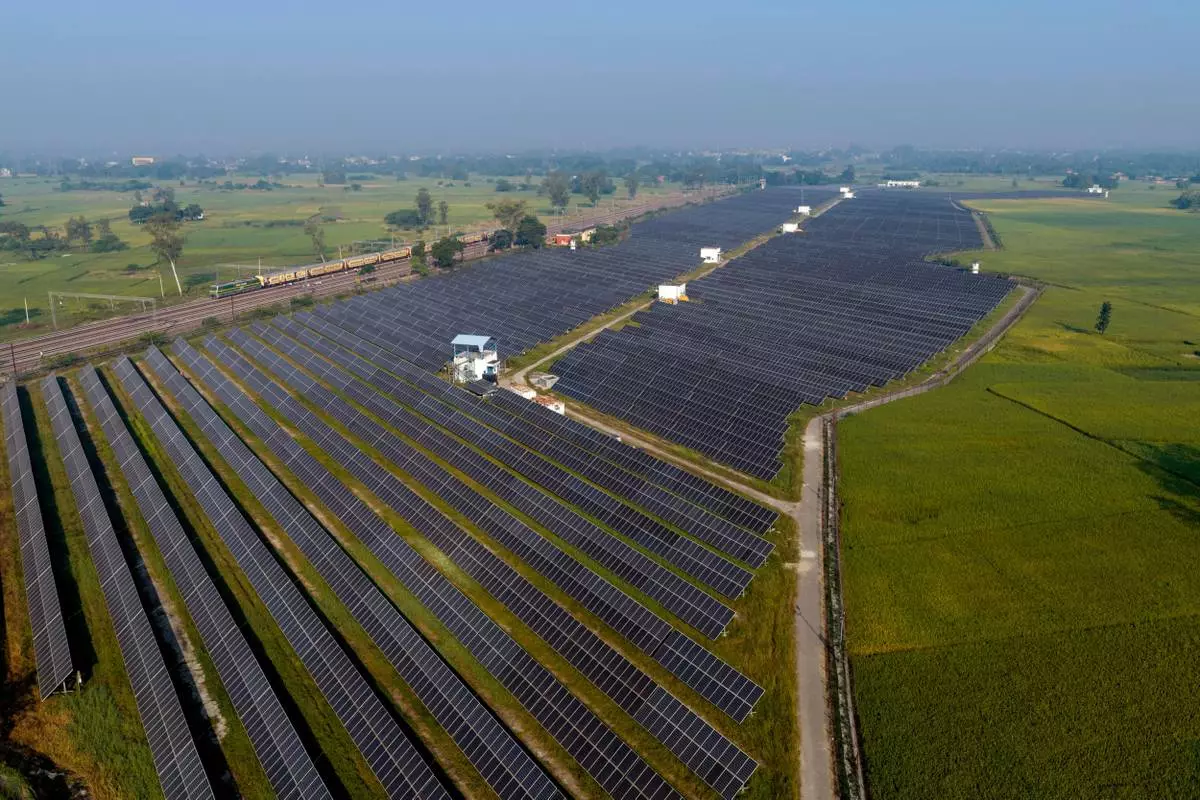
FILE - Solar panels cover the land at the Unchahar solar power plant, Raebareli district, India, Oct. 15, 2026. (AP Photo/Rajesh Kumar Singh, File)

FILE - Workers travel in a vehicle past transmission towers toward the construction site of Adani Green Energy Limited's Renewable Energy Park in the salt desert of Karim Shahi village, near Khavda, Bhuj district near the India-Pakistan border in the western state of Gujarat, India, Sept. 21, 2023. (AP Photo/Rafiq Maqbool, File)
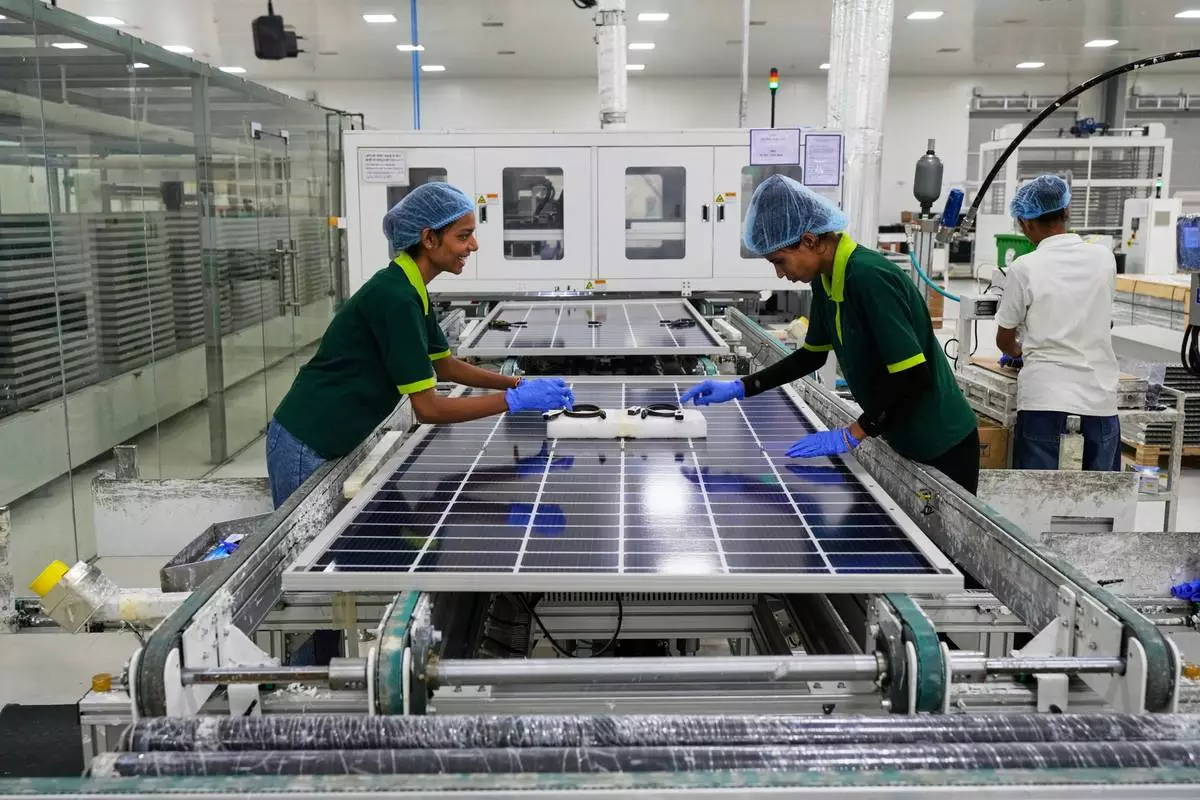
FILE - Workers put switches and connectors after they come out of automated framing at a ReNew solar panel manufacturing plant on the outskirts of Jaipur, India, Aug. 21, 2025. (AP Photo/Manish Swarup, File)