The 2026 UK-China Clean Energy Cooperation Forum was held on Tuesday in Manchester, Britain, bringing together around 150 government officials, business representatives from the green development sector and experts from both countries.
Many participants said there is huge potential for in-depth cooperation between China and Britain in energy security and transition, electricity market reform and energy storage.
Chinese Consul General in Manchester Tang Rui said soaring energy prices driven by geopolitical uncertainty have put enormous pressure on ordinary households.
"Internationally, the uncertainty brought by geopolitical dynamics has driven energy prices very high in Britain, putting huge pressure on ordinary people in their daily life. Looking at China's development, our new energy sector is growing very fast. At present, China-Britain cooperation in clean energy is truly timely," Tang said.
David Houliston, an official from Manchester City Council, said the cost of living crisis remains a real political priority for the British government. "The cost of living crisis has been going on for some years now, and it's a priority for national government. It's also, for Manchester City Council, who I work for, a real political priority. The scale of the change over the last few years in terms of Chinese brands coming into the market is already playing a role, but also products — solar, obviously, energy storage in terms of batteries and that kind of innovation, as well as lots of the industrial collaboration," he said.
Rebecca Hiscott, a policy analyst, said China's massive investment in clean energy manufacturing opens up broad opportunities for cooperation.
"China has invested so much in clean energy manufacturing, and I think that definitely presents a lot of opportunities for collaboration, as there is potential for a lot of collaboration, especially between manufacturers, policymakers and also recyclers, to collaborate to build sustainable products, to make the global supply chain stronger, to make it more resilient, and just to reduce the impact on the environment," she said.
Experts at the forum noted that China's substantial investment in the clean energy industry provides opportunities for the bilateral cooperation in the sector, and that collaboration between the two countries will have a positive impact on both the stability of global supply chains and environmental protection.
Launched as the UK-China Hydrogen Energy Cooperation Forum, the event was renamed the UK-China Clean Energy Cooperation Forum in 2024 and has been held annually since then.
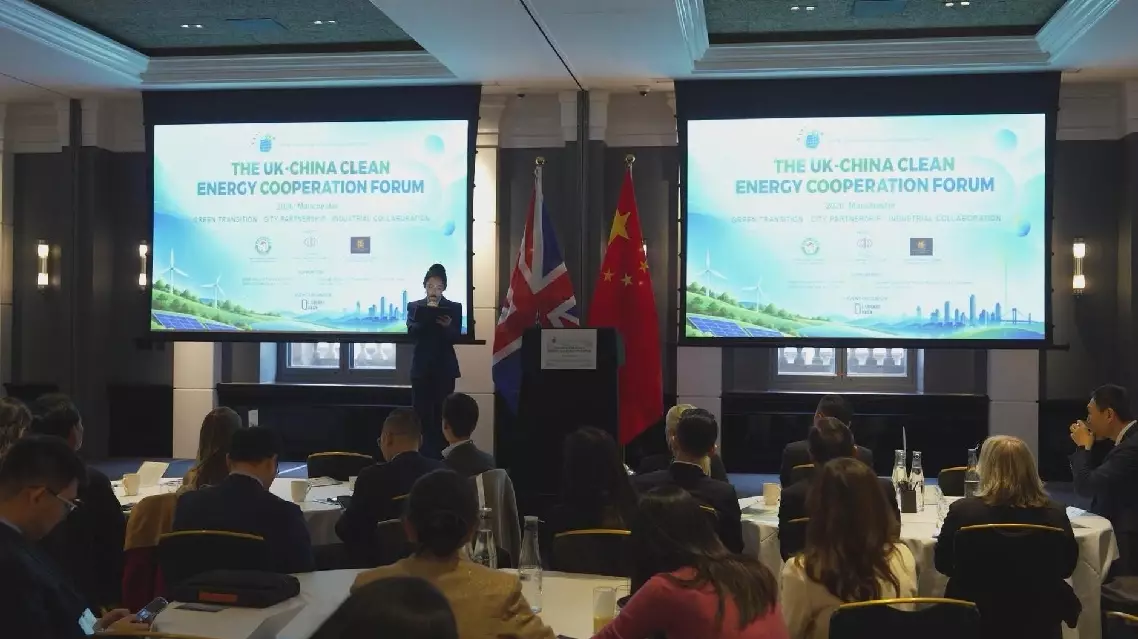
UK-China Clean Energy Cooperation Forum held in Manchester
The ninth Paris Peace Forum took place in the French capital from Tuesday to Wednesday, calling for reinforced multilateral cooperation to confront global challenges across security, climate, technology and development.
Held under the theme "From sovereignty to cooperation," the two-day forum gathered more than 350 global speakers across more than 80 discussion sessions. The agenda spanned four primary tracks: peace and geopolitics, the planet, development, and emerging technologies. Alongside the main event, organizers held a "Child Summit" focused on children's welfare amid global shifts.
Organizers said this year's forum was held in a backdrop of strain on multilateral institutions and international law, arguing that nations must strengthen mutual cooperation while preserving sovereignty to effectively address worldwide crises.
In a video speech delivered at the opening session, UN Secretary-General Antonio Guterres described sovereignty as a core principle of the UN Charter, while noting that cooperation remains essential for nations to safeguard their own sovereignty. Guterres called on the international community to build a networked, multipolar world grounded in international law.
Addressing the tension between safeguarding sovereignty and pursuing multilateralism, Cui Hongjian, a professor at the Academy of Regional and Global Governance at Beijing Foreign Studies University, warned against rising unilateralism.
"Currently, some countries are pursuing many unilateralist, or even hegemonic policies. As a result, for many nations, the issue of how to enhance their own capabilities -- especially the capability to safeguard and defend their sovereignty -- has become rather urgent. On the other hand, however, the enhancement and strengthening of sovereignty should not contradict international cooperation," Cui said.
This year's forum also placed particular emphasis on cooperation regarding critical mineral resources. Experts noted that as long-standing major suppliers of mineral resources, countries of the Global South still need stronger voice and protection of their interests in international resource cooperation, calling for more open and inclusive mechanisms to help them better participate in global industrial and supply chains.
"As a representative country of the Global South, China has actually made substantial policy, financial, and industrial investments over the years, both in strengthening trade and industrial cooperation with other Global South countries and in promoting green and digital transformation," Cui said.
Launched in 2018, the Paris Peace Forum serves as an international platform for states, international organizations, and non-governmental actors to advance global governance solutions.
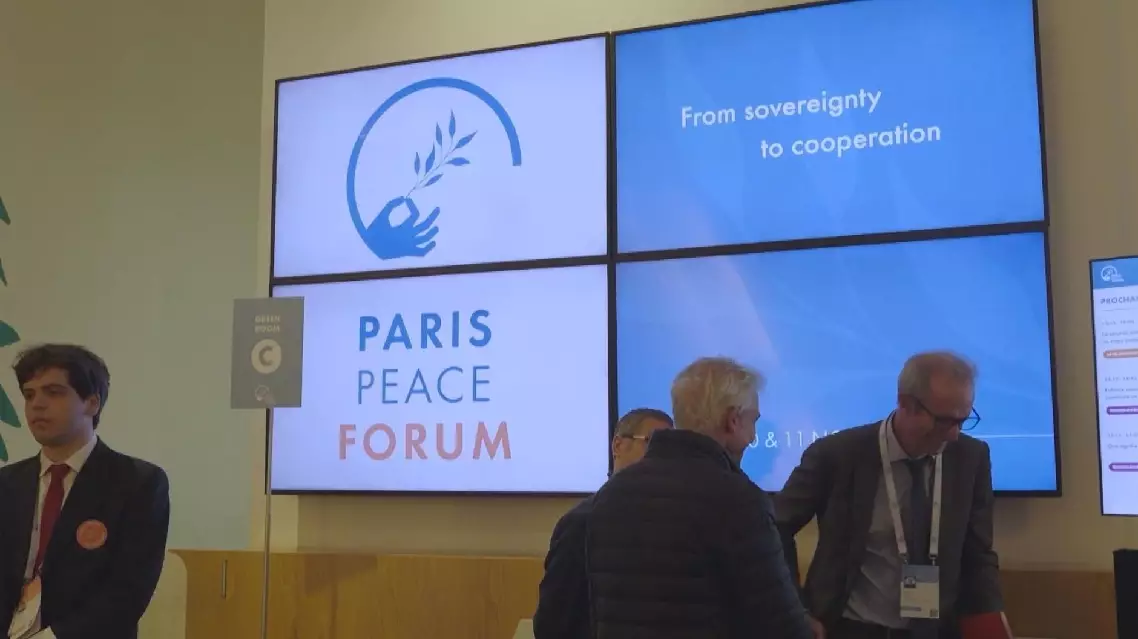
9th Paris Peace Forum urges global cooperation amid rising pressures on multilateralism