IRVINE, Calif.--(BUSINESS WIRE)--Nov 12, 2026--
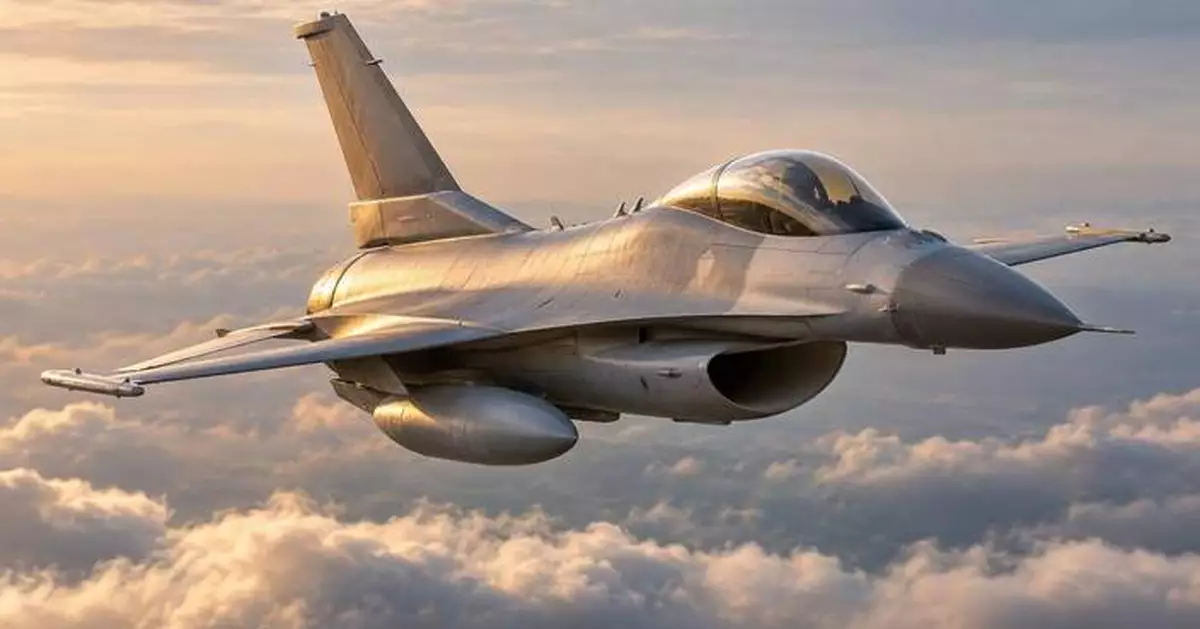
Mobix Labs, Inc. (Nasdaq: MOBX), a U.S.-based provider of mission-critical aerospace and defense electronics, today highlighted its expanding role on U.S. fighter aircraft. Mobix Labs components now support four frontline platforms: the F-16 Fighting Falcon, F-22 Raptor, F-35 Lightning II and F/A-18 Super Hornet.
This press release features multimedia. View the full release here: https://www.businesswire.com/news/home/20261112160597/en/
The F-16 is the newest addition. In September, the Company secured its initial production order for EMI-filtered connectors supporting the aircraft. That order followed an approximately five-fold increase in component orders supporting the F-22 Raptor.
In November, Mobix Labs won new six-figure production orders from a tier-one global aerospace and defense supplier for engine-system components used across multiple U.S. fighter jet platforms and wide-body commercial aircraft. The custom connectors protect engine control and monitoring electronics from electromagnetic interference.
“Earning a place on one fighter program is hard. Supporting four says a great deal about the trust our customers place in our team and our technology,” said Phil Sansone, Chief Executive Officer of Mobix Labs.
About Mobix Labs, Inc.
Mobix Labs, Inc. (Nasdaq: MOBX) is a U.S.-based provider of advanced electronic components and connectivity solutions for aerospace, defense, communications and other mission-critical applications. For more information, visit www.mobixlabs.com.
Forward-Looking Statements
This press release contains forward-looking statements, including statements regarding potential follow-on orders, future demand for Mobix Labs’ products and the Company’s role on U.S. fighter aircraft programs. Forward-looking statements are subject to risks and uncertainties that could cause actual results to differ materially, including changes in customer demand, production schedules, defense spending and other risks described in Mobix Labs’ filings with the U.S. Securities and Exchange Commission. Mobix Labs undertakes no obligation to update forward-looking statements except as required by law.
Follow us on X: @MobixLabs_MOBX
Follow us on StockTwits: MobixLabs
Follow us on LinkedIn: Mobix Labs
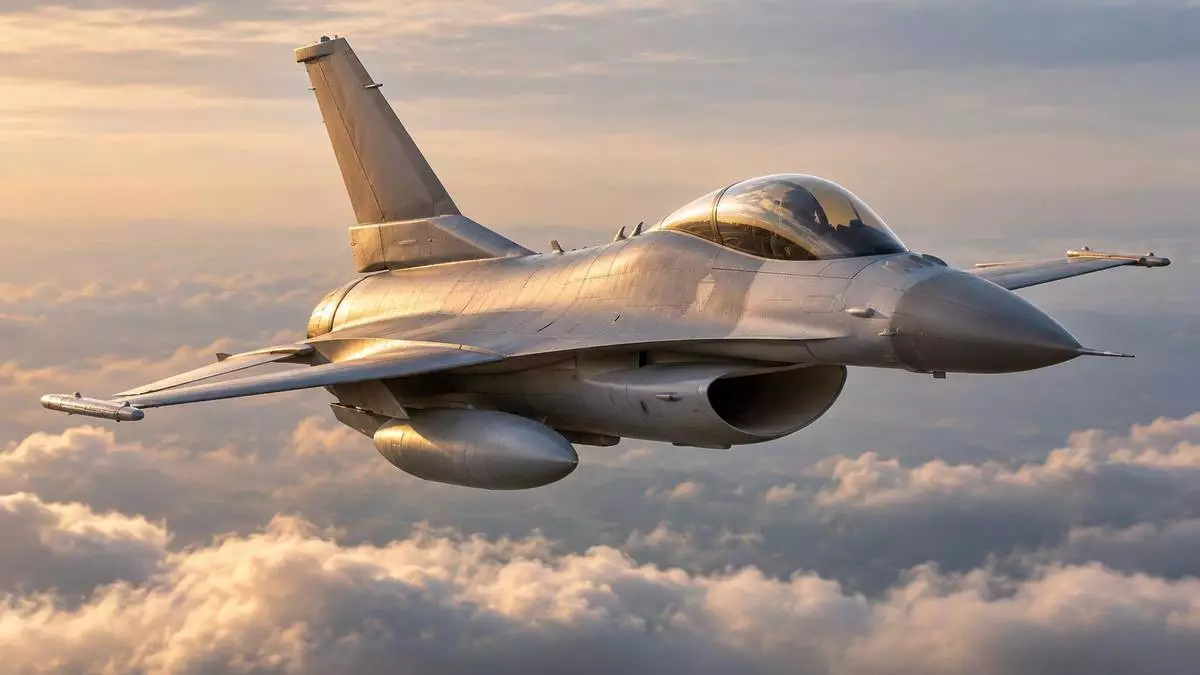
Mobix Labs Secures Six-Figure F-Series Fighter and Wide-Body Aircraft Order!
NEW YORK (AP) — A drop for Nvidia’s stock is pulling the U.S. market lower Thursday, threatening to upend the boom in artificial intelligence technology that carried Wall Street to record after record in recent years.
The S&P 500 fell 0.6% in its latest yo-yo move. The weakness for AI stocks dragged the Nasdaq composite down 0.9%, but the rest of the market was holding up better. The Dow Jones Industrial Average was down a modest 15 points, or less than 0.1%, as of 9:35 a.m. Eastern time.
Nvidia’s stock dropped 9.7% following the resignation of Jensen Huang, its CEO, co-founder and face of the brand. The chip company’s stock has been sinking since its board announced an investigation into Huang for a relationship with a woman suspected of being a Chinese government agent.
It’s a stunning fall for Nvidia, which had become Wall Street’s most valuable and influential stock because of its central role in the artificial intelligence boom. Its stock price set a record high last month after soaring an astounding 1,722% in four years. That compares with the already healthy gain of nearly 109% for the overall S&P 500 over the same time.
But Nvidia’s price dropped 27% from then through Wednesday on worries about whether Huang would remain and how Nvidia would navigate a future without him. Nvidia’s board answered the first question Thursday morning, when it said Huang resigned, and it named Chief Financial Officer Colette Kress as its interim CEO.
The second question remains to be determined. And it looms over the entire market because Nvidia and the broader AI industry have been the main reasons the U.S. stock market has set so many records in recent years.
Wall Street’s immediate reaction on Thursday was to punish stocks across the AI industry, though some of Nvidia’s rivals held up better in hopes of a competitive advantage.
CoreWeave, which buys Nvidia chips and then rents out access to them to customers over the cloud, fell 10.9%. Micron Technology, which sells memory for computers that’s been getting gobbled up in the AI frenzy, sank 3.1%. GE Vernova, which is helping to power AI data centers, slipped 0.8%.
But Broadcom rose 5.2%, and Advanced Micro Devices added 2%. They were two of the strongest forces limiting the S&P 500's losses.
Stocks also felt some pressure after President Donald Trump said he’s no longer interested in a deal with Iran to end their war, which briefly sent oil prices, worries about inflation and Treasury yields jumping. Instead of that, Trump said he asked his vice president to focus on investigating U.S. cities and states run by Democrats.
“We don’t need a deal with Iran,” Trump said on his social-media platform. “Those days have long since passed. We’ve got their money, Hundreds of Billions of Dollars, and we’ve got their Strait!”
The price for a barrel of Brent crude oil suddenly went from about $92 to more than $94 following Trump’s posting, before it later eased back. It was most recently at $93.34, up 0.6%.
It’s been swinging sharply since the United States and Israel began the war with Iran in late February, bouncing between roughly $70 and $150.
In the bond market, the yield on the 10-year Treasury climbed to 5.03% from 4.98% late Tuesday. Trading in the bond market had been closed Wednesday for Veterans Day.
In stock markets abroad, indexes rose modestly in Europe following a weaker finish in Asia.
Hong Kong’s Hang Seng fell 1.3% for one of the world’s biggest moves.
AP Business Writer Yuri Kageyama contributed to this report.
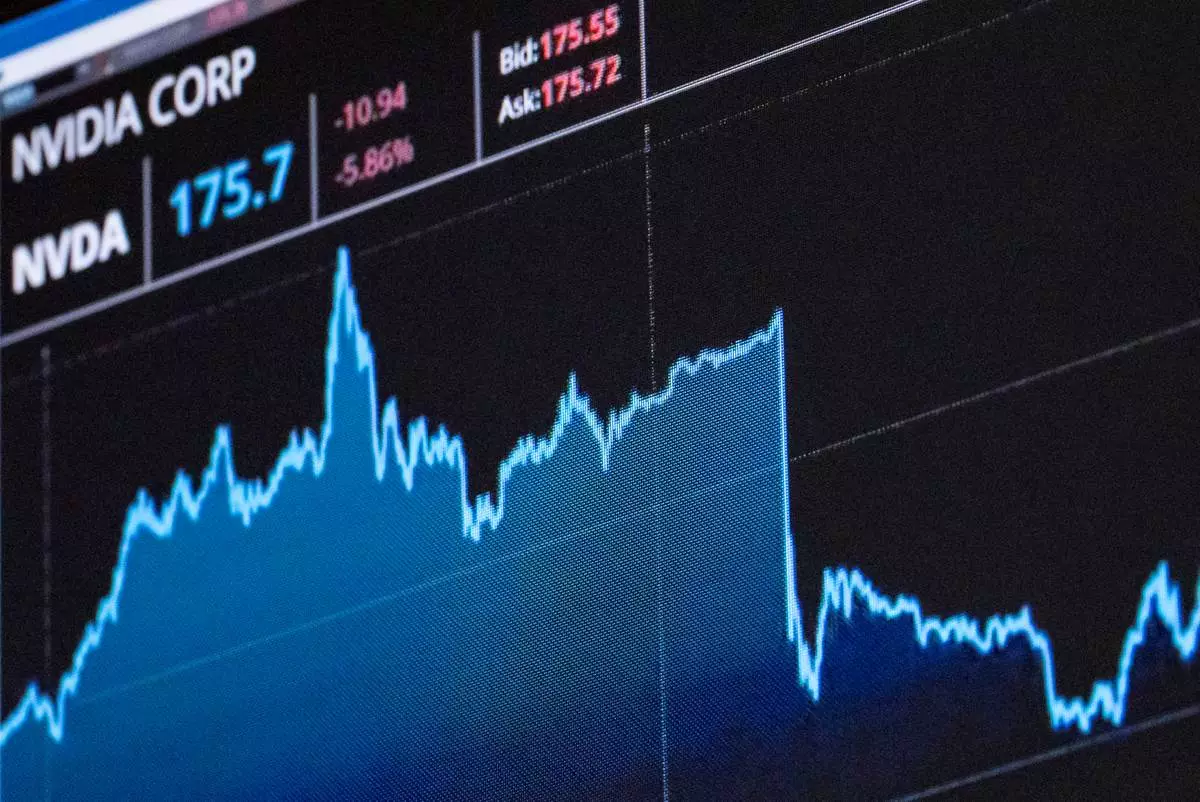
A screen on the floor of the New York Stock Exchange displays news about Nvidia's stock price in New York, Monday, Nov. 9, 2026. (AP Photo/Yuki Iwamura)
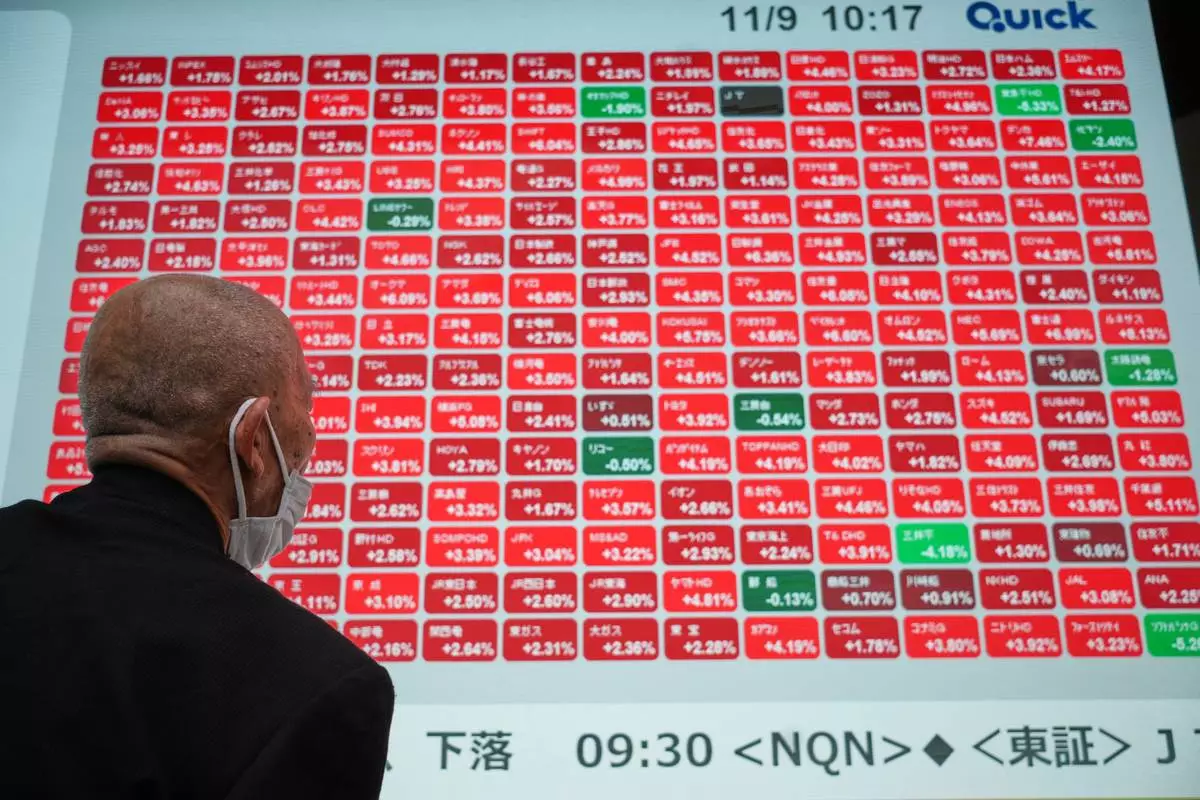
A person looks at an electronic display board showing Japan's Nikkei index at a securities firm, Monday, Nov. 9, 2026, in Tokyo. (AP Photo/Eugene Hoshiko)
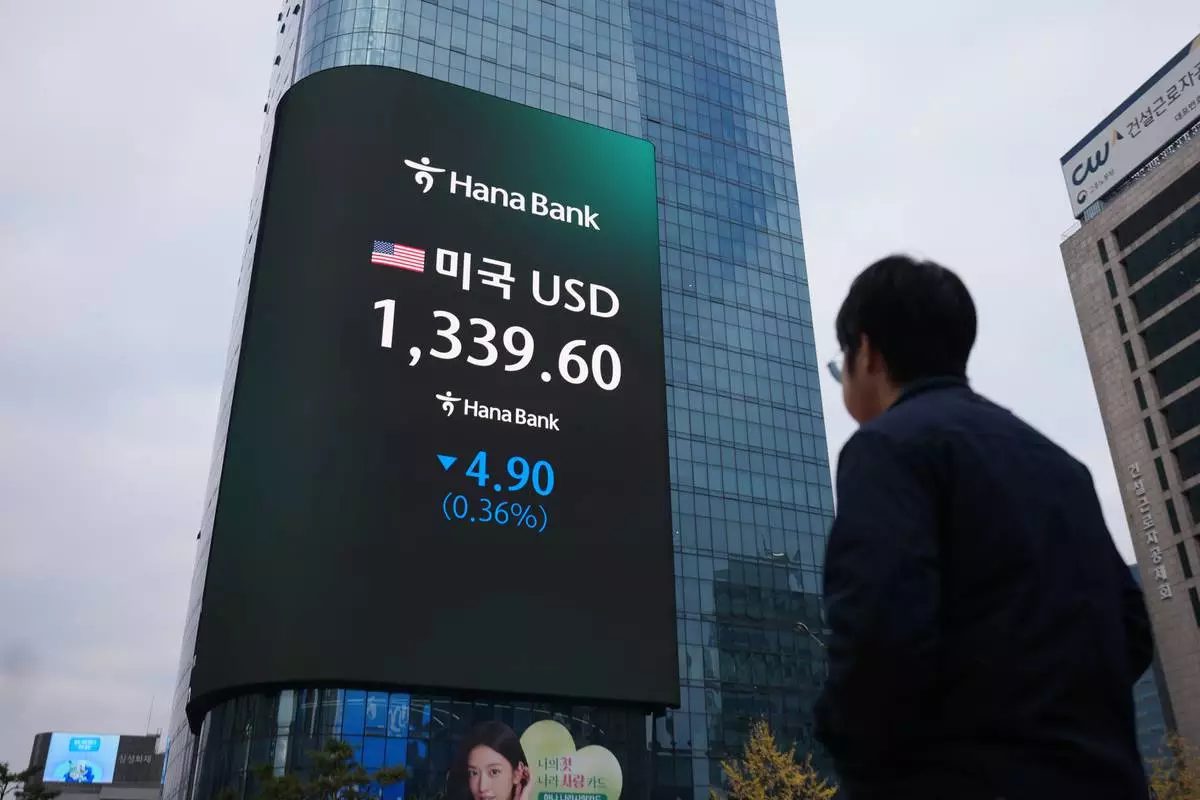
A person walks below a huge screen, displaying the foreign exchange rate between U.S. dollar and South Korean won in Seoul, South Korea, Wednesday, Nov. 11, 2026. (AP Photo/Lee Jin-man)
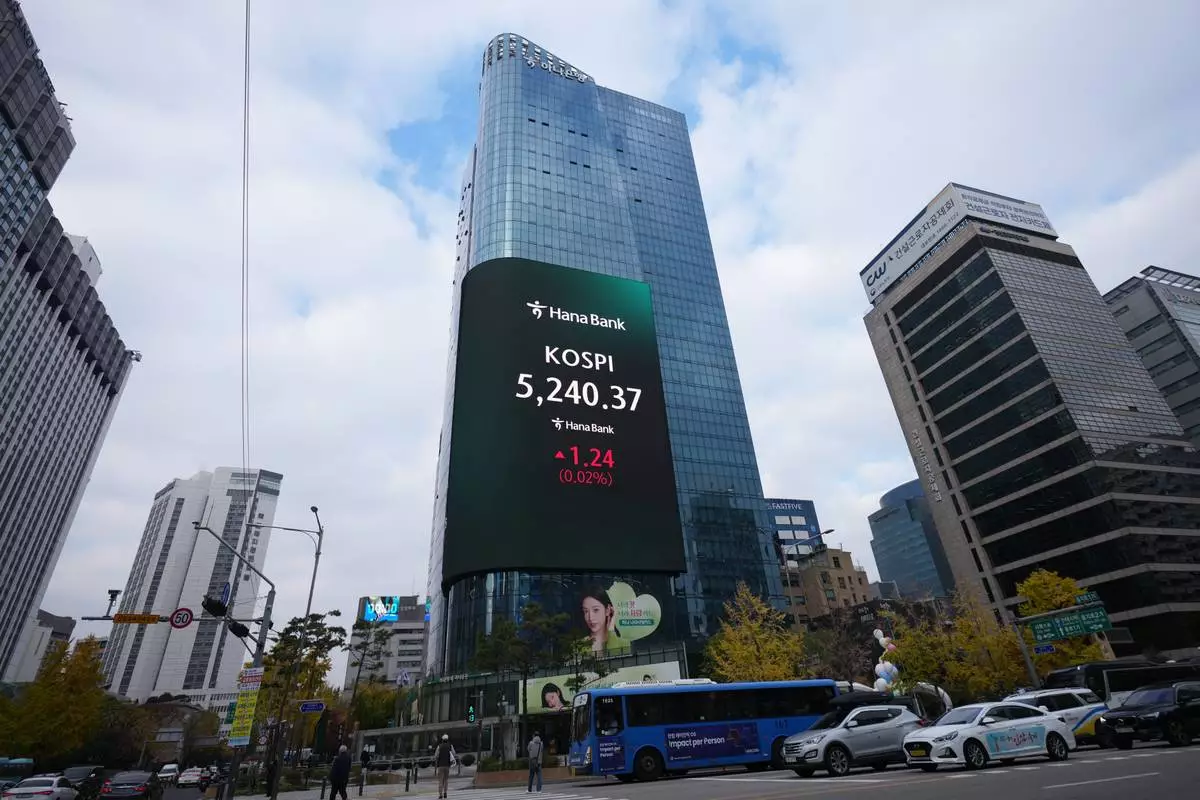
The screen showing the Korea Composite Stock Price Index (KOSPI) is seen in Seoul, South Korea, Wednesday, Nov. 11, 2026. (AP Photo/Lee Jin-man)