TOPEKA, Kan. (AP) — Democrat Cindy Holscher has been elected Kansas' next governor, fending off Republican Ty Masterson to keep the office in her party's hands and extend a massive wave of Democratic victories across the country.
Democrats had already secured a majority of governorships in the U.S. for the first time in two decades, even prior to the narrow win in Kansas, where Holscher had already declared victory following Tuesday's midterm elections. The Associated Press did not call the race until Thursday.
Holscher, a state senator, promised to halt new data centers and overcame a flood of money that Republicans poured behind Masterson, the president of the GOP-controlled state Senate. She will succeed outgoing Gov. Laura Kelly, a Democrat who was term-limited.
“Kansans have sent a clear message that they want to keep our state moving forward,” Holscher said in a video posted online Tuesday, two days before the race was called. "The work of preparing to lead has already begun."
Masterson remains the Kansas Senate’s top Republican leader. He promised that the Legislature, with the GOP in control of both chambers, would work to cut property taxes — Masterson's biggest campaign promise — and focus on safer communities and better schools.
“The things we fought for are no less important today than they were yesterday,” Masterson said in a statement. “This was a hard election for people who share our vision, here and across the country. But I believe in this state and in the people who live here, and that hasn't changed.”
The political tailwinds helping Holscher win the closest governor's race since 1974 also pushed U.S. Sen.-elect Adam Hamilton, pastor of the nation's largest United Methodist church, to Democrats' first victory in a Senate race in Kansas since 1932.
In another big victory for Kansas Democrats, Chris Mann ousted state Attorney General Kris Kobach, a champion of strict voter ID laws who served as vice chair of President Donald Trump’s commission on election fraud in 2017.
With Hamilton's victory in the Senate race and the election of state Rep. K.C. Ohaebosim, of Wichita, as lieutenant governor on Holscher's ticket — the first Black statewide elected official since 1887 — Democrats won four statewide contests in Kansas for the first time since 1958.
Masterson had reasons for optimism after emerging from a contentious primary in August with Trump's endorsement. For 60 years, when a Kansas governor has retired or been term-limited, the other party's nominee has won the next election. In fact, Kansas had never previously elected back-to-back Democratic governors.
The Republican Governors Association poured $19 million into television and digital advertising, according to the ad-tracking firm AdImpact, and attacked Holscher as an extreme liberal. The two candidates' fall fundraising was comparable, but Republicans outspent Democrats more than 3-to-1 overall.
Holscher also faced early resistance to her bid from Kelly, who had earlier backed another Democratic state senator and once suggested that Holscher could be too liberal to win in November. Kelly later endorsed Holscher and produced a video for her — though not until after she did a spot for Iowa's new governor-elect, Rob Sand.
Holscher made a state moratorium on building new data centers for artificial intelligence a cornerstone of her campaign. She said people want limits on their energy and water use and want to make sure the centers create local jobs.
“It cuts across party lines,” she told reporters in Topeka late in the race. “The people are asking for reasonable things.”
A former manager for Sprint Corp., Holscher lives in the Kansas City, Kansas, suburbs in Johnson County that boomed after World War II. It's the state's most populous county, home to 23% of the state's 2 million voters.
Johnson County has become increasingly Democratic since Trump's first run for president in 2016. Holscher won a Kansas House seat that year and was elected to the Senate in 2020.
She captured more than 60% of Johnson County's vote, offsetting Masterson's big margins in solidly GOP rural areas. Hamilton, who also lives in Johnson County, took the same path to victory.
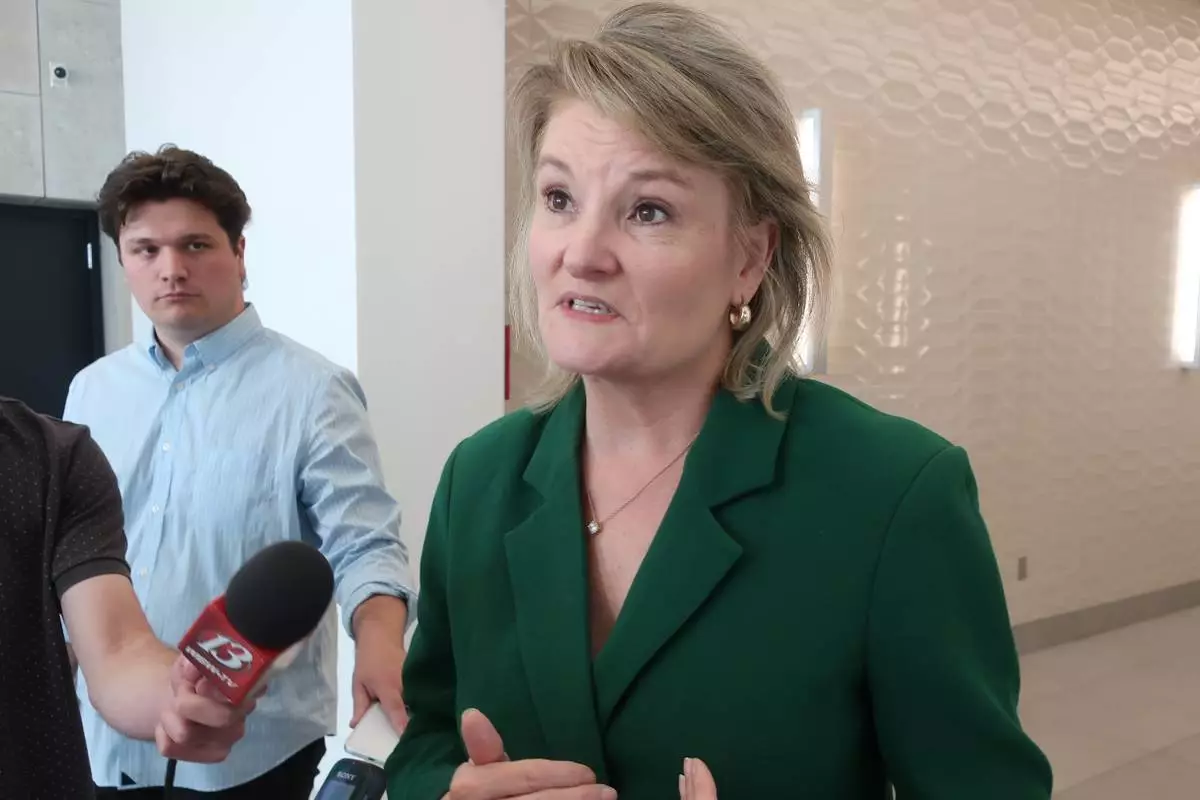
Kansas state Sen. Cindy Holscher, left, D-Overland Park, Kansas gubernatorial candidate, speaks to the media following a campaign event Thursday, Oct. 29, 2026, in Topeka, Kan. (AP Photo/John Hanna)
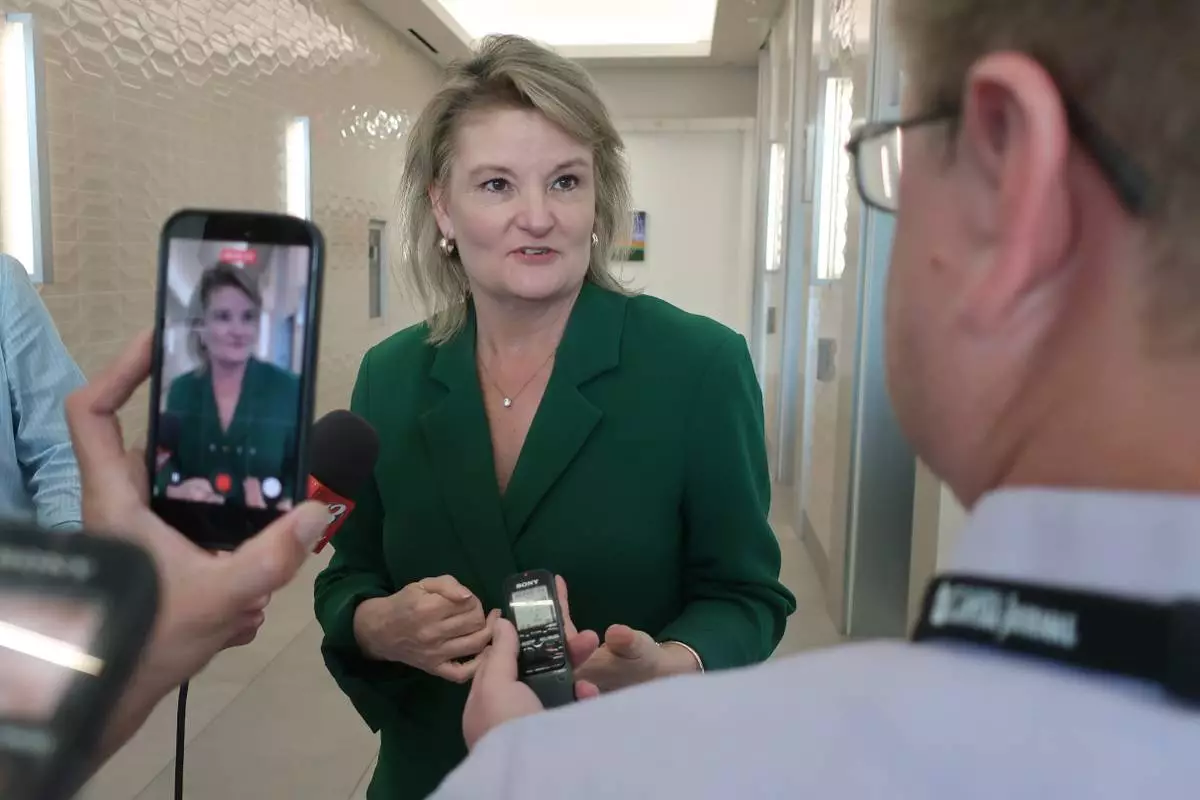
Kansas state Sen. Cindy Holscher, left, D-Overland Park, Kansas gubernatorial candidate, speaks to the media following a campaign event Thursday, Oct. 29, 2026, in Topeka, Kan. (AP Photo/John Hanna)
LIMA, Peru (AP) — Pope Leo XIV on Thursday denounced widespread “machismo” and violence against women in Peru, demanding that women be protected and respected as he set out marching orders for his beloved Peruvian church and people.
After his emotional homecoming Wednesday, the Peruvian pope got down to business and turned to the challenges facing a church and country he knows well.
He called on the influential Catholic hierarchy to be models of unity and communion, and instructed Peruvian bishops to accompany their flocks and respond to victims of clergy sexual abuse with truth and justice. He also met with six survivors, including from an abusive sect-like group that Pope Francis suppressed last year.
But the 71-year-old pope also showed himself to be positively overjoyed to be home and as relaxed as he has been in public since his 2025 election.
Leo sang along enthusiastically as 40,000 people in Lima's Plaza Mayor serenaded him with “Contigo Perú,” a famous song from Peru’s Pacific coast that celebrates national unity. He sang along later to another hymn, Alma Misionera (Missionary Soul), in Lima's stadium along with 30,000 young people during a vigil. He drew huge applause when he recited the lyrics of another famous Creole hymn, “Mi Perú.”
“It’s a blessing not only for us Chiclayans but for all of Peru,” said Ángel Esquives, a craftsman originally from Leo’s former diocese in Chiclayo who now lives in Lima. He said he left his home at 3 a.m. to go to the historic center and stand in line to get as close as possible to the pope.
Zozimo Perez came in a self-designed costume he named “the Inca Warrior,” with the pontiff’s image on his chest and back. He was in tears as he saw Leo stroll around the square. “This is a gift from heaven,” said Perez.
As he showed in the first two legs of his South American trip, Leo was in fine form despite having undergone lung cancer surgery last month. He bounded up a steep flight of stairs Thursday morning without any apparent problems and joked with the bishops that some “doubting Thomases” had predicted he wouldn’t be able to come.
“But God is great and his grace is bigger than all of us and I’m very happy to be here with you,” he said to applause.
In a speech to Peruvians in the plaza, Leo denounced the culture of “machismo” and violence against women that is prevalent in Peru, saying it went against the Christian teaching that proclaims men and women share equal dignity.
“It pains us to see that violence against women — who could be our grandmothers, mothers, sisters or daughters — continues to be a reality that wounds all of humanity," he said. He noted that poor, Indigenous and Afro-Peruvian women are doubly penalized, and called for all women to be valued, protected and respected.
Gender-based violence is an urgent social issue in Peru, which recorded 1,261 femicide victims between 2016 and 2024, according to the National Institute of Statistics and Informatics. During that period, the number of women killed because of their gender rose by 44%, suggesting the problem is only getting worse.
“While we’ve made progress with women’s suffrage and in being heard more, femicides are still on the rise — or at least they’re receiving more attention,” said Nicole Cruz, who was in the Plaza Mayor for the pope’s speech Thursday.
Cruz said she hopes the pope’s words will help unite women and help “men understand that we’re not complaining, but that we want help and to be loved and heard.”
The former Robert Prevost spent two decades as a missionary priest and bishop in Peru and credits the place with teaching him how to be a shepherd. He in many ways has modeled his vocation as a bishop on the 16th century St. Turibius de Mogrovejo, the first archbishop of Lima.
Mogrovejo is revered for having traveled long distances to be with his flock and for having defended the rights of Indigenous and enslaved peoples. He studied Quechua and Aymara and oversaw the printing of the Catechism of the Catholic Church in these Indigenous languages, because he believed the faith had to be transmitted in a language people could understand.
Leo urged bishops on Thursday to model their vocation on his example. Being a bishop, he said, means “entering people’s homes, accompanying the sick, meeting young people and reaching out to communities which, due to their geographical remoteness or social vulnerability, are rarely able to make their voices heard.”
While the clergy sexual abuse scandal hasn’t exploded publicly in Peru as it has in other Latin American countries, Leo identified it as a “reality that has caused us so much pain.”
“We must respond as Jesus would, with truth, justice, forgiveness, making amends and an ever more resolute commitment to fostering a culture of prevention and protection for the weakest in light of such crimes,” Leo said.
He later put that into practice by meeting with six victims for an hour, listening to their stories and “reflecting with them on how to foster a change in mindset by listening to the victims, seeking the truth, pursuing paths to healing, and committing to creating safe environments,” the Vatican said.
Among the six were former members of the Peru-based Sodalitium Christianae Vitae, a once-powerful movement.
Leo, who was the Peruvian bishops' point-person to welcome Sodalitium's victims while he was Chiclayo bishop, knows the case well.
In 2011, former members complained to the archdiocese in Peru’s capital, Lima, about abuses by its founder, Luis Figari. But neither the local church nor the Holy See took concrete action until one of the victims and a journalist, Pedro Salinas and Paola Ugaz, wrote a book in 2015.
After attempts at reform, Francis sent his two most trusted investigators to look into the Sodalitium abuse allegations. Their report uncovered “sadistic” sect-like abuses of power and spirituality, and financial abuses in administering church funds. Francis suppressed it shortly before he died, but it still wields economic power in Peru.
On Thursday, José Escardó, the Sodalitium's first whistleblower who wrote about the abuses he suffered in 2000, said the church's rhetoric has been empty when it comes to punishing clergymen who commit crimes.
Outside the house where Leo is staying, Escardó complained that Leo has not responded letters from victims for over a year. “These are not sins, they are not a mistake, that is an offense. These are crimes, and as such they must be punished,” Escardó said.
Beyond the Sodalitium case, the online database BishopAccountability has identified 77 priests, brothers, seminarians and laypeople consecrated in Peru who have been publicly accused of sexually abusing minors. But based on trends in other countries, the organization said that number is a “small fraction” of the total, arguing victims simply haven’t come forward yet in the overwhelmingly Catholic country where the church wields significant influence.
Associated Press religion coverage receives support through the AP’s collaboration with The Conversation US, with funding from Lilly Endowment Inc. The AP is solely responsible for this content.
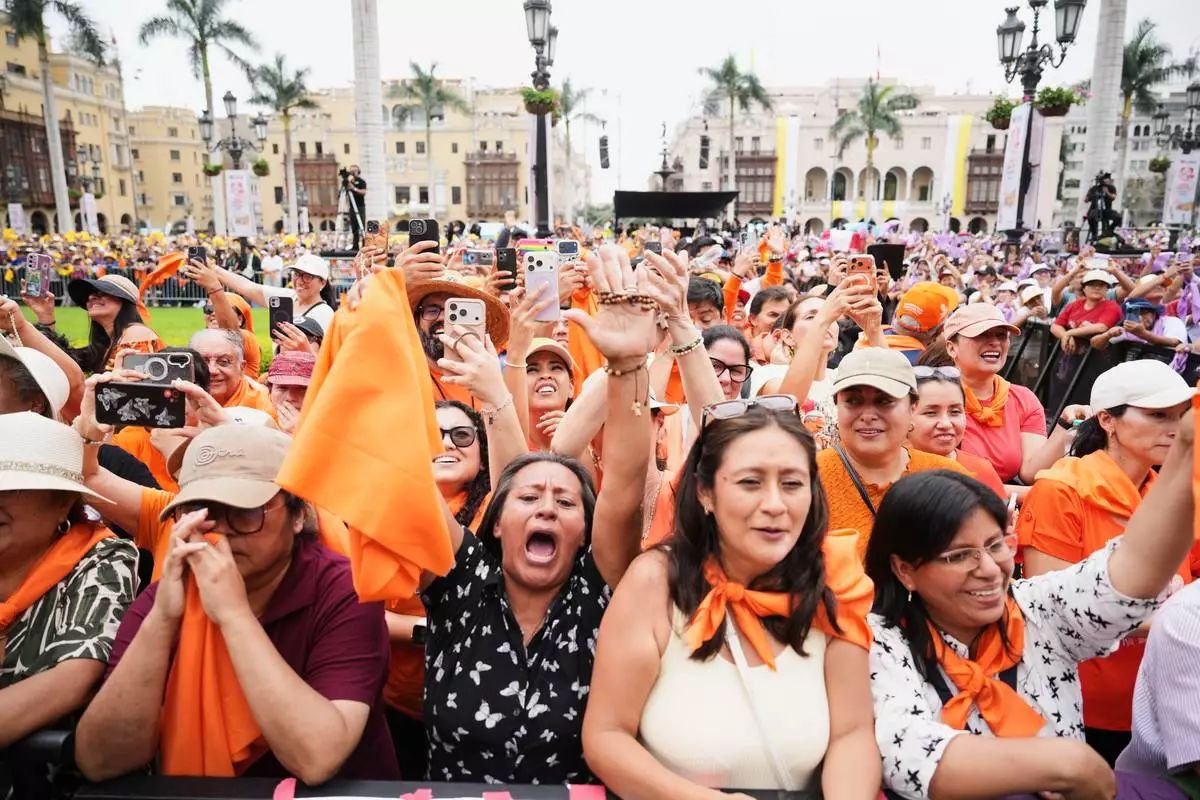
Faithful cheer as Pope Leo XIV delivers his speech during a meeting on the challenges and hopes for the future of the Peruvian people in the square outside Lima's cathedral, on the seventh day of his twelve-day apostolic journey to South America, Thursday, Nov. 12, 2026. (AP Photo/Andrew Medichini)
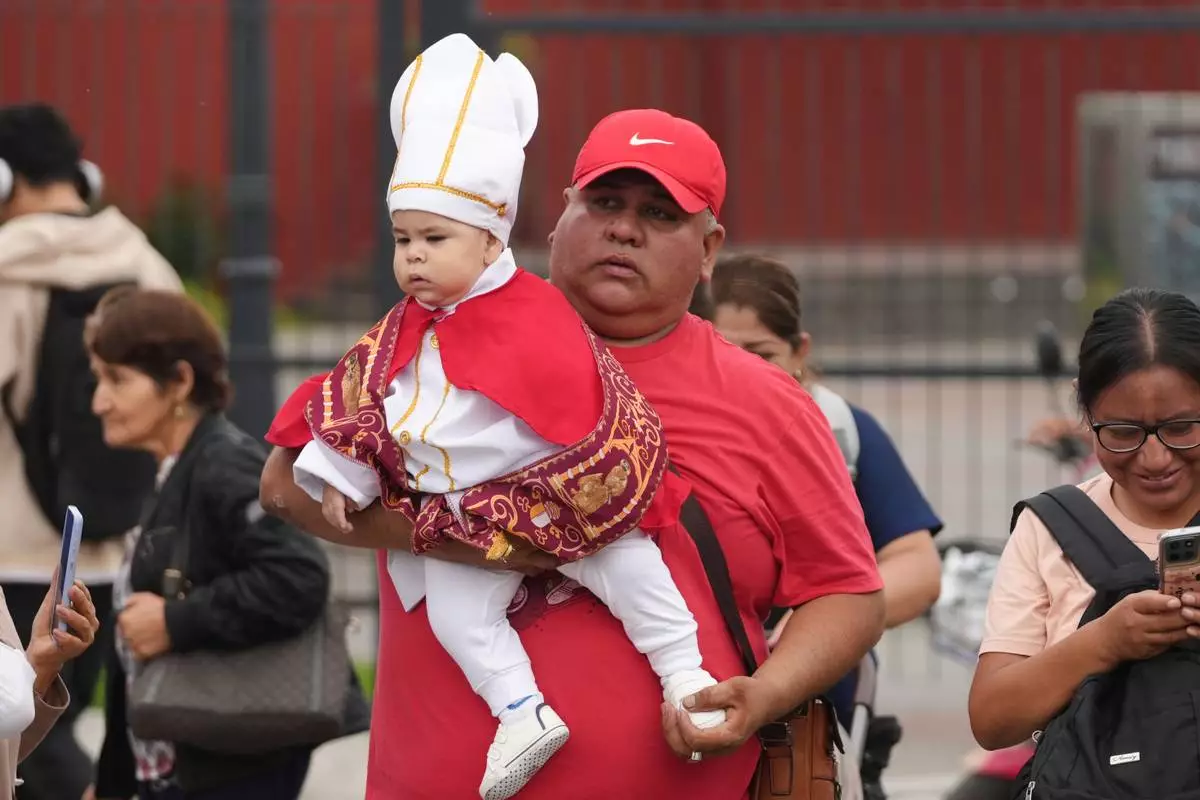
The faithful wait to greet Pope Leo XIV as he makes his way to the archbishop's residence in Lima, Peru, Thursday, Nov. 12, 2026. (AP Photo/Miguel Paredes)
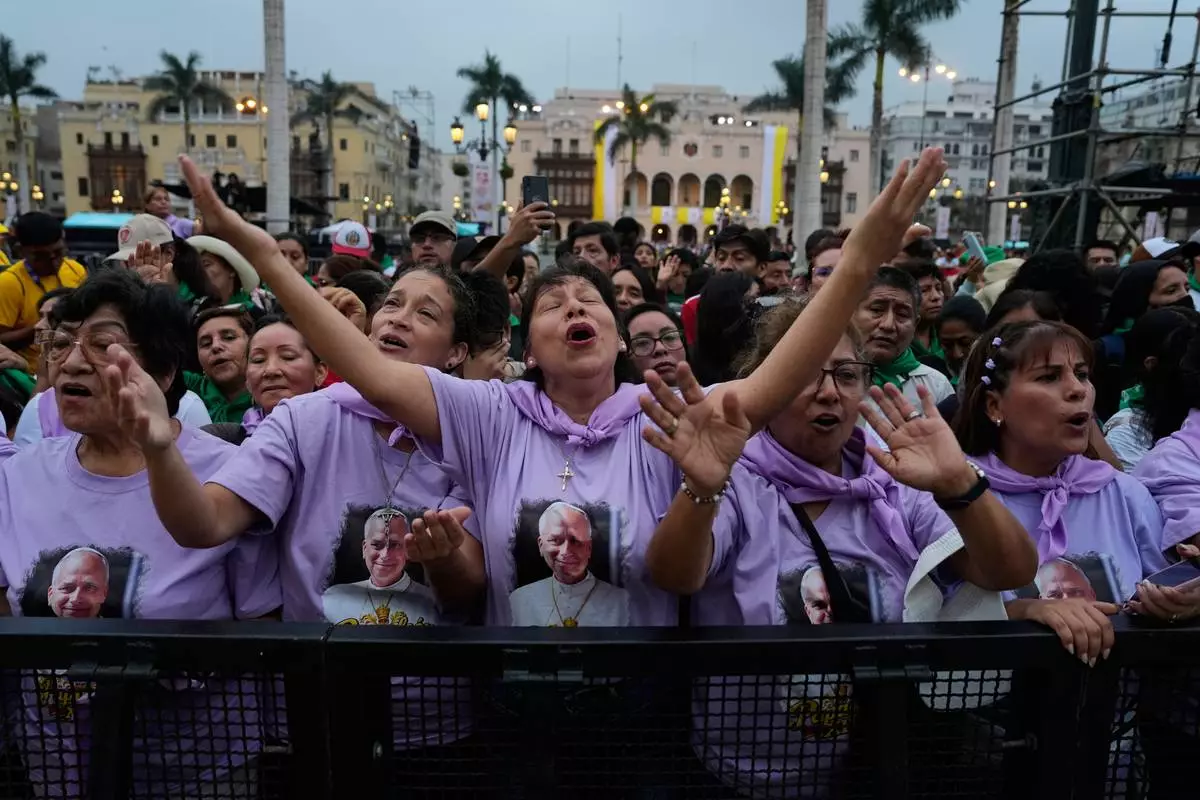
The faithful pray in Plaza de Armas as they await Pope Leo XIV's arrival at the archbishop's residence in Lima, Peru, Thursday, Nov. 12, 2026. (AP Photo/Martin Mejia)
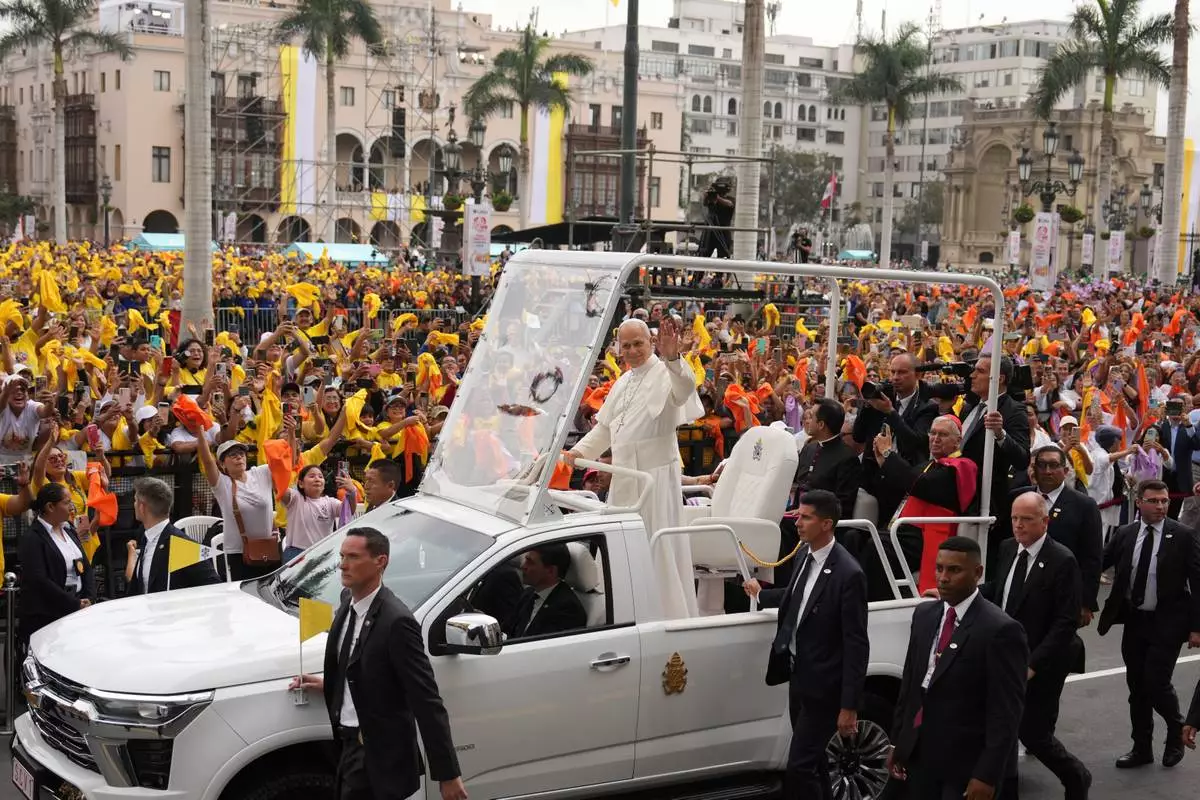
Pope Leo XIV arrives for a meeting with the bishops of Peru at the chapel of the Archbishop's Residence in Lima, on the seventh day of his twelve-day apostolic journey to South America, Thursday, Nov. 12, 2026. (AP Photo/Andrew Medichini)
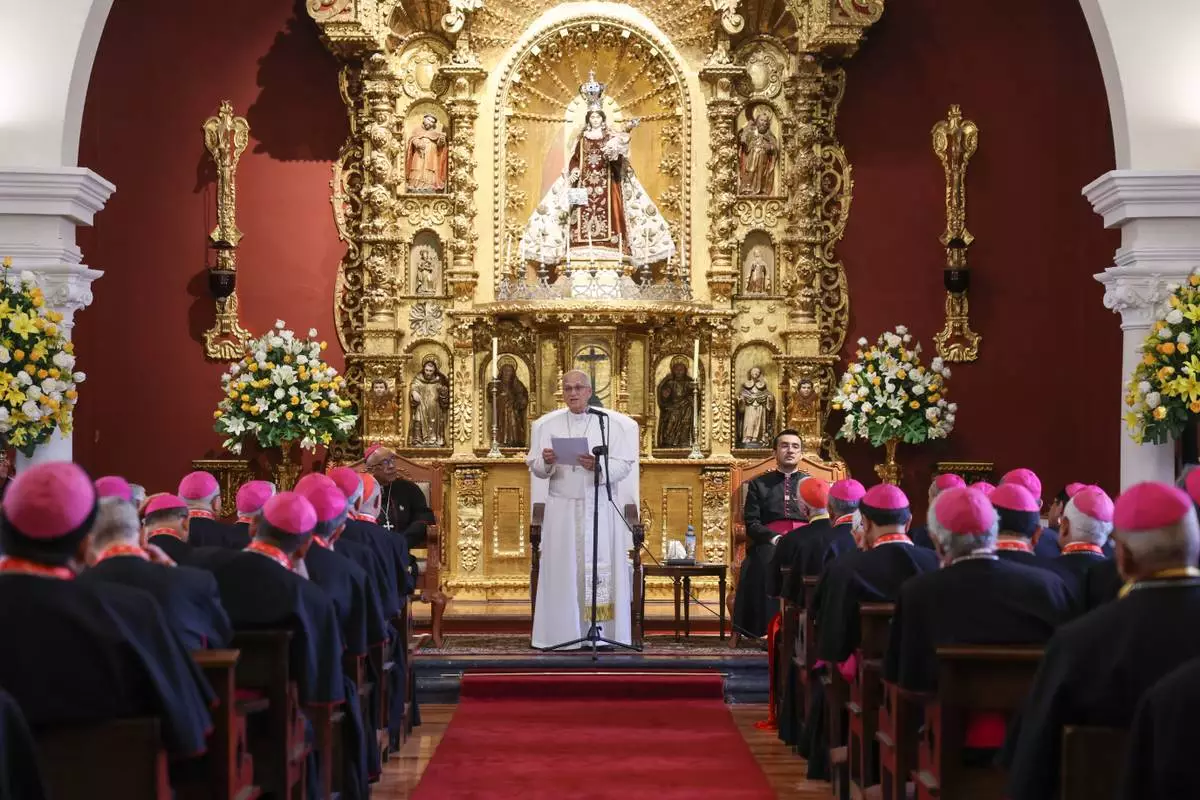
Pope Leo XIV attends a meeting with the bishops of Peru at the chapel of the Archbishop's Residence in Lima, on the seventh day of his twelve-day apostolic journey to South America, Thursday, Nov. 12, 2026. (Yara Nardi, Pool via AP)
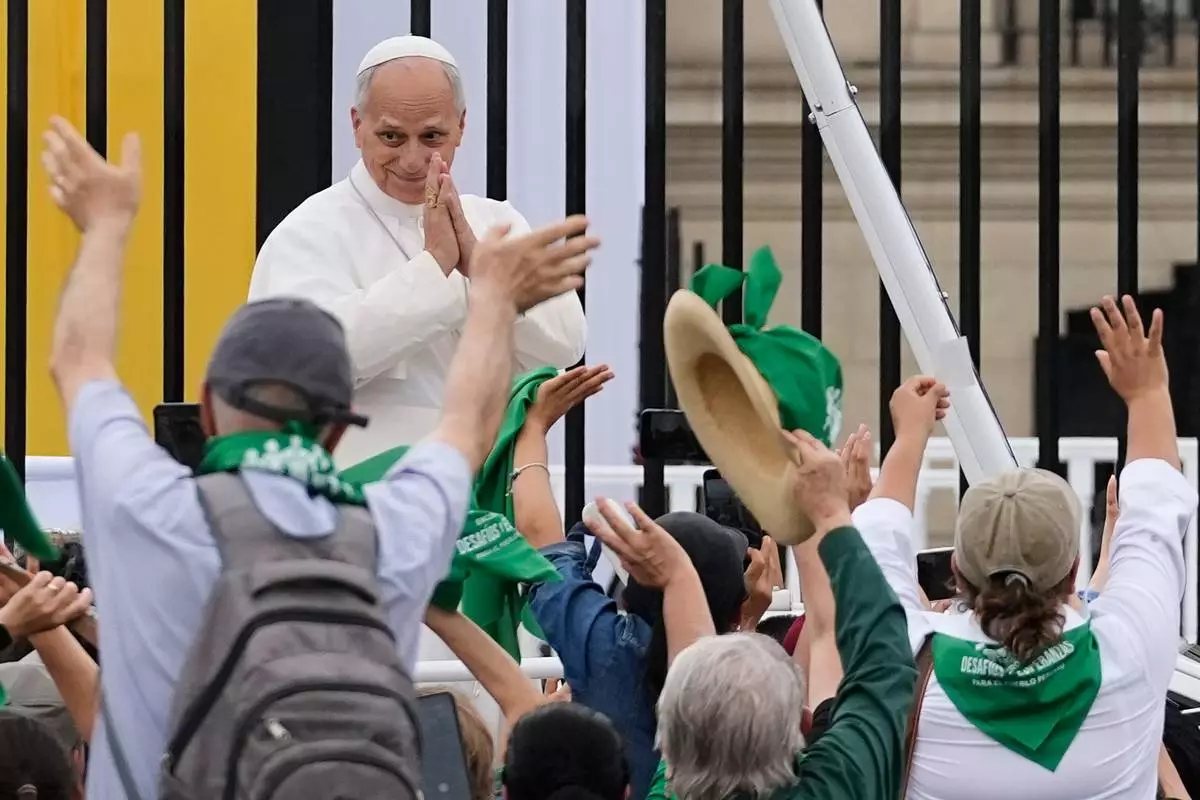
The faithful greet Pope Leo XIV as he arrives for a meeting with Peru's bishops at the archbishop's residence in Lima, Peru, Thursday, Nov. 12, 2026. (AP Photo/Martin Mejia)
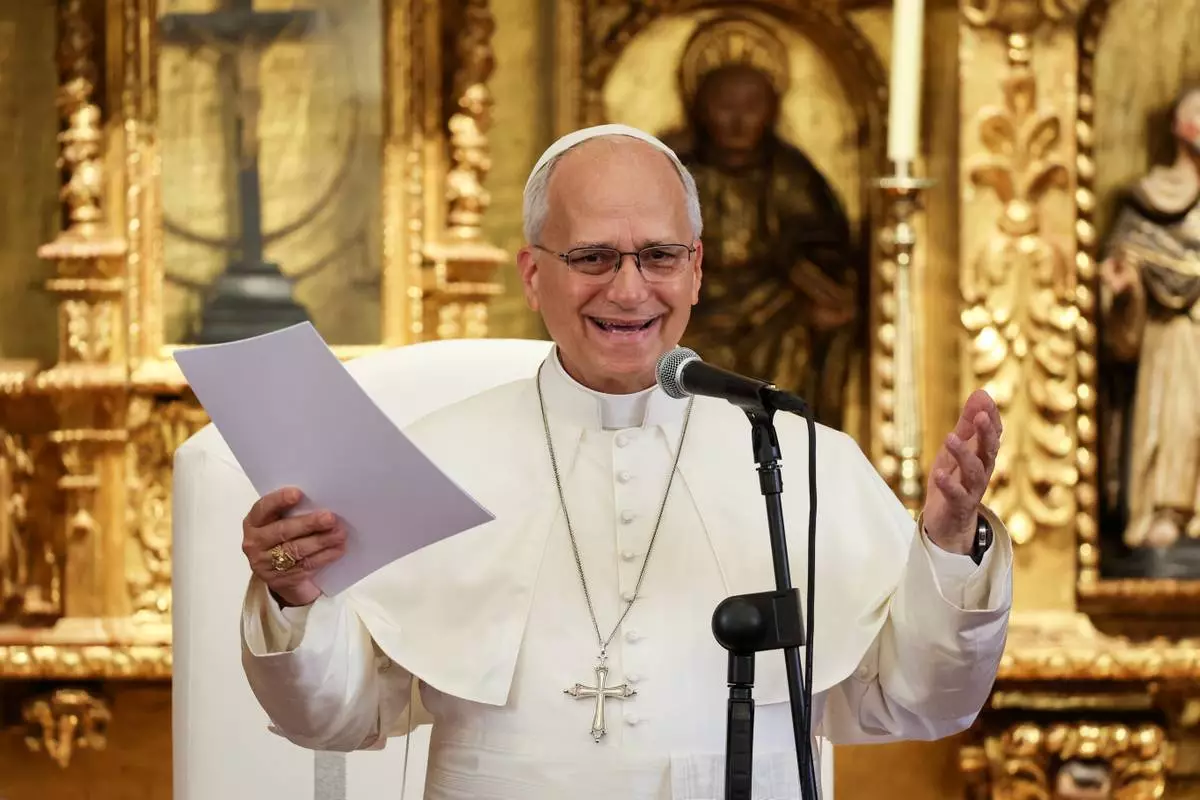
Pope Leo XIV attends a meeting with the bishops of Peru at the chapel of the Archbishop's Residence in Lima, on the seventh day of his twelve-day apostolic journey to South America, Thursday, Nov. 12, 2026. (Yara Nardi, Pool via AP)