Shunde, a district of Foshan city in China's Guangdong Province, is dubbed as the country's home appliance capital, and its complete industrial ecosystem is enabling local brands to tailor smart home appliances for APEC economies, turning one small district in southern China into one of the world's biggest and most varied home appliance manufacturing powerhouses.
In 2025, Shunde's home appliance industry output exceeded 400 billion yuan (about 60 billion in U.S. dollars), accounting for 15 percent of China's total home appliance market and 10 percent of the country's home appliance exports.
One in every three coffee makers exported from China comes from Shunde, also the home of China's top domestic coffee machine brand, Gemilai.
Many assume that small home appliances have low technical standards and are easy to copy. But entering the diverse Asia-Pacific markets demands that products are suited to local aesthetics and user habits, in both household and commercial scenarios.
"Shunde is a major export hub for home appliances. We tailor our coffee machines for Southeast Asia. Strong regional demand for small commercial machines has driven us to integrate more smart functions to fit diverse local application scenarios," said Yu Yanfang, the overseas business director of Gemilai.
Coffee machines custom-built for APEC markets feature compact, space-saving designs for local cafés and takeaway stalls with limited room. Built on dedicated small-commercial platforms with steady multi-boiler extraction, they support smart programmable brew curves and profile memory for fast scene switching and consistent brew quality.
Great designs need stable mass production. Small as these home appliances are, they must meet strict standards for performance and reliability for export.
"Shunde is home to one of China's major home appliance industrial clusters, and the whole industry is moving toward smart manufacturing. As a prominent local coffee machine producer, we have upgraded our production lines with smart systems. Combining manual fine-tuning by skilled technicians and intelligent automated testing, we make sure our products meet local safety standards and adapt to operating environments across APEC and other overseas markets," said Zhu Yinglin, Gemilai's head of manufacturing.
Beyond leading brands, local authorities have nurtured the sector for years. At Guangdong Industrial Design City, ideas do not stay on paper: the park brings together innovative entrepreneurs and outstanding designers.
One designer based there says Shunde's biggest strength is its complete home appliance supply chain. More than 3,000 manufacturers and supporting suppliers are based in the district, and 80 percent of necessary components can be sourced within a 50-kilometer radius.
"Shunde's design stands out because it's close to the supply chain, manufacturing and markets. Ideas and concepts could turn into real products very quickly. Asia-Pacific markets have fragmented demand. For small appliances, it's all about flexibility. Shunde's industrial ecosystem could pull together the design and manufacturing resources," said Zou Jianhong, founder of Soseki Technology.
Shunde has also made history as China's first district to hit a trillion-yuan industrial output milestone. Global giants like Midea sit right alongside niche champions that command global clout, all woven into one tough, flexible industrial ecosystem.
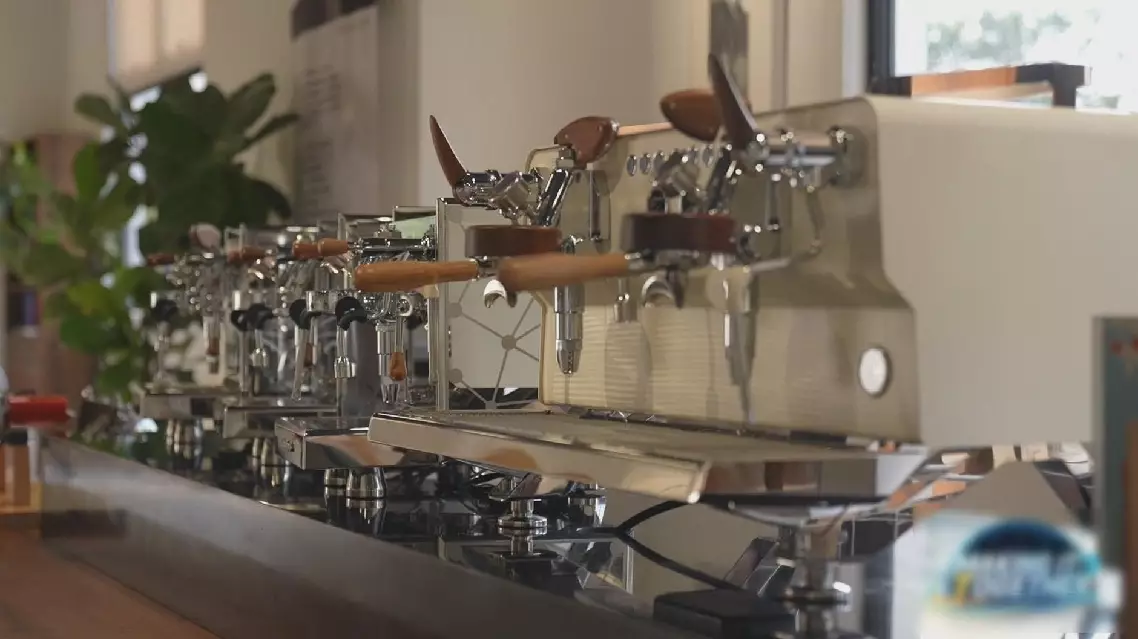
Full supply chain in Shunde drives exports of small home appliances to APEC markets