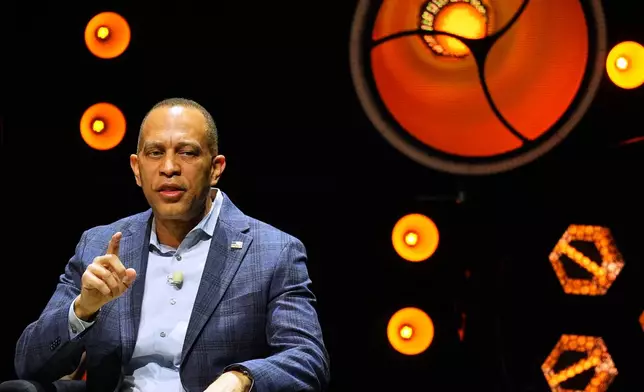
DENVER (AP) — When Democrats started planning a post-midterms conference in Denver months ago, political consultant Stephanie Valencia figured it would be more of the same — a bunch of strategists poring over the latest results and plotting a path forward in a country dominated by President Donald Trump.
She never expected that her party would still be celebrating what they consider a dream election, where they won virtually every contested race, flipped U.S. Senate seats in Mississippi and South Carolina, turned Texas blue and won big majorities in Congress.
Click to Gallery
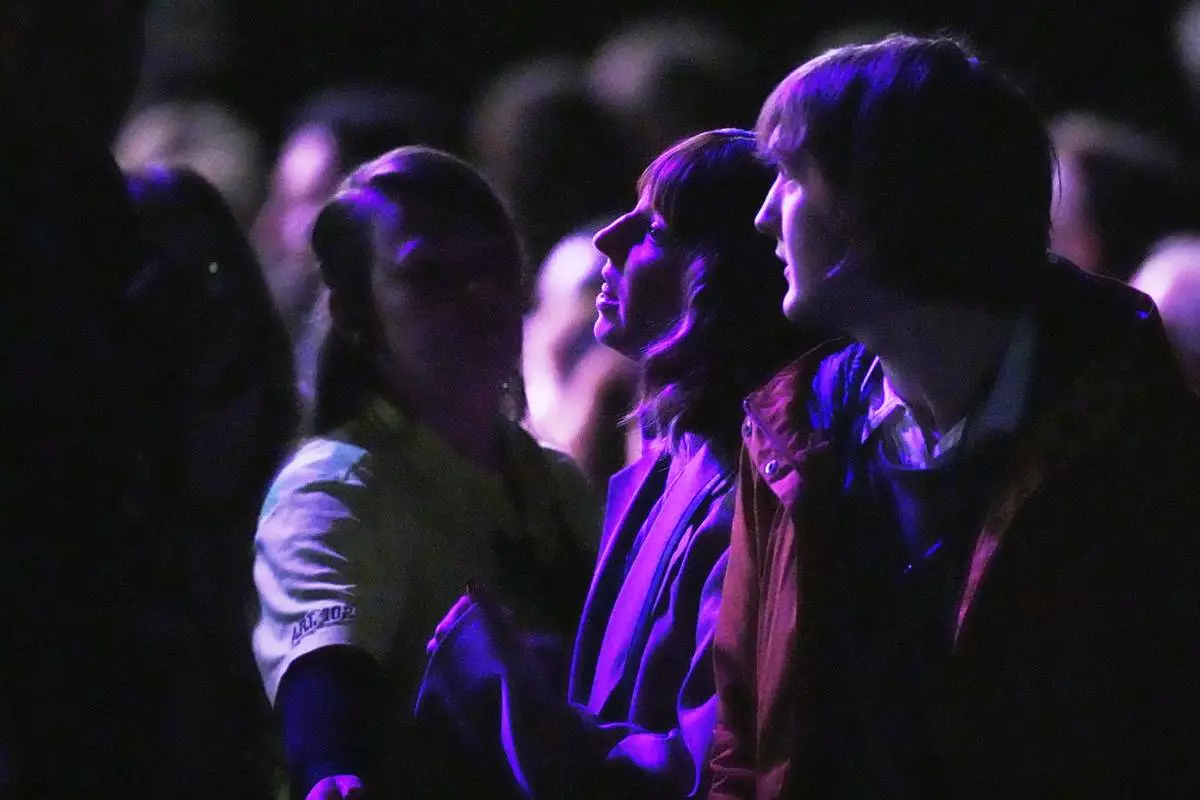
Attendees take their seats before a Democratic conference Thursday, Nov. 12, 2026, in Denver. (AP Photo/David Zalubowski)
A protester is escorted after asking about yooung voters during an appearance by U.S. Rep. Hakeem Jeffries during a Democratic conference Friday, Nov. 13, 2026, in Denver. (AP Photo/David Zalubowski)
U.S. Rep. Hakeem Jeffries speaks during a Democratic conference Friday, Nov. 13, 2026, in Denver. (AP Photo/David Zalubowski)
U.S. Sen. Chris Van Hollen, D-Maryland, speaks during a Democratic conference Friday, Nov. 13, 2026, in Denver. (AP Photo/David Zalubowski)
"I did not expect to be coming here with so much hope,” said Valencia, the co-founder of Equis, which researches Latino voters. “For the first time we can see the outlines of a post-Trump era.”
Democrats spent two days chewing over their future at the What's Next conference and trying to deal with the fact that it looks, for a moment at least, quite bright. Suddenly, anything seemed possible for a party that's become more accustomed to hand-wringing than fist-pumping. Speakers tossed around the word “supermajority.” One data analyst casually discussed pushing for 60 seats in the Senate and displayed a slide suggesting there were winnable races in places like Missouri and Utah.
“Everybody's happy about the results, but everybody's looking over their shoulder saying, ‘Can we really be happy about this?’” quipped former Secretary of Transportation Pete Buttigieg, one of several potential presidential candidates who attended. He urged the party to celebrate while not taking future wins for granted.
Some warned that voters hadn't fallen back in love with Democrats, they were just turning to them out of frustration over high prices, the Iran war and concerns about government corruption. No clear recipe emerged from the conference to address widespread dismay about affordability and the economy. But there was hope among attendees that they had the power to figure it out.
Jason Delattre and several friends came to Denver from the Rio Grande Valley after working on Democratic campaigns in Texas. They were still stunned at the opportunities now open to them.
“We have to figure out what we're going to do next,” said Delattre, wearing a cowboy hat and pin for winning U.S. Senate candidate James Talarico.
“We have so much power we didn't have before,” said his friend, Jose Robbie Juarez.
Some even had hope that statehood for Puerto Rico was finally possible.
“It finally feels we're going to get it done,” said Luis Davila, the Democratic chair on the island.
Pennsylvania Gov. Josh Shapiro, a possible White House contender, suggested that his party should aim for a landslide win in the next presidential race. Instead of “going out and scrapping for 270,” the minimum electoral votes for victory, they should be "fighting hard to swing for 370.”
That would be five more Electoral College votes than Barack Obama won in his historic 2008 presidential campaign, which was Democrats’ previous high-water mark this century.
The setting was tailor-made for good vibes — a well-known music venue in one of Denver’s hippest neighborhoods, with concert-style posters of politicians and operatives plastered on the walls. Distant snow-capped peaks framed the horizon outside.
Some old divisions reared their heads. A handful of protesters from the leftist Sunrise Movement protested outside the gathering Friday, complaining that it was sponsored by a group, Majority Democrats, that's more centrist and funded by wealthy businesspeople.
A couple of protesters interrupted what was supposed to be a triumphant appearance by the likely new House speaker, Hakeem Jeffries. They demanded a Green New Deal and an arms embargo against Israel. One man shouted profanities at Jeffries and called him a “traitor” while being led from the auditorium.
Jeffries brushed it off.
“I’m from Brooklyn," he said. "This is light work.”
Maryland Sen. Chris Van Hollen, who is challenging New York Sen. Chuck Schumer for caucus leadership, appeared at the conference Friday. He's allied himself with Democrats' liberal wing, and he argued that voters have demanded change.
But many were not worried about those signs of discord.
New Jersey Sen. Cory Booker, who may run for president again, said the leadership fight was a “family conversation” the party would have in Washington, and he welcomed signs of dissent.
“I think this is a wonderful thing that we have right now, that we're having a real discussion,” Booker said in an interview. “At a conference like this you're seeing the future," he added, returning to the party's optimism. "A new day is dawning in America.”
Rep. Joe Neguse of Colorado said Democrats were “the big tent party.”
“We have an ideological spectrum that covers virtually every element of Democratic thought," he said in an interview. "And I think that’s exciting.”

Attendees take their seats before a Democratic conference Thursday, Nov. 12, 2026, in Denver. (AP Photo/David Zalubowski)
A protester is escorted after asking about yooung voters during an appearance by U.S. Rep. Hakeem Jeffries during a Democratic conference Friday, Nov. 13, 2026, in Denver. (AP Photo/David Zalubowski)
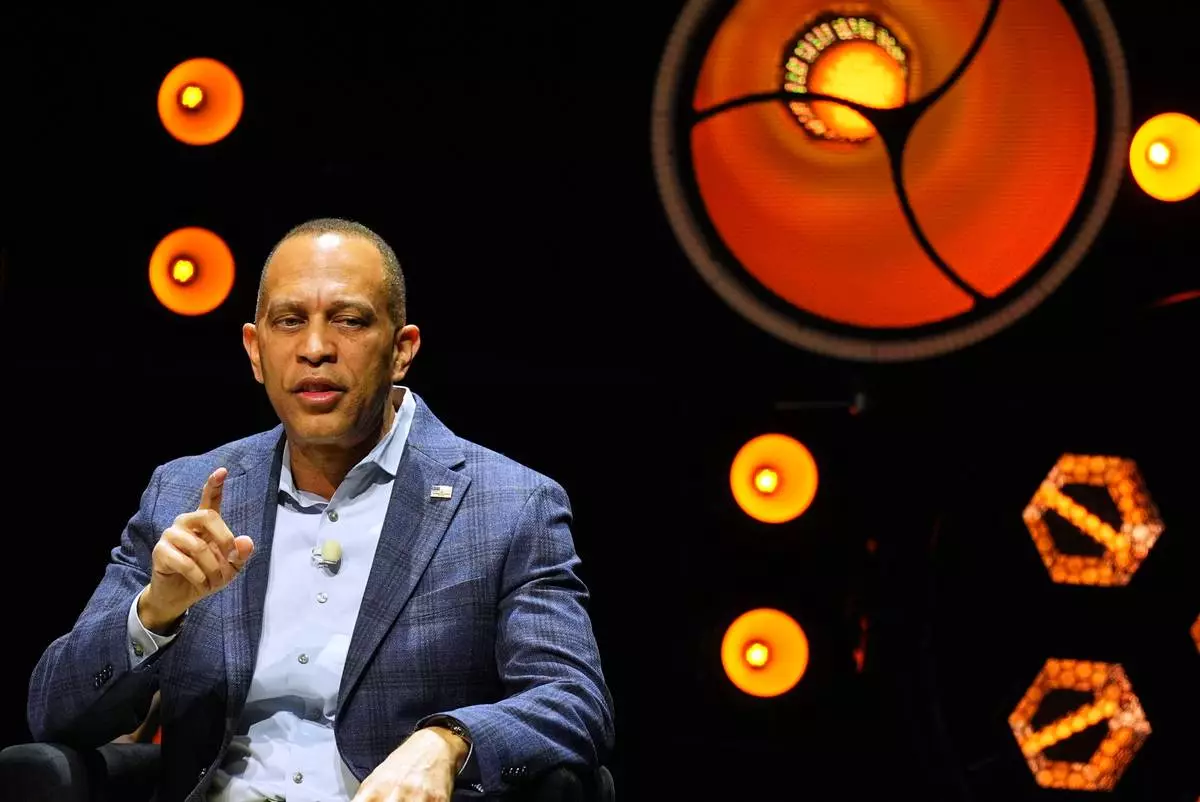
U.S. Rep. Hakeem Jeffries speaks during a Democratic conference Friday, Nov. 13, 2026, in Denver. (AP Photo/David Zalubowski)

U.S. Sen. Chris Van Hollen, D-Maryland, speaks during a Democratic conference Friday, Nov. 13, 2026, in Denver. (AP Photo/David Zalubowski)
WASHINGTON (AP) — Airlines across the U.S. worked to recover from the longest nationwide ground stop in 25 years that canceled more than 2,500 flights Saturday, spread ripple effects around the world, stranded passengers and forced pro and college sports teams to scramble for alternate transportation.
New technology being added to the nation’s air traffic control system overloaded antiquated equipment and caused “intermittent” communications and radar gaps, leading to the flight shutdown of more than four hours, Trump administration officials said.
Airports were slowly returning to normal, Secretary of Transportation Sean Duffy said, with planes taking flight and landing. But the effects could be felt for days, with officials saying the system would likely return to normal in time to handle the Thanksgiving travel rush.
The nationwide stop was the first since January 2023, when another key Federal Aviation Administration computer system that sends notices to pilots malfunctioned, and the second since the Sept. 11, 2001, attacks.
Andrew Charlton, an aviation consultant, said the stoppage on Friday had affected about a quarter of the 45,000 flights in the U.S. each day.
“The knock-on effect of that is incredible,” said Charlton, managing director of Aviation Advocacy. “The aircraft doesn’t just fly from A to B and back to B and then stop. It then moves onto C and then over to E and around and around and around. It is, of course, exacerbated if you’re talking about long-haul flights, international flights over the Atlantic or over the Pacific.”
At airports across the U.S., passengers stared at screens showing delays or rushed to find buses or trains to their destinations.
Emily Brown and her 14-year-old daughter waited more than four hours Friday at the Dallas airport for their flight to Columbus, Ohio, before giving up. They were traveling to surprise her daughter’s best friend. Instead, she had to settle for phoning the friend through tears in the airport, Brown said.
“She saved up her money to buy her own ticket, and she’s planned this whole weekend,” Brown said. “Now we’re not sure when we’re gonna be able to go.”
A cheerful Southwest Airlines gate agent greeted passengers at Dallas Love Field at dawn Saturday with “Good morning, good morning,” but then repeatedly said all flights were full and asked passengers to have boarding passes ready to expedite the process and help keep flights moving.
Sports teams scheduled to play this weekend adjusted game start times, searched for hotel rooms, rescheduled flights and chartered buses.
Auburn University's football team opted to take a bus to Mississippi State and the Saturday start time was pushed back from noon ET to 4:15 p.m. Other universities affected by the stoppage included Baylor, Washington, Kansas State, Minnesota and No. 19 Ole Miss, which did not plan to fly until Saturday morning for its game against Oklahoma.
More than 2,500 flights were canceled in the U.S. Saturday and hundreds more were delayed, according to FlightAware, a website that tracks flight disruptions.
Corbyn Wascher's flight was on the tarmac at Charlotte Douglas International Airport for four hours Friday on his way home to Moline, Illinois, from a conference in Miami. The 37-year-old high school teacher paid $100 to take an Uber to a hotel 25 minutes from the airport after he was unable to find a flight until Saturday afternoon to Chicago O’Hare International Airport.
At London’s Heathrow Airport, several flights to and from the U.S. were listed as delayed or canceled Saturday, including American Airlines flights to Dallas and Los Angeles, and a British Airways flight to New York’s JFK Airport. A Delta flight from Atlanta, an American flight from Miami and a United flight from Chicago were also listed as canceled.
“While U.S. flights have resumed, there may be some follow-on disruption as airlines work to rebook affected passengers and get all services back to normal,” said Tim Johnson, consumer director at the U.K. Civil Aviation Authority.
Secretary of Homeland Security Markwayne Mullin told reporters at the White House that no one was in any danger as more than 3,000 flights in the air at the time of the grounding order landed safely Friday.
Duffy blamed Congress for failing to approve more funding for new technology, while downplaying the fact that trying to implement new fixes overtaxed the system. He suggested more disruptions might occur.
“We didn’t think we would have this kind of outage. We did,” he said. “We were able to review what went wrong, and then reboot the system and go. But, you will have more of these.”
Duffy said the failure Friday involved old equipment and was not linked to the FAA’s new AI-powered system, which the agency is rolling out to help predict problems in the sky.
The problem was due to updating a system that can never shut down, Charlton said.
“What you’re watching here is trying to change the tires of your car when the car’s going at 80 miles an hour down the expressway, because nothing stops in aviation,” Charlton said. “It’s a 24/7 operation. And to make changes on the fly, if you’ll pardon that pun, is incredibly complex and dangerous.”
The FAA has already replaced thousands of old copper wires with fiber optic lines and upgraded hundreds of radio systems as part of the overhaul that began last year after Congress approved $12.5 billion of funding. Duffy and the White House are pushing for $30 billion more to complete the work.
The problem appeared similar to a regional air traffic control communication outage in September that snarled hundreds of flights across the Northeast, although that disruption was linked to a construction crew cutting a fiber optic line. Aging equipment was also blamed for the brief radar outages last year that disrupted Newark airport.
Aviation safety expert Steve Arroyo said the difference this time was the nationwide scale of the disruption, which left controllers unable to reliably talk to pilots.
“If you don’t have that ability, whether it’s because the old wires that they have are just run down or for whatever reason, you’ve got to stop airplanes on the ground and not put them in the air, where you’re going to risk not being able to communicate with them,” said Arroyo, a former United Airlines pilot.
Friday’s ground stop also differed from the one after 9/11 because planes were not being told to land immediately and pilots likely were able to communicate with ground controllers at airports, Arroyo said.
Funk reported from Omaha, Nebraska, and Golden from Seattle. Associated Press journalists David Keaton in Berlin; Stephen Hawkins in Dallas; Mead Gruver in Fort Collins, Colorado; Jessica Hill in Las Vegas; Ali Swenson in Chicago; Alex Veiga and Jaimie Ding in Los Angeles; Seung Min Kim and Aamer Madhani in Washington; Hannah Schoenbaum in Salt Lake City; and Brian Melley in London contributed to this report.
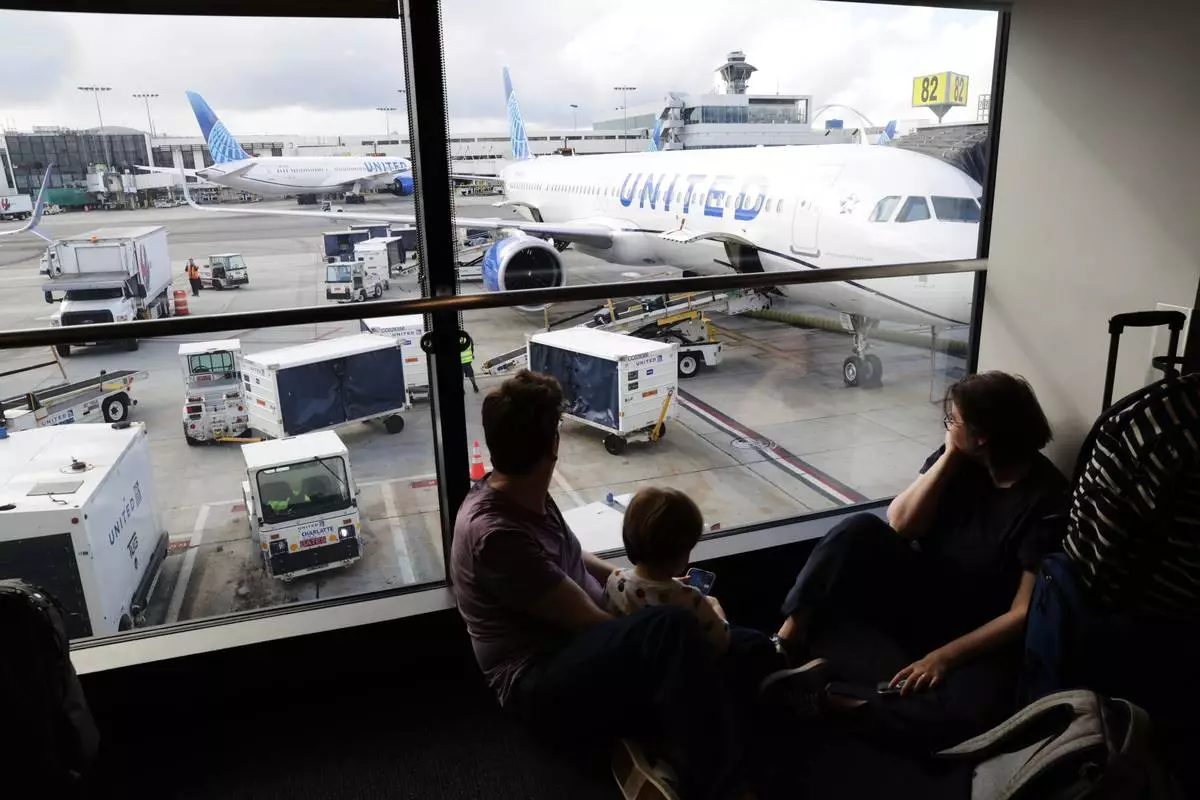
Passenger watch as workers unload luggage from a United plane as flights are delayed at Los Angeles International Airport Friday, Nov. 13, 2026, in Los Angeles. (AP Photo/Ethan Swope)
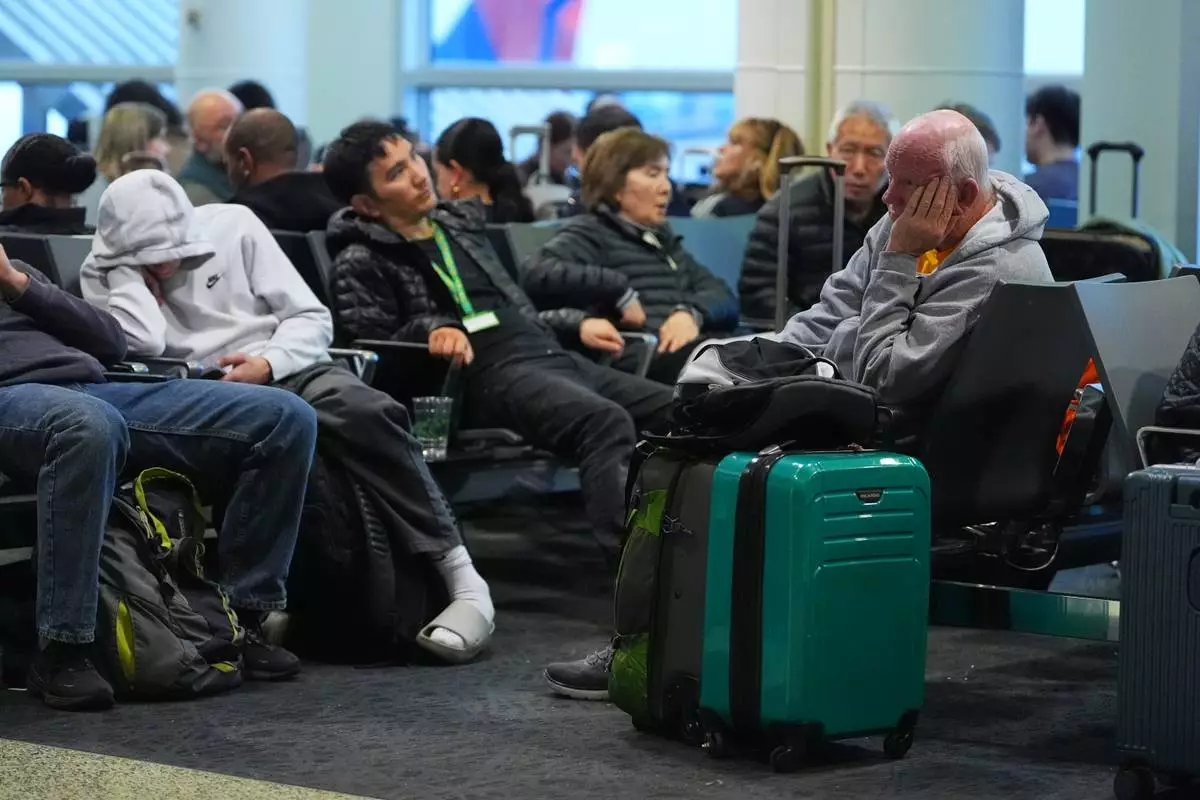
Passengers wait as flights are delayed inside a terminal at Seattle-Tacoma International Airport on Friday, Nov. 13, 2026, in Seattle. (AP Photo/Lindsey Wasson)
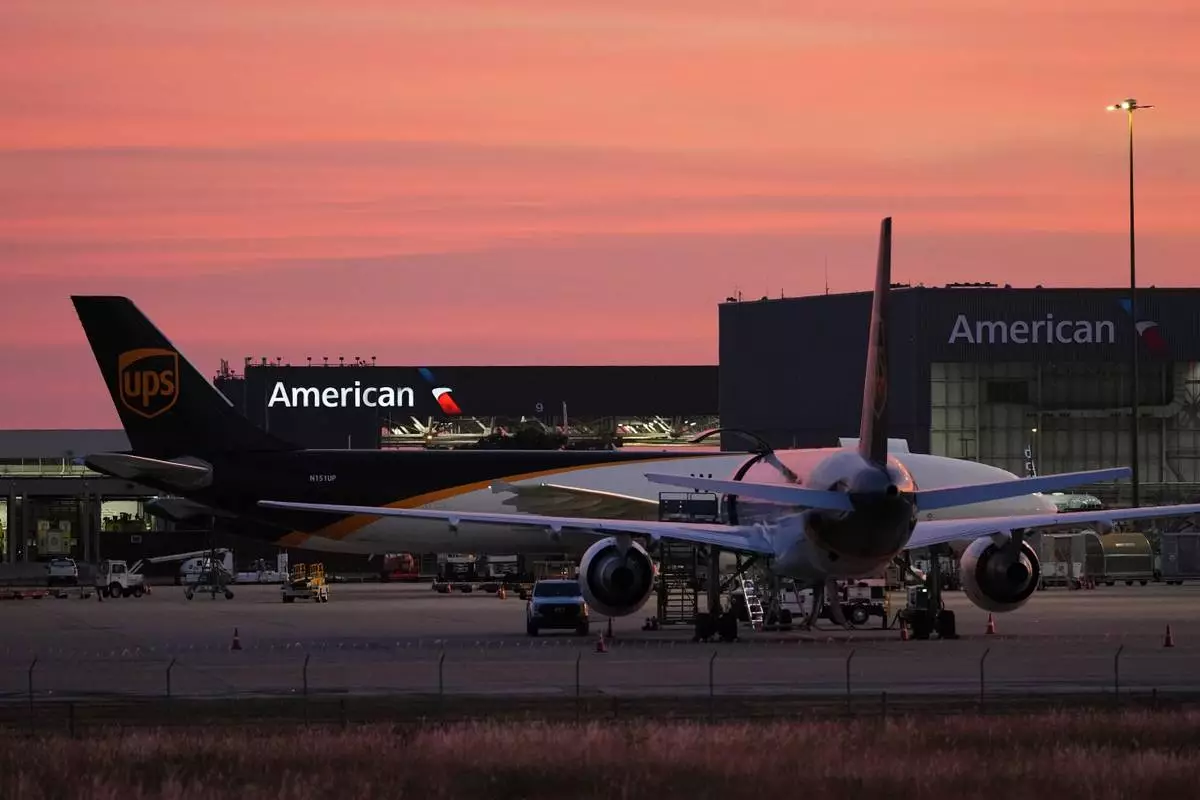
The sun sets over Dallas Fort Worth International Airport in DFW Airport, Texas, Friday, Nov. 13, 2026, after the Federal Aviation Administration grounded flights nationwide. (AP Photo/Tony Gutierrez)
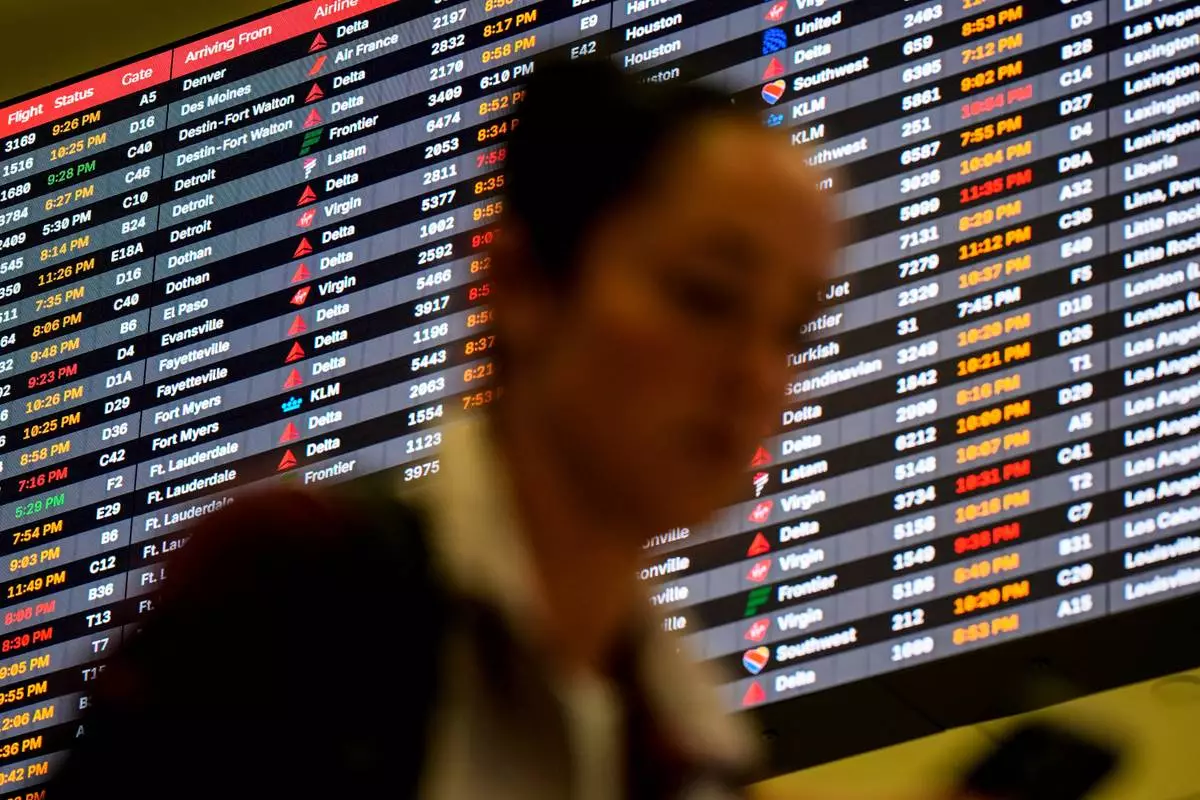
A passenger moves through Hartsfield-Jackson Atlanta International airport as all flights are canceled or delayed, Friday, Nov. 13, 2026, in Atlanta. (AP Photo/Mike Stewart)
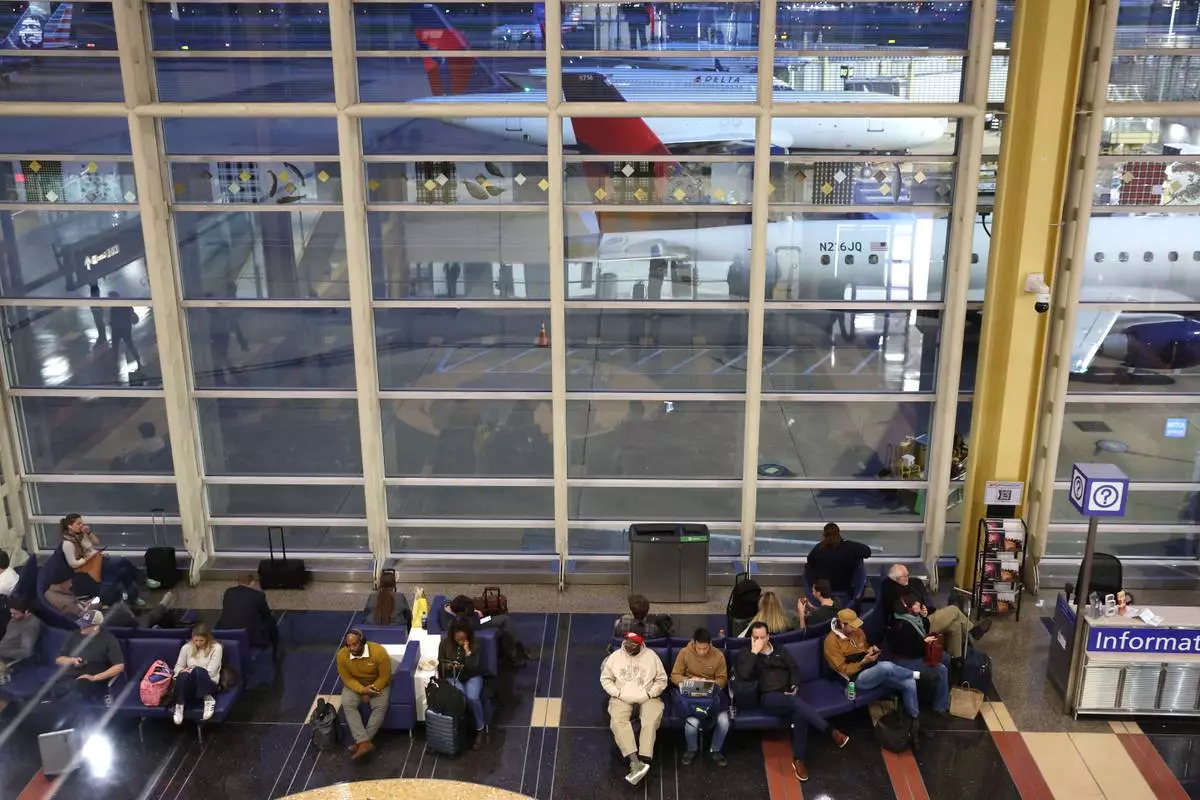
People wait at a terminal at Ronald Reagan Washington National Airport, Friday, Nov. 13, 2026, in Arlington, Va., after the FAA issued a nationwide ground stop. (AP Photo/Tom Brenner)
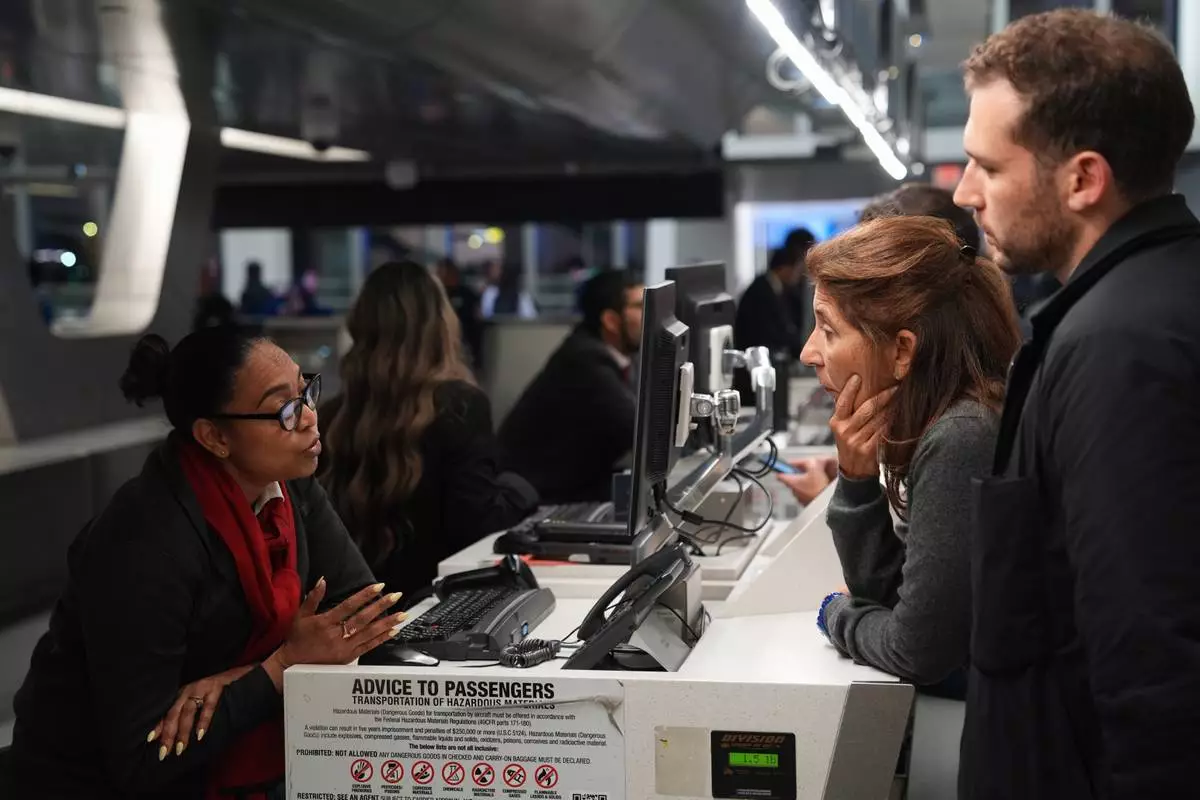
An agent helps travelers at a ticketing desk at LaGuardia Airport in New York, Friday, Nov. 13, 2026, after the Federal Aviation Administration grounded flights nationwide. (AP Photo/Ryan Murphy)