While millions of Catholics gather to catch a glimpse of Pope Leo XIV in South America, health authorities are watching for a different kind of visitor: measles.
Cases are already surging in the region this year and mass gatherings provide an opportunity for one of the world's most contagious viruses to spread further.
Click to Gallery
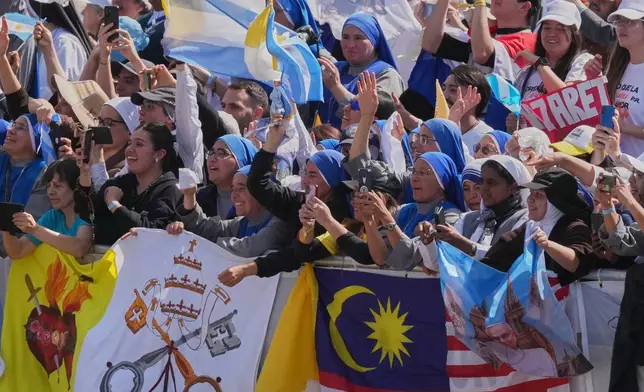
Faithful wait for Pope Leo XIV to preside over Mass at the grounds of the Military Aviation School in Córdoba, Argentina, on the fifth day of his twelve-day apostolic journey to South America, Tuesday, Nov. 10, 2026. (AP Photo/Andrew Medichini)
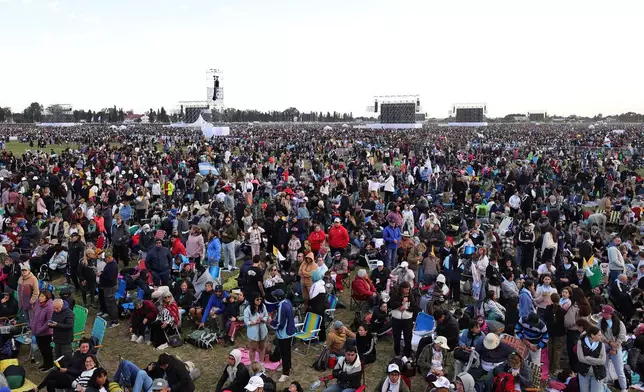
The faithful attend Mass led by Pope Leo XIV at the grounds of the Military Aviation School in Cordoba, Argentina, Tuesday, Nov. 10, 2026. (AP Photo/Nicolas Aguilera)
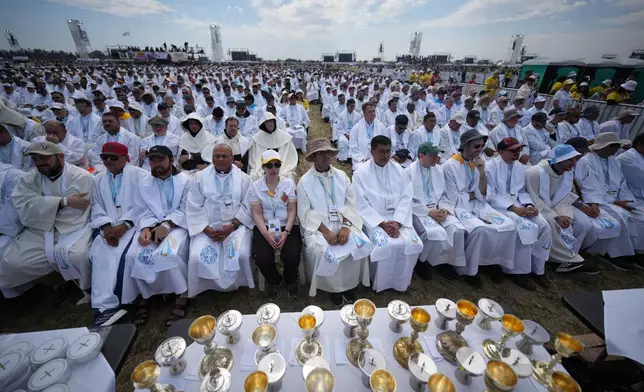
Members of the Catholic clergy attend a Mass presided over by Pope Leo XIV at the Military Aviation School in Córdoba, Argentina, on the fifth day of his twelve-day apostolic journey to South America, Tuesday, Nov. 10, 2026. (AP Photo/Andrew Medichini)
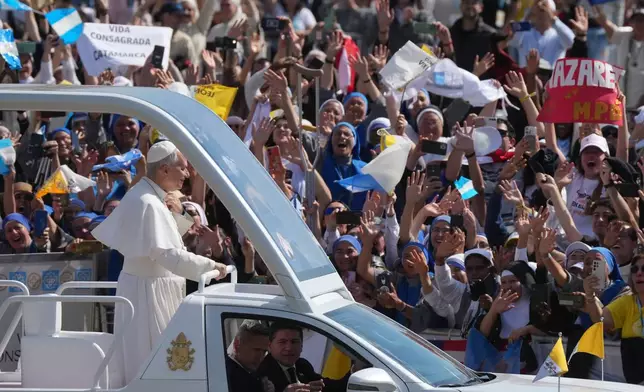
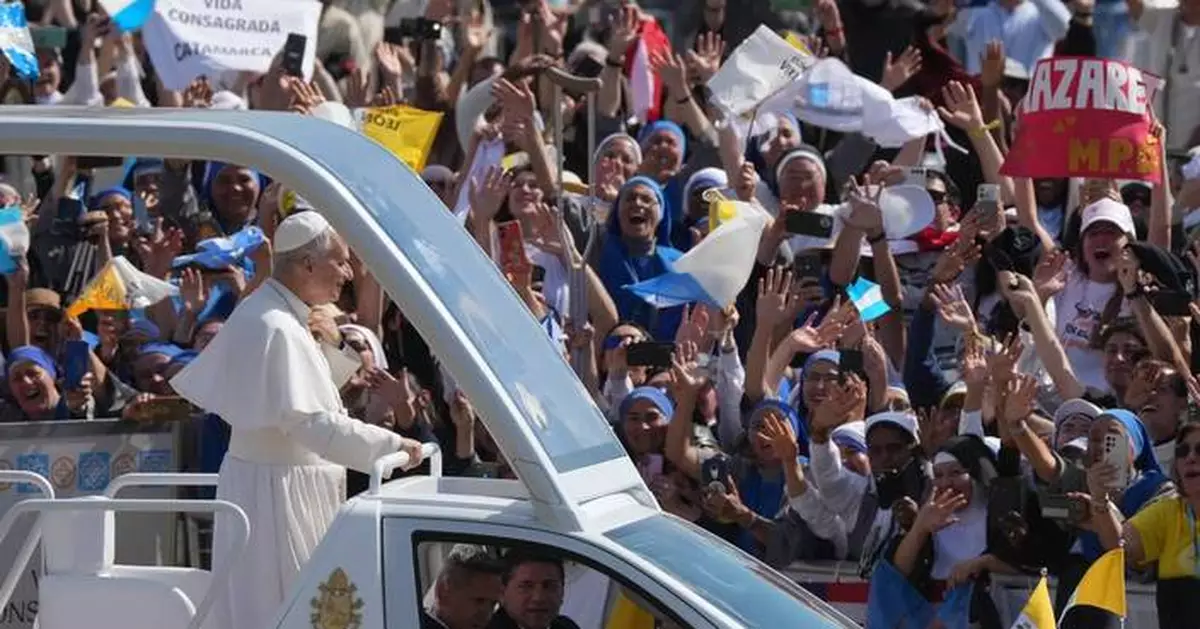
Pope Leo XIV arrives to preside over Mass at the grounds of the Military Aviation School in Córdoba, Argentina, on the fifth day of his twelve-day apostolic journey to South America, Tuesday, Nov. 10, 2026. (AP Photo/Andrew Medichini)
The Pan American Health Organization, or PAHO, and officials in Uruguay, Argentina and Peru have been preparing for potential problems to different degrees for months, including mounting vaccination campaigns and increasing surveillance to try to limit spread.
Uruguay, where thousands of people attended a prayer vigil and a Mass celebrated by Leo, implemented a nationwide intensified surveillance monitoring period until Nov. 29, three weeks after Leo’s departure from the country, according to Nataly Rodriguez, director of epidemiology at Uruguay’s health ministry. Uruguay has also taken steps to boost its vaccination rate to among the highest in the region.
“As a preventive strategy, the ministry has been emphasizing the importance of keeping vaccination schedules up to date,” Rodriguez said.
The Nov. 6-17 trip to the continent where around 40% of the world’s 1.4 billion Catholics live marks a return home for Leo, who spent two decades ministering in Peru as a missionary priest and then bishop.
Ahead of the visit, PAHO assessed the public health risk of measles in the context of the religious mass gatherings in South America as “very high.” That's in part because there has been a nearly five-fold increase in cases between January and October compared with the same period last year.
“We’re seeing children not going to school, children being hospitalized,” said Daniel Salas Peraza, the head of immunization at PAHO. “It’s a very complex situation.”
Measles spreads easily through the air when an infected person breathes, sneezes or coughs. A person can be contagious even before they show symptoms. The virus first infects the respiratory tract, then spreads throughout the body, causing a high fever, runny nose, cough, red, watery eyes and a rash. It most commonly affects children and while it usually isn’t fatal, it can be.
The vaccine for measles is extremely effective, but the first of two doses is not usually recommended for babies until their first birthday. In order to stop the disease from spreading in a community, to protect infants and others who can't get the vaccine, at least 95% of the population must be fully vaccinated with two doses.
As of 2025, only Uruguay had achieved that number, according to data from the World Health Organization. Peru has reached 90% with one dose and 82% with two doses while Argentina has reached only 84% with one dose and 55% with both doses.
PAHO reported 57,666 confirmed cases of measles in 17 countries and territories in the Americas between January and the end of October, nearly five times the number recorded during the same period in 2025. At least 81 people have died so far this year due to the disease.
With nearly 3,000 cases, Peru has seen the fourth highest number of cases in the Americas after Guatemala, Mexico and the United States.
In the five Peruvian cities Leo will be visiting including Lima, Chiclayo, Cajamarca, Cusco and Pucallpa, a total of 170 measles cases have been identified so far in 2026.
Ahead of the Pope’s visit, Salas Peraza said PAHO had supported efforts to encourage vaccination in Peru, including initiatives targeting adolescents, deploying equipment to strengthen vaccine storage and delivery capacity, and intensifying vaccination along the border with Brazil.
In late October, authorities carried out measles vaccination campaigns in areas with the highest rates of transmission. These included a dose for babies aged six to eleven months, as well as vaccination for people up to 29 years old.
By the end of September, 1.2 million vaccine doses had been administered since April in Peru, with more than two million additional doses available.
Still, with vaccination rates so far below the threshold needed for community protection in parts of the region, experts say conditions are ripe for further spread.
In Argentina, authorities issued a warning in late October about the high risk associated with the pope’s visit, after estimating that they expected up to 4 million people in the province of Buenos Aires.
But Argentina President Javier Milei has slashed Argentina’s healthcare budget, eviscerating agencies tasked with planning, financing and tracking immunization campaigns. The cuts coincided with a measles outbreak that in April 2025 led to Argentina’s first measles death in two decades and some are concerned that efforts are falling short.
Marcela Lopez Yunes, a doctor and pediatric infectious disease specialist, said she hadn’t seen what she considered sufficient public communication to encourage vaccination. “We need to do a little more to give diseases such as measles the attention and importance they deserve,” she said.
A spokesperson for Argentina's health ministry said that while the federal government is in charge of purchasing and distributing vaccines, provinces are in charge of administering them to their populations. They also said that there is an ongoing public service announcement speaking to the importance of vaccination in general.
Leo took aim at Milei’s austerity measures as he arrived in Argentina Sunday, insisting that political leaders must put people, not the economy, first.
Associated Press journalists Ramiro Barreiro in Montevideo, Uruguay, and Franklin Briceño in Lima, Peru, contributed to this report.
The Associated Press’ health and science coverage receives financial support from the AP Fund for Journalism and private foundations. AP is solely responsible for all content. Find AP’s standards for working with philanthropies, a list of supporters and funded coverage areas at AP.org.
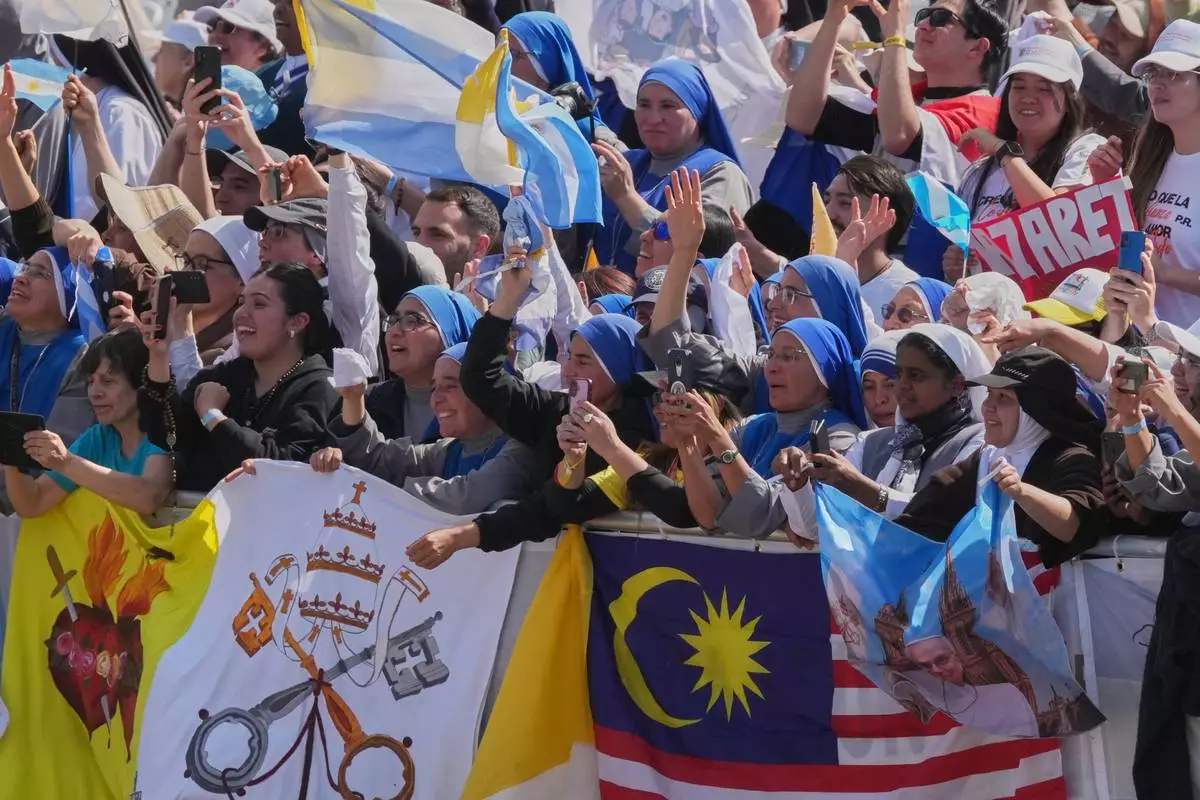
Faithful wait for Pope Leo XIV to preside over Mass at the grounds of the Military Aviation School in Córdoba, Argentina, on the fifth day of his twelve-day apostolic journey to South America, Tuesday, Nov. 10, 2026. (AP Photo/Andrew Medichini)
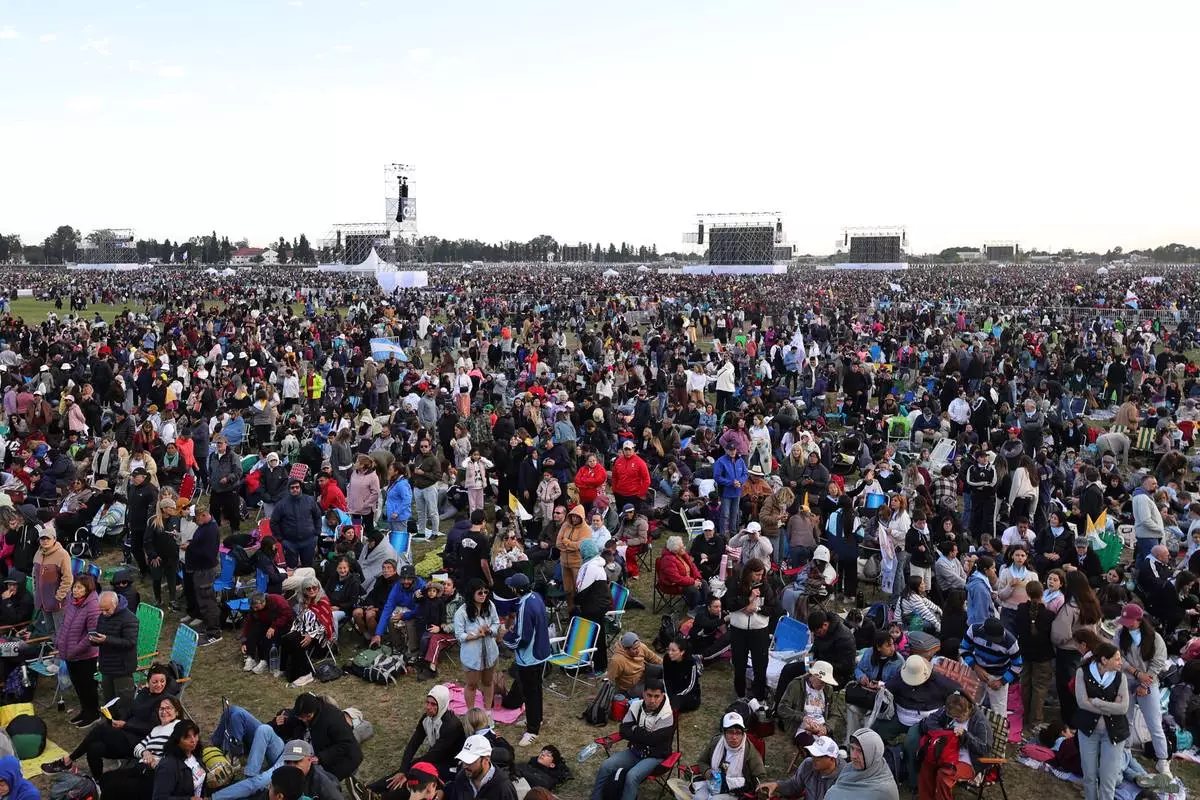
The faithful attend Mass led by Pope Leo XIV at the grounds of the Military Aviation School in Cordoba, Argentina, Tuesday, Nov. 10, 2026. (AP Photo/Nicolas Aguilera)
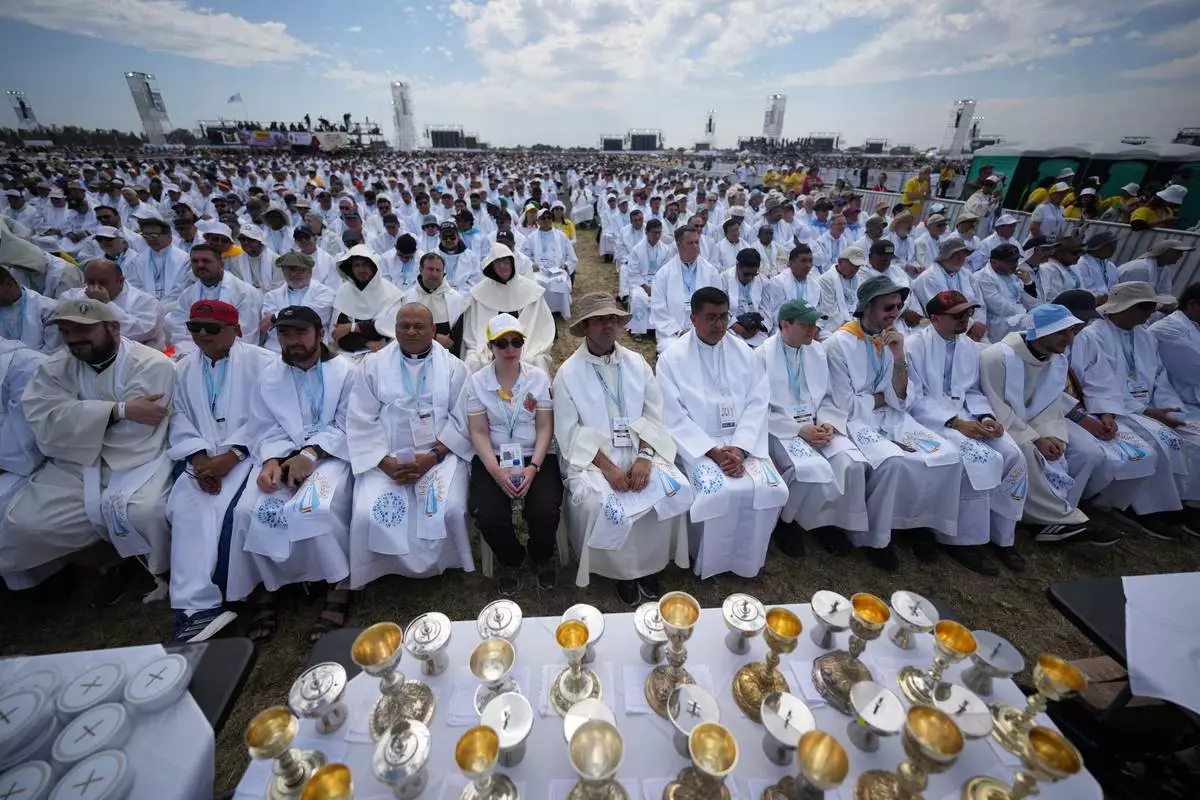
Members of the Catholic clergy attend a Mass presided over by Pope Leo XIV at the Military Aviation School in Córdoba, Argentina, on the fifth day of his twelve-day apostolic journey to South America, Tuesday, Nov. 10, 2026. (AP Photo/Andrew Medichini)
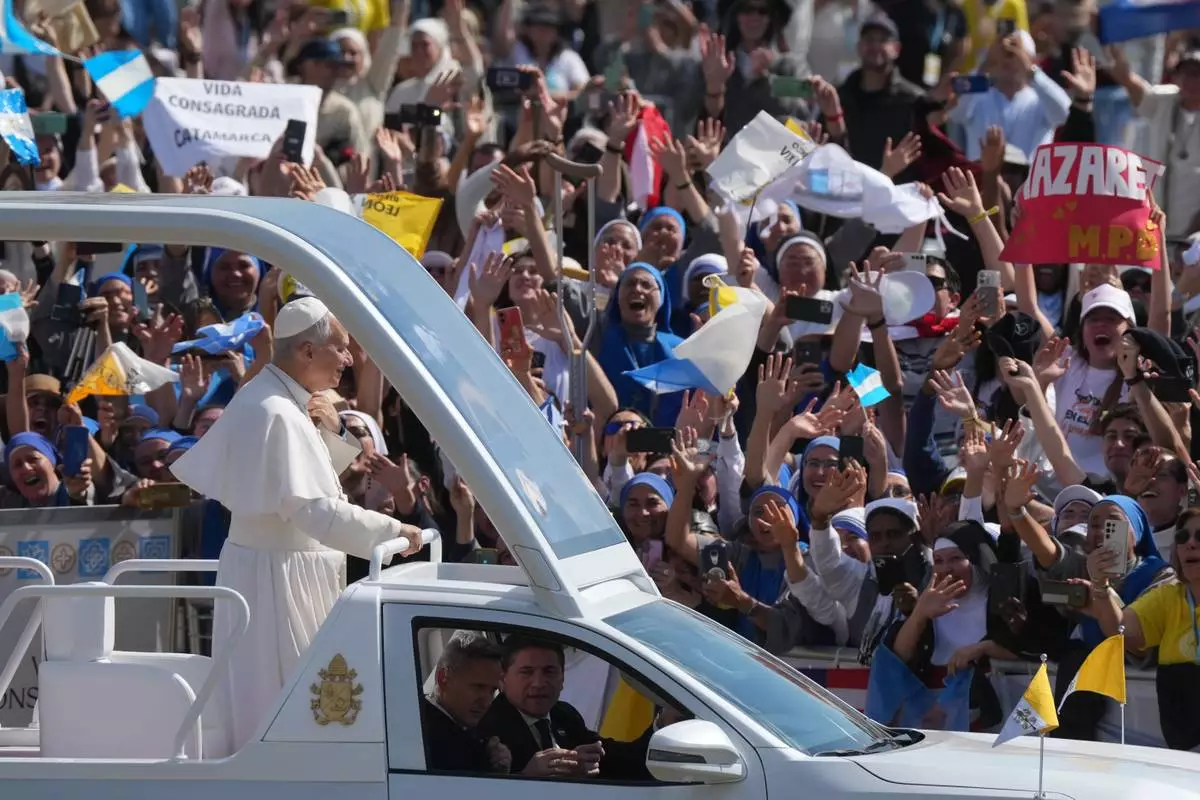
Pope Leo XIV arrives to preside over Mass at the grounds of the Military Aviation School in Córdoba, Argentina, on the fifth day of his twelve-day apostolic journey to South America, Tuesday, Nov. 10, 2026. (AP Photo/Andrew Medichini)