Erling Haaland ended a two-game run without scoring for Norway with the third goal in a 3-1 victory over Wales in the Nations League in Oslo on Saturday.
The 26-year-old Manchester City star looked set to go three games without scoring – an anomaly for a player who averages at least one goal for every international match he plays – until Connor Roberts conceded a penalty with a foul on Andreas Schjelderup in the 85th minute.
Haaland stayed cool while the decision survived a VAR check, then swung his spot kick to the right of Wales goalkeeper Karl Darlow.
He almost got a second in stoppage time but had to be content with his tally of 66 goals in 60 appearances for Norway – extending his national record.
Haaland’s rate of scoring is unseen since “der Bomber” Gerd Muller scored 68 in 62 games for West Germany, including the decisive goal in the 1974 World Cup final.
Norway needed Antonio Nusa to get the breakthrough in the 59th after Wales’ defense failed to adequately clear a corner.
Haaland set up Schjelderup to make it 2-0 with a simple finish soon after, only for David Brooks to make the finish exciting with a brilliant chip over the goalkeeper.
Haaland then ended any suspense to seal Norway's second win in Group A4.
Portugal, already assured of its place in the quarterfinals, was hosting Denmark later in the same group and its No. 7 shirt was to be altered in honor of the recently- retired Cristiano Ronaldo.
Dominik Szoboszlai was involved in both late goals as Hungary defeated Georgia 2-0 away to move top of Group B2 before Northern Ireland hosted Ukraine later.
Also later, Ireland faced Austria away in Group B3, where Israel held Kosovo 0-0 in Pristina earlier. Kosovan fans whistled the Israeli national anthem before the game.
Sweden was hosting Bosnia-Herzegovina later and Poland faced Romania away in Group B4.
See AP’s full soccer coverage here

Norway's Erling Haaland scores his side's third goal by penalty during the UEFA Nations League soccer match between Norway and Wales in Oslo, Norway, Saturday, Nov. 14, 2026. (Fredrik Varfjell/NTB Scanpix via AP)

Norway's Erling Haaland smiles after scoring his side's third goal by penalty during the UEFA Nations League soccer match between Norway and Wales in Oslo, Norway, Saturday, Nov. 14, 2026. (Fredrik Varfjell/NTB Scanpix via AP)

Norway's Erling Haaland smiles after scoring his side's third goal by penalty during the UEFA Nations League soccer match between Norway and Wales in Oslo, Norway, Saturday, Nov. 14, 2026. (Fredrik Varfjell/NTB Scanpix via AP)
WASHINGTON (AP) — Airlines canceled thousands of flights across the U.S. on Saturday as they worked to recover from a nationwide ground stop a day earlier that left passengers scrambling for seats and disrupted travel around the world.
The U.S. air travel schedule should be back to normal by the end of Sunday, two days after what was the nation's longest ground stop in 25 years, Bryan Bedford, administrator of the Federal Aviation Administration, said. He said airlines “will still have delays and cancellations” Saturday but promised that the “worst is behind us.”
Transportation Secretary Sean Duffy told reporters Saturday that a contractor had been replacing a section of the system's old copper wire with new fiber wire, and that work somehow caused the system overload, leading to Friday’s ground stop that lasted more than four hours. The work caused “intermittent” communications and radar gaps, according to Trump administration officials.
Duffy said officials were investigating whether contractor “incompetence” or a faulty router was the cause.
“Our contractor didn't meet the moment or the equipment didn’t meet the moment,” Duffy said.
The contractor, L3Harris Technologies Inc., did not immediately respond to requests for comment or issue a public statement Saturday.
The nationwide stop was the first since January 2023, when a key FAA computer system that sends notices to pilots malfunctioned, and the second since the Sept. 11, 2001, attacks.
Andrew Charlton, an aviation consultant, said Friday's stoppage affected about a quarter of the 45,000 flights in the U.S. each day.
“The knock-on effect of that is incredible,” said Charlton, managing director of Aviation Advocacy. “The aircraft doesn’t just fly from A to B and back ... and then stop. It then moves onto C and then over to E and around and around and around. It is, of course, exacerbated if you’re talking about long-haul flights, international flights over the Atlantic or over the Pacific.”
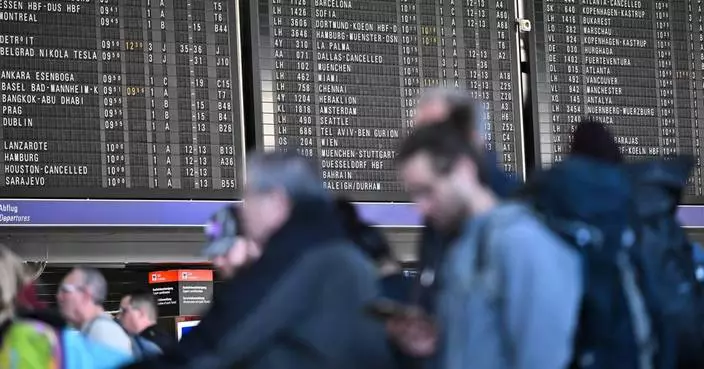
At airports across the U.S. on Saturday, passengers were still scrambling to figure out how to get to their destinations. Some waited out the chaos in hotels, others sprinted to snag rental cars and bus or train tickets. But many were forced to camp out in airports.
Others got creative. Video in Seattle's airport showed a passenger serenading stressed out travelers with classical music. The singer T-Pain and the band Hoobastank were recorded singing to passengers as they waited on commercial airplanes.
Dan Russell, 66, learned his connecting flight from Kona, Hawaii, to Fresno, California, was canceled a half-hour before boarding was scheduled in San Diego on Friday night. Hotels were full, so he and his wife waited at the airport for a rebooked flight on Saturday.
“There’s nothing you can do,” Russell said, as his wife, Mary, tried to nap on his shoulder.
A cheerful Southwest Airlines gate agent at Dallas Love Field greeted passengers at dawn with, “Good morning, good morning,” then repeatedly said all flights were full and asked passengers to have boarding passes ready to help keep flights moving.
In Las Vegas, Korean Mexican influencer Sujin Kim, known online as Chingu Amiga, said her Friday flight to Mexico was rescheduled for Saturday morning. Kim said she had never experienced anything like it, though she travels often and “I always lose my suitcase.”
“Many people ended up sleeping at the airport, too, but thank God we managed to find a room,” she said.
At the Newark, N.J., airport, Umi Egchi was trying to figure out when his flights would line up so he could return home to Japan.
“I’m not sure exactly what happened. I just want to go home,” said Egchi, who had a sleep mask on top of his head.
Sports teams that traveled for games this weekend adjusted game start times, and No. 19 Mississippi’s game at Oklahoma was delayed a full day to Sunday.
FlightAware, a website that tracks flights, said more than 4,100 flights had been canceled Saturday. Cirium, a similar site, put that number above 3,200 flights.
Duffy reiterated Saturday that no one was in any danger as more than 3,000 flights in the air at the time of the grounding order landed safely.
Trump administration officials also blamed Congress for failing to approve more funding to replace the decades-old technology that helps manage the U.S. air traffic. Duffy said that 70% of the system had been replaced with fiber optic wire but that his agency also needs new air traffic control towers and runways.
The FAA has replaced thousands of old copper wires with fiber optic lines and upgraded hundreds of radio systems as part of an overhaul that began last year after Congress approved $12.5 billion in funding. Duffy and the White House are pushing for $30 billion more to complete the work.
“We have aging infrastructure throughout the airspace,” Duffy said, while stressing that flying remains safe. “You won’t get to your destination if we don’t think you can get there safely.”
In a moment that perhaps only further underscored the Transportation Department’s struggling systems, Duffy’s news conference Saturday morning began with audio troubles that forced last-minute microphone swaps.
Although Duffy said he had repeatedly spoken with President Donald Trump since the ground stop began, the president has largely been quiet on the topic. He has not spoken publicly on the matter, nor issued statements via social media, although he commented on other things. He spoke on the phone with a Fox News reporter, but that was not on camera.
Charlton, the aviation consultant, pointed to the difficulties of updating a system that can never shut down.
“What you’re watching here is trying to change the tires of your car when the car’s going at 80 miles an hour down the expressway, because nothing stops in aviation,” Charlton said.
The problem appeared similar to a regional air traffic control communication outage in September that snarled hundreds of flights across the Northeast. That disruption was linked to a construction crew cutting a fiber optic line.
Aging equipment was also blamed for brief radar outages last year that disrupted Newark airport.
Aviation safety expert Steve Arroyo said the difference Friday was the nationwide scale of the disruption, which left controllers unable to reliably talk to pilots.
“If you don’t have that ability, whether it’s because the old wires that they have are just run down or for whatever reason, you’ve got to stop airplanes on the ground and not put them in the air, where you’re going to risk not being able to communicate with them,” said Arroyo, a former United Airlines pilot.
This version has been updated to correct that Duffy said investigators were looking at whether a possible faulty router, not a faulty wire, might have been the cause.
Kruesi reported from Providence, Rhode Island, and Colvin reported from New York. Associated Press journalists Josh Funk in Omaha, Nebraska, Elliot Spagat in San Diego, Bernice Bautista in Las Vegas, and Hannah Fingerhut in Des Moines, Iowa, also contributed.
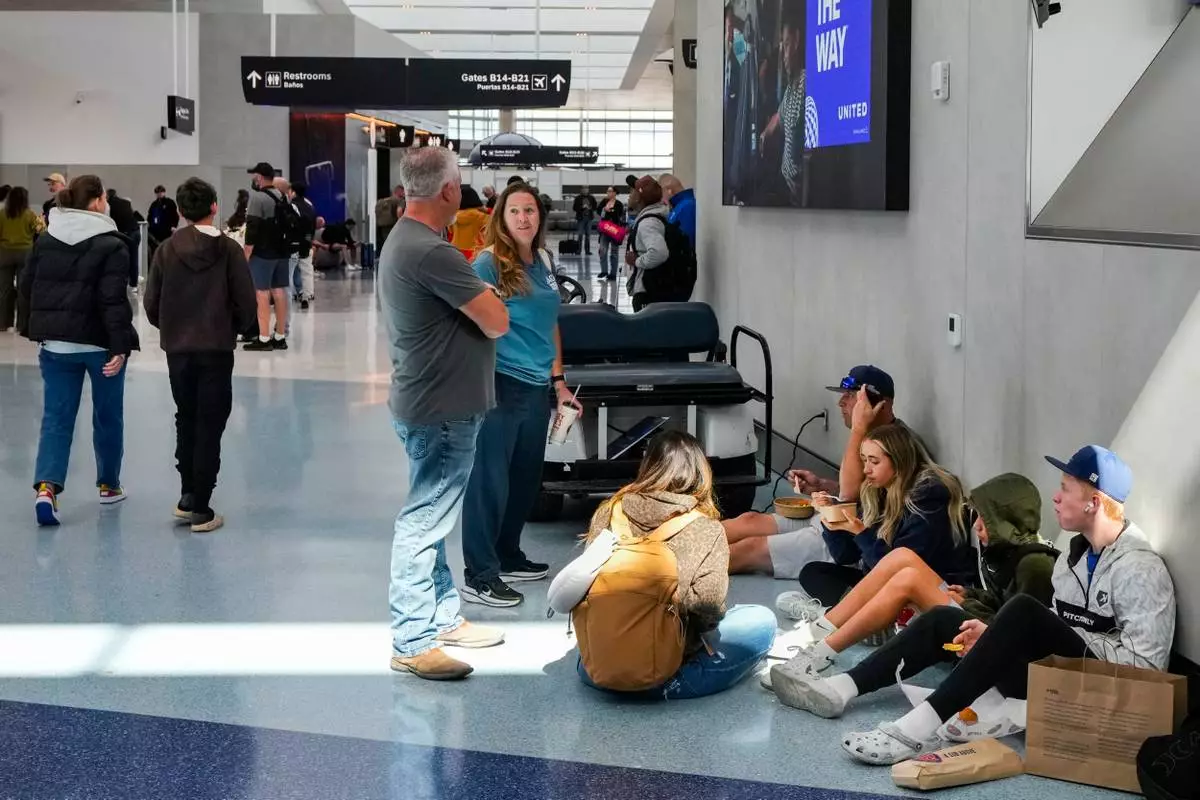
Passengers wait for their flights at George Bush Intercontinental Airport Saturday, Nov. 14, 2026, in Houston after the Federal Aviation Administration lifted nationwide ground stops. (Brett Coomer/Houston Chronicle via AP)
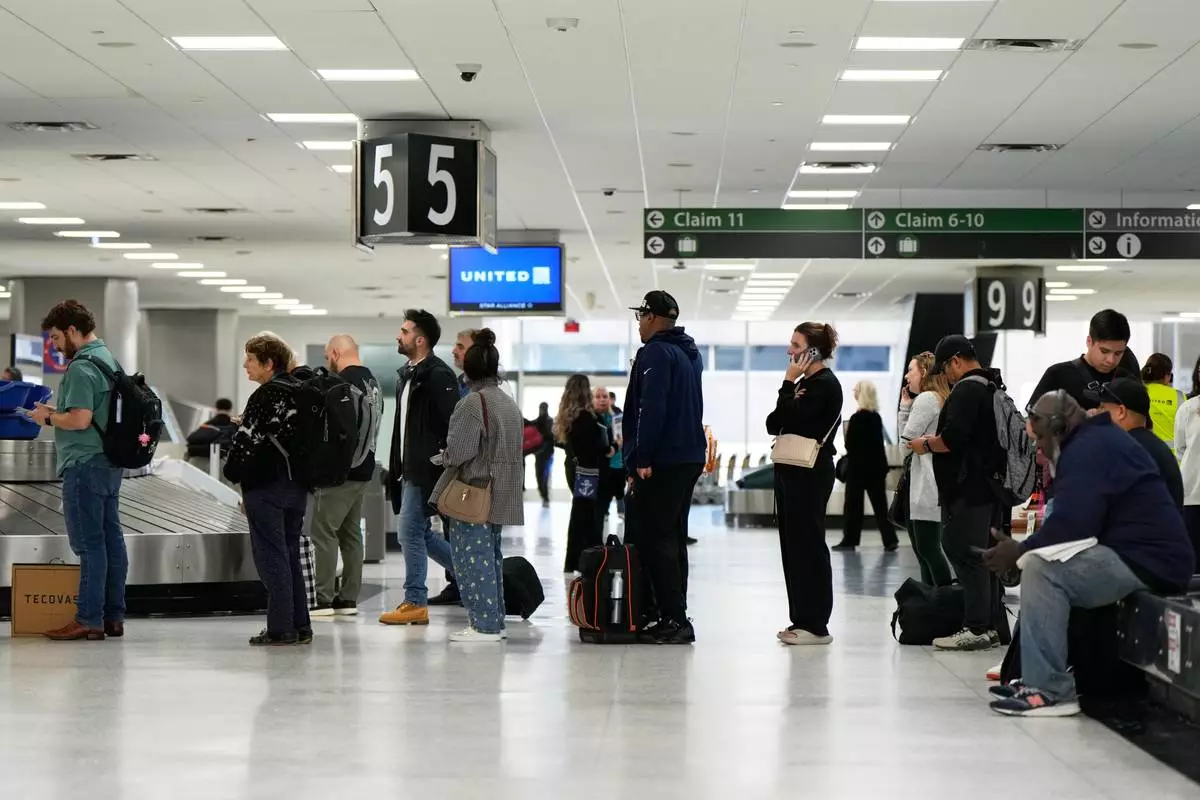
Passengers wait in line at a baggage claim area at George Bush International Airport on Saturday, Nov. 14, 2026, in Houston, after the Federal Aviation Administration lifted nationwide ground stops. (AP Photo/Ashley Landis)
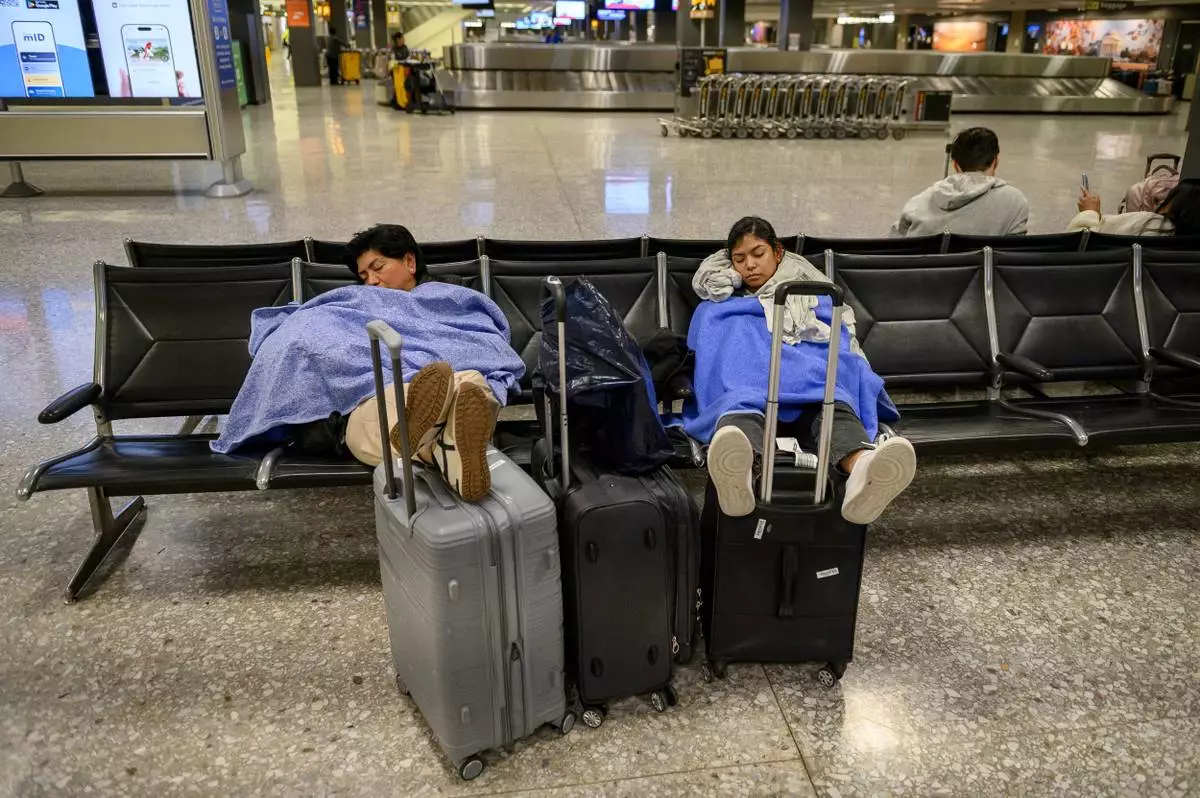
Two travelers sleep in the baggage claim area at Washington Dulles International Airport, in Chantilly, Va., Friday, Nov. 13, 2026, after the Federal Aviation Administration grounded flights nationwide. (AP Photo/Cliff Owen)
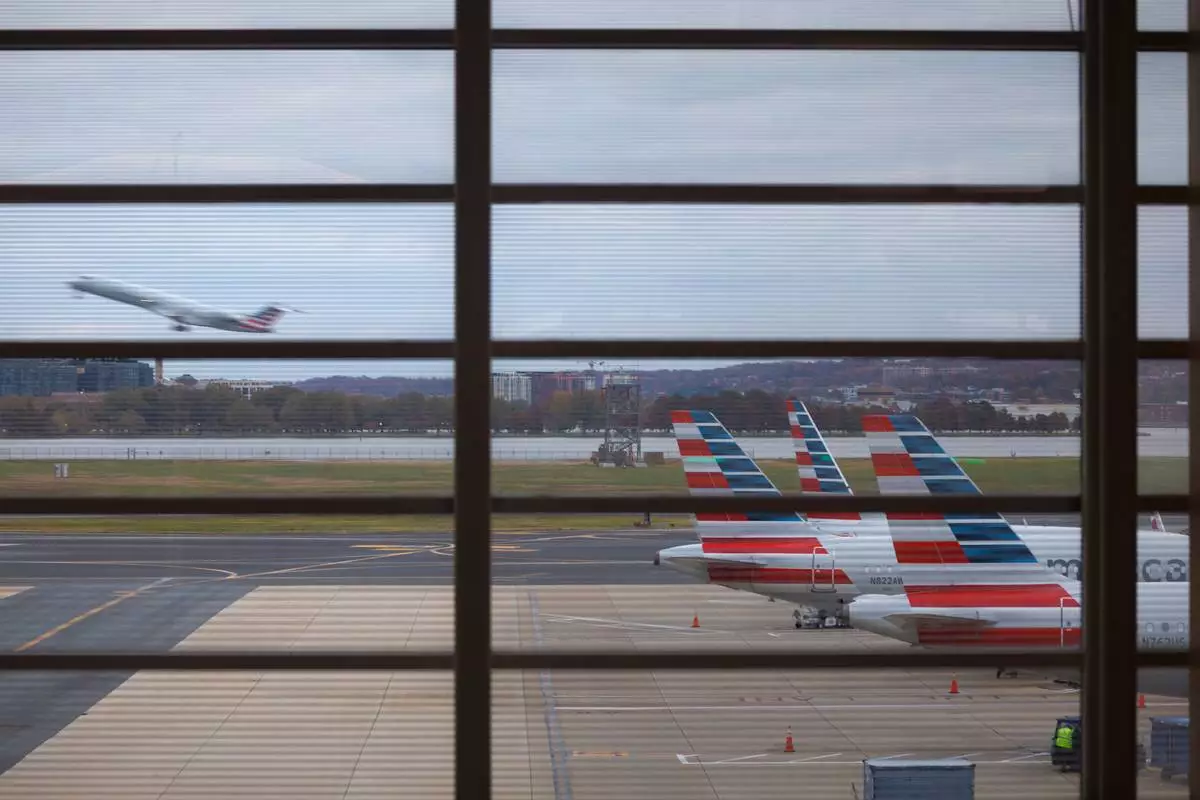
An American Airlines flight takes off from Ronald Reagan Washington National Airport in Arlington, Va., after the Federal Aviation Administration grounded flights nationwide, Saturday, Nov. 14, 2026. (AP Photo/Tom Brenner)
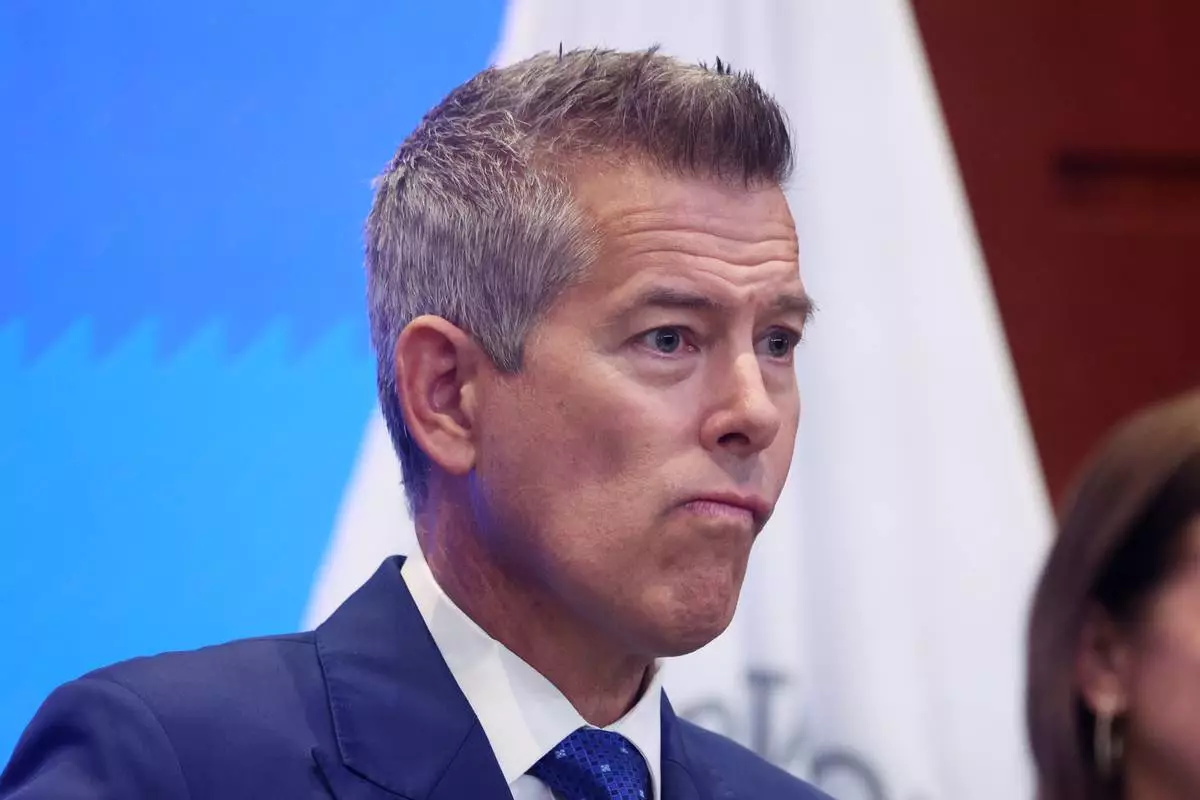
Transportation Secretary Sean Duffy, arrives for a news conference at the U.S. Department of Transportation, Saturday, Nov. 14, 2026, in Washington. (AP Photo/Tom Brenner)
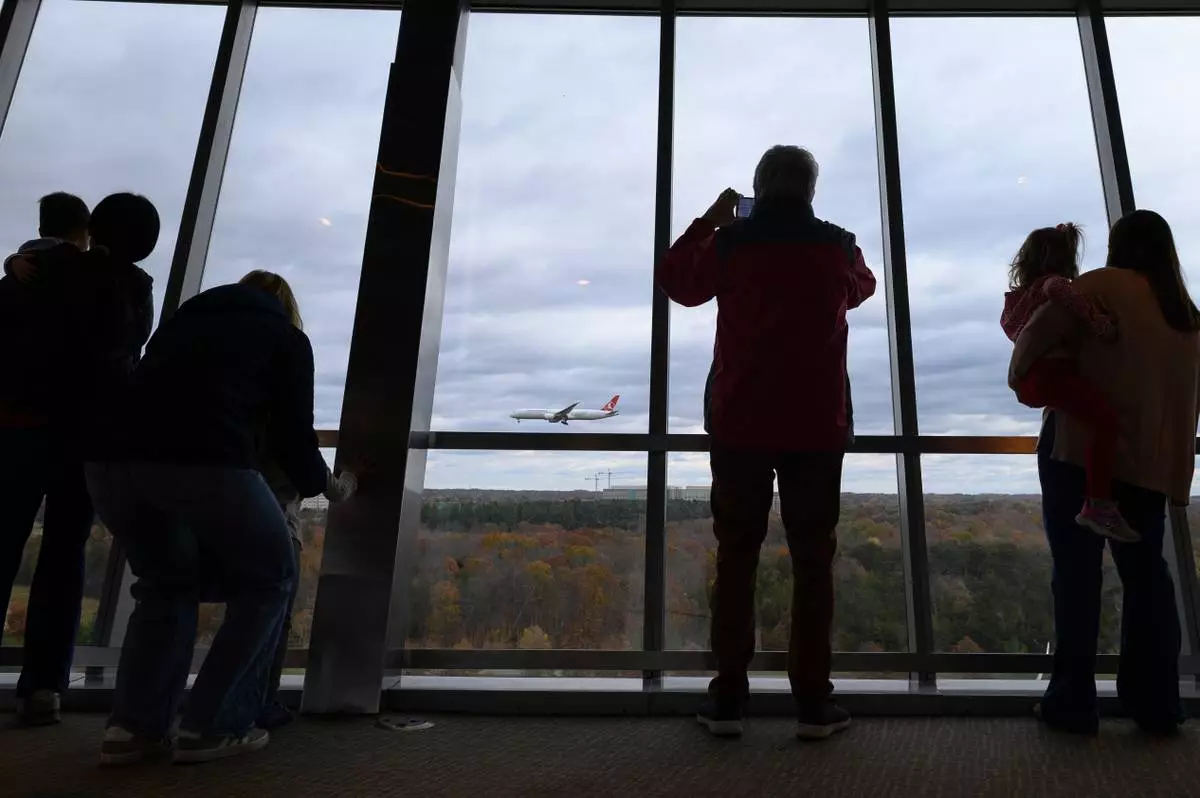
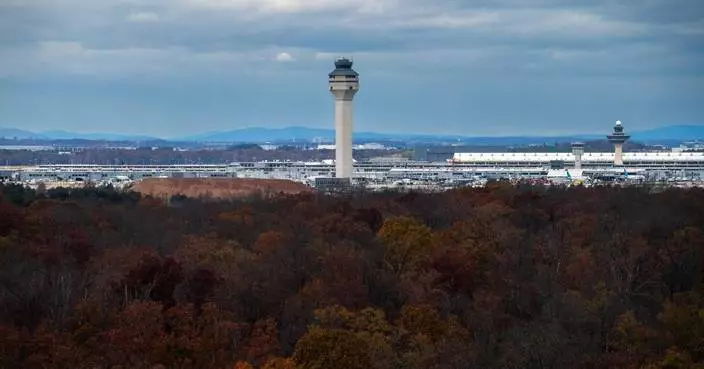
Visitors to the Steven F. Udvar-Hazy Center observation tower watch an airplane as it prepares to land at Washington Dulles International Airport after the Federal Aviation Administration lifted nationwide ground stops in Chantilly, Va., Saturday, Nov. 14, 2026. (AP Photo/Cliff Owen)
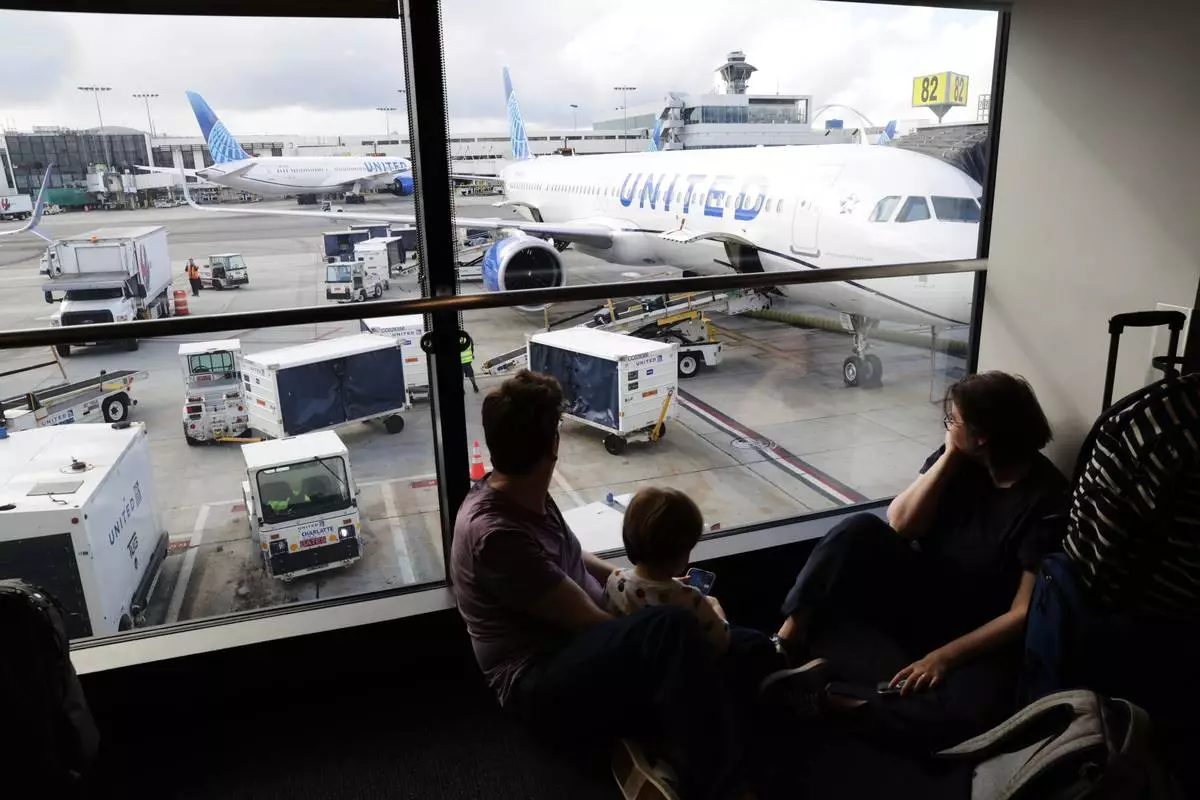
Passenger watch as workers unload luggage from a United plane as flights are delayed at Los Angeles International Airport Friday, Nov. 13, 2026, in Los Angeles. (AP Photo/Ethan Swope)
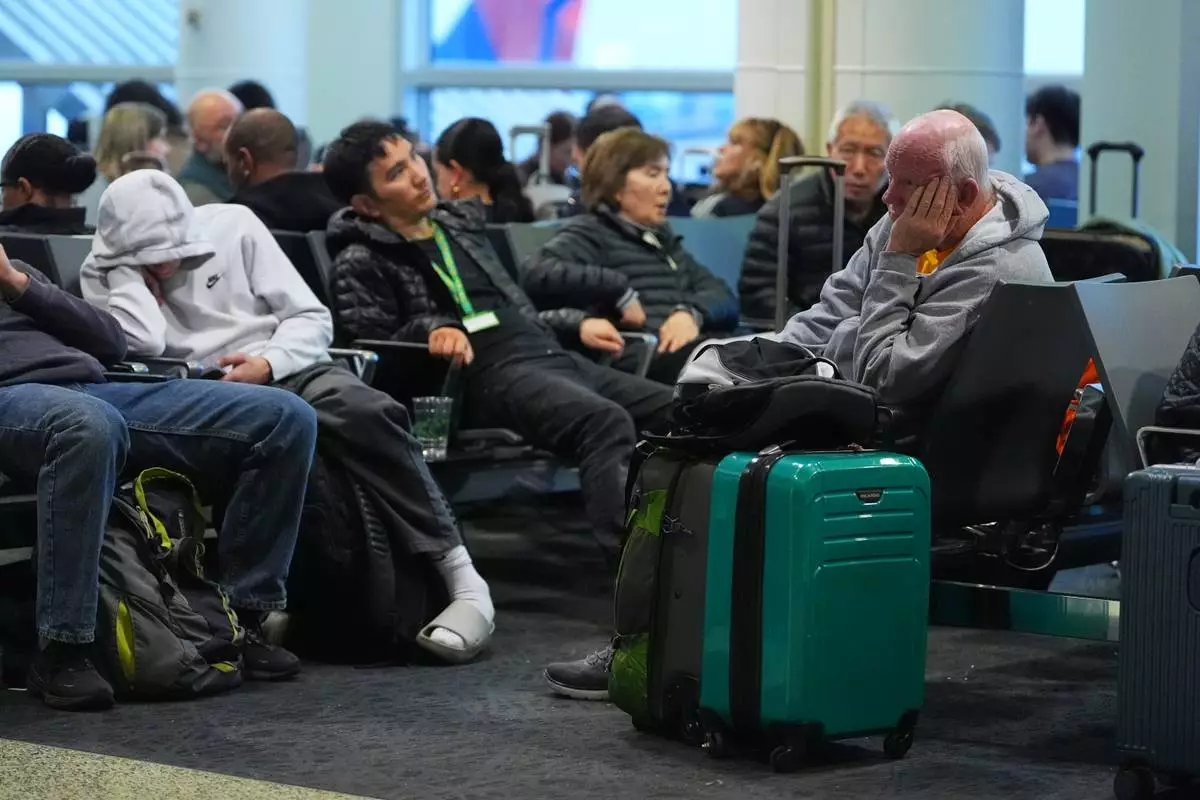
Passengers wait as flights are delayed inside a terminal at Seattle-Tacoma International Airport on Friday, Nov. 13, 2026, in Seattle. (AP Photo/Lindsey Wasson)
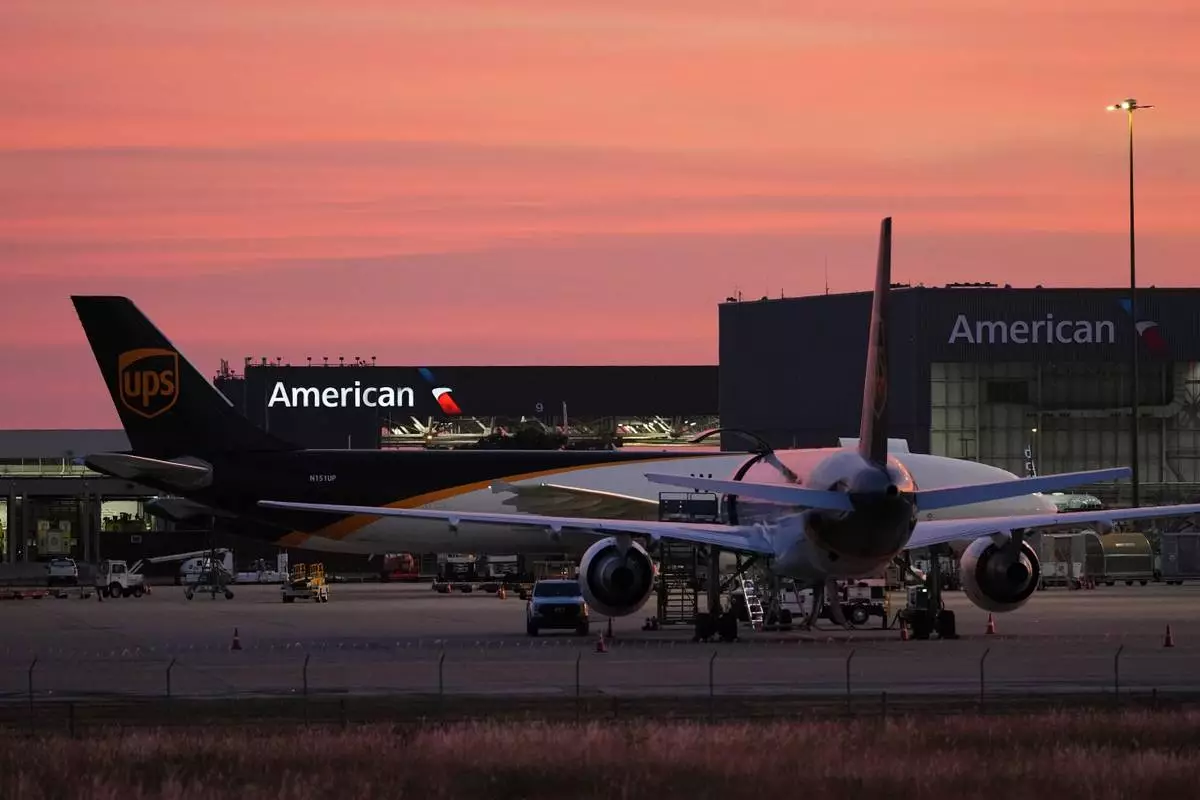
The sun sets over Dallas Fort Worth International Airport in DFW Airport, Texas, Friday, Nov. 13, 2026, after the Federal Aviation Administration grounded flights nationwide. (AP Photo/Tony Gutierrez)
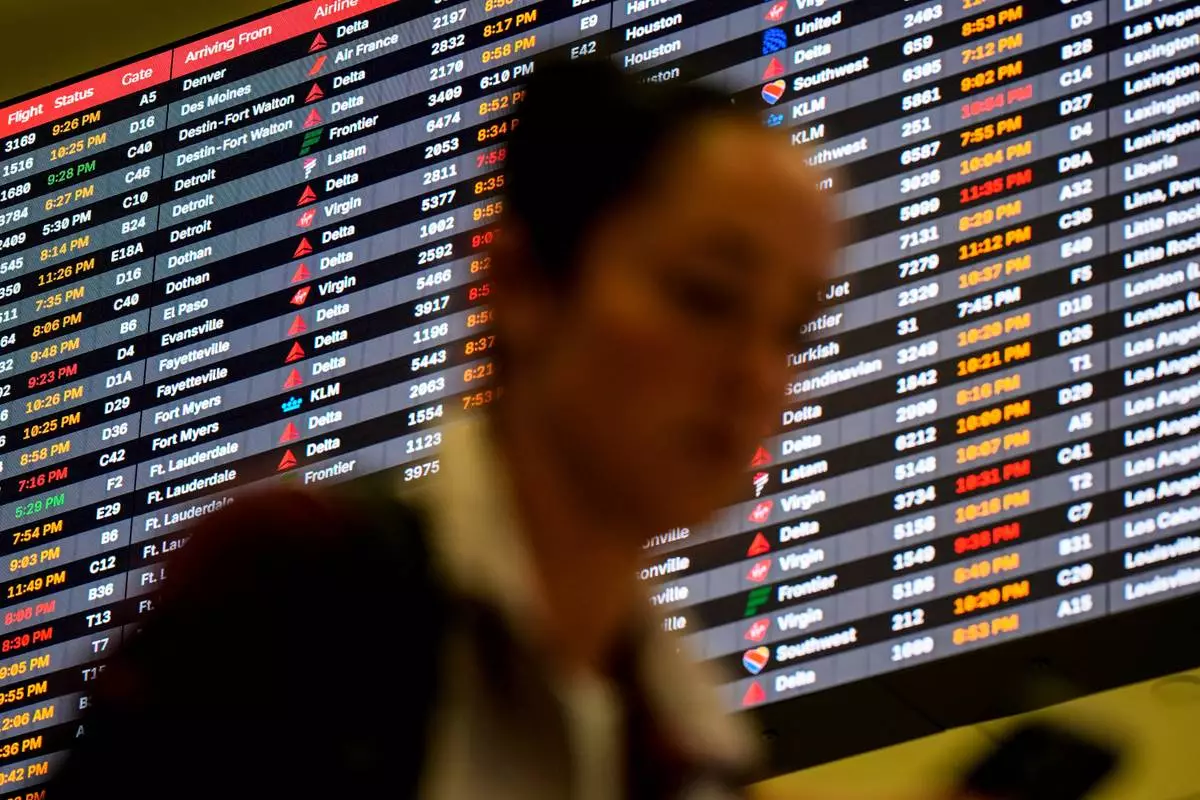
A passenger moves through Hartsfield-Jackson Atlanta International airport as all flights are canceled or delayed, Friday, Nov. 13, 2026, in Atlanta. (AP Photo/Mike Stewart)
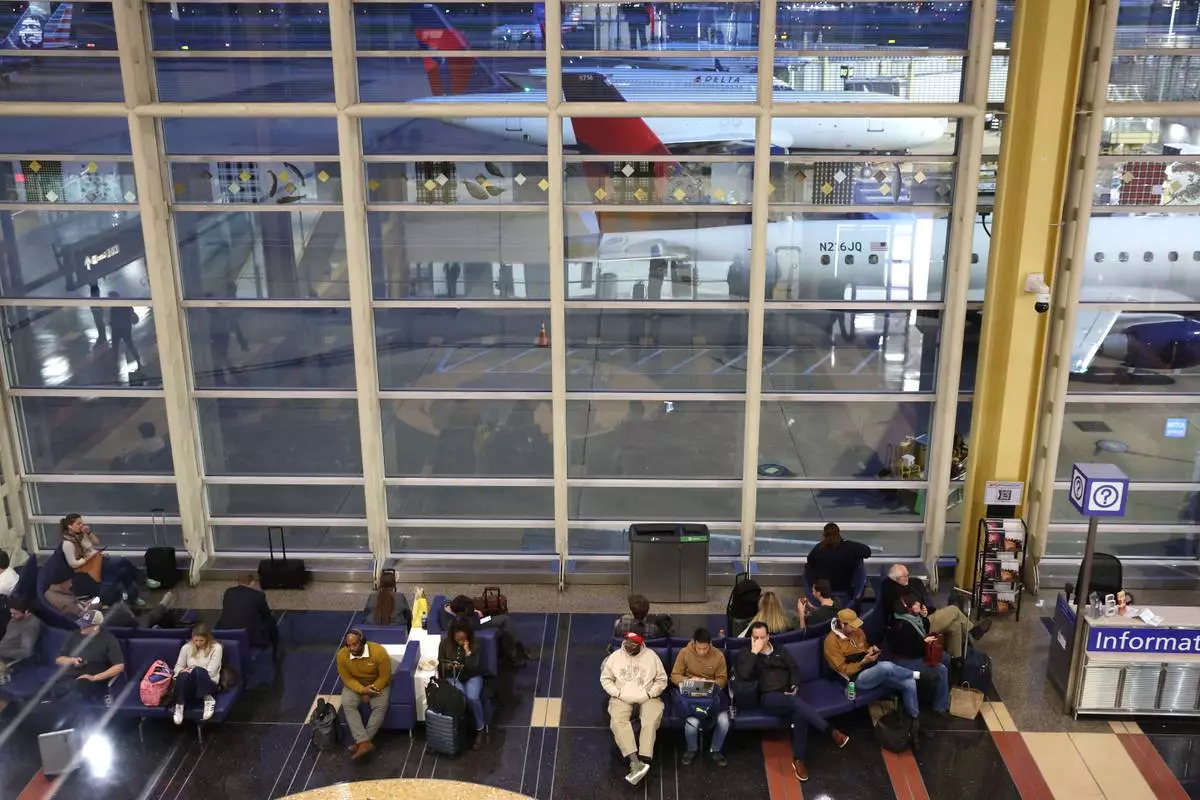
People wait at a terminal at Ronald Reagan Washington National Airport, Friday, Nov. 13, 2026, in Arlington, Va., after the FAA issued a nationwide ground stop. (AP Photo/Tom Brenner)
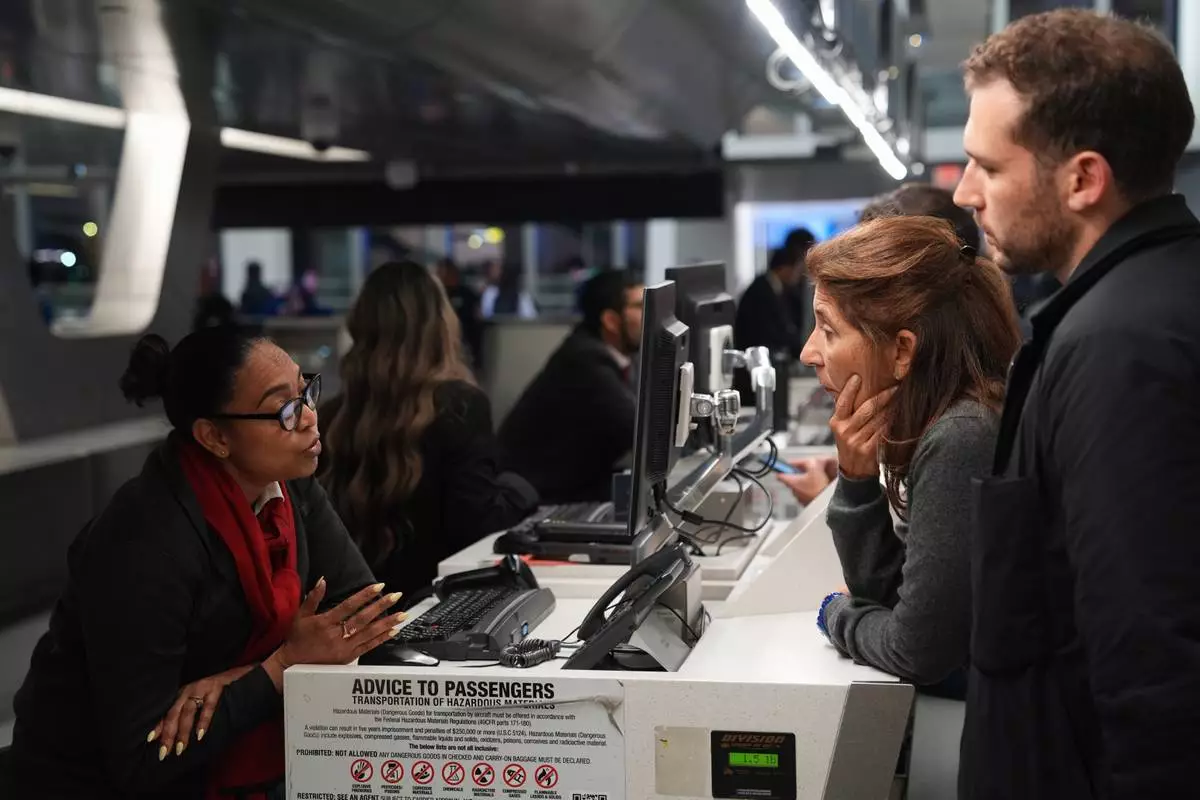
An agent helps travelers at a ticketing desk at LaGuardia Airport in New York, Friday, Nov. 13, 2026, after the Federal Aviation Administration grounded flights nationwide. (AP Photo/Ryan Murphy)