COLLEGE STATION, Texas (AP) — DaSaahn Brame had a touchdown catch and Cooper Ranvier made a career-high five field goals to lead No. 9 Tennessee to a 22-7 win over Texas A&M Saturday.
DeSean Bishop added 97 yards rushing to help the Volunteers, who ranked eighth in this week’s College Football Playoff rankings, to their fifth win in six games.
Coach Josh Heupel was impressed with his team's performance despite the FAA ground stop that made for an extra long travel day where the Volunteers didn't arrive in College Station until about 11 p.m. Friday night.
“A lot of things this group was dealing with; injuries, the travel, getting in late,” he said. “And ultimately deciding to prepare the right way, not let anything get in our way and going and competing really hard for four quarters.”
The Aggies led 7-6 at halftime and neither team could get anything going offensively in the third quarter as they combined for five punts.
Tennessee (8-2, 5-2 SEC) finally got going and took a 9-7 lead on a 32-yard field goal by Ranvier late in the third.
The Aggies (4-6, 1-6) looked to have forced a punt on Tennessee’s next drive. But Marco Jones was called for roughing the passer to give the Volunteers a first down.
Tennessee took advantage of the error when Faizon Brandon threw a 5-yard touchdown pass to Brame that made it 16-7 with less than 10 minutes to go.
The Aggies went for it on fourth-and-1 from their 34 on their next possession, but Reed’s pass was incomplete to give Tennessee great field position.
They padded the lead with a 44-yard field goal that left them up 19-7 with about six minutes left.
Ranvier added a 27-yard field goal with less than three minutes to go to make it 22-7.
“I feel like I’m a lot more polished than last year and bolder and more experienced,” Ranvier said. “And I’ve given (Heupel) more confidence in me throughout the season. I know he trusts me and I trust him to give me the right opportunities.”
Texas A&M's offensive struggles continued as the team punted on its first four possessions of the second half before turning it over on downs. Marcel Reed was intercepted on the next drive, and backup Brady Hart was picked off after that.
“An utter apology to everyone who supports our program," coach Mike Elko said. "You all deserve much better. Give me a chance and we’ll put a better product on the field. This is not what you deserve.”
Reed was 9 of 22 for a season-low 71 yards as the Aggies were limited to a season-worst 179 total yards.
Elko was asked if he might consider a change at quarterback.
“We’ll figure that out moving forward," he said. "Our offense is inept. It’s not just on one kid. It’s not just on Marcel Reed, that’s on me. It’s on me. It’s my fault. I own it. Come after me.”
The Volunteers had a 3-0 lead when K.J. Edwards dashed 25 yards for a touchdown to put Texas A&M up 7-3 early in the second.
Ranvier cut the lead to 7-6 on a 30-yard field goal with about six minutes left in the second. The Aggies had a shot to extend their lead just before halftime, but David Olano’s 50-yard field goal attempt was wide right.
Tennessee: The Volunteers got a convincing win despite struggling offensively for most of the day. They’ll need to score touchdowns instead of settling for field goals if they hope to stay on track and secure a CFP spot.
Texas A&M: The Aggies need to win their final two games against Oklahoma and No. 6 Texas to become bowl eligible a year after an 11-1 regular season that earned them their first CFP berth in 2025.
The Volunteers played without backup running back Daune Morris after he sustained a broken leg in a car accident early Friday morning.
Morris was ticketed for reckless driving following the crash, according to a police report. The report says that the 19-year-old was driving a Dodge Charger with two passengers when he hit a fire hydrant and four parked cars in a parking lot before the car flipped and came to rest on its roof.
“You hate having to deal with that,” Heupel said. “Got to make good decisions and you affect a lot of other people that put a lot of work into it.”
The sophomore ranks second on the team with 434 yards rushing and three touchdowns. He had a 66-yard TD run in last week’s 34-6 win over then-No. 6 Kentucky.
With Morris out, Javin Gordon had a season-high 78 yards rushing.
Tennessee: Hosts No. 21 LSU next Saturday.
Texas A&M: Visits Oklahoma next Saturday.
Sign up for Top 25 poll alerts here. Visit the Top 25 here and see AP’s full college football coverage here

Tennessee defensive back Ty Redmond (4) knocks the ball away from Texas A&M wide receiver Isaiah Horton (7) for an incomplete pass during the second half of an NCAA college football game Saturday, Nov. 14, 2026, in College Station, Texas. (AP Photo/Sam Craft)
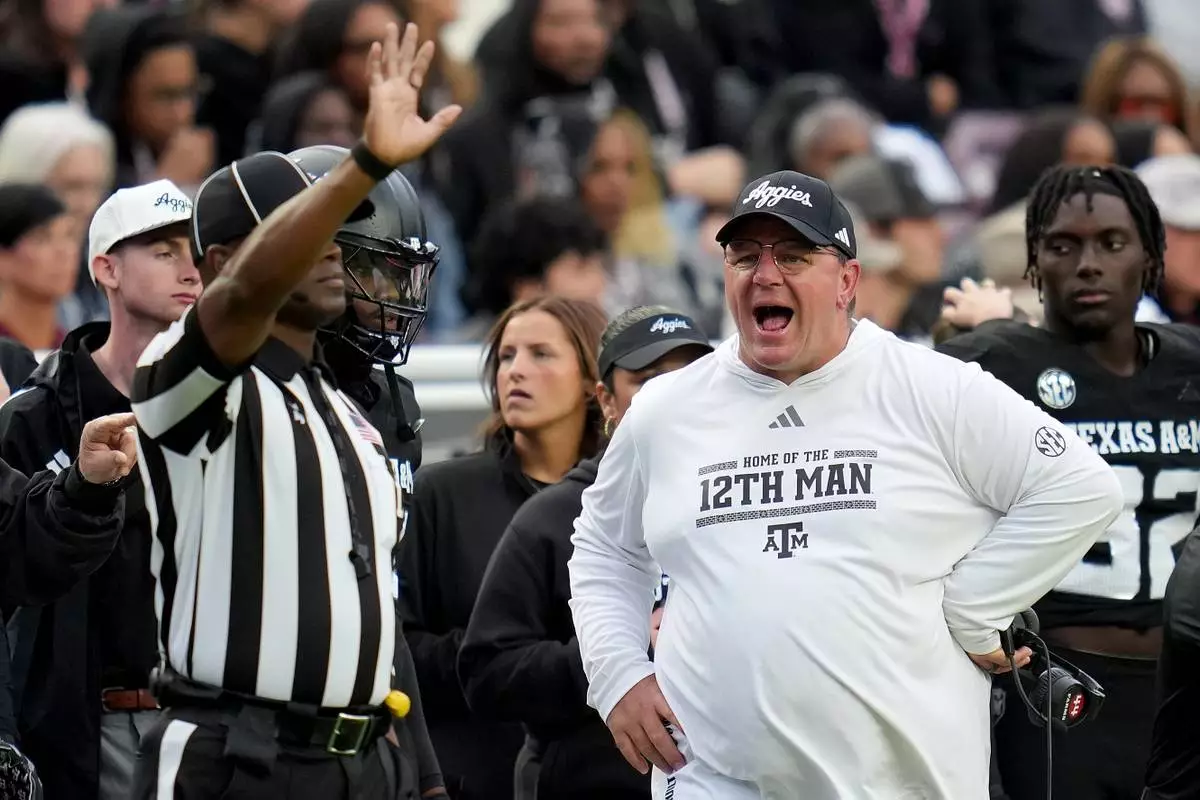
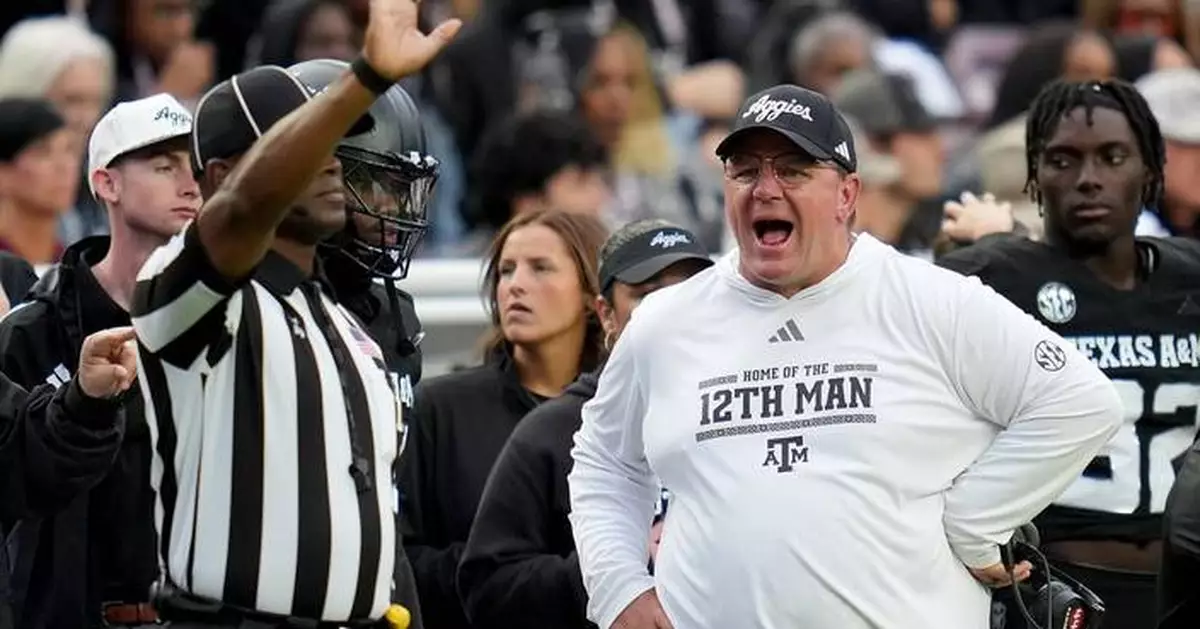
Texas A&M head coach Mike Elko reacts during the second half of an NCAA college football game against Tennessee Saturday, Nov. 14, 2026, in College Station, Texas. (AP Photo/Sam Craft)
Regional U.S. air traffic control centers communicate using a complex network that's “one of the largest telecommunications systems in the country,” and disruptions like those seen on Friday with an hourslong, nationwide grounding of flights can reverberate widely, according to an aviation expert.
Michael McCormick, a former airspace manager with the Federal Aviation Administration, said it could take days for airlines — many of which had to divert flights — to resume normal operations after officials lifted the grounding order. The order was lifted late Friday.
Here's a look at what happened, how regional air traffic control centers work, how controllers communicate with pilots and why a problem on the ground can affect flights thousands of miles away among other issues:
The nation’s air traffic control system overloaded antiquated equipment and caused “intermittent” communications and radar gaps, leading to the ground stop that lasted more than four hours on Friday, Trump administration officials said Saturday in a press briefing.
A contractor had been working on replacing a section of the system’s old and discontinued copper wire with new fiber wire in a remote location on Friday afternoon, Secretary of Transportation Sean Duffy said Saturday. That kind of work has been happening across the country and across industries for decades, he said.
“Specifically, we had over 1,000 connection attempts every 4 to 5 seconds,” Duffy said. “And what that did was gave us issues with our communication with airplanes, and it also caused some disruption with our radar feeds. And when we see that, your safety is paramount, we shut down the airspace.”
Planes flying at the time of the ground stop were able to land safely using “well-known procedures” in place for such circumstances, Duffy said Friday.
The government has been working to overhaul the outdated technology air traffic controllers rely on since Congress approved $12.5 billion for the effort last year. Miles of old copper wires have been replaced with fiber optic lines, while old radio systems are gradually being replaced at airports. But the work is far from complete, and Duffy used the news conference on Friday and Saturday to urge Congress to provide more funding.
The FAA grounded flights nationwide Friday due to issues at regional air traffic control centers, an FAA notice said.
The U.S. operates 22 regional air traffic control centers, managed by the FAA, and they oversee long-distance aircraft operating between departure and arrival airports, according to McCormick, associate professor and program coordinator in the Department of Applied Aviation Sciences at Embry-Riddle Aeronautical University. McCormick estimates these control centers take over flights at altitudes over 10,000 feet.
These centers, which operate in such places as Anchorage, Alaska, Houston and Indianapolis, are one of the three layers that guide pilots. The airport towers direct pilots during takeoffs at the 500-plus airports that have towers. Then, the so-called Terminal Radar Approach Control centers take over and guide pilots as they get further away from the airport. And then the regional control centers take over. When descending, the reverse happens, experts say.
Experts say that the controllers at the regional centers are sitting at radar displays and are responsible for only that airspace.
“As you fly, your flight is handed off from one controller to another controller,” said Stephen Creamer, president and CEO of the Air Traffic Control Association, a trade group for equipment manufacturers involved with air traffic control. “That handoff process is like taking the screen and the aircraft on one screen and making sure it’s on someone else’s screen before you send the communications over to that next controller and have the pilot start talking to them.”
McCormick said the country's regional, high-altitude air traffic control centers need to be connected to remote radio transmitter or receiver sites. That's to allow for radio frequency coverage to communicate with the aircraft.
Those transmitter sites are connected to the centers via telecommunications systems, the likes of which are in the process of moving from copper wires to fiber optic lines. The two-way communication is important to ensure — among other things — that planes maintain safe spacing, he said.
“What is especially problematic in this case is that it’s what’s known as a rolling outage,” McCormick said. “In other words, it's unpredictable and it may impact one air traffic control center now and then it gets better and then impacts another air traffic control center.”
But he and other aviation experts said that the FAA is now transitioning to what's known as controller pilot data link — a digital, text-based messaging system that allows controllers and pilots to exchange routine clearances, instructions and requests through the data link instead of voice radio.
In September, Newark Liberty International Airport temporarily lost radar communications with aircraft, after a backup fiber optic line was inadvertently cut by railroad construction workers. That forced the FAA to immediately cancel hundreds of flights going in and out of the airport.
But airline experts say that scenario was different from what occurred on Friday. Federal Aviation Administration Administrator Bryan Bedford told reporters Saturday that intermittent frequency instability affected as many as 17 of the 22 U.S. regional air control centers.
“The thing that was unique about this is that it was a type of failure that wasn’t local because it was part of the communication system,” said R. John Hansman, an aeronautics professor at MIT whose research includes information technology in aviation. “It propagated around the country.”
Andrew Charlton, an aviation consultant, said the “knock-on” effect is incredible.
“The aircraft doesn’t just fly from A to B and back to B and then stop,” he said. “It then moves on to C and then over to E and around and around and around. It is, of course, exacerbated if you’re talking about long-haul flights, international flights over the Atlantic or over the Pacific.”
Aviation experts say that pilots can still communicate with aircraft even during intermittent communications disruptions, noting as an example that many planes have satellite phone systems.
Hansman said pilots can still talk directly to other pilots in airplanes around them via radio. There is also equipment on board that tells pilots if airplanes are around them, he added.
If a control tower loses radio capabilities, it can also communicate with pilots with high intensity light beams, which send signals to pilots to alert whether it's safe to descend, Hansman said.
“We have a number of backup systems that allow the airplanes to fly safely to the extent that air traffic control can still communicate directly with the radio,” he said.
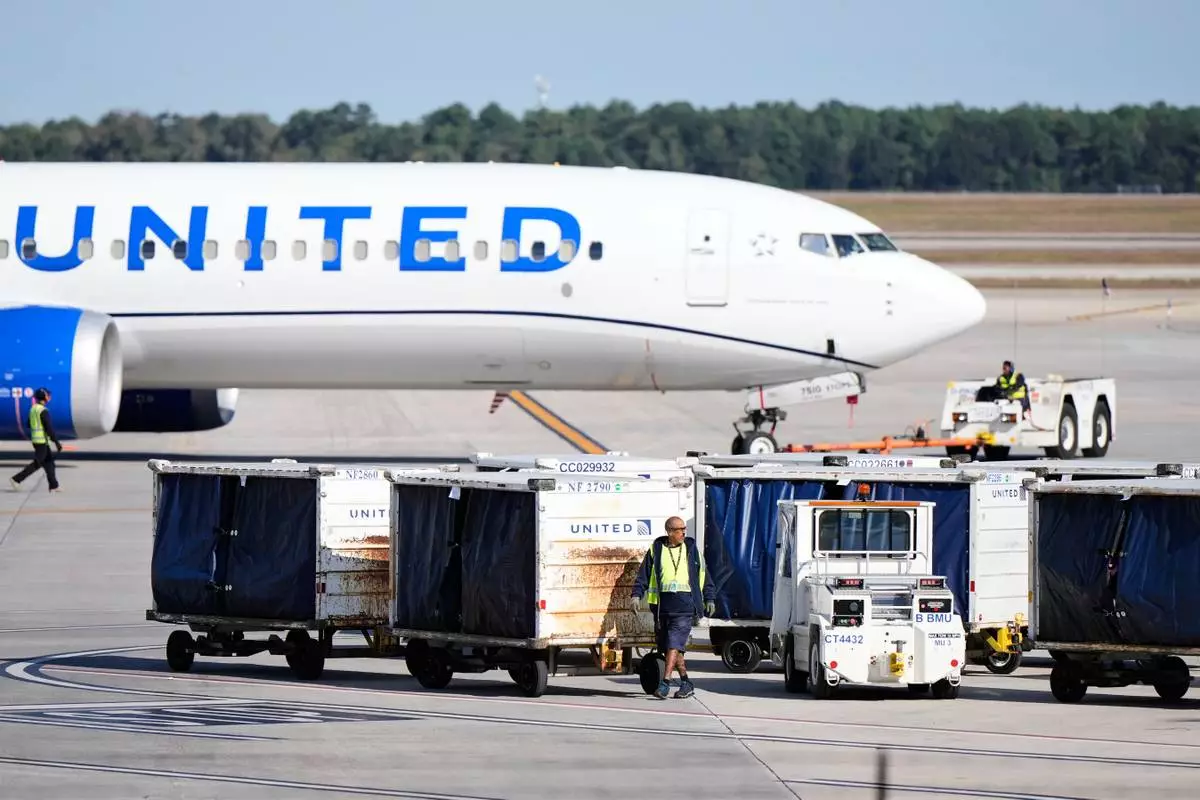
A worker manages baggage carts as a United Airlines flight taxis at George Bush International Airport on Saturday, Nov. 14, 2026, in Houston, after the Federal Aviation Administration lifted nationwide ground stops. (AP Photo/Ashley Landis)
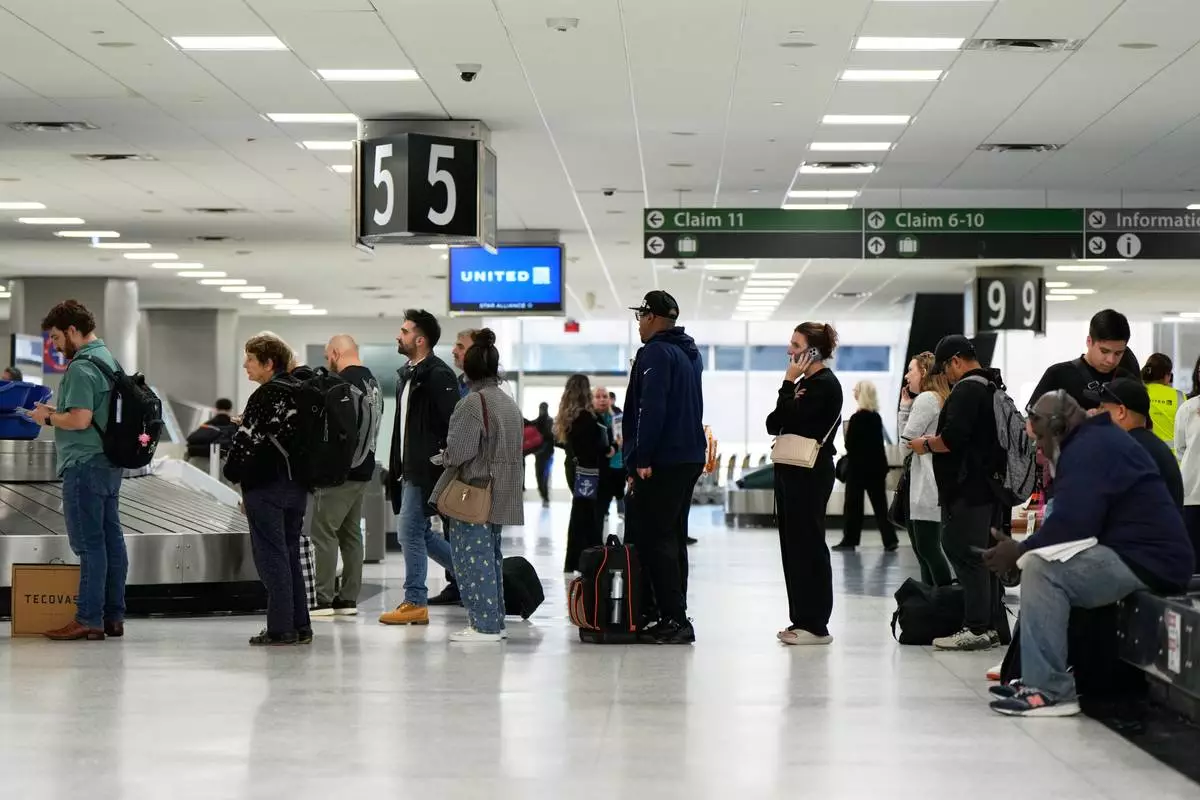
Passengers wait in line at a baggage claim area at George Bush International Airport on Saturday, Nov. 14, 2026, in Houston, after the Federal Aviation Administration lifted nationwide ground stops. (AP Photo/Ashley Landis)
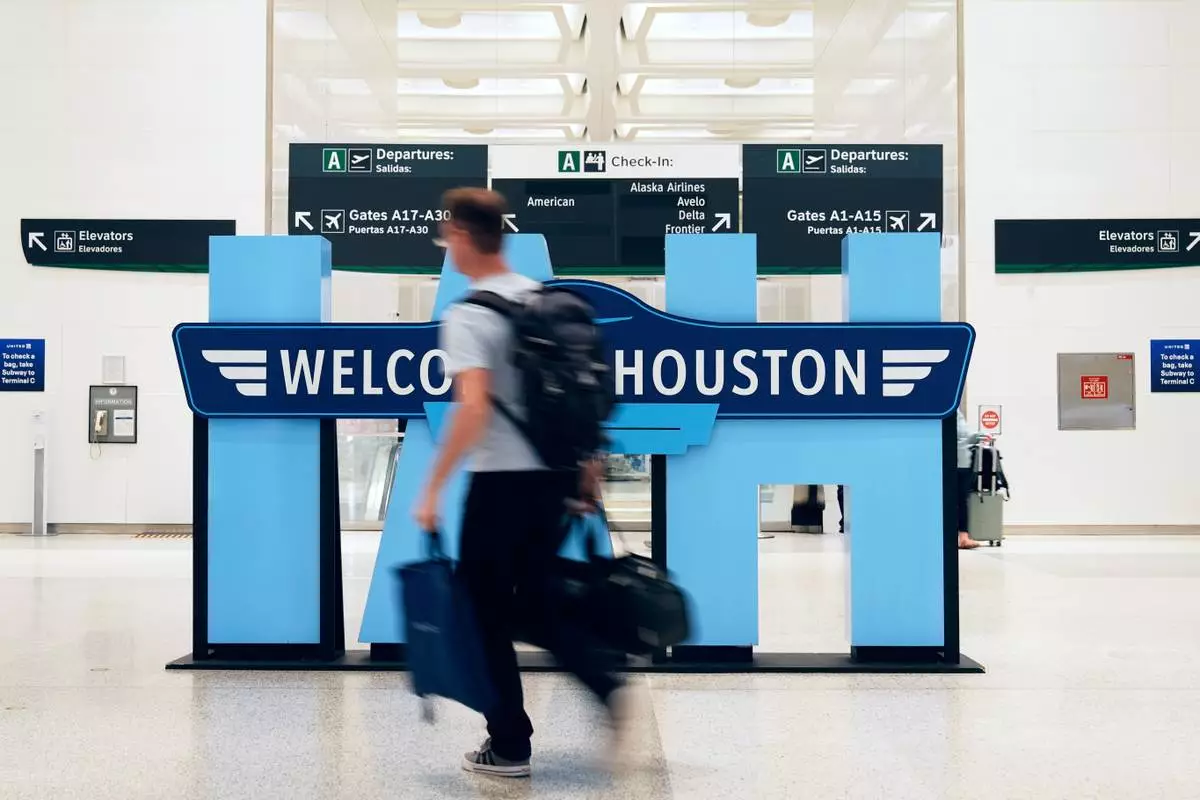
A traveler arrives at George Bush International Airport on Saturday, Nov. 14, 2026, in Houston, after the Federal Aviation Administration lifted nationwide ground stops. (AP Photo/Ashley Landis)
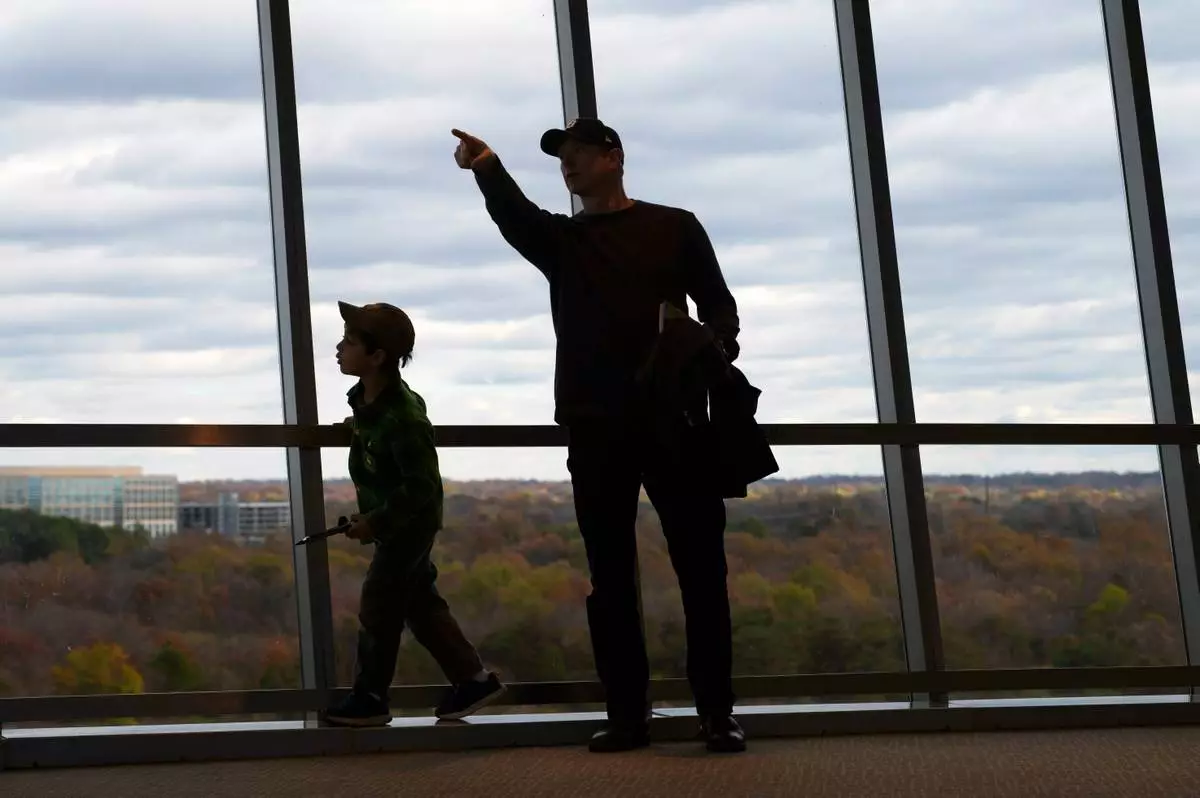
Visitors to the Steven F. Udvar-Hazy Center observation tower watch an airplane prepare to land at Washington Dulles International Airport after the Federal Aviation Administration lifted nationwide ground stops, in Chantilly, Va., Saturday, Nov. 14, 2026. (AP Photo/Cliff Owen)
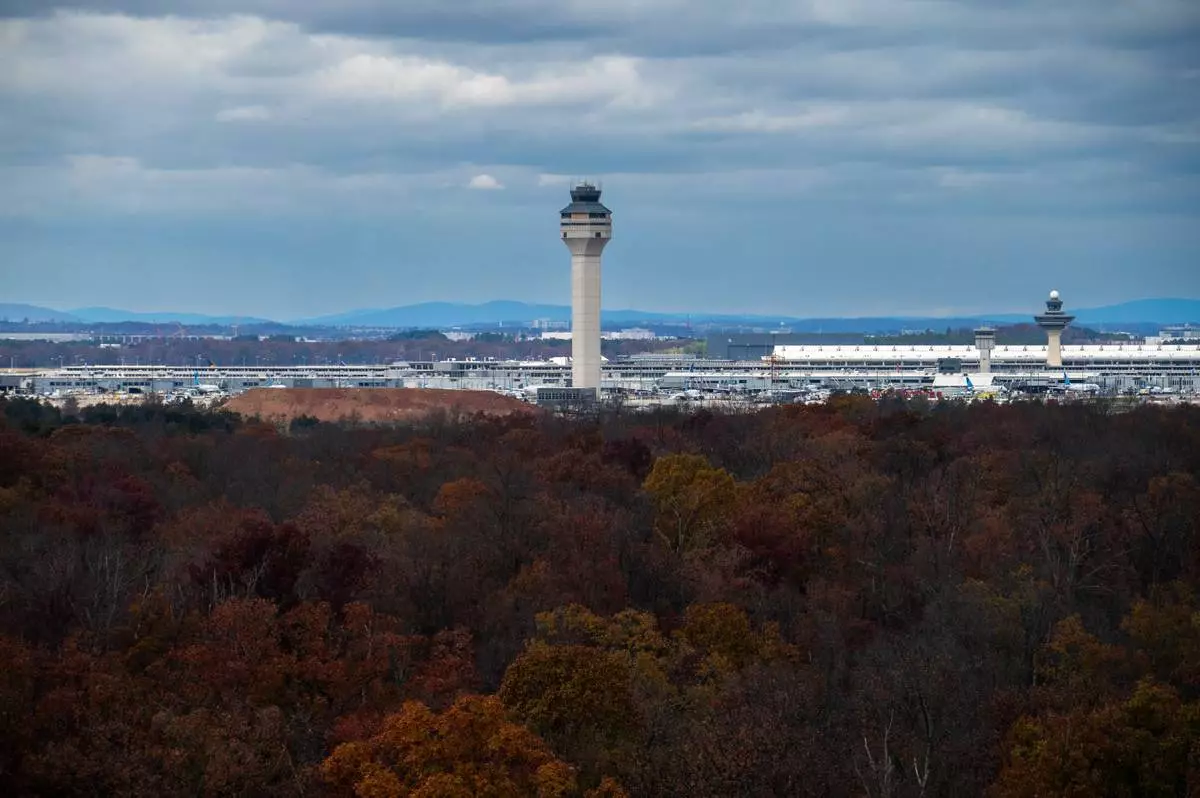
The control tower is seen at Washington Dulles International Airport after the Federal Aviation Administration lifted nationwide ground stops in Chantilly, Va., Saturday, Nov. 14, 2026. (AP Photo/Cliff Owen)