Skip to Content Facebook Feature Image

Pope Leo helps Argentines embrace Francis, the pontiff who once divided them

News

Pope Leo helps Argentines embrace Francis, the pontiff who once divided them
News

News

Pope Leo helps Argentines embrace Francis, the pontiff who once divided them

2026-11-15 13:00 Last Updated At:13:10

BUENOS AIRES, Argentina (AP) — Vast crowds of young Argentines, a generation that Catholic leaders had feared was abandoning the pews, packed the parks of Buenos Aires and cheered as if at a concert when Pope Leo XIV promised a church open to “todos, todos, todos” — everyone, everyone, everyone.

Those words, like all of Leo’s surest applause lines during the visit, belonged to his Argentine predecessor, Pope Francis. So did much of the week's adulation.

More Images
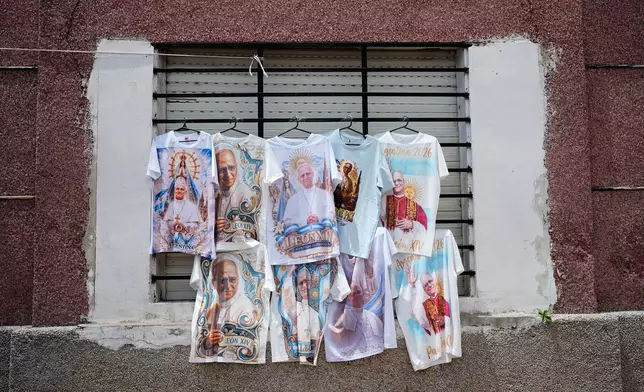
T-shirts featuring Pope Leo XIV hang for sale in a home's window a day before he is scheduled to celebrate Mass outside the Basilica of Our Lady of Luján in Luján, Argentina, Tuesday, Nov. 10, 2026. (AP Photo/Natacha Pisarenko)
T-shirts featuring Pope Leo XIV hang for sale in a home's window a day before he is scheduled to celebrate Mass outside the Basilica of Our Lady of Luján in Luján, Argentina, Tuesday, Nov. 10, 2026. (AP Photo/Natacha Pisarenko)

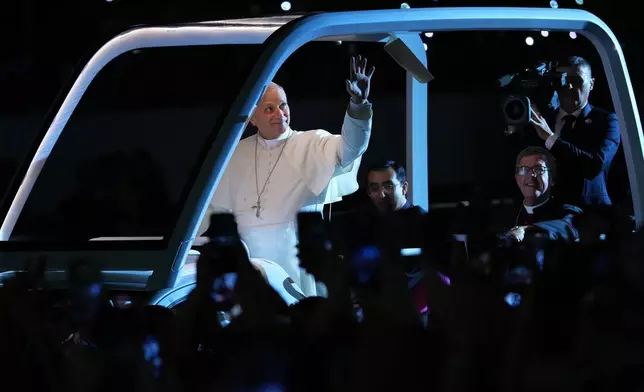
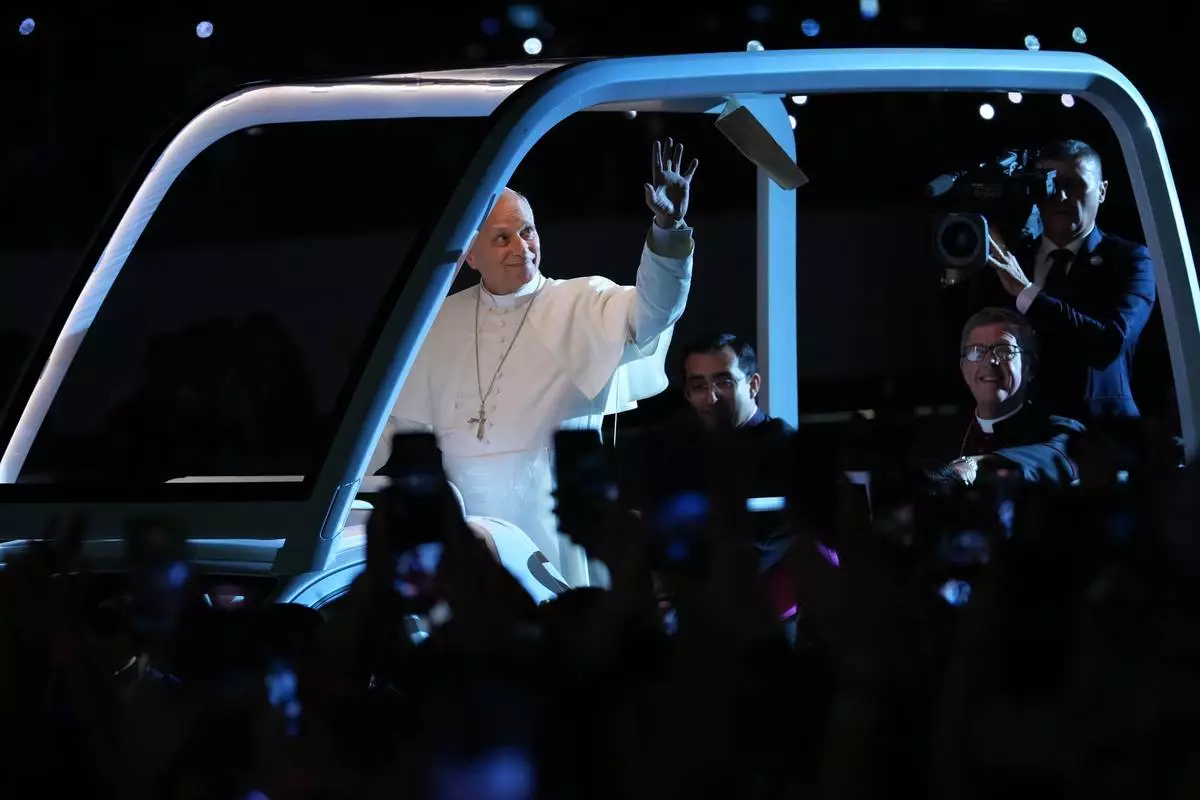
Pope Leo XIV arrives to lead a youth prayer vigil at Monumento de los Españoles in Buenos Aires, on the fifth day of his twelve-day apostolic journey to South America, Tuesday, Nov. 10, 2026. (AP Photo/Andrew Medichini)
Pope Leo XIV arrives to lead a youth prayer vigil at Monumento de los Españoles in Buenos Aires, on the fifth day of his twelve-day apostolic journey to South America, Tuesday, Nov. 10, 2026. (AP Photo/Andrew Medichini)

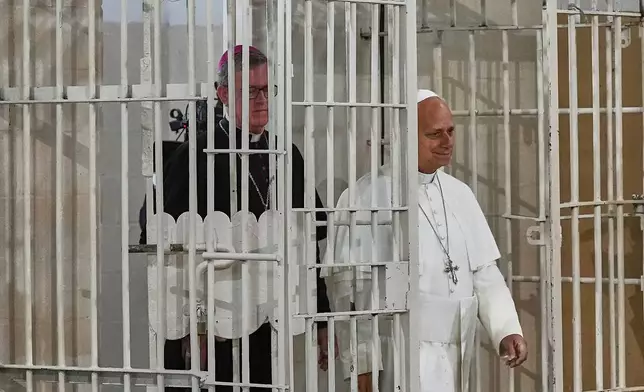
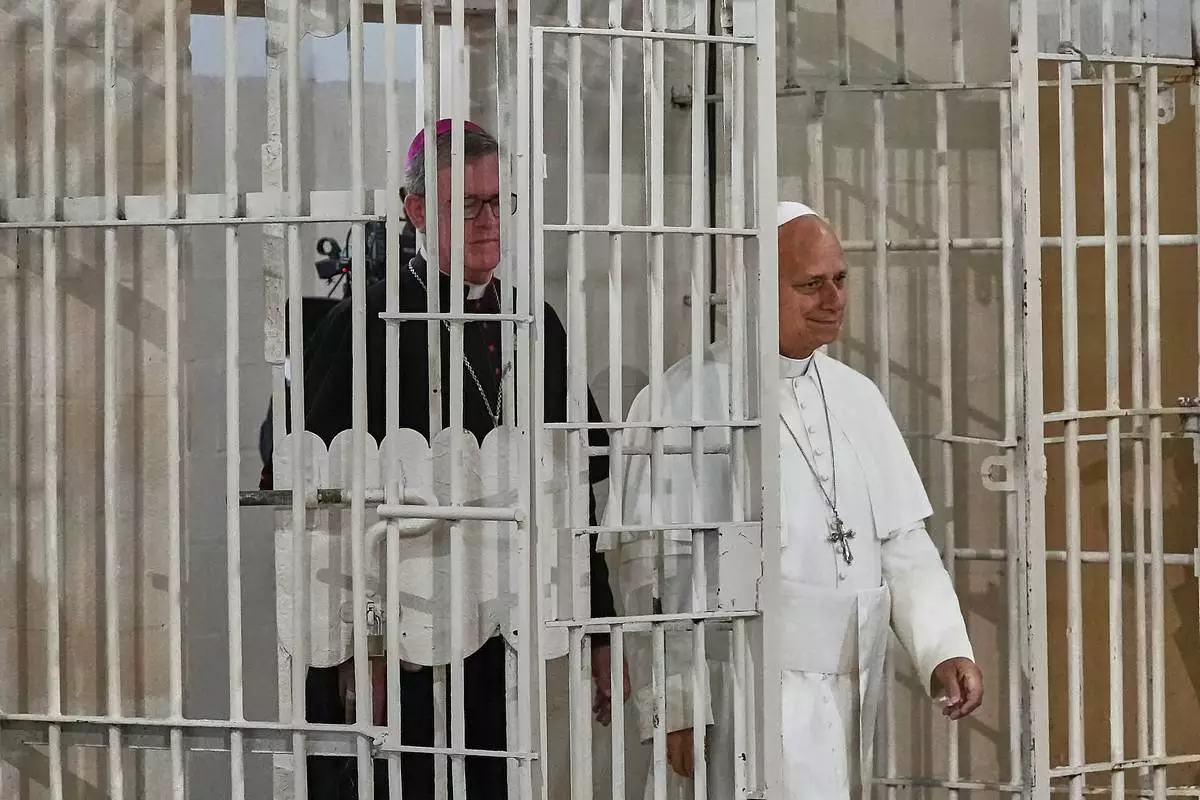
Pope Leo XIV, accompanied by Buenos Aires Archbishop Jorge Ignacio Garcia Cuerva, visits the federal prison complex in Buenos Aires, on the sixth day of his twelve-day apostolic journey to South America, Wednesday, Nov. 11, 2026. (AP Photo/Andrew Medichini)
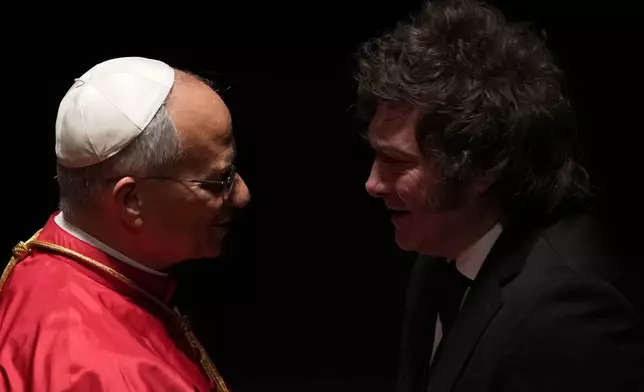
Pope Leo XIV, accompanied by Buenos Aires Archbishop Jorge Ignacio Garcia Cuerva, visits the federal prison complex in Buenos Aires, on the sixth day of his twelve-day apostolic journey to South America, Wednesday, Nov. 11, 2026. (AP Photo/Andrew Medichini)

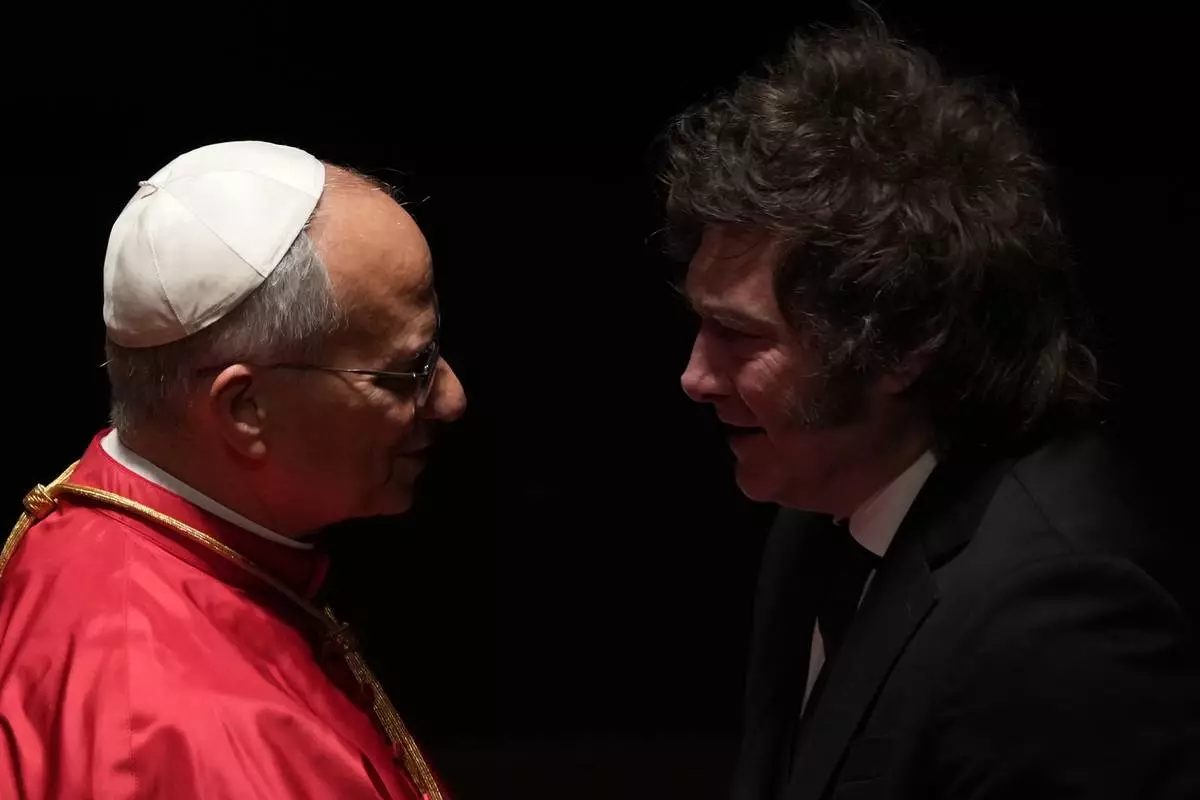
Pope Leo XIV shakes hands with Argentina's President Javier Milei as he meets authorities, civil society and the diplomatic corps at Palacio Libertad in Buenos Aires, on the third day of his twelve-day apostolic journey to South America, Sunday, Nov. 8, 2026. (AP Photo/Andrew Medichini)
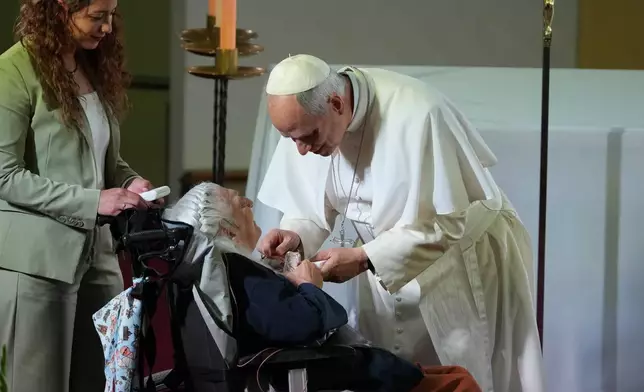
Pope Leo XIV shakes hands with Argentina's President Javier Milei as he meets authorities, civil society and the diplomatic corps at Palacio Libertad in Buenos Aires, on the third day of his twelve-day apostolic journey to South America, Sunday, Nov. 8, 2026. (AP Photo/Andrew Medichini)

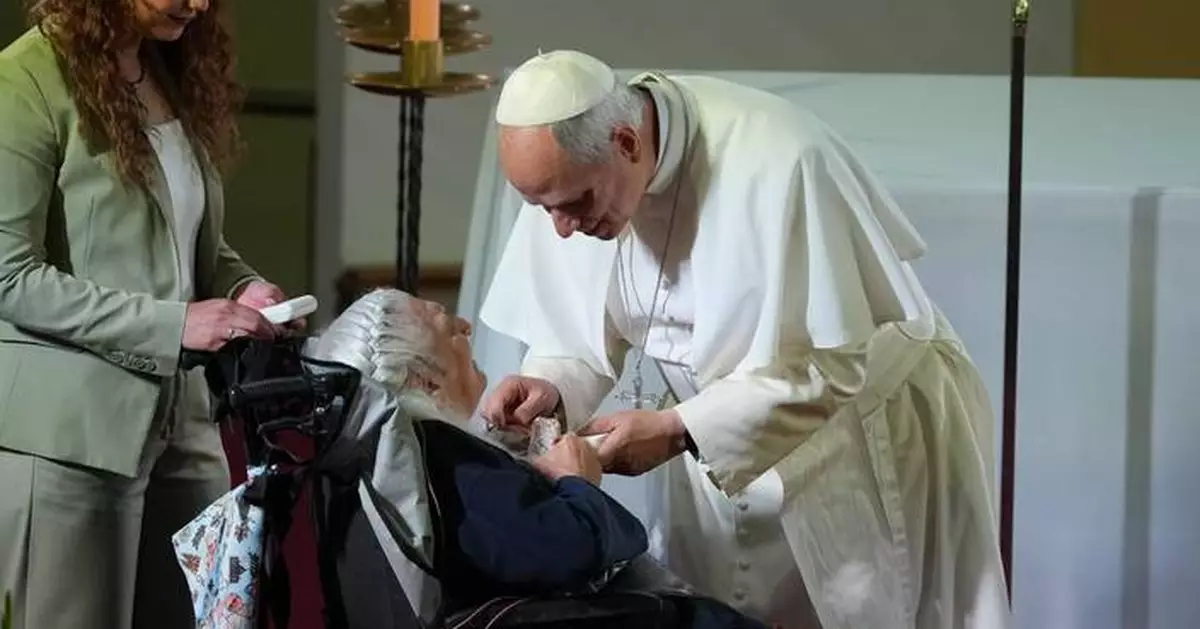
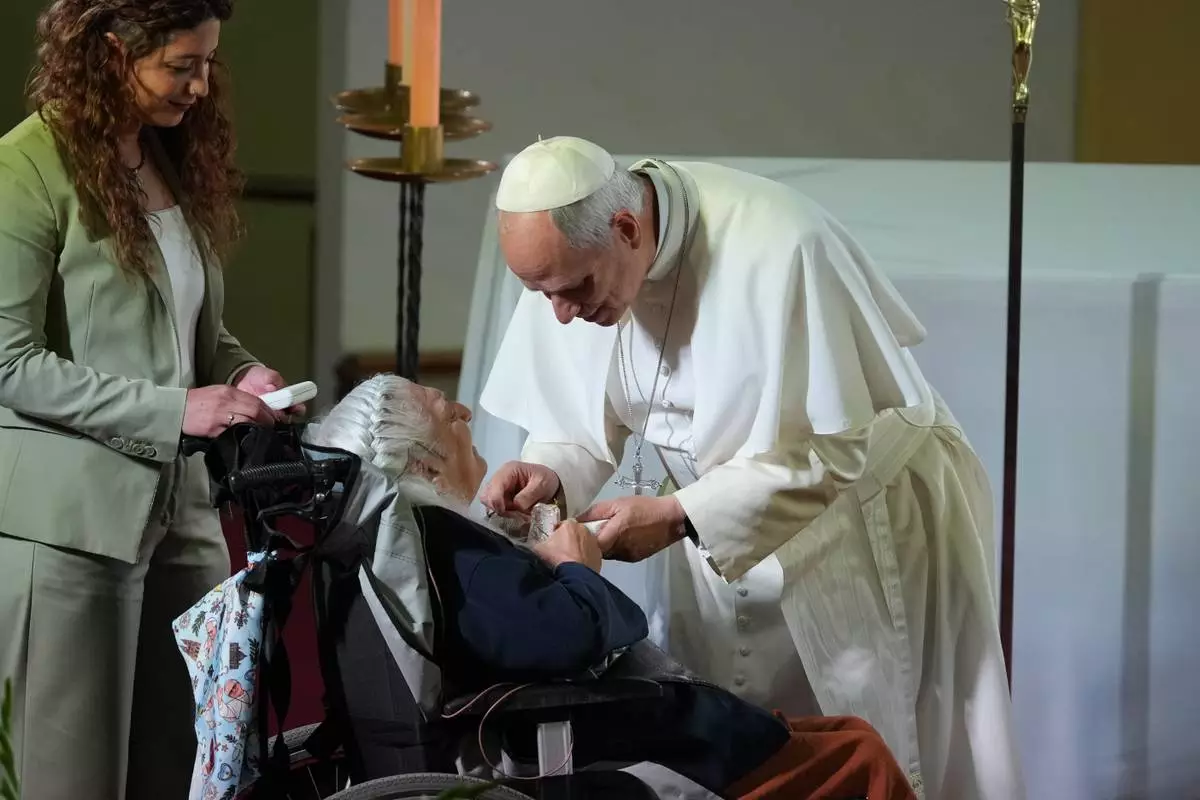
Pope Leo XIV, greets Marta Torres during his meeting with the staff and residents of the Pequeño Cottolengo Don Orione in Claypole, Argentina, on the fourth day of his twelve-day apostolic journey to South America, Monday, Nov. 9, 2026. (AP Photo/Andrew Medichini)

Pope Leo XIV, greets Marta Torres during his meeting with the staff and residents of the Pequeño Cottolengo Don Orione in Claypole, Argentina, on the fourth day of his twelve-day apostolic journey to South America, Monday, Nov. 9, 2026. (AP Photo/Andrew Medichini)

Francis’ fierce defense of the downtrodden made him a moral voice abroad but long embroiled him in political fights at home — controversy that many believe deterred him from returning as pope. More than a year after his death, the more measured Leo made the homecoming Francis never could, carrying on his legacy and helping Argentines embrace their once-polarizing pope as a unifying national figure.

“It’s as though it has finally become clear that Francis left a very important legacy, not just for Argentina but for the universal church,” said Pablo Forni, a sociologist at Argentina’s national research council, Conicet. “Leo is reaping what Francis sowed.”

Billboards welcoming Leo bore Francis’ face. Pilgrims waved signs declaring “Francisco y León, un solo corazón” — Francis and Leo, one heart. Even libertarian President Javier Milei, who once insulted Francis as “the representative of evil on earth," declared Francis “the most important Argentine in history” at Leo's welcome ceremony, bringing a packed hall of his political allies and foes to its feet.

As archbishop of Buenos Aires, Francis — then Jorge Mario Bergoglio — mobilized the church during Argentina’s 2001 economic crisis, sending priests into the slums and opening soup kitchens, schools and drug rehab centers as state services receded. But his concern for the poor did not make him a natural ally of Peronism, the long-dominant populist movement emphasizing social justice. He accused its leaders of arrogance and clashed with them over same-sex marriage.

Yet once Francis moved to Rome as pontiff, Peronists became some of his biggest fans, seeing their priorities reflected in his criticism of unbridled capitalism and his outreach to the marginalized. That affinity infuriated conservatives, who blame Peronism for ruining Argentina's economy and presiding over rampant corruption. However hard Francis tried to stay above the fray, even his smallest gestures — a dour expression beside right-leaning President Mauricio Macri, a relaxed lunch with left-leaning President Cristina Fernández de Kirchner — were read as proof of his political sympathies.

A homecoming would have meant treading a minefield. Francis visited more than 60 countries as pope, including four of Argentina’s five neighbors, but never returned home, despite invitations from four successive presidents.

“At first many people were thrilled to see an Argentine elected pope. But once they heard his criticism, they stopped loving him quite so much,” said the Rev. Lorenzo de Vedia, known as Padre Toto, one of the so-called slum priests who worked under Bergoglio in the capital’s informal settlements. “He became seen as a partisan pope.”

Argentines weren’t the only ones Francis provoked. His blunt, freewheeling papacy divided Catholics worldwide. He accused Vatican officials of “spiritual Alzheimer’s” and called attacks from American conservatives “an honor.” He delighted progressives by opening long-taboo debates, then disappointed them by balking at doctrinal change.

Now Leo — a Chicago-born former missionary in Peru whom Francis made a bishop and then a cardinal — is carrying the same causes forward with a gentleness that tempers his predecessor’s hard-charging style, church leaders say.

“Francis opened the way. He broke down walls. He was forceful and impetuous, firm in his principles and startling in his proposals,” said Cardinal Pedro Barreto, a Peruvian Jesuit and close ally of Francis. “Leo XIV is clearing the path Francis laid out so that it can be traveled by every baptized member of the church."

Leo called the trip “a homage” to Francis, and over four days he followed in his predecessor's footsteps: praying in Francis’ old cathedral, dispensing blessings at the prison where Francis once washed inmates' feet, embracing residents of a disability care home where he also preached and celebrating Mass at the Luján shrine he revered. Leo invoked Francis at least 26 times.

“Leo is fulfilling the promise that Francis left unfinished,” said Carlos Custer, a former Argentine ambassador to the Vatican. “Francis' presence was felt at every turn."

But Leo did more than honor Francis’ memory. In his own voice, and without the baggage of an Argentine passport, he revived the appeals that had made Francis at once beloved and divisive at home.

In Córdoba, Leo urged Argentines to keep “making a mess,” echoing Francis’ famous call for young Catholics to shake things up in their dioceses. Before an audience of garbage pickers and business leaders, he invoked Francis’ “three Ts” — tierra, techo y trabajo, or land, housing and work — the rallying cry of Argentina’s popular movements.

And in his opening address to political leaders last Sunday, standing beside a self-declared “anarcho-capitalist” president known for aggressive verbal outbursts and harsh austerity measures, he urged “careful use of words” and insisted that “the economy must be at the service of the person, not the person in the service of the economy.”

“There is continuity between them in every respect — in their message of peace, their love for the poor, their choice to go places where people are suffering, in their emotional connection to the people,” said the Rev. Carlos María Galli, a prominent Argentine theologian who was close to Francis. “Francis brought Leo to the center of the church, and Leo has now brought Francis back to us.”

Politicians scrambled to claim Leo's message as their own. Axel Kicillof, the Peronist governor of Buenos Aires province and a leading opposition figure, hailed the visit as “very necessary in these times of cruelty." Vice President Victoria Villarruel defended the concept of social justice derided by her boss and championed by Francis, blaming “ignorance and fanaticism” for its frequent association with Peronism.

Even Milei’s spokesman, Adrián Ravier, insisted Wednesday that by taming inflation, the government had put “the economy at the service of people.”

For observers, that political jockeying proved the wisdom of Francis’ decision to stay away — and the value of Leo as his messenger.

“Had Bergoglio said the same things and visited the same places, it would have been seen as far more political,” said Gustavo Morello, an Argentine sociologist of religion at Boston College. “But you can’t accuse Leo of being a Peronist. So when he speaks about workers or people with disabilities, it’s the church speaking ... and if you don’t like it, you can take it up with God.”

Associated Press writer Mauricio Savarese in Lima, Peru, contributed to this report.
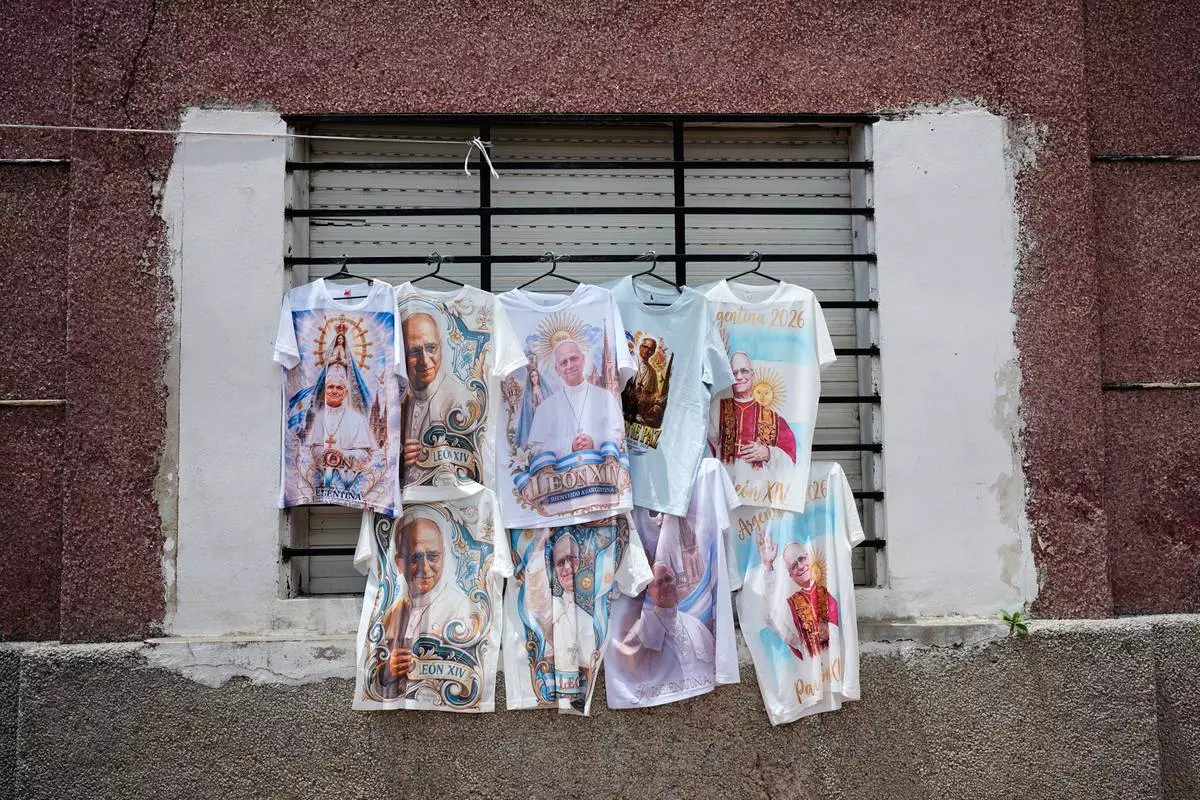
T-shirts featuring Pope Leo XIV hang for sale in a home's window a day before he is scheduled to celebrate Mass outside the Basilica of Our Lady of Luján in Luján, Argentina, Tuesday, Nov. 10, 2026. (AP Photo/Natacha Pisarenko)
T-shirts featuring Pope Leo XIV hang for sale in a home's window a day before he is scheduled to celebrate Mass outside the Basilica of Our Lady of Luján in Luján, Argentina, Tuesday, Nov. 10, 2026. (AP Photo/Natacha Pisarenko)

Pope Leo XIV arrives to lead a youth prayer vigil at Monumento de los Españoles in Buenos Aires, on the fifth day of his twelve-day apostolic journey to South America, Tuesday, Nov. 10, 2026. (AP Photo/Andrew Medichini)
Pope Leo XIV arrives to lead a youth prayer vigil at Monumento de los Españoles in Buenos Aires, on the fifth day of his twelve-day apostolic journey to South America, Tuesday, Nov. 10, 2026. (AP Photo/Andrew Medichini)

Pope Leo XIV, accompanied by Buenos Aires Archbishop Jorge Ignacio Garcia Cuerva, visits the federal prison complex in Buenos Aires, on the sixth day of his twelve-day apostolic journey to South America, Wednesday, Nov. 11, 2026. (AP Photo/Andrew Medichini)
Pope Leo XIV, accompanied by Buenos Aires Archbishop Jorge Ignacio Garcia Cuerva, visits the federal prison complex in Buenos Aires, on the sixth day of his twelve-day apostolic journey to South America, Wednesday, Nov. 11, 2026. (AP Photo/Andrew Medichini)

Pope Leo XIV shakes hands with Argentina's President Javier Milei as he meets authorities, civil society and the diplomatic corps at Palacio Libertad in Buenos Aires, on the third day of his twelve-day apostolic journey to South America, Sunday, Nov. 8, 2026. (AP Photo/Andrew Medichini)
Pope Leo XIV shakes hands with Argentina's President Javier Milei as he meets authorities, civil society and the diplomatic corps at Palacio Libertad in Buenos Aires, on the third day of his twelve-day apostolic journey to South America, Sunday, Nov. 8, 2026. (AP Photo/Andrew Medichini)

Pope Leo XIV, greets Marta Torres during his meeting with the staff and residents of the Pequeño Cottolengo Don Orione in Claypole, Argentina, on the fourth day of his twelve-day apostolic journey to South America, Monday, Nov. 9, 2026. (AP Photo/Andrew Medichini)

Pope Leo XIV, greets Marta Torres during his meeting with the staff and residents of the Pequeño Cottolengo Don Orione in Claypole, Argentina, on the fourth day of his twelve-day apostolic journey to South America, Monday, Nov. 9, 2026. (AP Photo/Andrew Medichini)

LOS ANGELES (AP) — The Rock & Roll Hall of Fame has inducted its 2026 class of 18 musical luminaries at the Peacock Theater in Los Angeles.

Artists become eligible for the hall 25 years after their first music release.

Here’s a look at this year's Rock Hall class, a few of their defining songs and who inducted them.

The 75-year-old English singer, songwriter and drummer is already in the hall as a member of Genesis and now gets in again for a solo career that brought some of the biggest hits of the 1980s. Key songs: “Against All Odds,” “One More Night,” “You'll Be in My Heart.”

Collins was inducted by Blink-182 drummer Travis Barker, who also played Collins' famous drum fill as Cynthia Erivo sang “In the Air Tonight” in tribute.

Wu-Tang Clan is an epic hip-hop coalition from Staten Island — made up of RZA, GZA, Method Man, Raekwon, Ghostface Killah, Inspectah Deck, U-God, Masta Killa and previously, the late Ol’ Dirty Bastard. They’ve been hip-hop innovators since their 1993 debut album, “Enter the Wu-Tang.” Key songs: “C.R.E.A.M.,” “Protect Ya Neck,” “Wu-Tang Clan Ain’t Nuthing Ta F’ Wit.”

The group was inducted by Chris Rock. The many members performed a medley of their hits, including "C.R.E.A.M." and late member Ol' Dirty Bastard's “Shimmy Shimmy Ya,” backed by a big jazz band.

Vandross was an R&B singer whose velvet-voiced love songs made him one of the definitive voices of the 1980s and ’90s. Vandross died in 2005. Key songs: “Never Too Much,” “Dance With My Father,” “I’d Rather.”

He was inducted by Oprah Winfrey. Usher sang a medley of his songs, including “Here and Now” and “So Amazing."

A trailblazing Brooklyn rapper in the late 1980s, MC Lyte became the first female rapper to release a full solo album, “Lyte as a Rock.” Her hard-edged rhymes brought a political consciousness that was growing in hip-hop at the time. Key songs: “Keep on Keepin’ On,” “Cold Rock a Party,” “Ruffneck.”

She enters the hall as a recipient of the Early Influence Award and was inducted by rapper Remy Ma. She accepted the honor in person.

Sade is a British band most prominent in the 1980s that blended jazz, smooth-and-sultry R&B and sophisti-pop, led by a Nigerian-born singer of the same name. Key songs: “Smooth Operator,” “No Ordinary Love,” “Like a Tattoo,” “Kiss of Life.” She did not appear.

Sade was inducted by singer Andra Day. Singer Sienna Spiro sang their biggest hit, “Smooth Operator.”

He was honored for bringing the Beatles, Elvis Presley, Buddy Holly, James Brown and the Doors to American living rooms, and for consistently featuring Black artists despite network pressure to keep television segregated. He died in 1974.

Sullivan was inducted via video montage and got into the hall as a recipient of the Ahmet Ertegun Award for non-performers who shaped rock and roll and youth culture.

These artists will be inducted later in the evening:

The 70-year-old punk-coded English rock singer had major hits through the 1980s. He will be inducted along with his longtime guitarist Steve Stevens. Key songs: “Dancing With Myself,” “White Wedding,” “Eyes Without a Face.”

The Brit-pop lords of the 1990s are led by famously feuding brothers Noel and Liam Gallagher. Key Songs: “Wonderwall,” “Live Forever,” “Don’t Look Back in Anger.”

The two British rock bands will get a rare joint induction that makes sense given their members and circumstances. Joy Division was a dark and seminal post-punk band formed in 1976. When their charismatic lead singer, Ian Curtis, died in 1980, the remaining members formed New Order. Key songs: “Love Will Tear Us Apart,” “Blue Monday,” “Bizarre Love Triangle.”

The scorching rock band led the new wave of British heavy metal and became the quintessential metal band of the 1980s. Key songs: “The Trooper,” “Fear of the Dark,” “Run to the Hills.”

The 56-year-old New Jersey-born Queen Latifah achieved unprecedented success for a female rapper, becoming a star at 19 with the release of her 1989 album “All Hail the Queen” and the single “Ladies First." Key songs: “U.N.I.T.Y.,” “Ladies First,” “When You’re Good to Mama.”

She enters the hall as a recipient of the Early Influence Award.

The queen of salsa and innovator and spreader of Afro-Cuban sounds and one of the most popular Latin artists of the 20th century, the Havana-born singer Cruz is the first member of the Hall of Fame who sang primarily in Spanish. She died in 2003. Key songs: “Vasos Vacíos,” “La Vida Es Un Carnaval,” “El Último Adiós.”

She enters the hall as a recipient of the Early Influence Award.

The Nigerian saxophonist, bandleader, progenitor and activist was born in 1938 in colonial Nigeria. His music career, which spanned the late 1950s up to the 1990s, was a signature blend of high-octane horn, jazz, and funk with Yoruba rhythms. Kútì, who died in 1997, is the first African-born solo artist to enter the Rock Hall. He gets in as a recipient of the Early Influence Award.

Key songs: “Water No Get Enemy,” “Zombie,” “Let’s Start.”

Parsons was arguably the most important figure in rock’s turn toward country in the late 1960s and early ’70s. Parsons was a member of the Byrds, co-founded the Flying Burrito Brothers and became a solo artist with Emmylou Harris as his duet partner and backup singer. He died in 1973. He enters the hall as a recipient of the Early Influence Award. Key songs: “Hickory Wind,” “Love Hurts,” “Return of the Grievous Angel.”

The 63-year-old producer was instrumental to the popularization of hip-hop in the 1980s through his work with the Beastie Boys, LL Cool J, Run DMC and his Def Jam Recordings label. Rubin went on to work in rock and country, producing Johnny Cash’s haunting final recordings in the 1990s.

He gets into the hall as a recipient of the Musical Excellence Award.

The late songwriter and producer will enter the hall for helping to define the Philadelphia soul sound of the 1970s, penning hits for the Stylistics, Teddy Pendergrass and the Spinners. Creed died in 1986 at 37.

She gets into the hall as a recipient of the Musical Excellence Award.

Mardin gets the honor for his decades of work as a producer for Atlantic Records for his work in helping create the soul sound of Aretha Franklin and his production of Rock Hall of Famers including Hall & Oates, the Bee Gees, Chaka Khan, Diana Ross and Cher. Mardin died in 2006.

He gets into the hall as a recipient of the Musical Excellence Award.

Miller was known for producing rock acts of the 1960s and 1970s, including the Rolling Stones albums considered to represent their artistic peak: “Beggars Banquet,” “Let It Bleed,” “Sticky Fingers” and “Exile on Main St.” He died in 1994.

He gets into the hall as a recipient of the Musical Excellence Award.

Sienna Spiro performs during the Rock and Roll Hall of Fame Induction Ceremony on Saturday, Nov. 14, 2026, at the Peacock Theater in Los Angeles. (AP Photo/Chris Pizzello)

Sienna Spiro performs during the Rock and Roll Hall of Fame Induction Ceremony on Saturday, Nov. 14, 2026, at the Peacock Theater in Los Angeles. (AP Photo/Chris Pizzello)

Usher performs during the Rock and Roll Hall of Fame Induction Ceremony on Saturday, Nov. 14, 2026, at the Peacock Theater in Los Angeles. (AP Photo/Chris Pizzello)

Usher performs during the Rock and Roll Hall of Fame Induction Ceremony on Saturday, Nov. 14, 2026, at the Peacock Theater in Los Angeles. (AP Photo/Chris Pizzello)

MC Lyte accepts the award for musical excellence during the Rock and Roll Hall of Fame Induction Ceremony on Saturday, Nov. 14, 2026, at the Peacock Theater in Los Angeles. (AP Photo/Chris Pizzello)

MC Lyte accepts the award for musical excellence during the Rock and Roll Hall of Fame Induction Ceremony on Saturday, Nov. 14, 2026, at the Peacock Theater in Los Angeles. (AP Photo/Chris Pizzello)

Recommended Articles