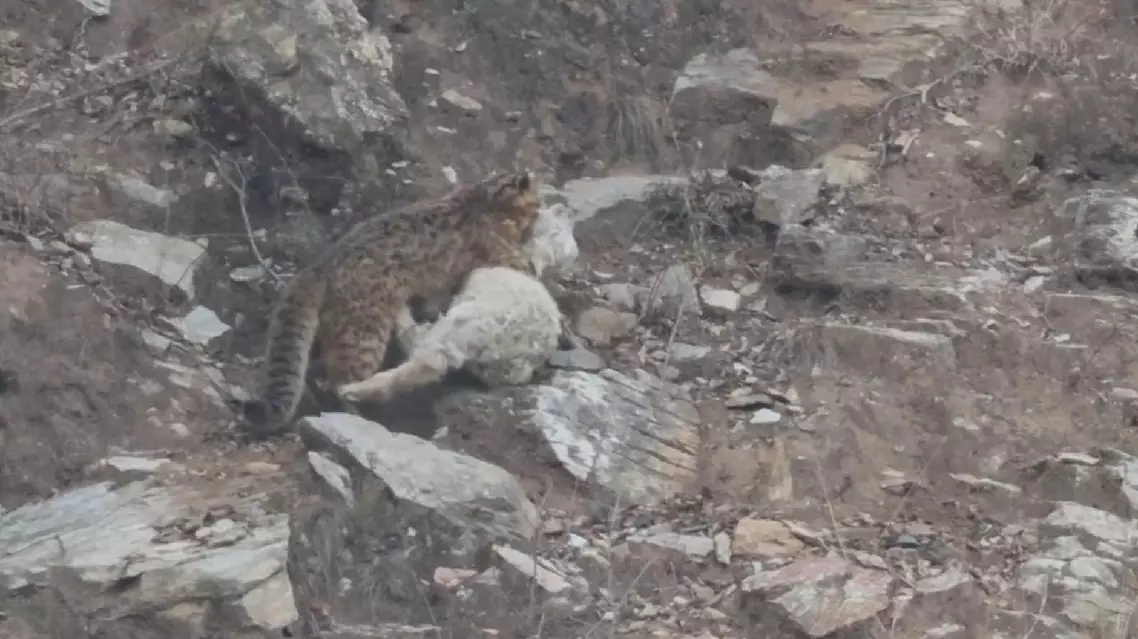
A wildlife photographer recently captured rare footage of a leopard cat preying on a young lamb in Beijing's Fangshan District.
In the footage, a young lamb—having just finished nursing from its mother on a hillside—remains on guard against golden eagles circling overhead; meanwhile, a leopard cat, taking advantage of the terrain and its natural camouflage, stealthily crept up close from behind.
"By the time I swung my camera back, the leopard cat had appeared—I don't know when. After spotting its prey, it crouched down, belly pressed tight to the ground, and inched slowly toward the lamb. It went straight for the throat. As the lamb struggled desperately, the leopard cat dragged it upward with all its strength—that cat is seriously powerful," said Liu Tong, the photographer.
The leopard cat is a Class II protected animal in China. It has a slender build, is roughly the same size as a domestic cat, and has its entire body covered in brown spots.
According to experts, the leopard cat’s typical diet consists primarily of small rodents, birds, and amphibians; killing a lamb in this instance was opportunistic predation.
According to the photographer, the location where this leopard cat was seen hunting is not far from a village, and the lamb that was preyed upon belonged to local herders who let their livestock roam freely. An expert said that villagers who encounter such situations can report them to the relevant government authorities to receive compensation.
"Its usual diet consists mainly of small rodents, with mice and rats making up the bulk of its food. It can catch large numbers of rats and help keep rodent populations in check. Under certain special circumstances, it may also prey on domestic poultry or livestock, but under normal conditions the leopard cat still prefers its natural prey. So if you come across one preying on your poultry or livestock, you should promptly report it to the relevant government authorities to claim compensation," said Feng Limin, a professor from the College of Life Sciences of Beijing Normal University.
Leopard cat caught on camera preying on lamb in Beijing
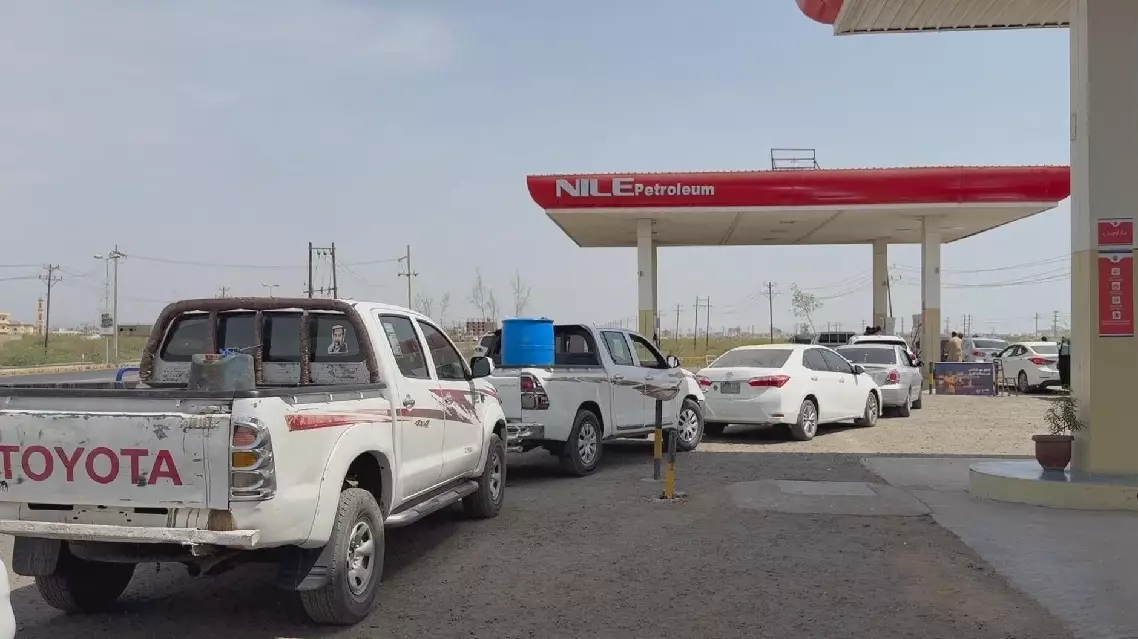
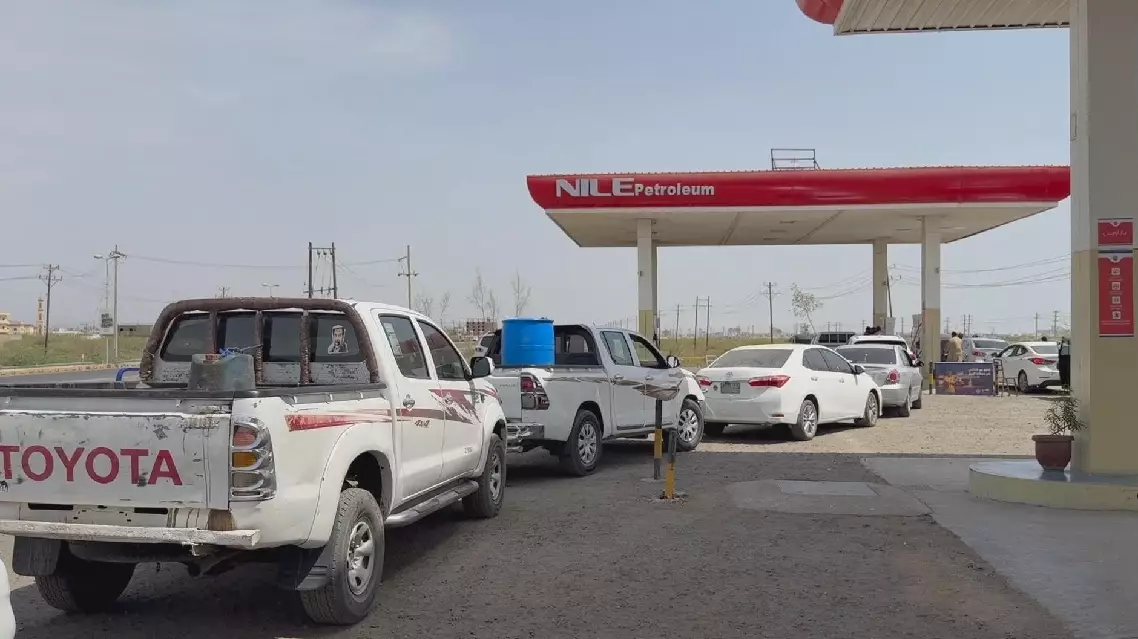
A deepening fuel crisis is paralyzing daily life across Sudan, where long lines of vehicles at the few operating stations have become a daily routine.
With domestic refining crippled and import prices rising, the country is under mounting pressure over its energy supply. The lingering and spreading crisis has also driven local prices sharply higher.
"I started queuing for gas at 7 this morning, and I've been waiting for over two hours now. I don't know how much longer I'll have to wait. I haven't been able to fill up for a week. And the price of gasoline has further gone up recently. Now it costs 35,000 Sudanese pounds (about 58.19 U.S. dollars) per gallon. It has increased by 5,000 Sudanese pounds in just several days," said Osman Faisal, a resident.
The crisis stems from war damage to Sudan's oil infrastructure. Relentless clashes since fighting erupted in April 2023 between the Sudanese Armed Forces and the paramilitary Rapid Support Forces have forced major oil fields to shut down. The Khartoum refinery, which once met about 70 percent of national fuel needs, has shut down. Several oil fields are also offline, forcing Sudan to rely almost entirely on imports.
The escalation in the Middle East since late February has led to significant fluctuations in international energy market prices, and Sudan's domestic supply is directly exposed to that backdrop.
This external shock has been coupled with the depreciation of the Sudanese pound against the U.S. dollar, making every imported shipment more expensive. Caught between rising global prices and a plummeting local currency, gas station operators are forced to constantly recalculate their rates and frequently shut down pumps.
The unpredictability forced workers into an impossible daily trade-off between earning a living and waiting in line.
"The Sudanese pound continues to depreciate against the U.S. dollar, exacerbating the fuel crisis. Hopefully, the exchange rate will stabilize as soon as possible. Every morning when we wake up, we are forced to make a choice -- go to work or queue for gas?" said Adnan Osman, another resident.
In addition to disrupting people's travel, the fuel shortage has driven up transportation and delivery costs, pushing the prices of food and daily necessities higher.
"The prices of food, including vegetables and bread, are also on the rise. The life of everyone in this country is being severely affected," said Alrazy Mohamed, a resident.
Sudan paralyzed by fuel crisis as war, currency collapse choke supply
Sudan paralyzed by fuel crisis as war, currency collapse choke supply