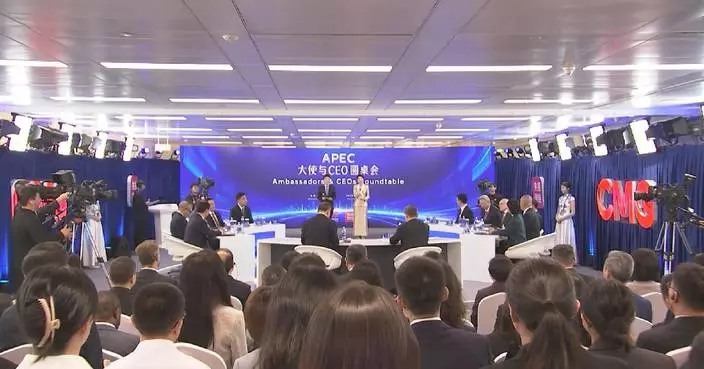
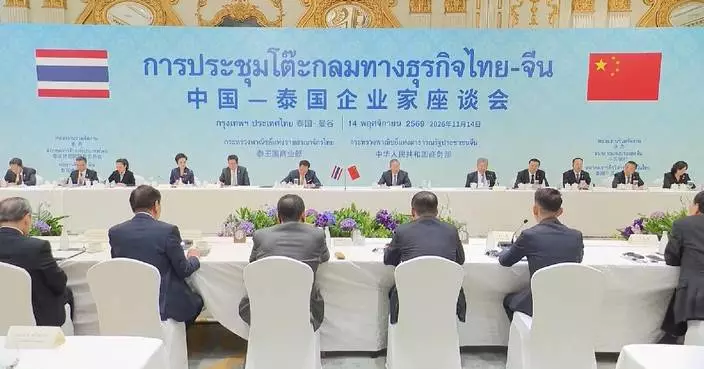
The fourth meeting of the APEC Business Advisory Council (ABAC) opened on Saturday in Shenzhen City in south China's Guangdong Province, drawing members who underscored China's expanding leadership in driving trade integration, green energy and multilateral cooperation across the Asia-Pacific.
The three-day meeting has gathered more than 60 representatives from 21 APEC economies, along with nearly 200 experts and accompanying staff, according to the organizer, the China Council for the Promotion of International Trade (CCPIT).
As global trade faces mounting economic headwinds and shifts toward sustainability, international business leaders pointed to China's technological advancements as a crucial catalyst for regional development.
Kasemsit Pathomsak, a Thai representative on ABAC, APEC's private-sector advisory body, highlighted China's contributions to green technology.
"China has played a very important role all along, especially when it comes to the renewable and green initiatives, with solar production, green technology, EVs. China has been very forefront in innovating and bringing this technology to the masses. I think it's very important to try help the world to try and become more green and affordable, to try transition to this green technology," said Pathomsak.
Members also highlighted APEC's vital platform for bilateral and multilateral engagement, fostering commercial bridges across diverse markets.
"As one of the economies that's in APEC, China, as we all acknowledge, is a very important trade partner in this region in both bilateral and multilateral opportunities. For Canada, we see that it is very important for us to establish a proper conduit of opportunities where we can grow together and understand the risks where we have to be clear about where we can and cannot go together. So, we think that APEC is an excellent opportunity where the public sector and the private sector, which I represent, would be able to engage in a deeper conversation on this," said Joseph Fung, an ABAC member from Canada.
Meanwhile, Francisco Suarez Hernandez, an ABAC member from Mexico, praised China's logistical and organizational leadership in hosting the meeting.
"It's really important and China hosting this event is the best example of leading. I think creating a bridge between Mexico, next year Vietnam, and this year China is going to be a great example. We actually hosted ABAC II (Second meeting of APEC Business Advisory Council) this year in Mexico. So, I know the effort," he said.
Founded in November 1995, ABAC is the only non-governmental body with an official advisory role in the APEC Economic Leaders' Meeting, engaging in a formal dialogue and submitting annual policy recommendation reports to APEC leaders.
After the ABAC meeting, Shenzhen will host the 2026 APEC CEO Summit on Nov 17 to 18, drawing the region's top business and government leaders to chart a course for Asia-Pacific prosperity.
This is the third time China has hosted APEC meetings, and the first in 12 years.
Working with other member economies under the theme of "Building an Asia-Pacific Community to Prosper Together," China has focused on three priorities, namely openness, innovation and cooperation, and has hosted more than 300 meetings and events across the country during the year.
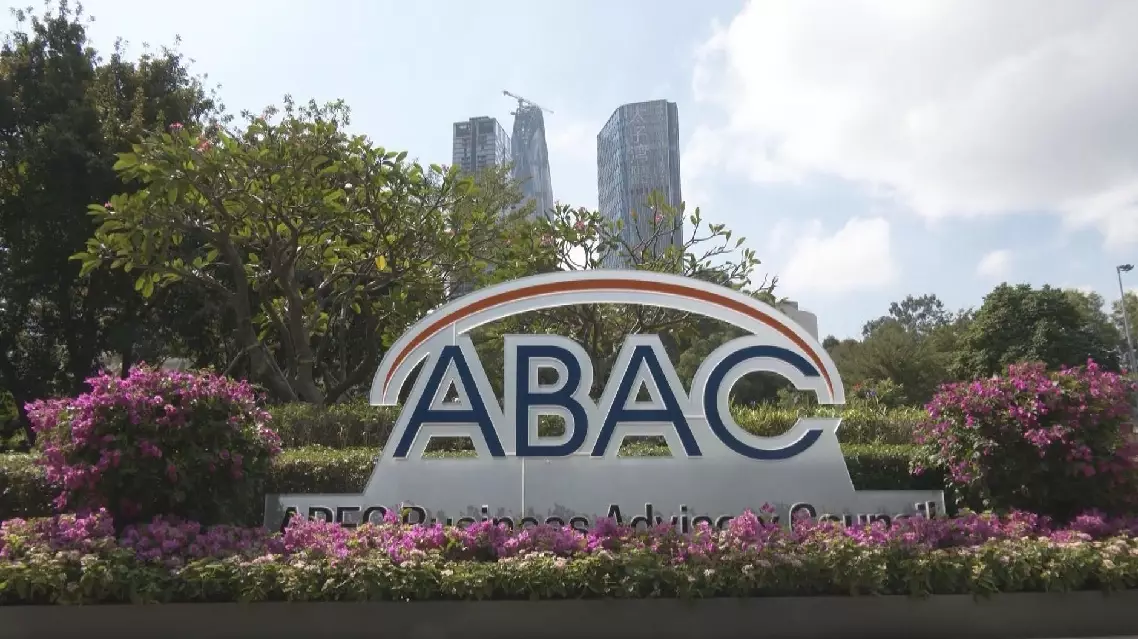
ABAC members laud China's role in Asia-Pacific economic integration
Global experts and dignitaries have expressed high expectations for the upcoming 33rd APEC Economic Leaders' Meeting, hoping China will shape the agenda and drive outcomes that yield tangible benefits for countries around the world.
This is the third time China will host the high-profile meeting, scheduled for Wednesday and Thursday in the southern Chinese metropolis of Shenzhen.
William Jones, a U.S. international affairs expert, said the choice of Shenzhen as the host city for APEC 2026 is particularly significant.
"APEC always has been a grouping of nations which are very diverse in terms of their size, in terms of their level of development and the like. It (APEC 2026) is happening in Shenzhen. I think there is a purpose for doing that -- it's one the most advanced scientific centers in China. The theme is 'Building an Asia-Pacific Community to Prosper Together'. And the fact that China is the host of this meeting, I think, will mean that there will be real results coming out of this for all the nations involved," said Jones.
Shenzhen's GDP has soared from just 270 million yuan (around 40.47 million U.S. dollars) in 1980 to 3.87 trillion yuan in 2025, trailing only Shanghai and Beijing.
China's choice of Shenzhen mirrors a pattern common to other APEC economies, which tend to favor national capitals, major economic or technological hubs, or internationally renowned tourist destinations as host cities, according to analysts.
Gyula Krajczar, a Hungarian international affairs expert, emphasized the importance of the gathering as a platform for regional leaders to exchange views and enhance mutual understanding on a wide range of issues.
"The APEC summit is undoubtedly a highly significant event. To achieve established goals, leaders from across the Asia-Pacific region will gather together. I look forward to all parties exchanging views on key areas such as trade, artificial intelligence, and financial architecture. Maintaining continuous dialogue with one another is crucial," said Gyula.
Artificial intelligence is poised to be a focal point of this event. Tan Kong Yam, former chief economist at Singapore's Ministry of Energy, Trade and Industry, pointed out that China has a prime opportunity to promote openness, innovation, and cooperation against the rising tide of protectionism, technological fragmentation, and growing geopolitical uncertainty.
"Under the theme 'Building an Asia-Pacific Community to Prosper Together', China has an opportunity to promote openness, innovations, cooperation against the rising tide of protectionism, technological fragmentation and growing geopolitical uncertainty. Artificial intelligence could become one of APEC's most consequential areas of cooperation. Affordable AI could transform agriculture, education, healthcare, manufacturing, and public administration. China's open-weight [AI] models could enable ASEAN economies and the Global South to develop low-cost applications tailored to local languages and economic needs," said Tan.
As China's influence continues to grow, many countries are eager to strengthen cooperation with China for common development and prosperity. Damas Ndumbaro, a member of Tanzania's parliament, praised China's upcoming role as the host of the APEC summit, highlighting its potential to deliver outcomes beneficial to participating countries.
"China's presence in this meeting is a blessing. But being able to host [the meeting], to be a good host is something very positive, not just because of the Chinese hospitality, but because the role the Chinese are going to play in this conference, to shape the agenda and to drive [the discussions] into the conclusions which are beneficial to all countries in the world," said Ndumbaro.
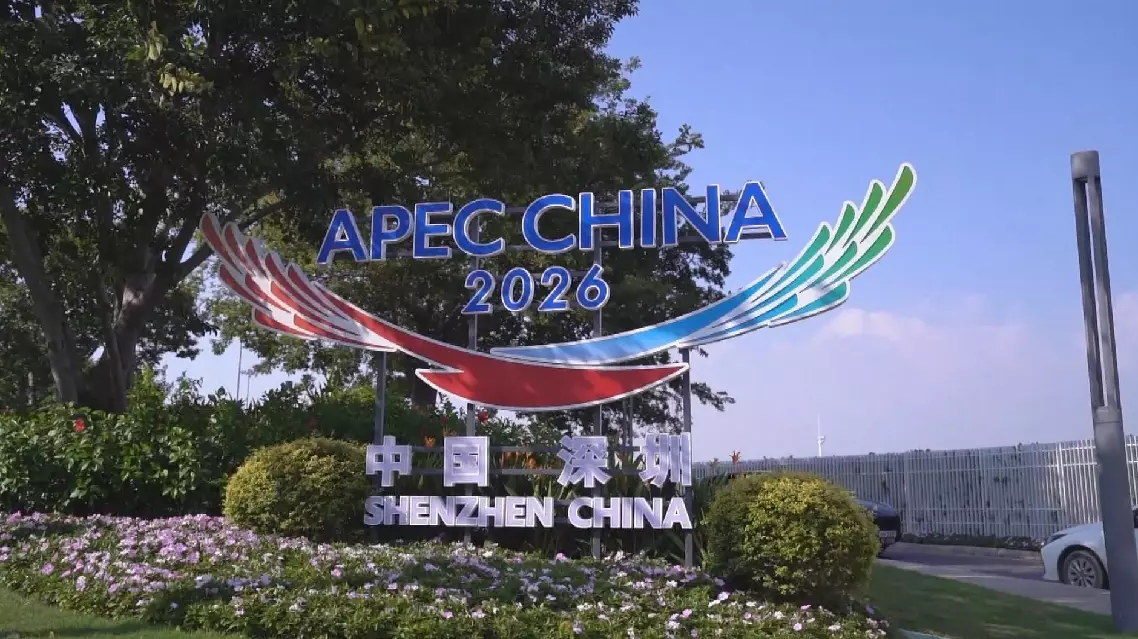
International figures anticipate tangible results from upcoming APEC summit in Shenzhen