Closing remarks by STL at Hong Kong Global Maritime Trade Summit
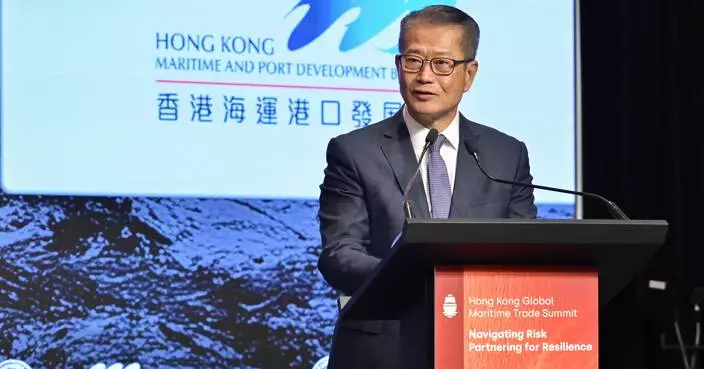
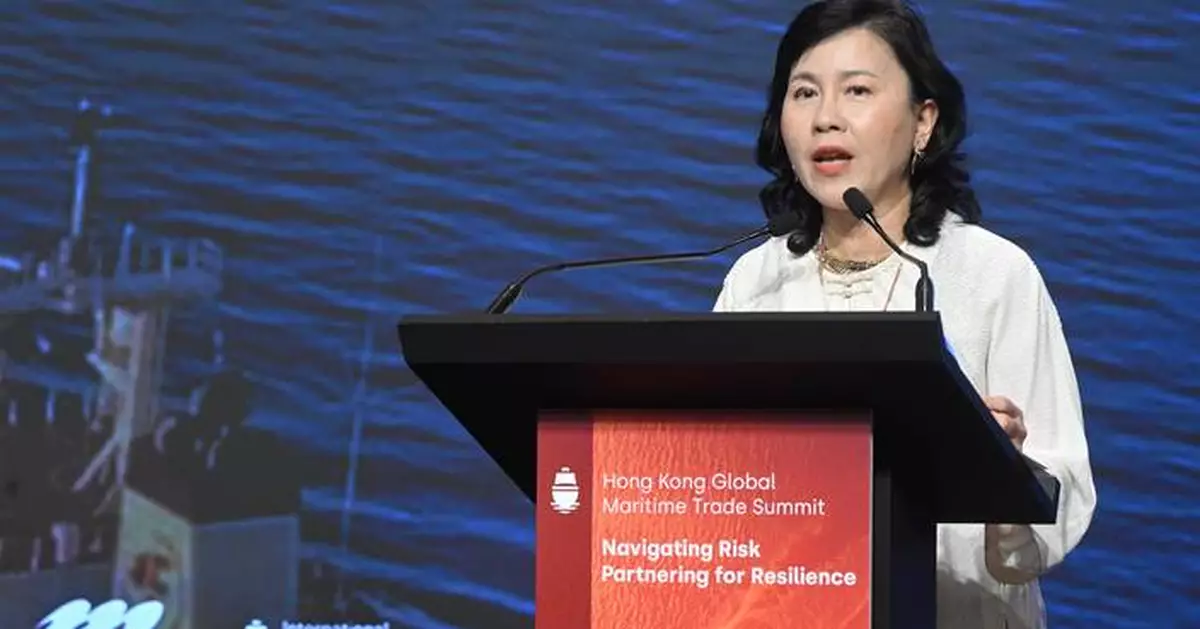
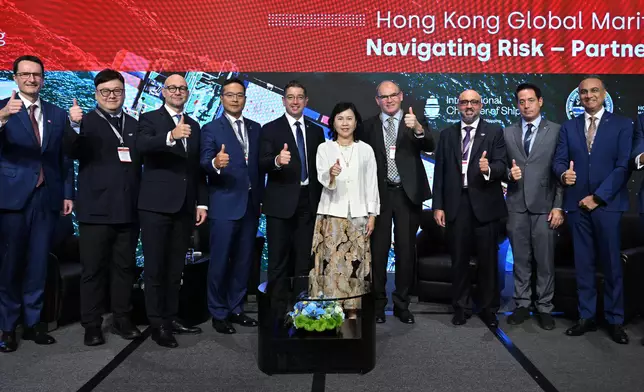
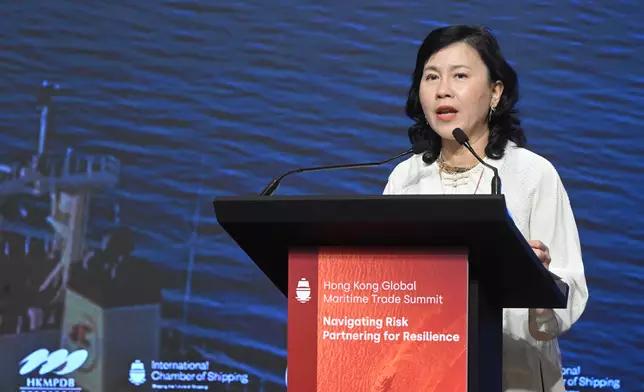
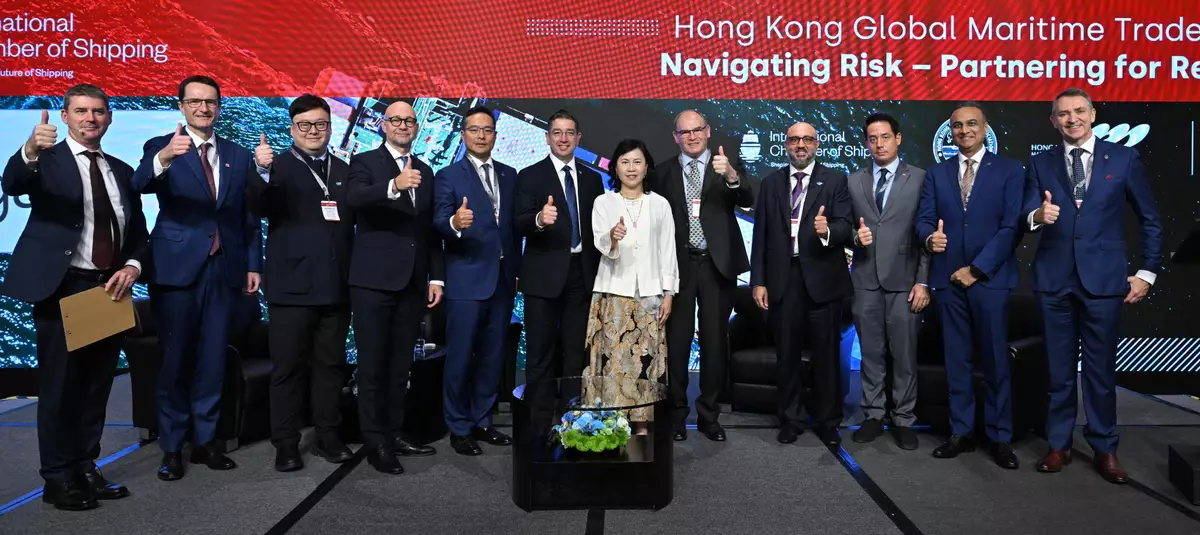
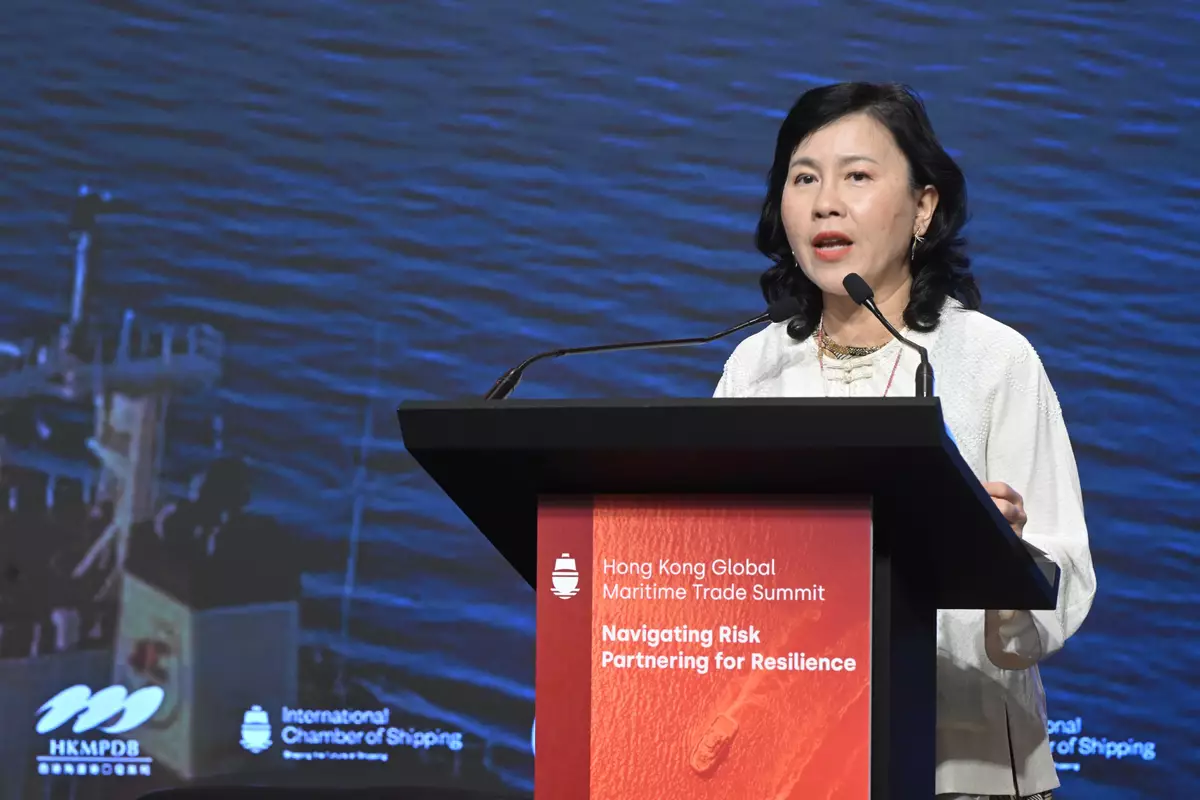
Following are the closing remarks by the Secretary for Transport and Logistics, Ms Mable Chan, at the Hong Kong Global Maritime Trade Summit today (November 16):
Click to Gallery
Source: AI-found images
Closing remarks by STL at Hong Kong Global Maritime Trade Summit Source: HKSAR Government Press Releases
Closing remarks by STL at Hong Kong Global Maritime Trade Summit Source: HKSAR Government Press Releases
Source: AI-found images
John (Chairman of the International Chamber of Shipping (ICS), Mr John Denholm), Moses (Chairman of the Hong Kong Maritime and Port Development Board, Dr Moses Cheng), Richard (Chairman of the Hong Kong Shipowners Association, Mr Richard Hext), Ambassadors and Your Excellencies, Peter (World Trade Editor of the Financial Times, Mr Peter Foster):
Good afternoon. As we bring the third Hong Kong Global Maritime Trade Summit to a close, allow me to express my heartfelt appreciation to the International Chamber of Shipping and the Hong Kong Shipowners Association (HKSOA) for once again staging this landmark summit in Hong Kong. My sincere thanks also go to our moderators, panellists, and the many global industry leaders and participants who have joined us today. Your candid exchanges and shared commitment truly embody the spirit of partnership that defines this summit. Having been able to join you for the last couple of minutes, I could see that you must have enjoyed this morning's open-door summit very much as I enjoyed yesterday's closed-door summit. A few key themes and buzzwords kept coming up, and we had a very candid and frank exchange today. I would like to use my few minutes to share with you my observations and lessons learned.
Planning the Course, Delivering on Action: Hong Kong's First Five-Year Plan and 2026 Policy Address
Throughout today's discussions under the theme "Navigating Risk - Partnering for Resilience", one truth has come out: In an era of redrawn trade lanes, geopolitical friction and climate urgency, no single jurisdiction, or port, or sector can build supply chain resilience alone. In our discussions yesterday, we had quite a number of interactive exchanges on how the industry looks upon the Government to lead and invest. We, the Government, would also like to figure out and explore how the industry would react to and resonate with the policy objectives, operational targets and investment plans, so that we can partner, align and collaborate. Resilience is really a very key subject for all of us. Resilience is not merely about enduring disruption; it is about adapting through strategic partnership, shared investment, and forward-looking innovation. And partnership, at its core, means governments and industry pulling in the same direction, with jurisdictions choosing co-operation over competition.
In Hong Kong, we are very blessed. Yesterday, a few guests asked me how we see the collaboration between the Government and the industry in Hong Kong. I would say that it is a very close collaboration. I see a lot of our stakeholders here, including an honourable Legislative Councillor, who himself is also an industry stakeholder and a participant. Through different channels, we can hear their views directly, and I hope that they consider my team to be very responsive, reactive, and very sincere in getting to the bottom of every issue that they have pointed out to us. That same spirit guides how Hong Kong is charting its course. As you may have heard throughout the past two days of discussions at the summit, grounded in Hong Kong's First Five-Year Plan and the 2026 Policy Address announced just two months ago, the Hong Kong Special Administrative Region Government is working hand in hand with the industry to drive a dual-core strategy - enhancing port competitiveness and optimising the high value-added maritime services ecosystem. Together, these efforts under the dual-core strategy are propelling Hong Kong Port's vital transformation from "volume to value", building Hong Kong into a global maritime capital.
I would like to share with you how we are moving on these two fronts. On enhancing port competitiveness, it means building resilience directly into the physical and digital arteries of global trade. The guest speakers just now mentioned a few key areas, which are mainly the areas that we are investing in the physical infrastructure. We are pursuing this on two fronts: quality and quantity. On the quality front, we are accelerating digitalisation, smart transition as well as green transformation. Today, our Port Community System (PCS) connects sea, land and air transport networks, with close to 10 000 enterprises registered. It is a very sharp learning curve. We just introduced it back in January this year, and by now the rate of growth of participation is being accelerated. They include Chinese Mainland medium-sized enterprises as well as local SMEs (small and medium-sized enterprises). We are partnering with the industry to chart a roadmap for driving smart transition and green transformation of the Hong Kong Port.
On quantity, we are widening our reach by extending our cargo hinterland through consolidating the "rail-sea-land-river" intermodal system while deepening collaboration with neighbouring ports in the Guangdong-Hong Kong-Macao Greater Bay Area and other strategic ports across the Chinese Mainland, not to mention some of our close partner ports overseas. But expanding our reach is only half the equation. You may have learned from our Financial Secretary this morning that we established a "brother port" relationship with Shanghai last month. I did travel to Shanghai and sealed the deal. We hope to strengthen strategic ties with the international maritime hub of the Chinese Mainland, as well as to strengthen our function as a transit hub for all cargoes to go global, and for the global network with all cargoes to go to the Chinese Mainland.
And we will soon, in the afternoon, announce the second batch of partner ports, and the collaboration milestones to prepare for Hong Kong's first-ever green shipping corridor.
Optimising our high value-added maritime services ecosystem means building resilience through diversification. For resilience, we cannot just treat it as a slogan, but really have to diversify our efforts and risks. Ensuring Hong Kong's strength rests not only on cargo throughput alone, but also on the depth of the entire maritime services cluster. We are actively revamping our ship registration regime, introducing the "dual registration arrangement" to provide greater operational flexibility. We are also moving full steam ahead with a half-rate profits tax concession for physical commodity trading, which we aim to have in place within this year. Thanks to the high efficiency and high professional knowledge demonstrated by our legislators, we have been able to put in place a series of legislative amendments throughout the past 12 months or so. At the same time, working closely with the Hong Kong Maritime and Port Development Board (HKMPDB), which is under the leadership of Dr Moses Cheng, and the industry, we are exploring strategies to synergise the co-development of maritime and financial services. Furthermore, we are building the green fuel value chain by announcing our first Green Energy Corridor with a Chinese Mainland city this week, and supporting a market-driven green maritime fuel trading platform.
Ladies and gentlemen, we talked about rules yesterday at our closed-door session. The rules of global trade are something that should not be shied away from or avoided. These are being rewritten before our eyes. In this new chapter, the "one country, two systems" arrangement gives Hong Kong a unique value proposition that grows more relevant by the day - a stable, bilingual common law system, a trusted legal framework, the free flow of capital and information, and world-class professional expertise that helps remove risk from globl trade. Whatever your needs, we in Hong Kong have the capabilities. Hong Kong is here to serve and help you do more than weather today's challenges - we are here to help you seize tomorrow's opportunities.
While this summit is drawing to a close, our shared collaboration carries forward. This summit serves as a fitting centrepiece of the 10th anniversary of Hong Kong Maritime Week. In the coming days, a wide array of flagship conferences, forums, seminars and networking events will take place across our city, bringing together maritime leaders, industry experts and delegates from around the world. I hope by the day we take stock of the number of activities and participants, they will surpass the records last year.
Beyond the conference hall, we have also arranged a few experiences that show Hong Kong at its best after dark. Tomorrow evening, please do join us aboard the Aqualuna for a harbour cruise, an iconic red-sailed junk, a glass in hand, and the skyline at its most spectacular. This Wednesday, step aboard our Party Tram for a lively evening of conversation as we glide through the city's streets. The Party Tram is operated by the Hong Kong Tramways, a French company that has been here operating this iconic and historic tram that runs across the shoreline of Hong Kong Island. And on Thursday, a perfect way to round off the week with a ride on the Star Ferry, back to the core business of the maritime sector, seeing the harbour the way generations of Hong Kong people have. I warmly invite you all to join, connect with your peers, and experience the vibe, hospitality, and iconic harbour of Hong Kong - the very core on which we have built our harbour and from which all of our shipping and maritime businesses started.
Once again, my heartfelt thanks and gratitude go to the ICS and HKSOA as our co-organisers. I have to thank Kenneth (Founder and Chief Executive Officer of SeaKapital and ICS Board Member, Mr Kenneth Lam) for bringing another exceptional summit to Hong Kong. I wish you all a very rewarding remainder of your stay, and I hope you leave with a sense of the energy that makes Hong Kong Asia's world city. Thank you very much.
Source: AI-found images
Closing remarks by STL at Hong Kong Global Maritime Trade Summit Source: HKSAR Government Press Releases
Closing remarks by STL at Hong Kong Global Maritime Trade Summit Source: HKSAR Government Press Releases
Source: AI-found images