Russian air defenses intercepted 1,336 drones launched by Ukraine, Russia’s Defense Ministry said Monday, in what appeared to be Kyiv’s biggest aerial attack since Moscow’s all-out invasion of its neighbor nearly five years ago.
Ukraine has scaled up its long-range aerial assaults on Russia, as well as illegally annexed Crimea and the Black and the Azov seas, with more than 1,000 drones used in some attacks in recent months.
Russia, meanwhile, has battered Ukrainian civilian areas with relentless strikes that seek to make normal daily life impossible and break public morale, especially through strikes on the power grid, as well as choking the economy.
The war has killed hundreds of thousands of soldiers and thousands of Ukrainian civilians, Western analysts and officials say.
Six people were wounded in an attack on Russia's southern Krasnodar region, according to local authorities. The town is home to the Ilsky oil refinery, a frequent target of Ukrainian drone attacks.
In the Rostov region near the border with Ukraine, three people in the city of Azov, where two oil depots are located, were wounded by drones, Gov. Yuri Slyusar said.
Around 600 drones flew toward the Moscow region overnight, Mayor Sergei Sobyanin said. Most were downed far away, while 191 were shot down as they approached the Russian capital, he said.
The strikes on Russia serve multiple purposes for Ukraine.
They have repeatedly targeted Russian oil refineries, which are an economic mainstay for Moscow. President Volodymyr Zelenskyy claimed late Sunday that Ukrainian attacks have disabled more than 55% of Russia’s oil refining capacity.
Russian officials didn’t comment on that claim, and independent verification wasn’t possible. But in a rare acknowledgment of the strikes’ economic impact, President Vladimir Putin said on Oct. 1 that they had cost Russia roughly 1% of its gross domestic product.
Ukrainian officials are keen, too, to make Russians feel the war at home, while mid-range strikes are disrupting Russia’s front-line supply routes and hampering Moscow’s efforts to get momentum on the battlefield, analysts say.
Kyiv says newly imposed speed limits on the U.S.-made Starshield system, which is SpaceX’s military-grade version of the Starlink satellite internet service, have weakened Ukraine's air defenses. Ukrainian forces say they are adapting to that by launching pre-emptive attacks that hit Russian weapons production plants and sites that Russia uses to launch drone and missile attacks.
Kyiv also wants to show its supporters that it is still in the fight, as Moscow tries to depict its victory in Ukraine as inevitable and U.S.-mediated talks make no impact on the war.
There was no clear picture of the extent of damage caused by Ukrainian strikes in Russia. Moscow-based and local officials rarely provide details.
Ukrainians are bracing for what could be the hardest winter since the war began, as Russia repeatedly batters the power grid and denies civilians heat, light and running water.
Russian strikes on power lines and substations in the southern Zaporizhzhia and central Dnipropetrovsk regions left hundreds of thousands of people without electricity, Ukrainian Prime Minister Serhii Koretskyi said Monday.
Zelenskyy says the Russian strategy is to bombard specific areas for days, flattening energy infrastructure.
Since the start of September, for example, the central Dnipro region has endured 131 strikes, while the Kyiv region around the capital has witnessed 125, he said.
One person was killed and three were injured in a Monday morning strike on Dnipro, local officials said.
Just over the past week, Russia has launched more than 2,300 attack drones, 1,590 glide bombs and 15 missiles of various types against Ukraine, according to Zelenskyy.
They are "brutal strikes that are difficult to counter,” he said on social media.
Four people were killed and three more injured in Russian shelling of towns and villages in the Donetsk region over the past day, said Vadym Filashkin, head of the Donetsk Regional Military Administration.
Follow the AP’s coverage of the war in Ukraine at https://apnews.com/hub/russia-ukraine
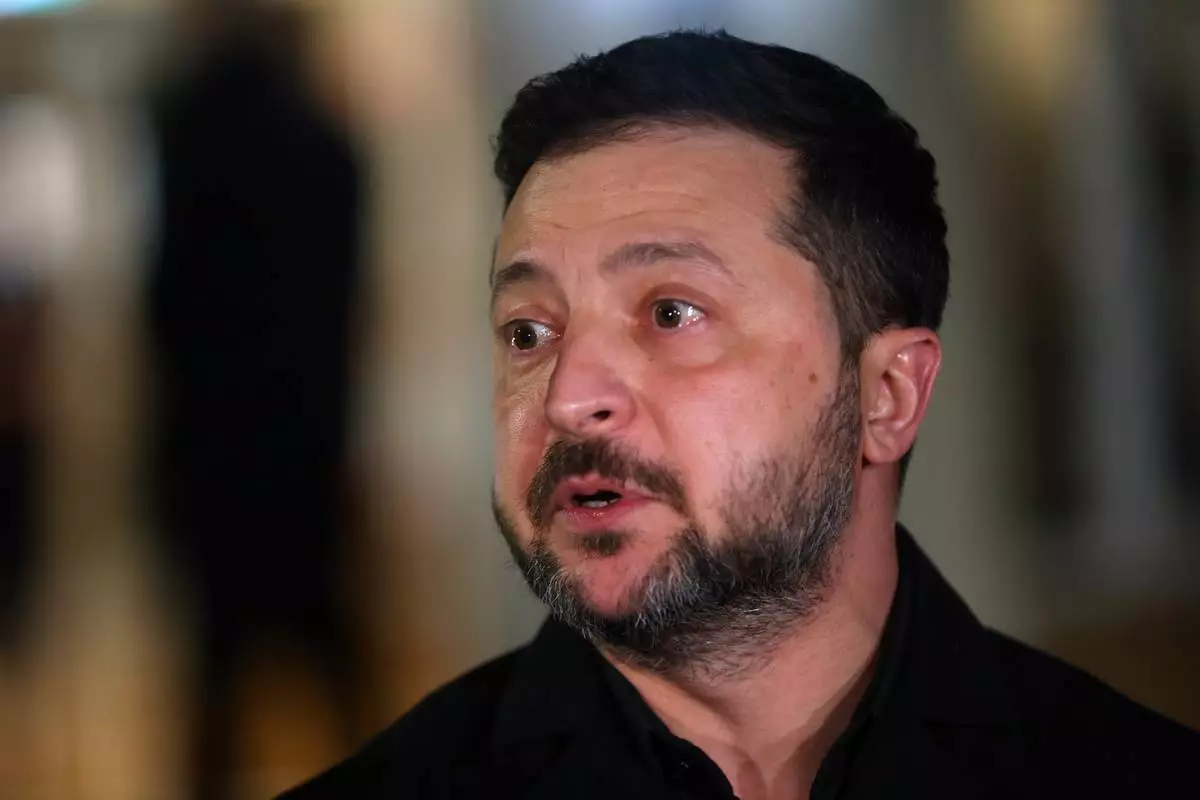
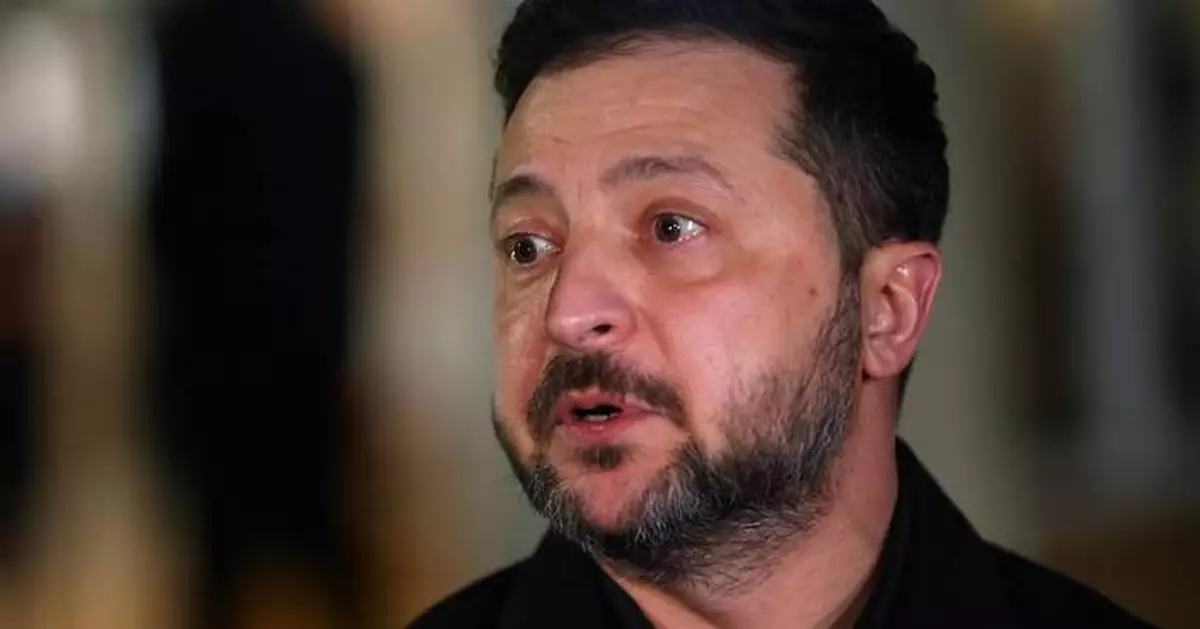
Ukraine's President Volodymyr Zelenskyy speaks to the media at the airport in Dublin, Thursday, Nov. 12, 2026 after a meeting with U.S. special envoys Steve Witkoff and Jared Kushner, U.S. President Donald Trump's son-in-law.(AP Photo/Peter Morrison)
BRUSSELS (AP) — European Union countries on Monday accused Russia of trying to drag out talks on ending the war in Ukraine while it bombs power plants and other infrastructure to make life even harder for civilians as winter closes in.
At talks in Brussels, EU foreign ministers said the priority should be to secure a ceasefire and then a real peace agreement. They said that Russia started the nearly five-year war and must back down rather than make fresh demands of Ukraine and its Western backers.
“Let’s not blur the picture right now. What we need to see is a ceasefire,” EU foreign policy chief Kaja Kallas said before chairing the meeting. “We don’t see it at the moment. We see that Russia is really escalating.”
After negotiations in Abu Dhabi last week, the United States encouraged Ukraine and its backers to agree to a Russian demand for a new security framework for Europe, suggesting that it might help bring peace.
But the Europeans see that as a Russian attempt to weaken NATO by obliging the military alliance to pull troops and equipment back westward, similar to the way they were deployed before the Czech Republic, Hungary and Poland joined in 1999.
That demand is “really absurd,” Kallas said. “If we look at the history, none of these countries has ever attacked Russia.” She said Russia’s tactic is always to demand more even though “they started the war. They are the aggressor. And there’s one victim.”
Irish Foreign Minister Helen McEntee, whose country currently holds the EU’s rotating presidency, said that despite the talks, “Russia has clearly not changed its position. It is continuing its attacks on civilians and civilian infrastructure.”
McEntee said the EU will agree on more sanctions later Monday “trying to in particular attack the financial mechanism by which Russia is waging this war.” The ministers will also look at ways to help Ukraine endure the coming winter.
German Foreign Minister Johann Wadephul said: “Europe has a security architecture – we don’t need a new one, we just need respect from everyone for the existing security architecture.” He said that is "the foundation for any conceivable agreement, from the European point of view.”
Lithuanian Foreign Minister Kęstutis Budrys also insisted that Europe does not need another security framework, saying that Russia cannot be trusted and has already broken past agreements anyway.
“It’s very clear that we don’t need another one. We already have one. Secure Ukraine, strong Europe, strong trans-Atlantic bond,” he told reporters. “It’s not about the rules. Rules are working. The problem is that Russia is breaking them.”
U.S. negotiators Jared Kushner and Steve Witkoff have positioned themselves as mediators and have been talking to Russia and Ukraine for just over a year. In that time, no lasting ceasefire has been agreed, and little obvious progress has been made toward peace.
Major differences remain over the control of territory and future security arrangements.
European leaders and officials, including Kallas, have expressed skepticism about the talks. The only tangible progress has been exchanges of prisoners, which are often used by warring parties as a trust-building measure during peace talks.
At a summit in Dublin last week, EU leaders agreed that Europe should be represented in future talks by a team of security advisers from France, Germany, the U.K., Italy and Poland as well as senior officials from the EU’s main institutions.
The Europeans concede that as Ukraine’s biggest backers they cannot also act as mediators. Their role will focus on security arrangements, reconstruction and Ukraine’s future. Only Ukraine itself can decide on matters involving its sovereignty, they said.
Associated Press writer Geir Moulson in Berlin contributed to this report.
Follow the AP’s coverage of the war in Ukraine at https://apnews.com/hub/russia-ukraine
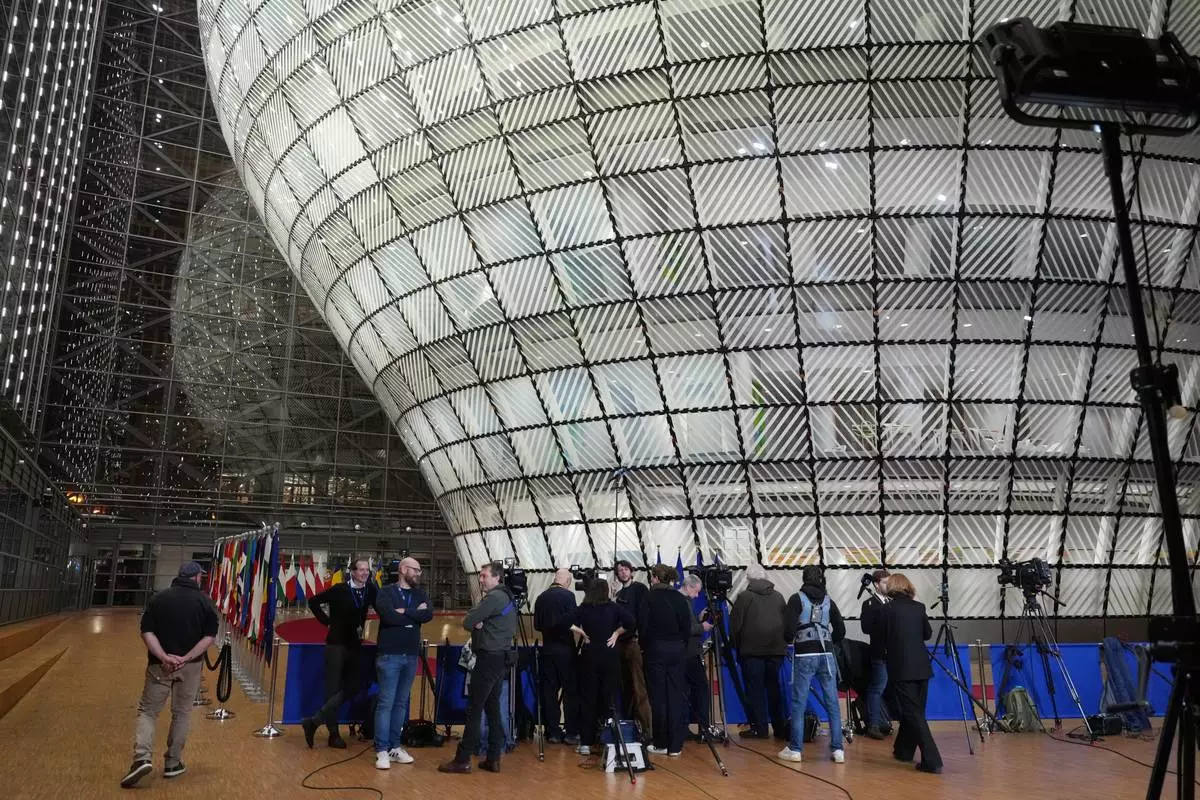
Journalists take positions as they prepare for the arrival of ministers ahead of a meeting of EU foreign ministers at the European Council building in Brussels, Monday, Nov. 16, 2026. (AP Photo/Virginia Mayo)
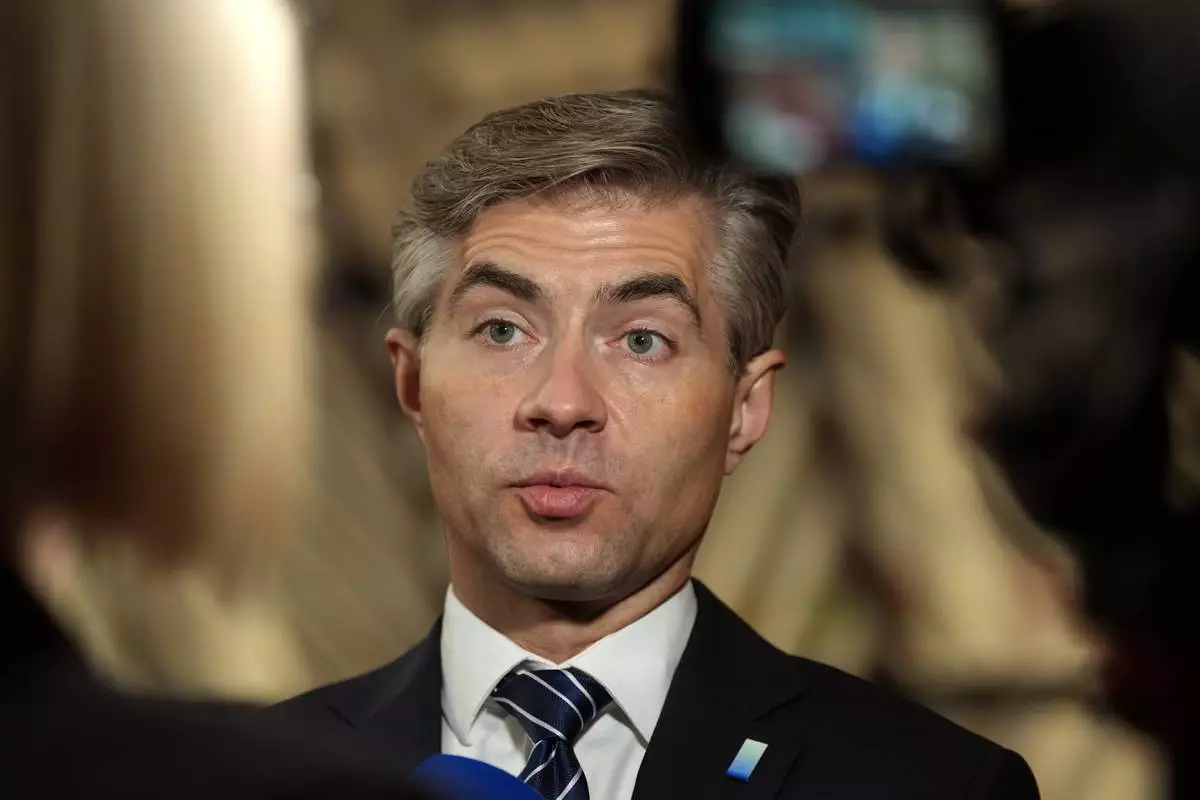
Lithuania's Foreign Minister Kestutis Budrys speaks with the media as he arrives for a meeting of EU foreign ministers at the European Council building in Brussels, Monday, Nov. 16, 2026. (AP Photo/Virginia Mayo)
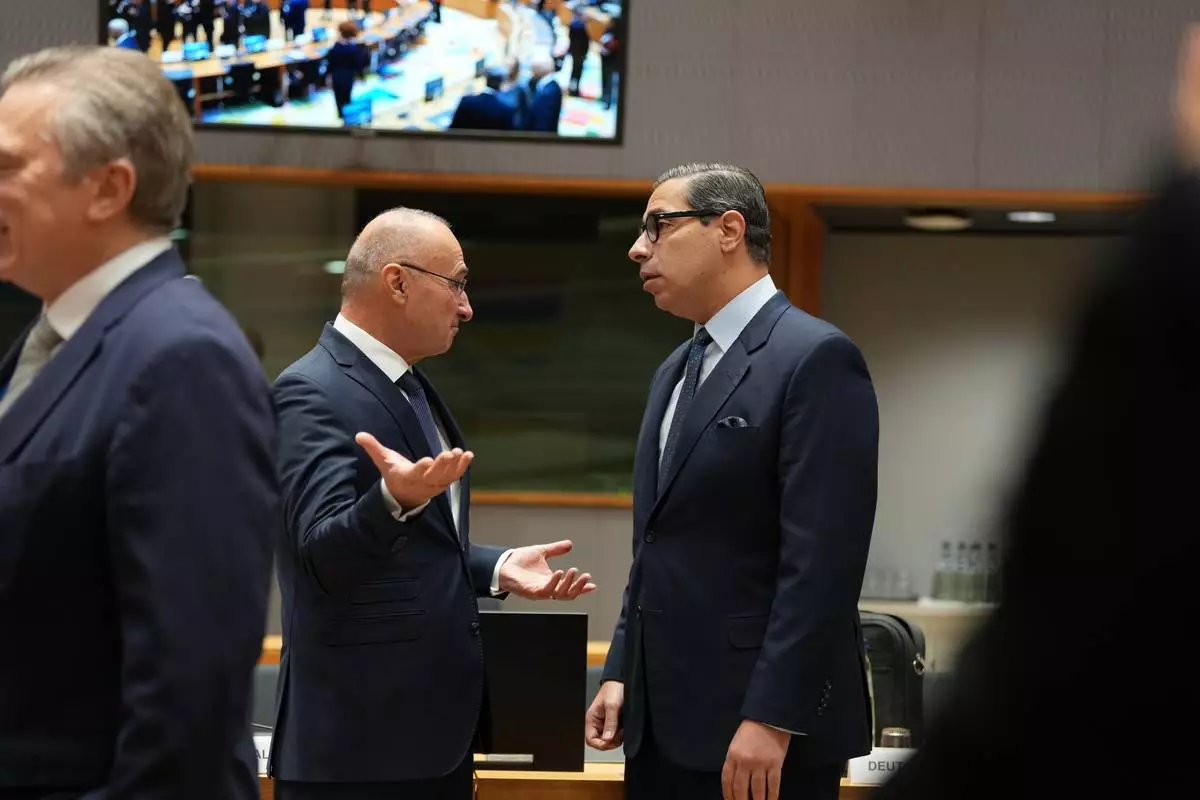
Croatia's Foreign Minister Gordan Grlic Radman, left, speaks with Cypriot Foreign Minister Constantinos Kombos during a round table meeting of EU foreign ministers at the European Council building in Brussels, Monday, Nov. 16, 2026. (AP Photo/Virginia Mayo)
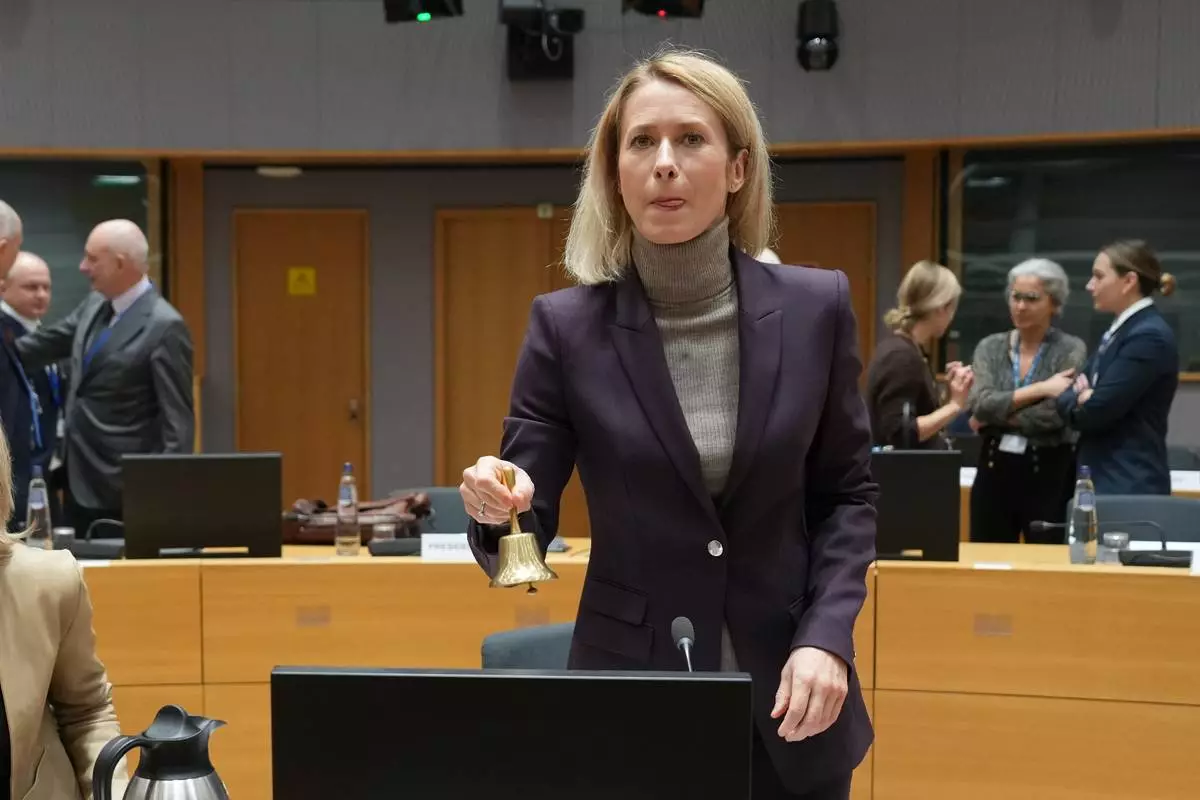
European Union foreign policy chief Kaja Kallas rings a bell to signify the start of a meeting of EU foreign ministers at the European Council building in Brussels, Monday, Nov. 16, 2026. (AP Photo/Virginia Mayo)