JINAN, China, Nov. 17, 2026 /PRNewswire/ -- A report from Aijinan.com.cn
Springs are Jinan's most distinctive cultural symbol and one of its strongest calling cards to the world. Built around springs, sustained by their waters and named for their abundance, Jinan's identity as the "City of Springs" is not only a defining feature of the city, but also the starting point for sharing its story with an international audience. In recent years, Jinan has placed spring culture at the heart of its efforts to bring together ecological conservation, cultural heritage preservation and international communication. Today, the clear waters that have flowed through the ancient city for centuries are reaching overseas audiences through their screens and into their hearts, as Jinan's spring culture increasingly takes centre stage on the world stage.
A Thousand-Year Legacy: The Cultural Confidence Behind Jinan's Springs
The springs of Jinan are more than natural attractions. They are an integral part of the city's way of life and cultural identity. The distinctive urban landscape, where "springs flow through every household and weeping willows grace every doorway", has nurtured a vibrant atmosphere of everyday life. The poetic legacy of Li Qingzhao and Xin Qiji, two of China's most celebrated Song Dynasty poets, has given the springs a profound humanistic character. Meanwhile, images of clear spring waters, lotus-filled lakes and gentle breezes have found their way into the patterns of traditional mamianqun (horse-face skirts) and contemporary intangible cultural heritage creations, allowing classical Eastern aesthetics and local cultural traditions to enrich one another.
The serenity and inclusiveness embodied by the imagery of springs are precisely what give Jinan's spring culture its universal appeal, enabling it to transcend linguistic and cultural boundaries and resonate with audiences around the world.
This cultural confidence is grounded in protection. Jinan remains committed to safeguarding its springs through legal frameworks, scientific approaches, ecological conservation and targeted management. Only by ensuring the long-term sustainability of its spring system can the city's distinctive spring culture continue to flourish. Its sound ecological foundation also lends authenticity and credibility to the way Jinan presents its cultural identity to the world.
Springs have also shaped the rhythm of everyday life in Jinan. From Baotu Spring, Wulongtan and Black Tiger Spring to Qushuiting Street and Baihuazhou, a scenic spring-viewing route connects the city's historic neighbourhoods, lakes and mountains. At designated spring-water drinking stations, visitors can bend down and savour a handful of fresh, naturally cool water. In spring-themed reading rooms and traditional courtyard spaces, reading, tea drinking and leisurely walks through old streets come together. Shandong cuisine inspired by spring culture adds another dimension to the city's distinctive culinary experience.
Building Friendships Through Springs: Helping the World Understand the City of Springs
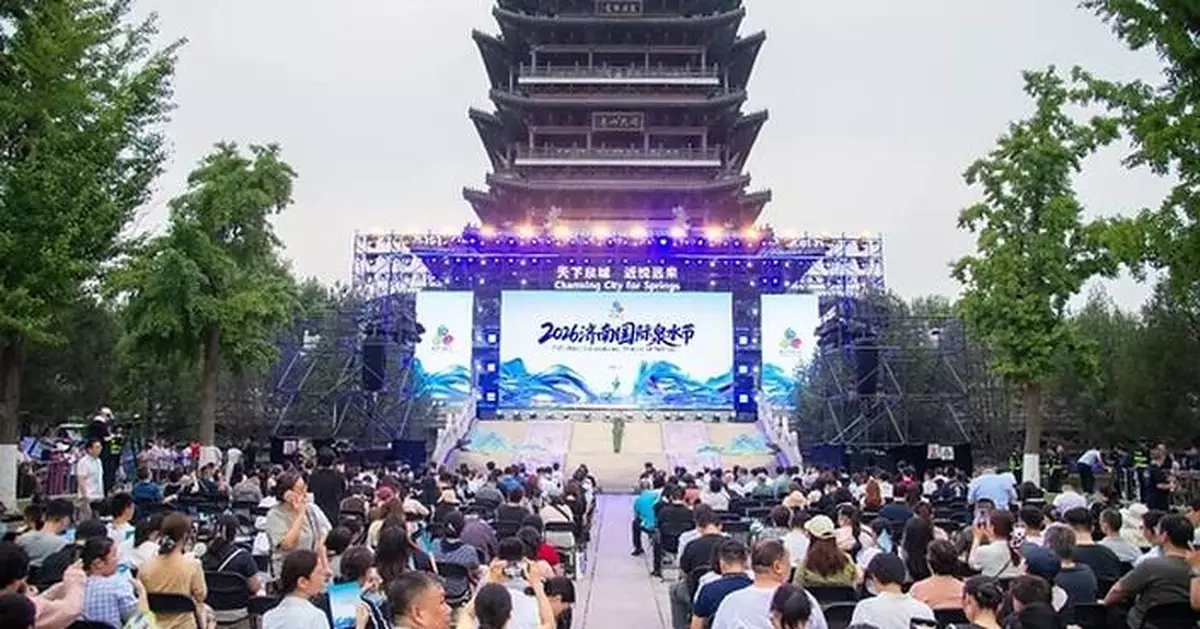
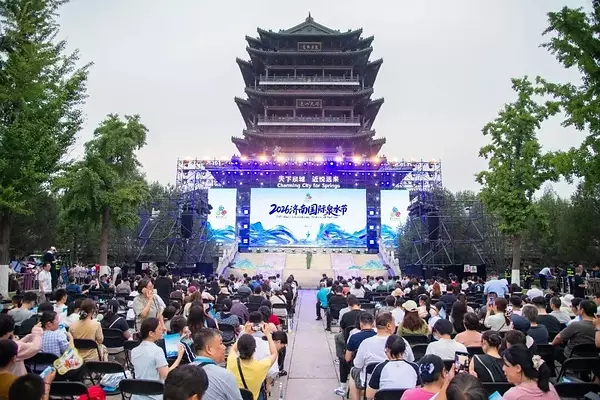
A strong cultural foundation needs an effective platform for communication. Drawing on cultural exchange platforms such as the Jinan International Spring Water Festival, the city has woven international engagement into its cultural fabric.
At festival opening ceremonies, representatives from Jinan's international sister cities have extended their greetings, while friends from around the world have gathered in the City of Springs. A special commemorative stamp series titled The Charm of Jinan's Springs captures the city's spring culture in a distinctive visual form. Meanwhile, a spectacular drone light show over Daming Lake has transformed the night sky into a vast canvas, illustrating the flow of the springs and the city's remarkable transformation. Through these experiences, spring culture is no longer simply something to be viewed in an exhibition; it has become a shared cultural experience in which visitors can actively participate.
International sister-city partnerships and dialogue between Chinese and international participants have been among the most engaging aspects of these exchanges.
Jinan and Rennes, France, share a special connection through their relationship with water. The two cities, both closely associated with their waterways, brought their distinctive urban identities together through a photography exhibition entitled Twin Cities, Shared Spring Charm: A Dialogue Through Light and Shadow. Through photographs, the exhibition presented the character of each city: the surging waters of Baotu Spring, lotus blossoms on Daming Lake and the vibrant atmosphere of Mingshui Ancient City alongside the historic streets of Rennes, the rural landscapes of Brittany and scenes from the "Garden of Jinan".
Bai Sijie, director of the Confucius Institute of Brittany in France, remarked that "photography is a universal language that transcends borders". He expressed his hope that more residents of Rennes would discover and fall in love with Jinan through the lens of a camera. Chinese and French photographers also explored the ancient city and its springs together, capturing scenes that continue to tell the story of this friendship, one photograph at a time.
Meanwhile, a cultural dialogue entitled Jinan Through the Eyes of Chinese and International Cultural Ambassadors brought together intangible cultural heritage practitioners, folk culture experts, international scholars and overseas photographers in the City of Springs. Through discussions ranging from the aesthetics of traditional craftsmanship and the preservation of folk customs to international visual communication and reflections on humanity and culture, participants explored Jinan's unique appeal from a variety of perspectives.
The event also saw the appointment of cultural advisers, who will continue to promote Jinan through their contributions to cultural heritage preservation, literary creation and visual storytelling.
The springs continue to flow, and the city's cultural traditions continue to thrive. Rooted in its springs, Jinan is turning its distinctive spring culture into a world-class calling card, sharing the story of China and the story of the City of Springs with audiences around the globe.
** This press release is distributed by PR Newswire through automated distribution system, for which the client assumes full responsibility. **
Taking Spring Culture to the World: How Jinan Uses Its Springs to Tell the Story of a Chinese City