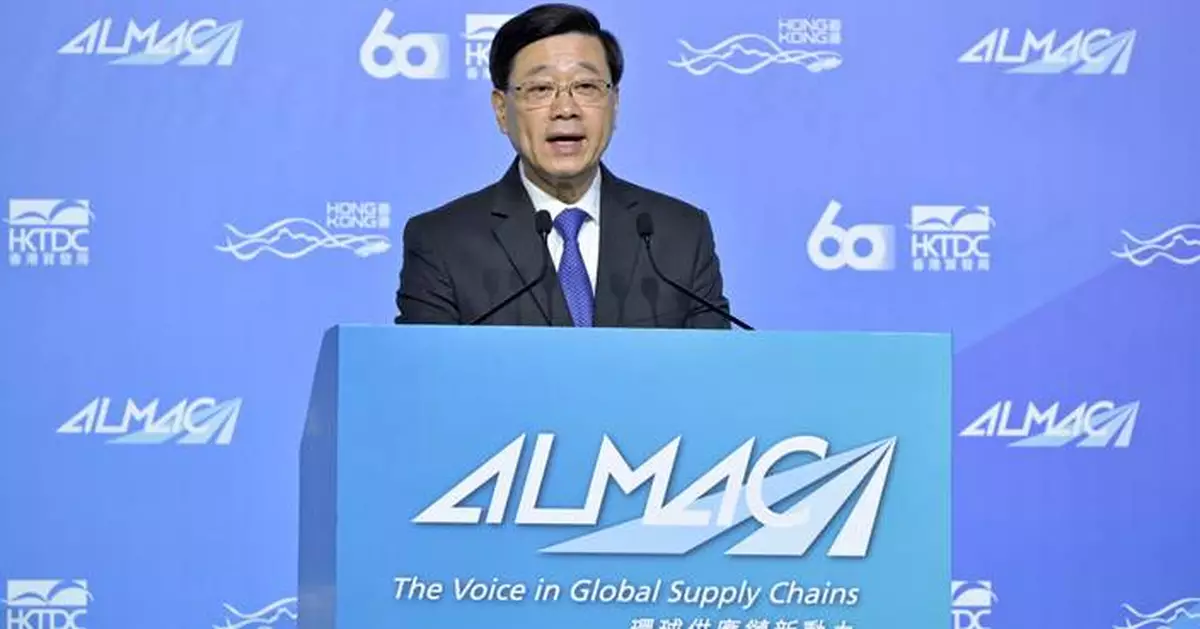
Speech by CE at Asian Logistics, Maritime and Aviation Conference 2026
Following is the speech by the Chief Executive, Mr John Lee, at the Asian Logistics, Maritime and Aviation Conference 2026 today (November 17):
Honourable Governor Zhao Gang of Shaanxi (Governor of Shaanxi Province), Mayor Ye Niuping of Xi'an (Mayor of Xi'an), Deputy Minister Sanphet Bunyamanee of Thailand (Deputy Minister of Transport, Thailand), Assistant Minister Mohamed Fathi of Egypt (Assistant Minister of Transport for Maritime Transport and Head of the Central Administration for Finance and Investment, Egypt), Deputy Director-General Jennifer Nordquist of WTO (Deputy Director-General of the World Trade Organization), Professor Frederick Ma (Chairman of the Hong Kong Trade Development Council), distinguished guests, ladies and gentlemen,
Good morning. Welcome to Hong Kong and the 16th Asian Logistics, Maritime and Aviation Conference, which brings together professionals in logistics, maritime, aviation, supply chain management and related fields from around the world.
You are here to discuss trade and transport: the challenges, the trends, and the boundless opportunities. This year's theme, "Driving Inclusive Growth through Innovation and Sustainability", focuses on three strategic priorities. Allow me, for the next several minutes, to touch on each of them.
First, "Growth". Growth matters amid continuing energy price hikes and wide-ranging geopolitical concerns. For an indispensable sector like logistics, supply chain disruptions often translate to frontloaded shipments. This is reflected in the first three quarters of the year, with Hong Kong's goods exports soaring more than 45 per cent, year-on-year.
In aviation, Hong Kong International Airport handled over five million tonnes of cargo in 2025, making it the world's number one busiest cargo airport for the 15th time since 2010. Such results underscore Hong Kong's role as an international logistics hub, backed by our strengths in connectivity, customs efficiency, and cargo expertise.
To help us stay ahead, the Hong Kong SAR (Special Administrative Region) Government announced Hong Kong's First Five-Year Plan in September. It is our roadmap for strategic development. It aligns us with our country's National 15th Five-Year Plan. It reinforces our standing in several critical areas. That very much includes our status as an international maritime centre and aviation hub.
In aviation, we are capitalising on our Three-Runway System to expand our flight network and enhance capacity. We're committed to giving businesses greater reach and more choices in moving goods through Hong Kong.
At sea, we are pursuing cargo growth and higher-value maritime services, from ship finance and insurance to management and legal services. More than a port through which goods move, Hong Kong will become a centre where maritime business of every kind is conducted.
Our expanding Partner Port network supports this ambition. Last year, we established partnerships with Guangxi Port, Dalian Port and Chile's San Antonio Port. This year, we are forging ties with Port in Shanghai, Piraeus Port in Greece, Yangpu Port in Hainan and, as we will witness today, Port of Qingdao in Shandong.
We also have the ground-breaking SuperLink Direct service. It is an intermodal, land-air express logistics corridor between Vietnam and Hong Kong via Guangxi. This regional co-operation allows Vietnamese manufacturing goods to reach global clients via Hong Kong's aviation network.
We are also working with our Greater Bay Area partners to advance cargo movement and develop high-value logistics services. In doing so, we will make Hong Kong a more competitive gateway, connecting Chinese Mainland production with international markets.
"Innovation" is our second priority. Technology must deliver efficiency, transparency and new channels. And our Port Community System is already putting this into practice. Since its rollout in January, nearly 10 000 enterprises have registered to track shipments, share data and access financing. We are now expanding its coverage and blockchain-enabled cargo tracking, while encouraging wider adoption. Better information flows mean better cargo and business flows.
Innovation must be accessible to businesses of all sizes. We are ensuring just that through the Future Innovative Logistics Acceleration Scheme. It helps small and medium-sized enterprises plug into logistics data platforms, multiplying their digitalised supply chain opportunities.
The Five-Year Plan calls for Hong Kong to become the Asia-Pacific hub for innovative low-altitude applications. Our regulatory sandbox tests cargo delivery safely in real conditions. This will guide legislative review and infrastructure planning, as we move from trials to services. We welcome international co-operation, especially on standard harmonisation, so the sector can develop safely and serve wider markets.
"Sustainability" is our third priority. This year's extreme weather events highlight the need for green practices backed by practical solutions. And our maritime and aviation sectors are making steady progress in this regard.
In maritime transport, we have completed about 220 green fuel operations totalling 380 000 tonnes since last year, setting national B24 and B100 biofuel records. We have conducted our first green methanol bunkering, and liquefied natural gas bunkering volume has grown by 80 per cent year-on-year. Throughout our new green energy, we have established Green Energy Corridor with Zhanjiang in Guangdong. Hong Kong is connecting Chinese Mainland production with global fleets.
We will also sign an MOU (Memorandum of Understanding) with the Ministry of Transport's Global Sustainable Transport Innovation and Knowledge Center to promote our country's Global Sustainable Transportation Certification System internationally, offering an alternative for verifying green fuel credentials.
In aviation, we are building a Sustainable Aviation Fuel (SAF) supply chain to cut airline emissions. We will soon witness an MOU signing between our Airport Authority, Towngas and Hong Kong-based EcoCeres for a dedicated SAF blending facility. It will strengthen local blending and supply and help airlines use SAF when refuelling at Hong Kong International Airport.
Ladies and gentlemen, the three priorities I have outlined reinforce one another. Growth opens markets. Innovation gives businesses the tools to compete. Sustainability prepares them for the future. Together, they make inclusive growth possible. They create opportunities for major operators and smaller enterprises alike.
Hong Kong, the world's "super-connector" and "super value-adder", brings together the Chinese Mainland, international networks and professional expertise. We stand ready to turn these strengths into shared opportunities for you and your business future.
My thanks to the Hong Kong Trade Development Council for organising this conference, and to our speakers, partners and participants for making it the region's leading annual event for logistics, maritime and aviation professionals.
I wish you a rewarding conference and a memorable stay in Hong Kong, Asia's world city. Asia's logistics city, too. Thank you.
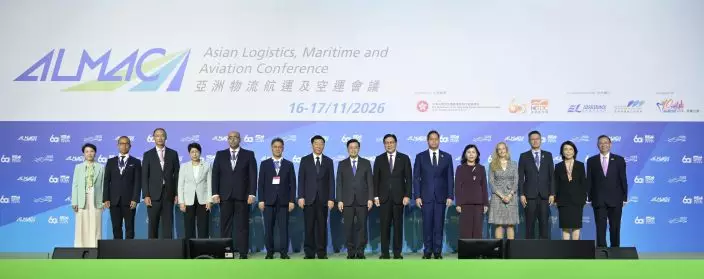
The Chief Executive, Mr John Lee, attended the Asian Logistics, Maritime and Aviation Conference 2026 today (November 17). Photo shows (from fifth left) the Assistant Minister of Transport for Maritime Transport and Head of the Central Administration for Finance and Investment, Egypt, Mr Mohamed Fathi; the Mayor of Xi'an, Mr Ye Niuping; the Governor of Shaanxi Province, Mr Zhao Gang; Mr Lee; the Chairman of the Hong Kong Trade Development Council, Professor Frederick Ma; Deputy Minister of Transport of Thailand Mr Sanphet Bunyamanee; the Secretary for Transport and Logistics, Ms Mable Chan; Deputy Director-General of the World Trade Organization Ms Jennifer Nordquist, and other guests at the event. Source: HKSAR Government Press Releases
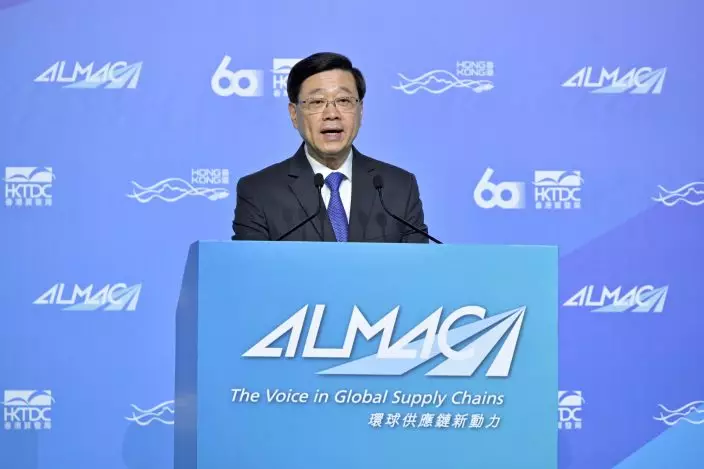
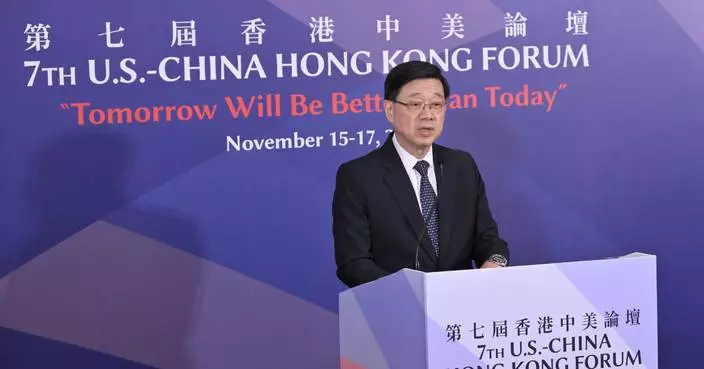
The Chief Executive, Mr John Lee, speaks at the Asian Logistics, Maritime and Aviation Conference 2026 today (November 17). Source: HKSAR Government Press Releases