JURF AL-SAKHAR, Iraq (AP) — A powerful Iran-backed armed group in Iraq vowed on Tuesday to confront government forces if they try to enter its main stronghold near Baghdad, denying allegations that it is smuggling oil from the area.
The standoff between Kataib Hezbollah and Iraqi authorities is shaping up to be the first major test of the new government’s resolve to disarm nonstate armed groups.
Abu Taleb al-Saidi of Kataib Hezbollah made the comments a day after Iraqi Prime Minister Ali al-Zaidi said security forces would enter Jurf al-Sakhar, south of Baghdad in Babil province, later this week. Local media reported that the group had until Friday to leave.
Kataib Hezbollah, one of Iraq’s most powerful armed groups, wields considerable influence in Jurf al-Sakhar and has maintained an armed presence there for more than a decade.
The planned move by al-Zaidi is part of his push to disarm powerful Iran-backed groups by mid-2027. The move by both rival sides raises alarms of internal Shiite fighting that has been mostly avoided since the 2003 U.S.-led invasion that removed Saddam Hussein from power.
Two officials from Kataib Hezbollah told The Associated Press that Gen. Esmail Qaani, who heads the foreign wing of Iran’s Revolutionary Guard, arrived in Baghdad on Monday to take part in mediation to end the tension. The officials, who spoke on condition of anonymity because they were not authorized to comment publicly, gave no further details.
The United States backs efforts to disarm Iran-backed groups in Iraq as part of its push to reduce Tehran’s influence in the region, including in Iraq and Lebanon. Washington has described Kataib Hezbollah as an “Iran-backed terrorist organization.”
Lebanese authorities will likely be watching the standoff in Jurf al-Sakhar closely. They have made little progress in carrying out their own plan to disarm Lebanon’s Hezbollah militia, which is allied with but separate from Kataib Hezbollah.
Also Tuesday, an Iraqi judicial committee inspected Jurf al-Sakhar following allegations by authorities that Kataib Hezbollah had used the area to smuggle oil worth tens of millions of dollars.
The state news agency quoted an unnamed senior official as saying the judicial committee was accompanied by a government committee. The inspection aimed to examine the circumstances of the alleged smuggling and identify sites where violations had occurred.
The agency quoted al-Zaidi as saying that all suspects involved in the oil smuggling operations will be referred to the judiciary and that legal measures will be taken against them. He also ordered the dismissal of nine security and administrative officials in Babil governorate, including the Babil police chief, commanders and directors of security and intelligence agencies, and the director of the State Company for Oil Pipelines.
Ali al-Nheir, a member of the parliament’s investigative committee, told the state news agency that the investigation that included thermal imaging showed 25 tanker trucks each carrying 36,000 liters.
“The reports reviewed by the committee were shocking, and included evidence and documents proving the existence of smuggling operations,” al-Nheir said about Jurf al-Sakhar.
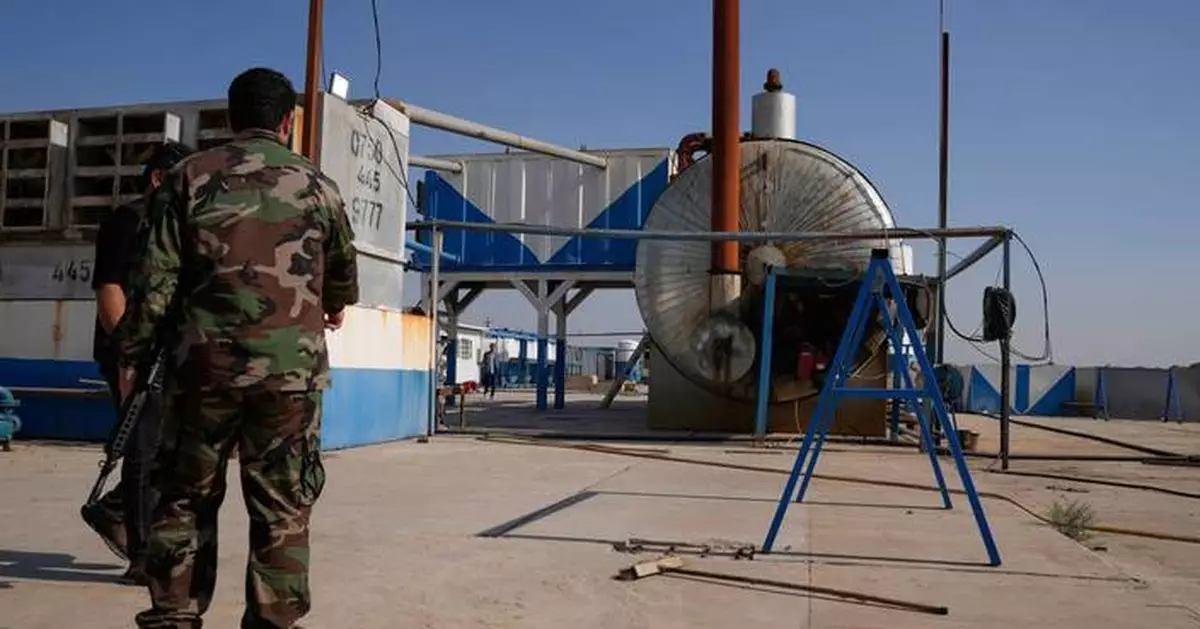
Another Kataib Hezbollah official, who spoke on condition of anonymity, told journalists touring Jurf al-Sakhar on Tuesday that two facilities in the area refine oil. He said the fuel was used only to run the group’s vehicles and power generators and denied allegations of smuggling.
The official said Jurf al-Sakhar had been hit more than 35 times since the U.S. and Israel began attacking Iran in late February.
He warned that if “a war is imposed on us we will fight.”
Associated Press writer Bassem Mroue contributed to this report from Beirut.
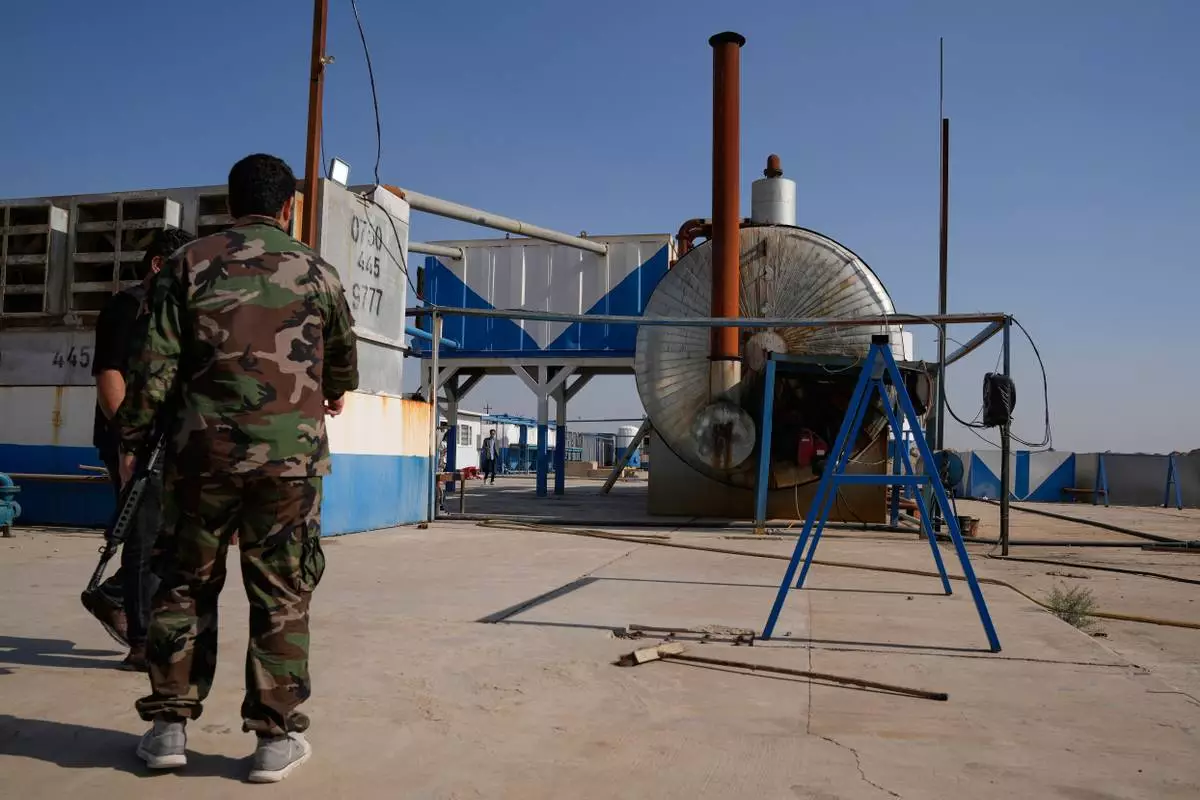
A fighter with the Iran-backed Kataib Hezbollah militia stands near an oil refinery in Jurf al-Sakhar, in Iraq's Babil province, south of Baghdad, Tuesday, Nov. 17, 2026. (AP Photo/Hadi Mizban)