EDITORS/NEWS DIRECTORS:
The U.S has lost its measles-free status, international health officials said Tuesday, as the highly-contagious virus once relegated to medical textbooks has spread — largely among the unvaccinated — at the highest rate in more than 30 years.
Mexico also lost its measles elimination status, following a resurgence of the virus there that included a massive outbreak in Chihuahua state.
The Pan American Health Organization declaration has few practical implications and is largely symbolic, but it marks a sharp turnabout in a disease largely controlled through decades of scientific advances. It also may be seen as the beginning of an era in which diseases of the past become deadly problems for the modern world.
Measles has been spreading throughout the Americas since 2024. The outbreaks in North America started in close-knit Mennonite communities and have since spread to areas with low vaccination rates. Last year, Canada lost its measles-free designation for the first time since 1998.
International health officials consider measles eliminated when the virus is not locally spreading among residents. The designation hinges on whether a single measles chain has spread uninterrupted for at least 12 months.
Tuesday’s announcement signals an erosion of public health preparedness.
Vaccination rates have been falling against a number of diseases, in the U.S. and globally. And as one of the most infectious diseases known to medicine, measles was seen as likely to be one of the first vaccine-preventable diseases to re-emerge when vaccinations falter.
That means others are likely will follow, some experts said.
READ AP'S LATEST COVERAGE
US loses its measles-free status. Here’s how the Trump administration has responded to outbreaks
Measles is no longer considered eliminated in the US and Mexico
Doctors are raising concerns about US babies born with measles
The US and Mexico are on the verge of forfeiting a major health victory. Here’s what to know
WHAT IS MEASLES?
The illness typically begins with a high fever followed by a telltale rash that starts on the face and neck. Most people recover, but it’s one of the leading causes of death among young children, according to the World Health Organization. Serious complications, including blindness and swelling of the brain, are more common in young children and adults over age 30.
Ten measles-associated deaths have been reported in the U.S. this year. Health officials have not released detailed information on each death, but at least four were children.
This year’s measles death count is higher than what has been seen in any previous year in more than three decades.
And the U.S. is experiencing its worst year for measles illnesses since 1991.
The country has seen major outbreaks in Texas, Utah, South Carolina and Pennsylvania.
REPORTING THREADS AND RESOURCES
— View national and state data on the CDC's measles page.
— The CDCs VaxView shows data on different kinds of vaccinations across age groups. Check out the interactive SchoolVaxView to look at vaccine levels in kindergarteners nationally and by state. You can select MMR to see measles numbers.
— Look at vaccination rates in your state. It takes a community vaccination rate of 95% to prevent outbreaks, experts say. But as fewer parents vaccinate their children and federal leaders sow doubt and confusion about their importance, the virus has found footholds in communities across the U.S. All but three states have reported a confirmed a case of measles this year.
— Routine measles vaccination typically begins at age 1, so infants are particularly vulnerable to the virus. How are day cares dealing with the situation? How are parents feeling about the specter of measles?
— Check with your state’s health department or education department to see if they publish data showing community or school vaccination rates. Rhode Island, for example, publishes vaccination rates by individual school at this link. How do parents and teachers feel about the vaccine rates at their schools. How are public health officials trying to increase vaccination rates or keep them from dropping?
— Become familiar with your state’s public health website and where measles data is being posted. Does your state have a current campaign or plans to promote the measles vaccine? Talk to local, county and state public health officials about how they are approaching the vaccine. How do they feel about local vaccination rates?
— In August and September, the CDC awarded $100 million to support state and local measles-response work. Talk to state and local officials about these funds — how much was received and how they are being used. Do officials feel like the funding is enough?
— Even in states with high vaccination rates, there can be pockets of lower participation depending on the beliefs of a given community, putting residents at greater risk. Talk to experts and public health officials about communities with lower vaccination rates. How are schools in these areas or in states with lower rates communicating with families about vaccines or spotting symptoms of the illness?
— Health experts are also on alert for congenital measles — when a pregnant woman passes the virus to her fetus in the womb. Getting vaccinated before pregnancy and having high vaccination rates in the community are important for prevention. Talk to public health officials, local OBGYNs and fertility clinics about any messaging they are pursuing for vaccinations in advance of pregnancy.
— Consider a service journalism piece on how and where people in your area can get free or low cost MMR shots — adults and children.
READ ADDITIONAL AP COVERAGE
Doctors say Trump’s vaccine order will raise fears, cause confusion and endanger kids
FACT FOCUS: RFK Jr. says the US is limiting measles outbreaks better than the rest of the world
EMBED THIS GRAPHIC
This AP digital embed chart shown known cases of measles in the U.S. by year since 1991. The U.S. has lost its measles-free status. The highly contagious virus has spread at the highest rate in over 30 years, mainly among the unvaccinated. Mexico and Bolivia also lost their measles-elimination status following a resurgence. The Pan American Health Organization’s declaration Tuesday is largely symbolic, but it highlights a significant setback in controlling the disease. Measles has been spreading throughout the Americas since 2024, starting in close-knit communities and spreading to areas with low vaccination rates. Experts warn that declining vaccination rates could lead to more disease outbreaks. This chart is current as of Nov. 17, 2026, and will update as events warrant. Source: CDC.
Click for a preview.
To embed, insert this code into your CMS:
!-- start AP embed --
iframe title=“Measles cases spike” aria-label=“Column Chart” id=“ap-chart-PjWwx” src=“https://interactives.ap.org/embeds/PjWwx/24/” scrolling=“no” width=“100%” style=“border:none” height=“415″/iframescript type=“text/javascript”!function()(“use strict”;window.addEventListener(“message”,(function(e)(if(void 0!==e.data(“datawrapper-height”))(var t=document.querySelectorAll(“iframe”);for(var a in e.data(“datawrapper-height”))for(var r=0;rt.length;r++)(if(t(r).contentWindow===e.source)t(r).style.height=e.data(“datawrapper-height”)(a)+“px”))))))();/script
!-- end AP embed --
The Associated Press’ health and science coverage receives financial support from the AP Fund for Journalism and private foundations. AP is solely responsible for all content. Find AP’s standards for working with philanthropies, a list of supporters and funded coverage areas at AP.org.
Localize It is a resource produced regularly by The Associated Press for its customers’ use. Questions can be directed to the Local News Success team at localizeit@ap.org. View guides published in the last 30 days here.
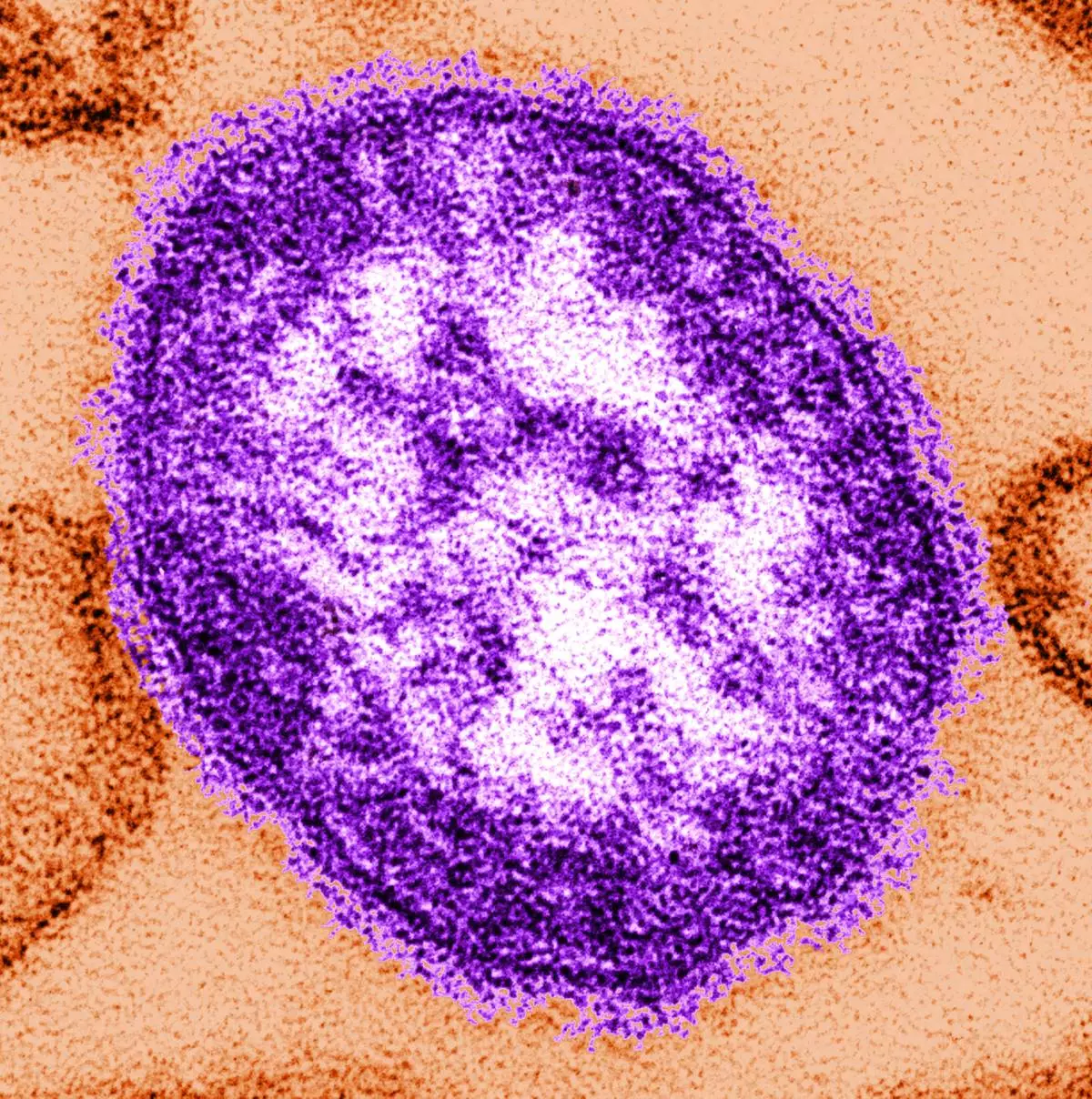
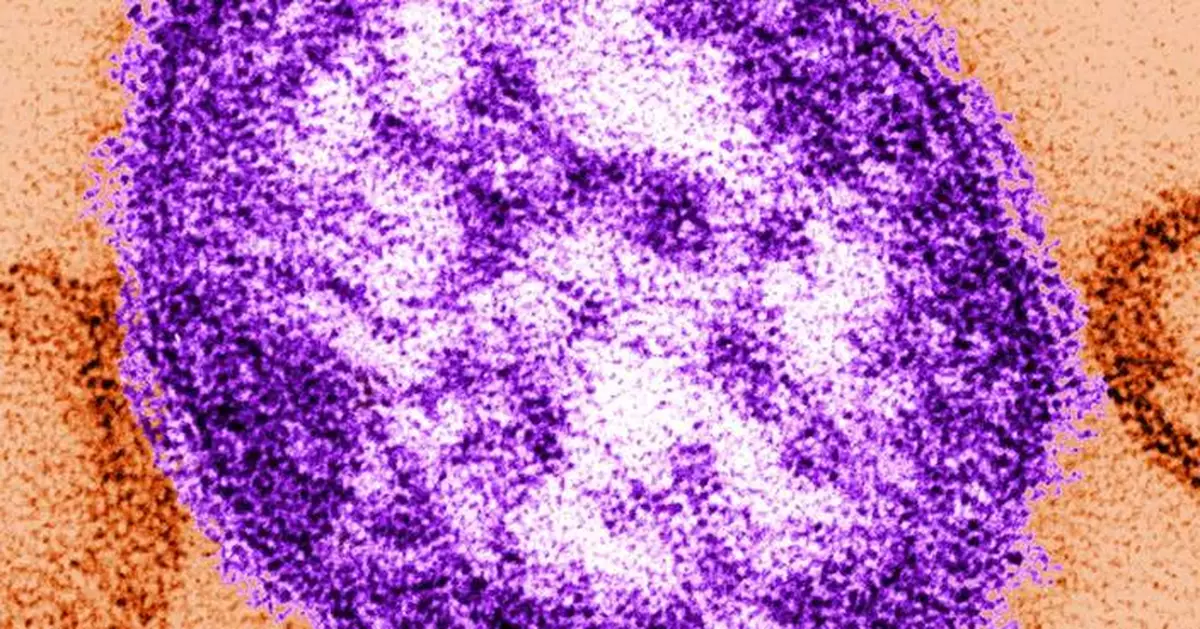
FILE - This undated electron microscope image provided by the Centers for Disease Control and Prevention on Feb. 4, 2015, shows a measles virus particle, center. (Cynthia Goldsmith/CDC via AP, File)