WASHINGTON (AP) — The top Democrat on the House Oversight Committee is laying the groundwork for long-promised investigations into the Trump administration that will launch with the new Congress in January.
Rep. Robert Garcia of California, who is expected to lead the House Oversight Committee when Democrats take control, sent letters directing members of President Donald Trump’s family and top administration officials to preserve documents, an early step toward launching investigations into the president and his administration.
The letters, released Wednesday, cover a wide range of potential investigations, including alleged financial conflicts involving Trump’s family, misconduct at the Department of Homeland Security and the administration’s handling of files related to Jeffrey Epstein.
“Oversight Democrats are fighting to put an end to this Administration’s self-dealing, misconduct, and abuse,” Garcia said in a statement. “These investigations will lay the groundwork for legislation which helps all Americans. This is just the beginning.”
Targets of the letters include two of Trump’s sons, Vice President JD Vance, White House chief of staff Stephen Miller, Attorney General Todd Blanche and Jared Kushner, the president’s son-in-law.
The letters offer an early glimpse of how Democrats plan to use their newly won congressional majority to scrutinize Trump and his administration. As favorable election results rolled in for Democrats on the night of the midterms, Garcia posted a two-word warning on social media: “Lawyer up.”
The preservation notices do not compel recipients to turn over documents, but they signal the investigations Democrats intend to pursue once they gain control of the committee and its subpoena power in January.
Before the midterms, Garcia outlined several areas Democrats would scrutinize, including the administration’s handling of the Epstein investigation, Immigration and Customs Enforcement operations and potential financial conflicts involving Trump’s family.
The letters to Eric Trump, Donald Trump Jr. and Kushner seek to preserve documents related to alleged conflicts of interest and their business dealings. Garcia also sent notices to former ambassador to Greece Kimberly Guilfoyle and former Homeland Security secretary Kristi Noem over separate allegations of misconduct and financial conflicts.
The letters to Vance and Blanche focus on the administration’s handling of files related to Epstein, including allegations by Democrats that White House officials sought to conceal information and manage the political fallout from the investigation.
The moves come as the White House has increasingly warned Garcia and other Democrats that their planned investigations into the Trump administration may open them up to investigations from the Justice Department.
Last week, White House counsel Will Scharf said in a letter to Garcia that “threats to executive branch officials designed to deter them from public service, or process designed merely to abuse or instill fear in the recipient may cross the line into blatant criminality.”
The investigative powers of Congress are well established, inherent in its constitutional authority as a check on the other branches of government. Modern U.S. history is filled with congressional probes and their aftermath, from the Watergate investigation to the 9/11 attacks to Republicans’ more recent look into President Joe Biden’s family.
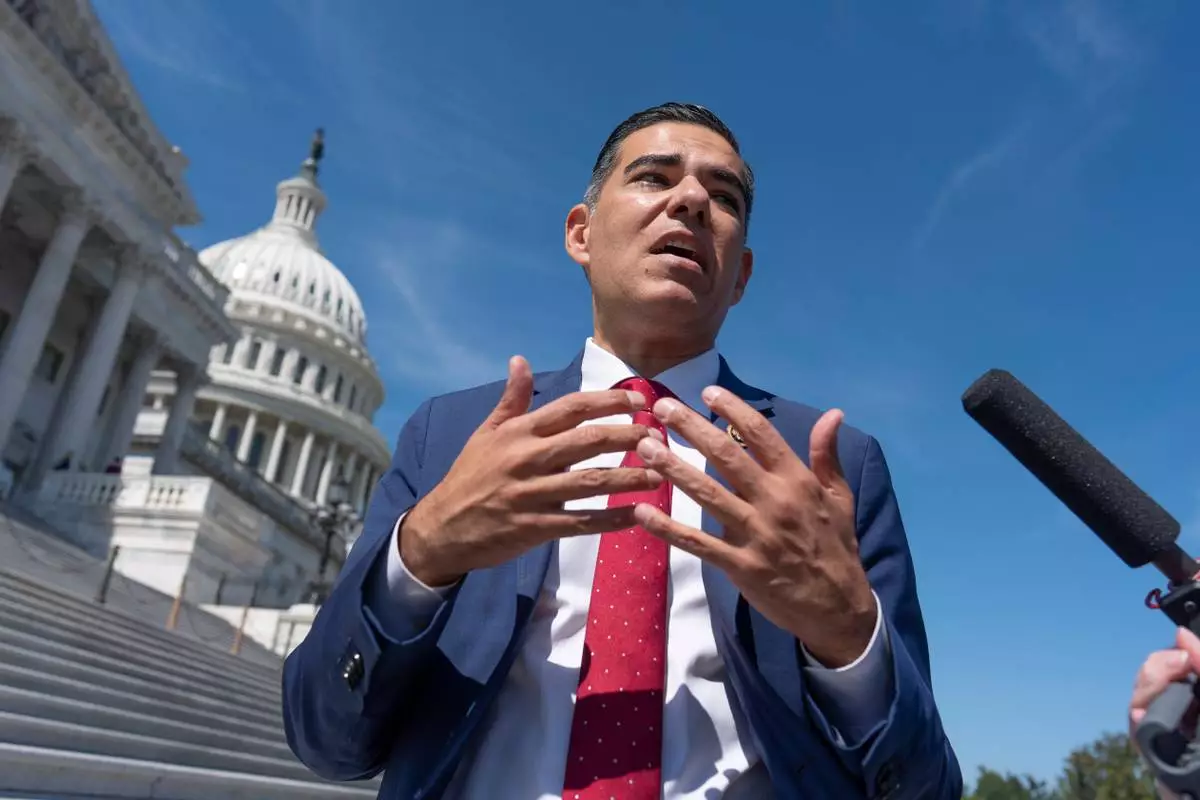
FILE - Rep. Robert Garcia, D-Calif., the ranking member of the House Oversight Committee, speaks to reporters at the Capitol in Washington on Sept. 16, 2026. (AP Photo/J. Scott Applewhite, File)