Thai Prime Minister Anutin Charnvirakul on Wednesday encouraged Chinese companies to increase investment in Thailand, and pledged efforts to facilitate business activities of the investors.
Anutin made the remarks during an interview with China Global Television Network (CGTN) on the sidelines of the Asia-Pacific Economic Cooperation (APEC) CEO Summit 2026 in Shenzhen, south China's Guangdong Province.
"Since the beginning of the year, the numbers and the amount of investments from China have grown up almost 25 percent, so we encourage the Chinese companies to expand their manufacturing base in Thailand and further create the supply chains in our country and we will do our best to facilitate the needs of these investors to make sure that they won't make other option but Thailand," said the Thai prime minister.
Anutin, who arrived in Shenzhen on Wednesday, is attending the two-day 33rd APEC Economic Leaders' Meeting on Nov 18-19.
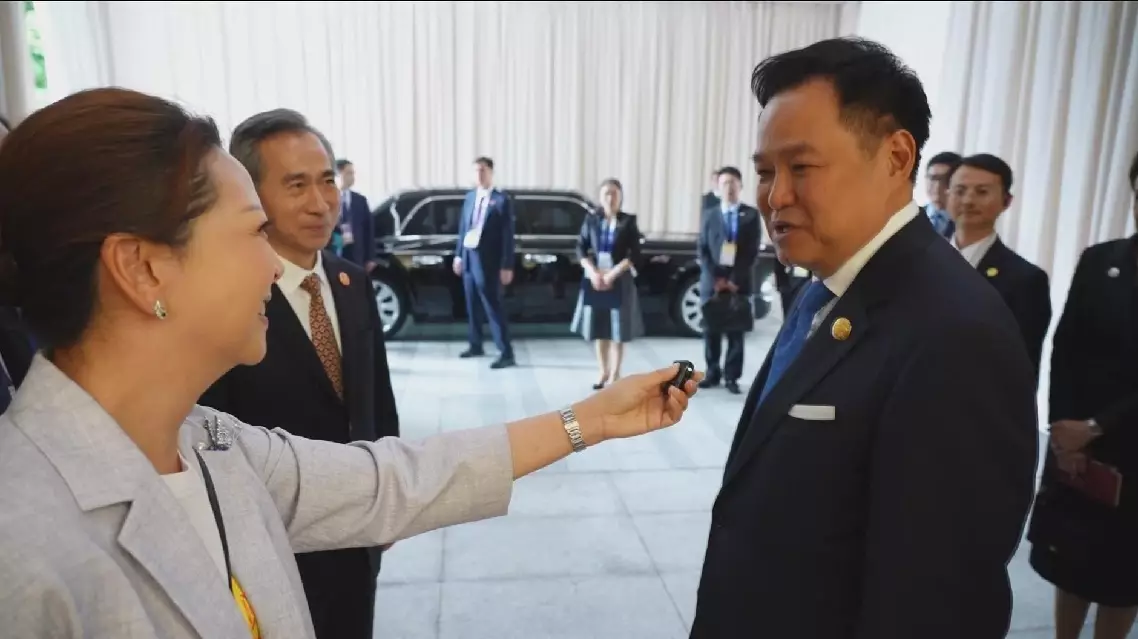
Thai prime minister encourages Chinese companies to increase investment
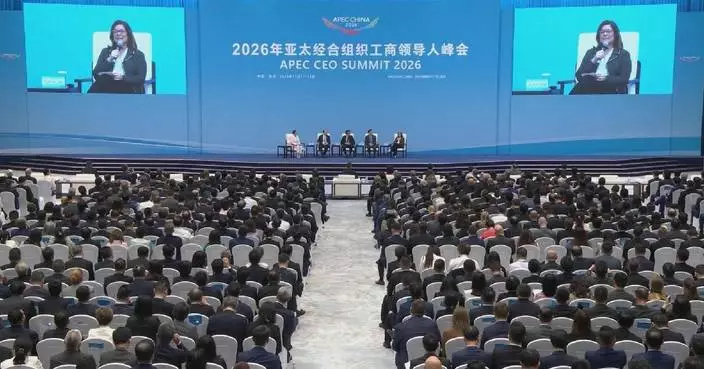
Artificial intelligence (AI), advanced robotics, and cross-border financial integration took center stage on Tuesday as corporate leaders gathered in China's Shenzhen for the APEC CEO Summit 2026.
As an important part of the 2026 APEC Economic Leaders' Week, the two-day summit has brought together more than 2,000 political and business delegates from across 21 APEC member economies and 13 non-member regions.
During the summit, top technology executives and financial leaders shared their sights on how artificial intelligence can empower industrial development and enterprise innovation across APEC economies.
Lei Jun, founder, chairman and CEO of Chinese technology company Xiaomi said that the potential of AI industry is larger than that of the automotive sector. He also said that Xiaomi’s embodied AI robots had begun trials in factories, could work for eight hours and could recharge themselves.
"We are optimistic about the room for growth and potential of AI entering the physical world. It may bring huge opportunities to the entire Asia-Pacific economy. Our embodied AI robots are already in the factory. They can work for full eight hours and are capable of charging themselves twice during that time. I think this performance is already extremely impressive. I believe that embodied AI robots will definitely a massive industrial opportunity, and their potential will likely surpass that of the automotive industry," said Lei.
Wang Xingxing, founder, chairman, and CEO of Chinese humanoid robot manufacturer Unitree Robotics, shared a similarly bullish perspective on hardware scaling.
"We are seeing a lot of truly exciting things in the field of large models and embodied AI. We have already seen the overall direction for the next few years, and the potential is immense. For example, right now we may just produce tens of thousands of robots a year, but in the future, we could suddenly be asked to produce millions or tens of millions annually. I believe the demand for computing power in the future will far exceed the imagination of almost everyone," said Wang.
While tech executives believe that tech innovation will drive regional growth, banking leaders stressed that translating tech innovations into widespread economic dividends relies heavily on establishing open, collaborative regional frameworks.
"We launched an action plan to support the AI industry chain in 2025, publicly committing to investing one trillion yuan to support this chain over the next five years. To date, our investments into this industry chain have already exceeded 700 billion yuan. I think, for APEC economies as well as the global market, that we should jointly build a cooperative and open ecosystem -- helping more foreign enterprises investing in China expand their reinvestment, and helping more Chinese companies become very important sources of outbound investment for investors," said Ge Haijiao, chairman of Bank of China (BOC).
"Over the past few years, we have had substantial cooperation with fintech companies, including card-issuing banks and acquirers in this region. This ensures that card holders from another side can scan local QR codes for payment without applying for local accounts or switching apps. I believe this will greatly enhance business, economic and trade ties, and promote personnel exchanges across the Asia-Pacific region," said Dong Junfeng, chairman of China UnionPay, a bank card service provider.
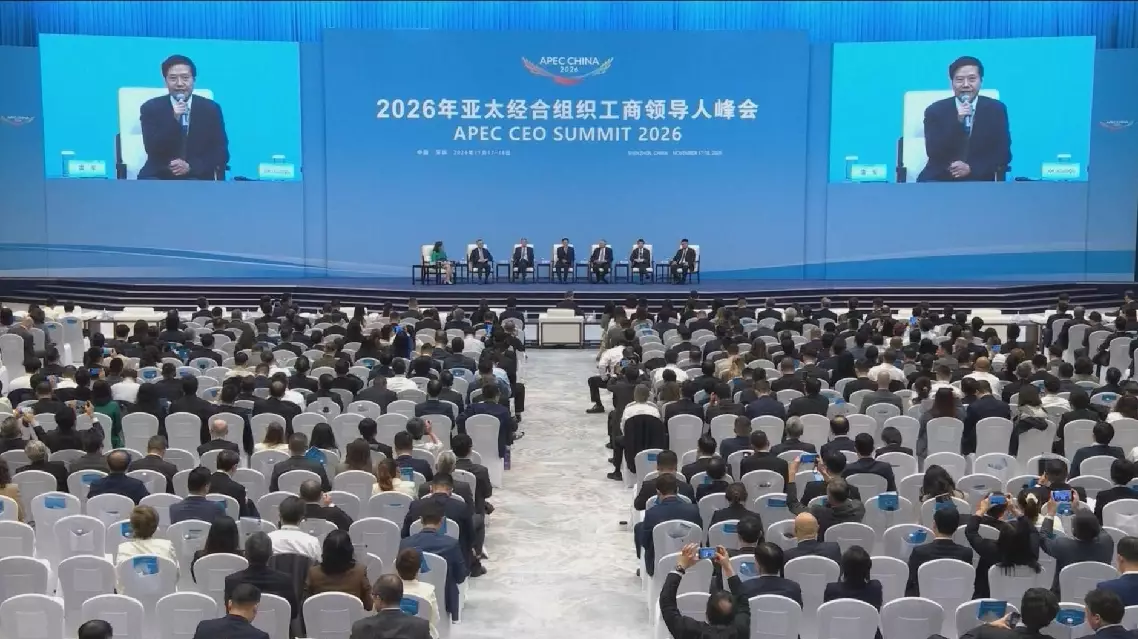
AI, advanced robotics, financial integration take center stage at APEC CEO Summit