
As the APEC Summit convenes in Shenzhen in November 2026, the viral "Chinamaxxing" trend has evolved directly into a sensation sweeping overseas social media platforms: "I wish my country had a Shenzhen too." This sentiment comes not only from everyday netizens, but has also found resonance on the highest diplomatic stage among world leaders.
During his meeting with President Xi Jinping in Shenzhen on November 18, Russian President Vladimir Putin remarked candidly, "No wonder you chose this place to host APEC," adding with genuine admiration that "Russia would also like to emulate this kind of development achievement," and praising Shenzhen as "one of the most modern and dynamic megacities." At the APEC CEO Summit, Chilean President José Antonio Kast lauded Shenzhen for shattering conventional limits on what development can look like, proving that "progress is not a miracle, but a matter of determination." Meanwhile, Australian Prime Minister Anthony Albanese reflected on the city’s transformation from firsthand experience—recalling his first visit in 1998 when Shenzhen was still a relatively small town, vastly different from today, where almost every building, road, and piece of infrastructure in sight is brand new. Calling Shenzhen a "remarkable success story" that has become a hub for startups and innovation, he noted it is an ideal host for the APEC Summit.
Click to Gallery

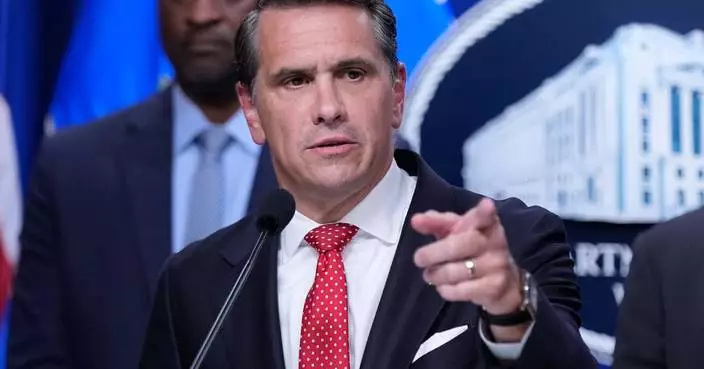
Russian President Vladimir Putin meets with President Xi Jinping in Shenzhen. (Screenshot via Ta Kung Wen Wei Facebook)
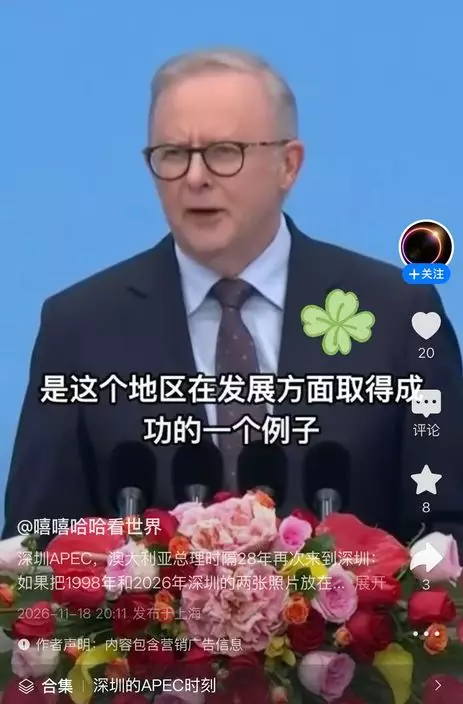
Australian Prime Minister Anthony Albanese praises Shenzhen as a "remarkable success story." (Screenshot via online media)
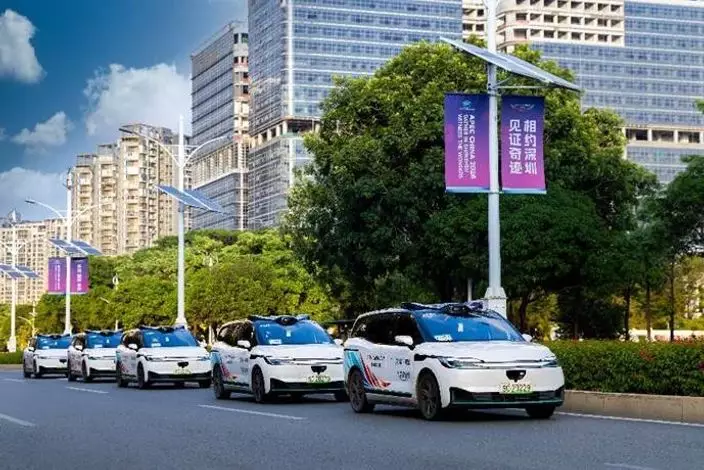
Autonomous vehicles take centre stage at APEC, showcasing Shenzhen's innovation prowess. (Photo/BitAuto)
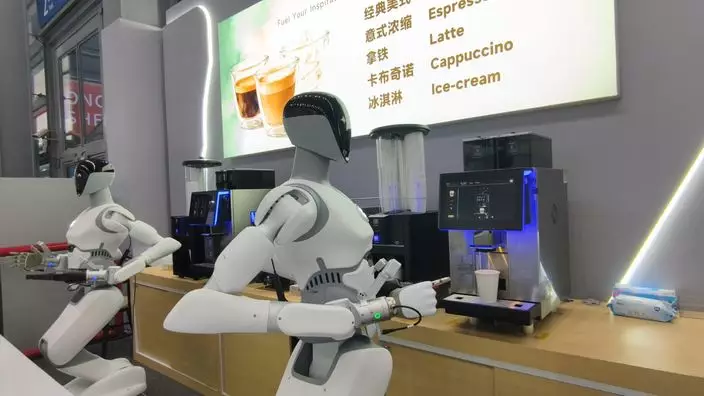
Journalists test out humanoid robots brewing coffee at the media centre. (Photo/Ta Kung Wen Wei Net)
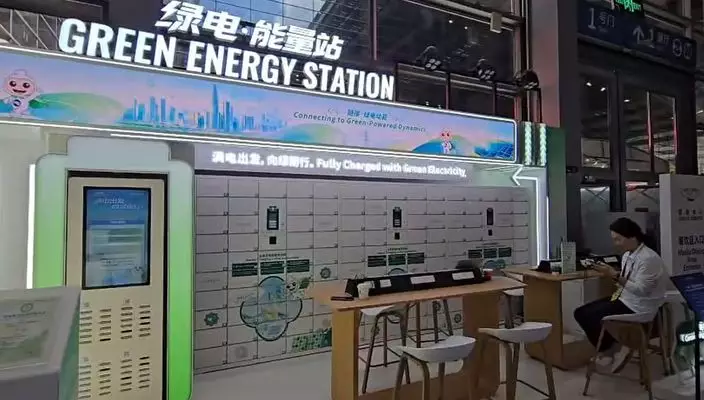
The Green Energy Station serves as a dedicated hub for APEC journalists and delegates, combining device charging with rest and networking. (Photo/Bastille Post)
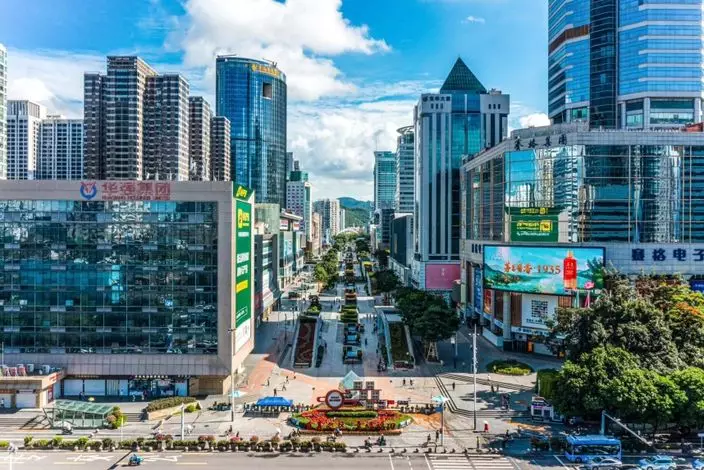
Daytime street scene in Huaqiangbei's commercial pedestrian district. (Photo/People's Daily Online Shenzhen Channel)
Russian President Vladimir Putin meets with President Xi Jinping in Shenzhen. (Screenshot via Ta Kung Wen Wei Facebook)
Australian Prime Minister Anthony Albanese praises Shenzhen as a "remarkable success story." (Screenshot via online media)
A "First Calling Card" That Drives Itself
Even the summit's opening calling card drives itself. As an official mobility partner of the event, Baidu's Apollo Go robotaxis rolled onto Shenzhen's streets in orderly fleets ahead of the meetings to ferry delegates. After taking a ride, one New Zealand delegate exclaimed: "Unbelievable! The car actually drives itself—I've never experienced travel like this before. I hope it can be introduced to our country as soon as possible."
Autonomous vehicles take centre stage at APEC, showcasing Shenzhen's innovation prowess. (Photo/BitAuto)
Apollo Go has now deployed across 28 cities worldwide, logging more than 23 million cumulative rides. It also secured Hong Kong's first autonomous driving pilot licence and completed the world's first fully driverless public road test for right-hand-drive, left-hand-traffic vehicles—meaning delegates are riding in the "international standard edition" of Chinese smart mobility.
On the Summit Floor: Robot "Baristas" and Green Power Stations
Stepping into the 15,000-square-metre APEC Media Centre at the Futian Convention and Exhibition Centre feels like walking into the future. In the refreshment zone, seven service robots work in seamless coordination: journalists scan a QR code to place an order, and the machines hand out sweets, deliver bottled water, brew coffee, and press fresh juice—capable of jointly turning out roughly 30 servings of ice cream, 45 cups of coffee, and 30 glasses of juice per hour. Right next door at the "Green Power Station," every kilowatt-hour charging reporters' and photographers' phones and cameras comes from clean energy. The media centre consumes 49,000 kWh daily, cutting carbon emissions by the equivalent of 26 tonnes.
Journalists test out humanoid robots brewing coffee at the media centre. (Photo/Ta Kung Wen Wei Net)
Sustainability underpins the entire high-tech showcase. China Southern Power Grid coordinated 89 million kWh of green electricity in advance—channelled thousands of kilometres across provinces from offshore wind farms in Yangjiang, Guangdong, and massive wind-and-solar bases in China's northwestern deserts—achieving 100% green power coverage across the main venue, transport hubs, and official hotels. Every kilowatt-hour carries a digital "green certificate" traceable end-to-end via QR code. As Guo Yandong, founder of Shenzhen-based AI2 Robotics, noted: "We want to showcase the real-world applications of China's embodied intelligence and explore broader possibilities for the technology."
The Green Energy Station serves as a dedicated hub for APEC journalists and delegates, combining device charging with rest and networking. (Photo/Bastille Post)
A "Gold Rush" for Foreign Firms: 16,000 New Entrants in a Year
In 2025, Shenzhen saw roughly 16,000 newly established foreign-invested enterprises—a 63.3% year-on-year surge that ranked first among major Chinese cities. Actual utilised foreign direct investment rose 14.4% to RMB 50.48 billion, climbing to second nationwide, while more than 340 Fortune Global 500 companies have now set up operations in the city. The agenda of this year's APEC CEO Summit reads like Shenzhen's home playbook: the Free Trade Area of the Asia-Pacific (FTAAP), artificial intelligence, the digital economy, green finance, supply chain resilience, and the Guangdong-Hong Kong-Macao Greater Bay Area. For the first time, the summit will also issue an outcome document in the form of an initiative, offering a "Shenzhen Solution" for regional business cooperation. As Ren Hongbin, chairman of the China Council for the Promotion of International Trade, put it, these frontier sectors "are precisely where Shenzhen excels."
Forty Years of "Shenzhen Speed" on Global Display
Underlying this spectacle is an industrial ecosystem forged over more than four decades. In 2006, Shenzhen's GDP stood at just RMB 581.36 billion; by 2025, it had surged 6.7-fold over two decades to RMB 3.87 trillion—surpassing Hong Kong by roughly 27%. Today, the city manufactures 70% of China's consumer drones and 50% of its industrial drones, with output jumping 40.1% year-on-year to 7.45 million units in 2025. Meanwhile, R&D spending intensity reached 6.67% of GDP—ranking first among all Chinese cities—and the "Shenzhen–Hong Kong–Guangzhou" science and technology cluster claimed the No. 1 spot globally in the World Intellectual Property Organization's Global Innovation Index.
Nowhere is this supply-chain agility more concentrated than in Huaqiangbei. Packed into just 1.45 square kilometres are 115,000 commercial entities operating on a celebrated industrial rhythm: "design in the morning, prototype in the afternoon, mass production the next day, and global shipment within a week." Silicon Valley engineer Noah famously completed three rounds of hardware iteration here in seven days before shipping mass-produced units to North America. Today, the district welcomes nearly 8,000 foreign buyers daily, with AI-related hardware jumping from 41% of its product mix in 2025 to 61%.
Daytime street scene in Huaqiangbei's commercial pedestrian district. (Photo/People's Daily Online Shenzhen Channel)
By choosing Shenzhen, APEC is also endorsing the bedrock of national resilience behind this system: economic security and social stability. On the economic front, four decades of development have produced the world's most complete and responsive hardware and digital supply chain—where Huaqiangbei's "one-day turnaround" functions as the reflex arc of the world's factory. On social governance, according to the Shenzhen municipal government work report, public sense of safety and satisfaction with policing have ranked first in Guangdong province for four consecutive years. Keeping a megacity of 20 million people—with the highest metro passenger intensity in the country—running with clockwork precision is what allows APEC's "China Year" events and a gathering of a thousand global leaders to unfold seamlessly.
Shenzhen has proven one truth: the most hardcore form of openness is turning one's own certainty into a public good for the Asia-Pacific. From netizens overseas sighing "I wish my country had a Shenzhen too," to Putin’s remark that "Russia would also like to emulate this kind of development achievement," Chinamaxxing is no longer merely a playful internet trend—it is the world's most authentic, visceral collective aspiration when confronted with Chinese modernization and hardcore technological strength. For readers in Hong Kong, this summit feels especially close to home: with "Shenzhen–Hong Kong–Guangzhou" standing together atop the Global Innovation Index, the APEC spotlight shines on the entire Greater Bay Area. The world's applause falls on Shenzhen—and in Shenzhen’s story, Hong Kong has never been absent.
Chinamaxxing
** 博客文章文責自負,不代表本公司立場 **