BEIRUT (AP) — Nearly two years after the fall of Syria's Assad dynasty, the country’s rulers are struggling to integrate thousands of battle-hardened foreign fighters who joined insurgent groups during the civil war.
Syria’s government is trying to merge into its armed forces fighters who include large groups of Uighurs, a Turkic-speaking Muslim minority from western China, Uzbeks and ethnic Chechens and Daghestanis, as well as those from Arab countries and Western nations.
Interim President Ahmad al-Sharaa, who came to power after President Bashar Assad ’s ouster in December 2024, is their former ally. Many don't want to go home as they could face arrest, and in some cases their home countries won't take them back out of security concerns.
Another regional worry is that some might join the Islamic State group. IS militants have said they consider al-Sharaa an apostate who should be removed from power. And despite its defeat in Syria in 2019, the extremist group has sleeper cells throughout the country that still carry out deadly attacks against different targets, including the government and Kurdish fighters.
The militants' presence adds to Syria’s other post-war security challenges, including sectarian clashes that killed hundreds of minority Alawites and Druze last year.
In the northeast, tensions remain high between Arabs and Kurds despite a January agreement ending fighting between the Islamist-led government troops and the secular Kurdish-led Syrian Democratic Forces. The SDF had carved out a de facto autonomous zone during the civil war that Damascus brought back under central government control this year.
It isn't known how many foreign fighters remain in Syria. At their height, they numbered between 18,000 and 20,000, said Rami Abdurrahman, who heads the Britain-based Syrian Observatory for Human Rights, a war monitor.
Like al-Sharaa, most of the fighters are Sunni Muslims, and early in the war many joined insurgent groups including al-Sharaa's Hayat Tahrir al-Sham, a now-dissolved militia once affiliated with al-Qaida. While many have been integrated into the security forces, others have refused.
“Syria hosts one of the largest concentrations of foreign fighters in the world, a population whose skills in explosives, unmanned systems, and small-unit tactics have obvious transnational salience,” said an August report by the Combating Terrorism Center at West Point, a U.S.-based academic institution.
On the other side of Syria's civil war, Shiite regional powerhouse Iran sent thousands of militants from Lebanon, Iraq, Pakistan and other countries to keep Assad in power. Those fighters have left since Assad's fall.
The government has sought to crack down on foreign fighters it views as security threats at a time when the country is struggling to start reconstruction after years of conflict.
In October, Syrian officials said that security forces shot and killed a French militant who opened fire on them while they were trying to enforce a ban on fighters carrying weapons outside a camp housing French-speaking militants near the border with Turkey. Security has been tight around the camp since clashes between the two sides last year.
The militant, known by his nom de guerre, Abu Ayman al-Faransi, was one of nearly 70 French-speaking fighters at the camp who have refused to join the security forces. The fighters denied the government's account, saying al-Faransi had left the camp to buy food. They didn't say if he was armed.
The Francophone fighters were further angered when Syrian officials hosted a French military delegation to discuss mutual cooperation. The fighters complained that Syria was welcoming officials from its former colonial power while “laying a siege on us.”
Last year, Syrian authorities detained an Egyptian jihadist who threatened Egyptian President Abdul-Fattah al-Sisi. And in May, al-Sharaa’s forces carried out a security sweep against Uzbek fighters in the northwestern province of Idlib.
Other countries in the region are concerned.
Syria agreed in November to send fighters to Saudi Arabia to potentially help it fight Iranian-backed Houthi rebels in neighboring Yemen, officials with knowledge of the plans told The Associated Press. The Saudis insisted the contingent should comprise only Syrian nationals and not include foreign fighters. The officials spoke on condition of anonymity because they were not authorized to comment publicly.
Many of the nearly 3,000 Uighur fighters who fought alongside al-Sharaa's al-Qaida’s branch have joined the Syrian army and are mediating between the new government and resistant fighters, the Observatory's Abdurrahman said.
And many foreign fighters have married local women. Thousands of their children are considered stateless since Syrian law forbids women from passing down their citizenship, though Social Affairs Minister Hind Kabawat says the government plans to change the law.
Aymenn Jawad Al-Tamimi, a Syria-based historian who tracks jihadist groups in the Middle East, said the contingents who were loyal to al-Sharaa’s Hayat Tahrir al-Sham have generally joined the new army without an issue, while some of the more hard-line foreigners who pose a challenge on ideological grounds still refuse.
“The foreigners who reject integration will continue to face harassment and the possibility of a crackdown from government forces,” Al-Tamimi said.
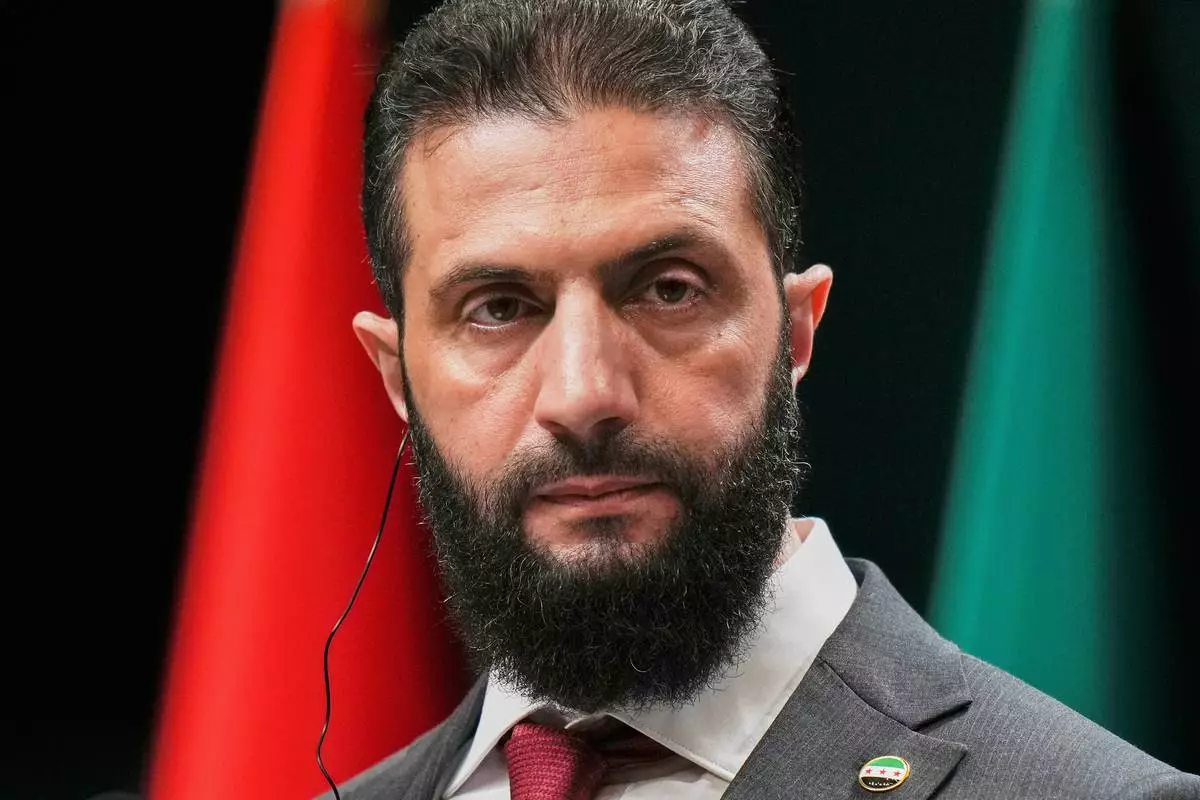
FILE - Syria's interim President Ahmad al-Sharaa looks on during a press conference in Ankara, Turkey, Feb. 4, 2025. (AP Photo/Francisco Seco, File)
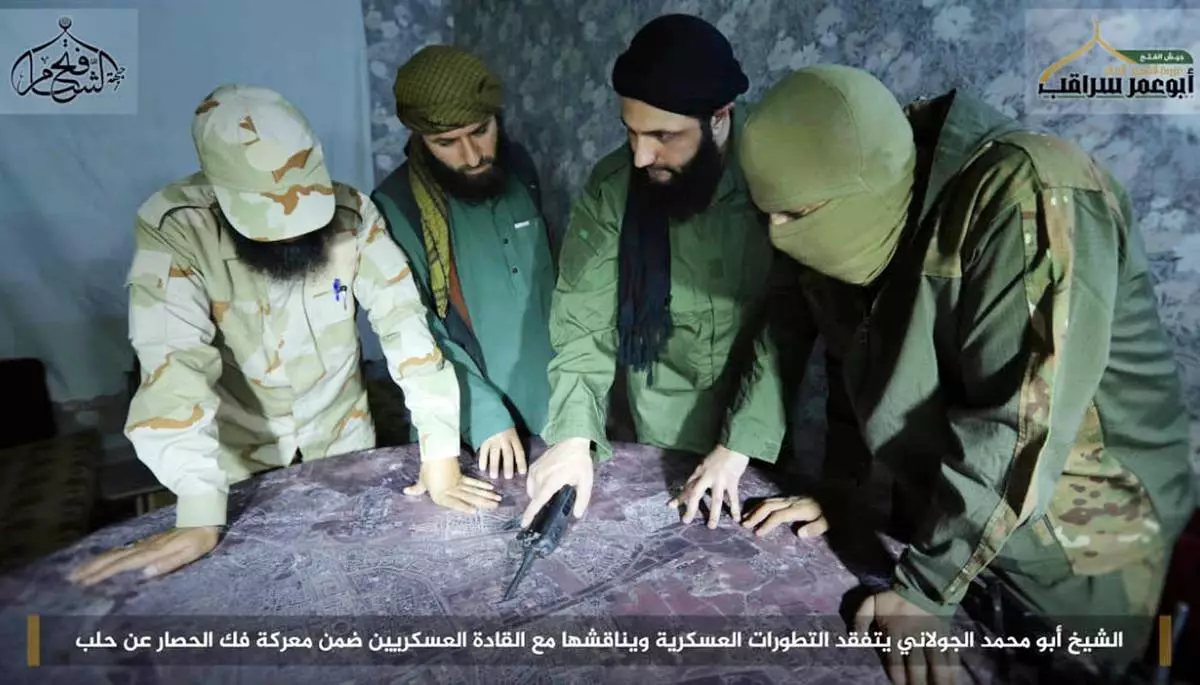
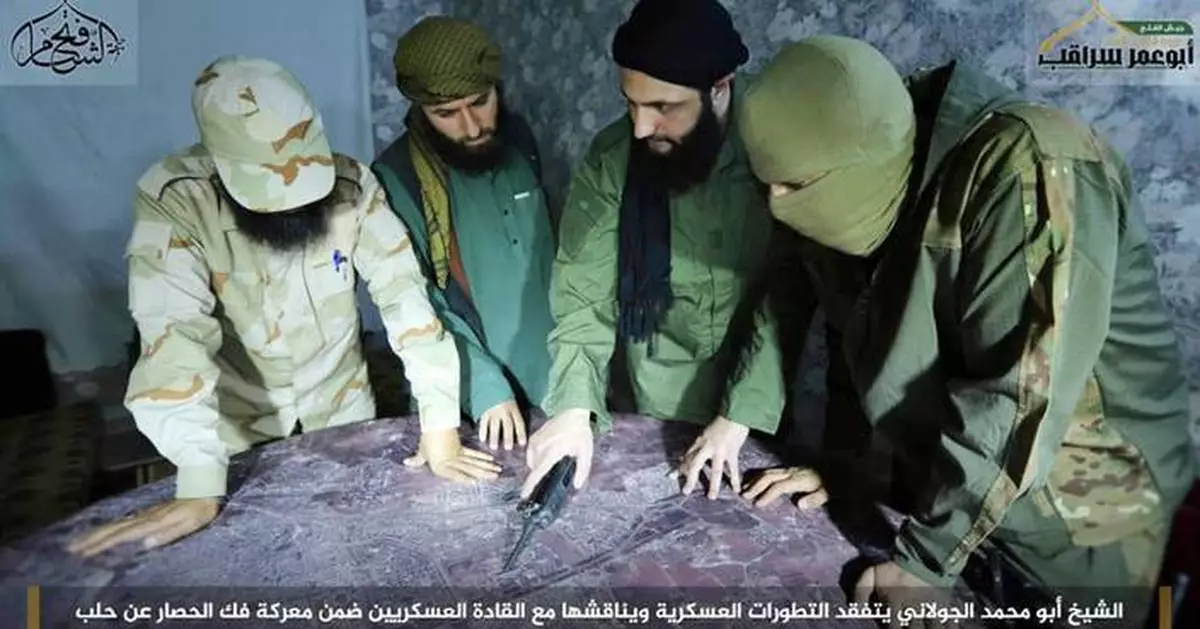
FILE - This undated file photo shows Syria's current interim President Ahmad al-Sharaa, second right, then known as Abu Mohammed al-Golani and the leader of the Fatah al-Sham Front insurgent group, in pictures posted by the group in 2016, discussing battlefield details with field commanders over a map, in Aleppo, Syria. (Fatah al-Sham Front via AP, File)