Now that measles is officially back in the U.S., some Americans are asking: Do adults need a booster shot?
Generally, experts say, the answer is no.
“Most people are protected without getting a booster shot” because they’ve either been vaccinated or had measles as kids, said Dr. Richard Martinello at Yale School of Medicine.
The U.S., Mexico and Bolivia lost their measles-free status this week after stubborn outbreaks erased decades of progress. Last year, Canada lost its measles-elimination designation.
Doctors say getting two doses of the measles, mumps and rubella, or MMR, vaccine is the best way to protect against one of the most contagious viruses in the world. The vaccine usually protects people for life, as does having had the disease. Americans born before 1957 are considered to have “presumptive evidence” of immunity because almost everyone back then got measles during childhood.
But doctors say certain people should consider getting boosters.
One group is healthcare workers born before 1957 without proof of immunity. They’re more likely than the general public to come in contact with people who have measles, so they may get it or even spread it to vulnerable patients.
Adults vaccinated between 1963 and 1967 also might want to think about boosters. During those years, some children received an inactivated vaccine that uses a killed version of the virus, which was less effective than the current vaccine containing live, weakened virus. Doctors said people who know they got the inactivated vaccine or aren’t sure should get at least one dose of the live MMR vaccine. One dose is 93% effective at preventing measles, while two doses are 97% protective.
Until 1989, only a single dose was standard. Now the recommendation is for adults to have at least one documented dose of MMR. Two doses are recommended for certain people in high-risk groups who don’t have other evidence of immunity.
“People who have had no shots should go get vaccinated, if they weren't born before 1957,” said Dr. Joshua Sharfstein at Johns Hopkins Bloomberg School of Public Health. “If they have had only one shot, they may want to consider whether they’re in a risk group for a second shot.”
That risk group, he said, includes people in school, healthcare workers, international travelers or people living with family members who have compromised immune systems. In places with active measles outbreaks, health officials sometimes recommend that everyone have two shots, Sharfstein said.
For people who have only had one shot, especially in an area where measles is circulating, “it’s always a good idea to talk with your physician about whether another shot is needed,” Martinello said.
But what if you don’t know how many shots you received or even if you’ve been vaccinated?
The Centers for Disease Control and Prevention suggests asking your parents or doctor, checking with your high school or college health services or reaching out to previous employers that required immunizations. You can also try contacting your state’s health department; some states have registries that include adult vaccines.
If you’re still unsure about your vaccination status, you can talk with your doctor about an MMR immunity blood test that can show whether you have antibodies against measles. But Martinello said this isn't an ideal measure of how safe you are from the virus. Though the test is accurate, he said, scientists don’t know how to link the result perfectly with the level of protection someone might have.
Regardless, doctors said getting a booster just to be safe won’t harm you unless you’re in a group that is not supposed to get the vaccine at all, such as pregnant women.
Now that measles is circulating in the U.S., doctors said it’s crucial to take measures to protect yourself.
“This is a moment to not just check for yourself, but also encourage others to make sure that they are adequately vaccinated,” Sharfstein said. “Too many people took measles for granted … or just didn’t think about measles. But now it’s something to think about.”
The Associated Press Health and Science Department receives support from the Howard Hughes Medical Institute’s Department of Science Education and the Robert Wood Johnson Foundation. The AP is solely responsible for all content.
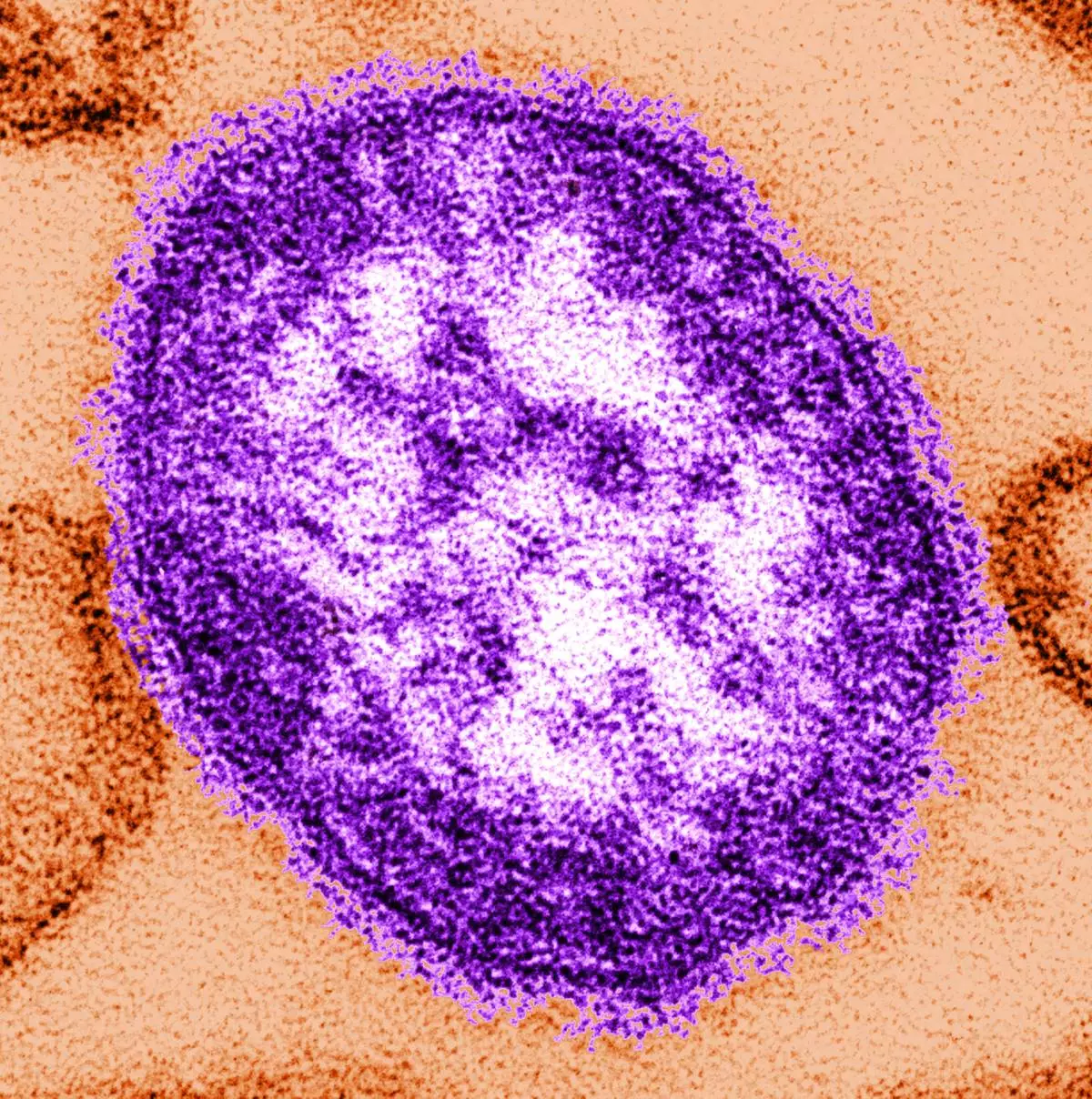
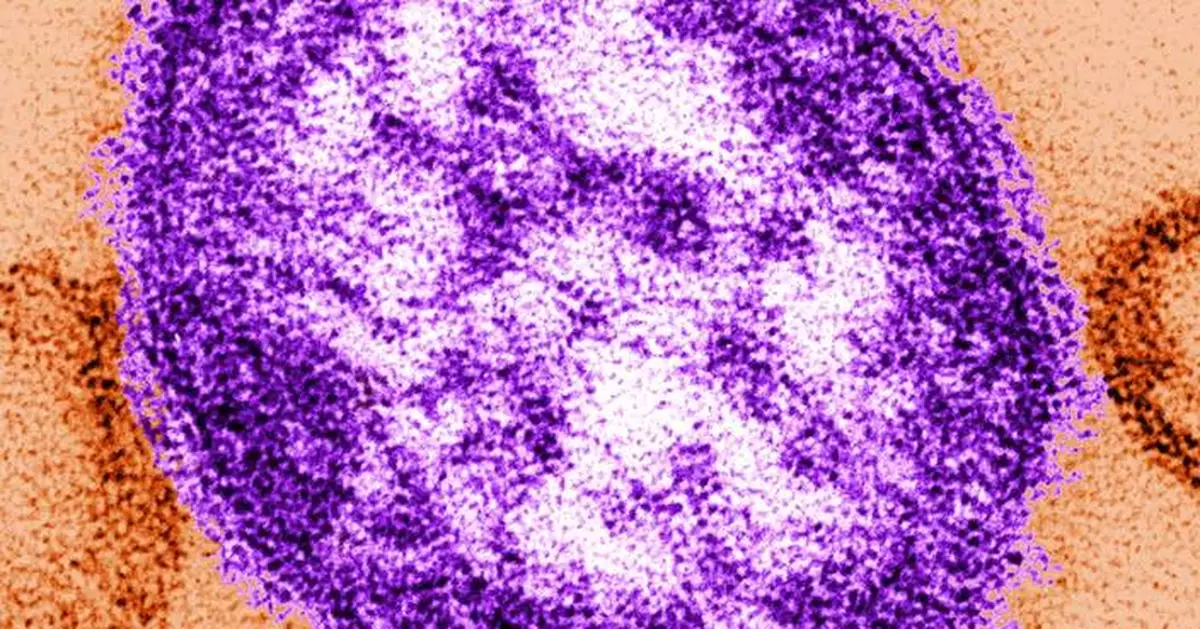
FILE - This undated electron microscope image provided by the Centers for Disease Control and Prevention on Feb. 4, 2015, shows a measles virus particle, center. (Cynthia Goldsmith/CDC via AP, File)
WASHINGTON (AP) — Democrats nominated Hakeem Jeffries on Wednesday to be speaker of the House, as he brushed past skeptics and was on track to make history as the nation’s first Black lawmaker with the gavel.
Jeffries secured the nod during closed-door voting, with 251 of the 262 ballots cast, ahead of a full House vote when the new Congress convenes in January.
He ran unopposed but faces a restive party eager for a change after voters ousted Republicans in a rebuke of President Donald Trump and the party in power. Phone calls and social media posts have been flooding the offices of Democrats and the newly elected, demanding a fresh start. Protesters heckled Jeffries last week during a Democratic conference in Denver.
Ahead of Wednesday's vote, Jeffries, of New York, said he was taking nothing for granted. He met with the caucuses that make up the House Democrats and talked to almost all members in what will be their large majority.
“I embrace those conversations," he said.
Jeffries is part of a leadership trio with Rep. Katherine Clark of Massachusetts and Rep. Pete Aguilar of California, who would all be historic firsts — Clark as the first female majority leader and Aguilar as the first Latino to serve as the majority whip. They also ran unopposed.
Jeffries will face a separate roll call of the whole House to become speaker when the new Congress convenes on Jan. 3, 2027.
Wednesday’s vote was the first of their careers for dozens of members-elect, before they’re even sworn into office in January. With one of the biggest incoming majorities in decades, Jeffries will have room to spare.
Rep.-elect Brad Lander of New York announced he would support Jeffries when he launched his campaign for Congress. Rep.-elect Randy Villegas of California has said he was supporting whoever would help him best deliver for his Central Valley district.
Returning Rep. Emily Randall of Washington said she heard questions about House leadership during town halls in her district and had been watching direct messages stream into her Instagram feed about the leadership election. So she decided to start dialing them back.
“People have messaged me asking if Bernie Sanders could be the speaker of the House,” she said, referring to the Vermont independent senator who caucuses with Democrats. “Technically yes, and it would be probably difficult.”
(It's true that the House can elect anyone speaker, but it's unlikely to be Sanders because he already has his day job in the Senate.)
On one call, Randall said, she listened to the constituent's concerns and then replied, “Truthfully, not like blowing smoke, whoever is our speaker — and I think it is going to be Hakeem Jeffries, and I am supporting Hakeem Jeffries for speaker — I think we will accomplish a lot of the things that he was asking us to.”
Lawmakers pointed to the livestream that Rep. Alexandria Ocasio-Cortez of New York did trying to explain the role of the speaker.
“There is one candidate in this race: Hakeem Jeffries,” Ocasio-Cortez said at the Capitol. “I think that everyone is far more concerned what that leadership means, what is it promising.”
Jeffries, Clark and Aguilar have risen together, as a team, as the first new generation of leaders of the post-Pelosi era and will soon serve as leaders in the majority for the first time.
When Rep. Nancy Pelosi of California decided to step aside from leadership in 2022 after the party's electoral defeat that handed Republicans the majority, it set the stage for this era. Pelosi, No. 2 Democratic Rep. Steny Hoyer of Maryland and Rep. James Clyburn of South Carolina had often moved together, rising, and then stepping back, from their long-held positions.
A similar upheaval with Democrats angling for change is happening in the Senate, where Senate leader Chuck Schumer of New York faces a challenge from Sen. Chris Van Hollen of Maryland.
Returning Rep. Yassamin Ansari of Arizona said the situations in the Senate and the House “are quite different.”
She said Jeffries has been a collaborative leader who is listening to ideas from progressive caucus members like her and others. “His job is to reflect all of us, not just a faction,” Ansari said.
"It is more productive to focus on preparing on what we're going to do in the majority and what we need and want to get done in those first 100 days," she said.
Rep. Shomari Figures of Alabama, who pulled off a stunning victory in a redrawn district favoring the Republican candidate, said before the vote that he'd be supporting Jeffries.
“It’s not even like a complex question,” he said about Jeffries, who he said “led us through what is likely the most tumultuous two-year tenure of any presidency in the history of this nation.”
“I’m not going to not stand by him right here on the precipice of history," he said.
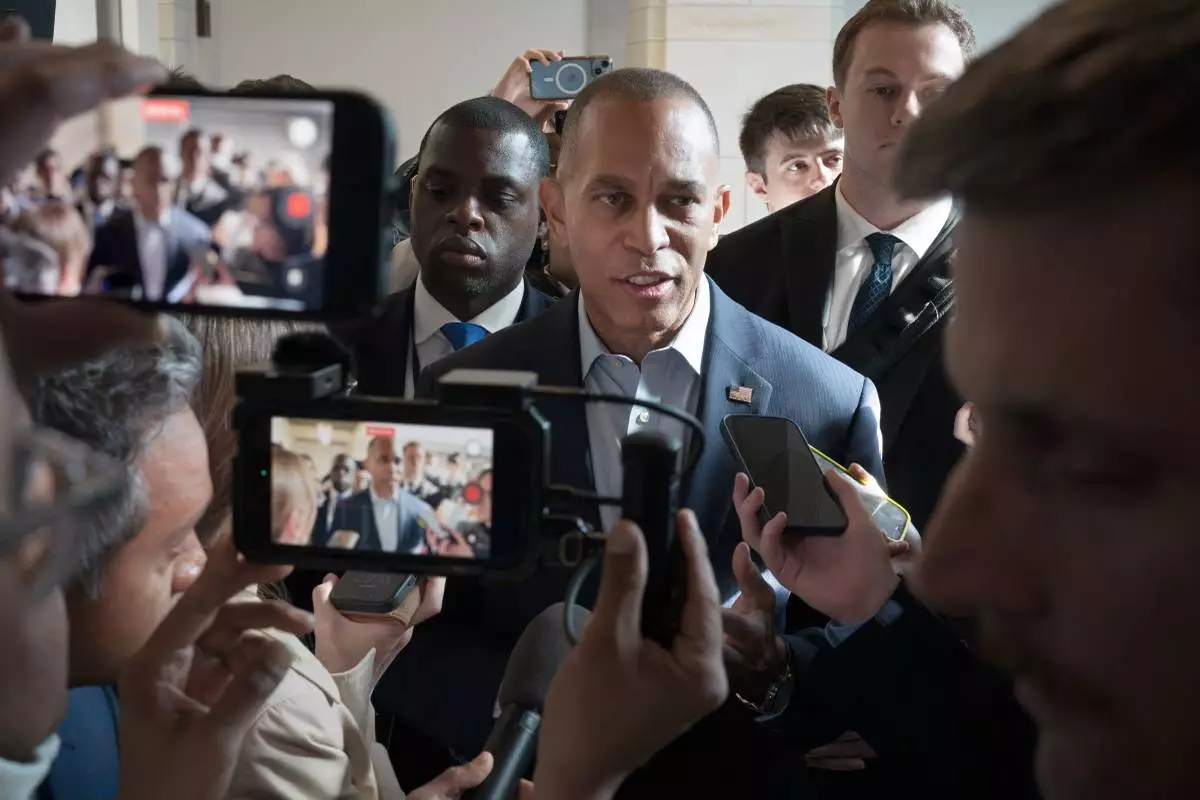
House Minority Leader Hakeem Jeffries, D-N.Y., discusses his agenda with reporters at the Capitol in Washington, Thursday, Nov. 12, 2026. (AP Photo/J. Scott Applewhite)
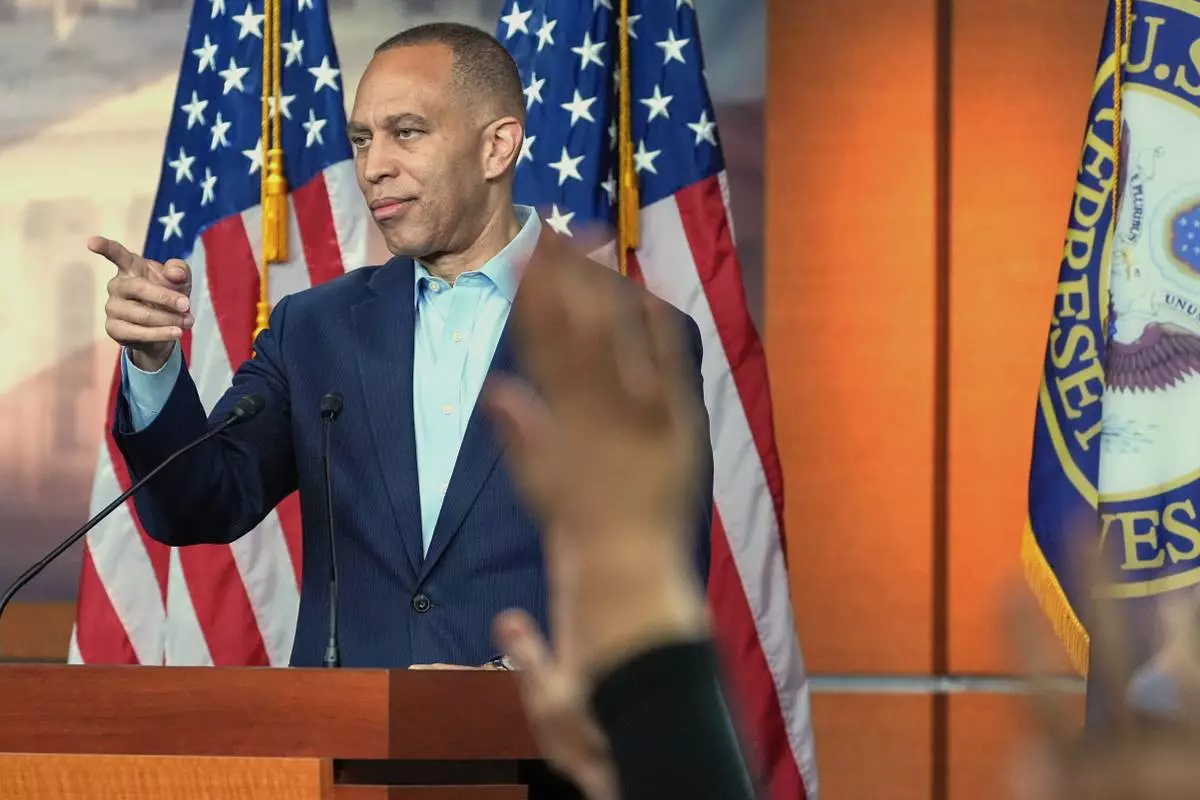
House Minority Leader Hakeem Jeffries, D-N.Y., speaks during a news conference on Capitol Hill, Thursday, Nov. 12, 2026, in Washington. (AP Photo/Mariam Zuhaib)
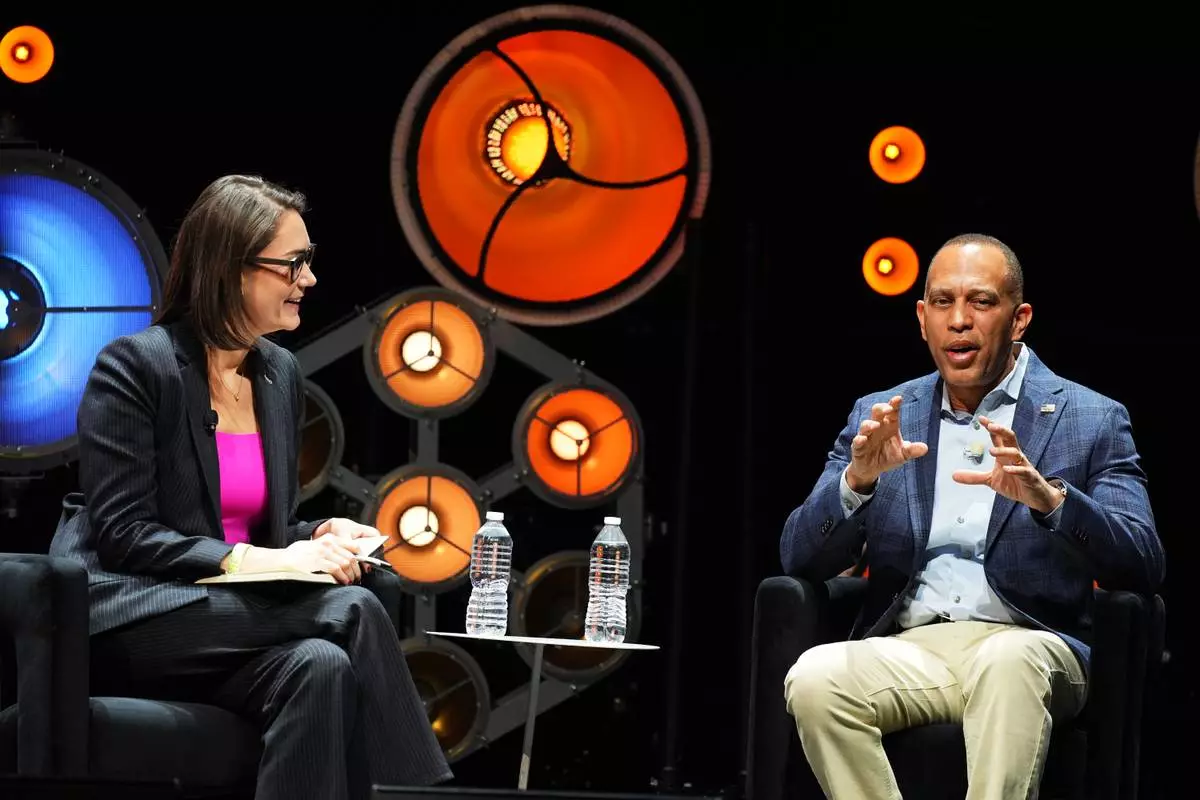
U.S. Rep. Hakeem Jeffries, right, responds to a question from moderator Jessica Tarlov during a Democratic conference Friday, Nov. 13, 2026, in Denver. (AP Photo/David Zalubowski)
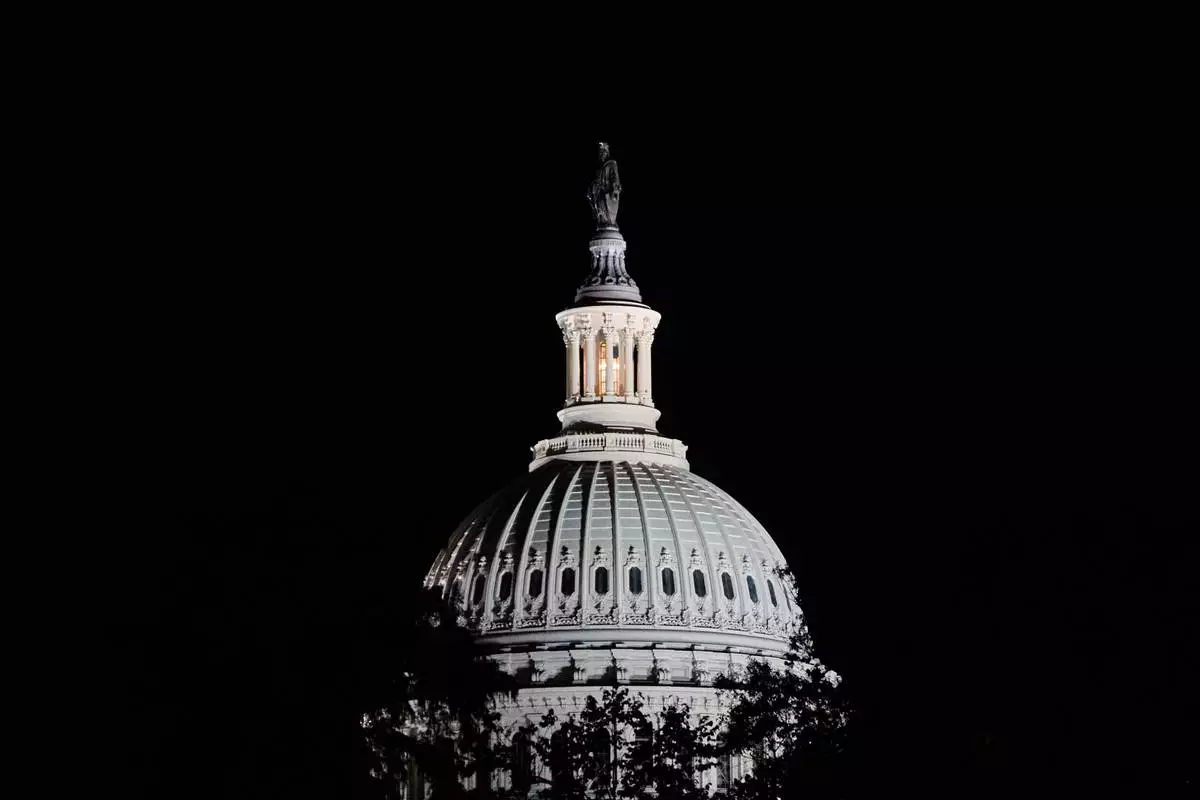
The U.S. Capitol is photographed Tuesday, Nov. 10, 2026, in Washington. (AP Photo/Julia Demaree Nikhinson)
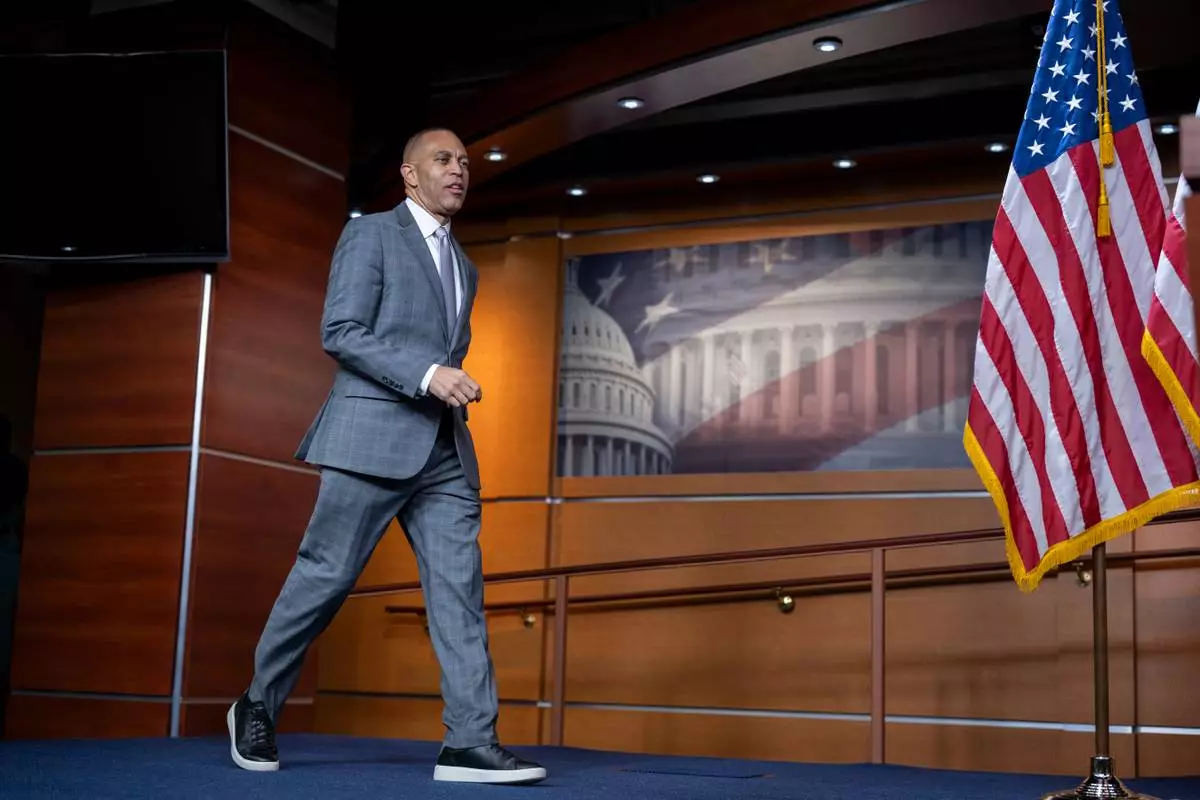
House Minority Leader Hakeem Jeffries, D-N.Y., arrives to speak with reporters ahead of Democratic leadership elections, at the Capitol in Washington, Tuesday, Nov. 17, 2026. (AP Photo/J. Scott Applewhite)
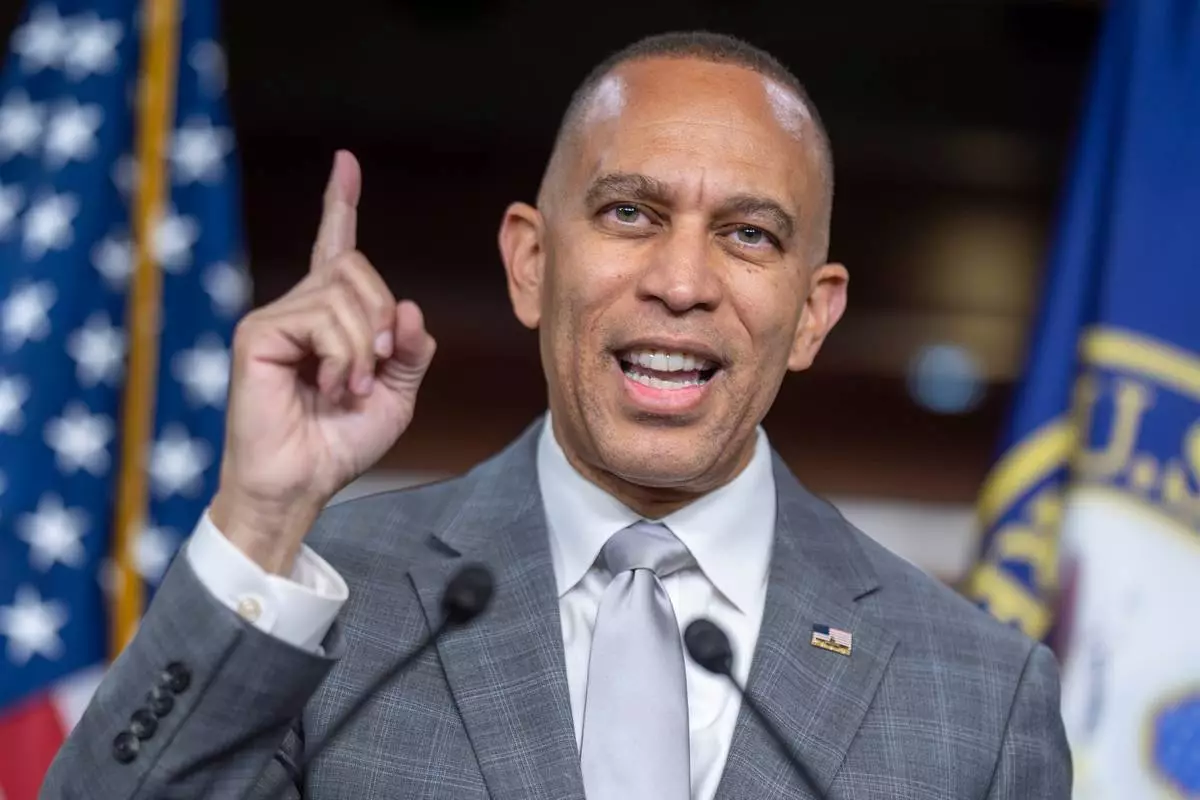
House Minority Leader Hakeem Jeffries, D-N.Y., speaks with reporters ahead of Democratic leadership elections, at the Capitol in Washington, Tuesday, Nov. 17, 2026. (AP Photo/J. Scott Applewhite)