DALLAS--(BUSINESS WIRE)--Nov 18, 2026--
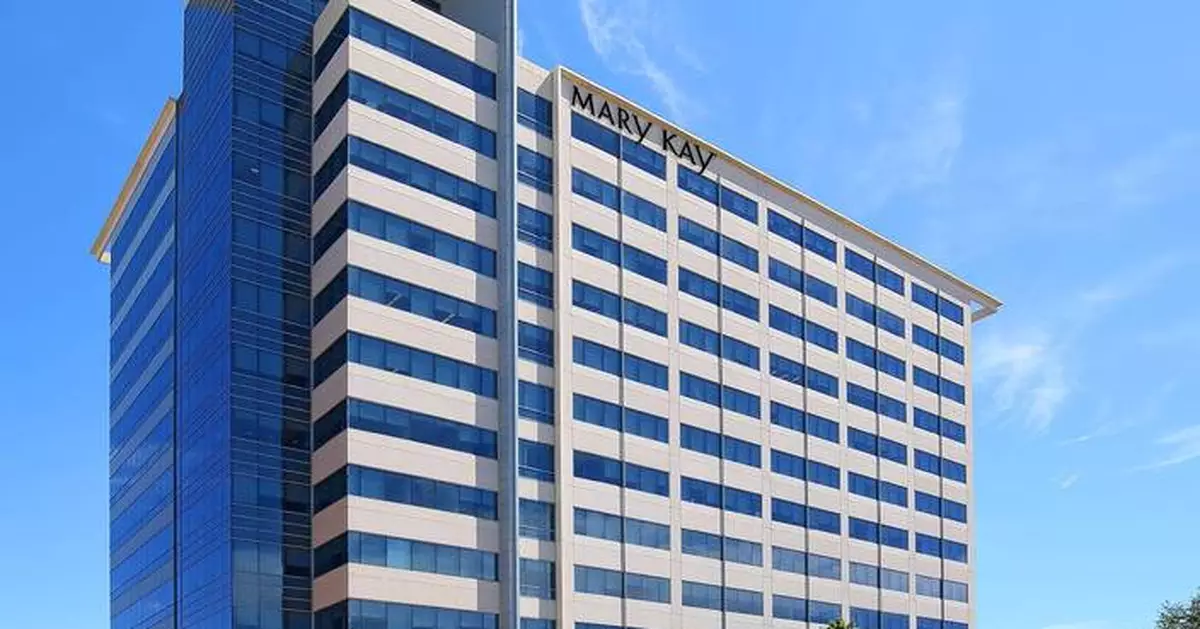
Mary Kay Inc., the iconic beauty and entrepreneurship company today announced a new global headquarters in Plano, Texas, making its mark on the Legacy skyline.
This press release features multimedia. View the full release here: https://www.businesswire.com/news/home/20261118251539/en/
In late 2027, Mary Kay will move to Legacy Union One, located at Legacy North. The new, state-of-the-art office will comprise nearly 160,000 square feet across six floors. Corporate employees will benefit from modern workplace amenities and an enhanced collaborative experience while enjoying panoramic views of North Texas and Legacy’s vibrant walkable District, becoming part of the community where they work.
The modern, open interior designed by Dallas-based Corgan, a leading architecture and design firm, fosters collaboration, creativity, and connection. It draws inspiration from the company’s mission — enriching women’s lives — and its people‑first values directly tied to its founder’s vision, Mary Kay Ash, who believed “people are definitely a company’s greatest asset.” A vision carried forward today by CEO Ryan Rogers and reflected in the meaningful relocation of Mary Kay Ash’s historic office to the new headquarters.
“Beauty isn’t just what we create. It is how we work. This new office is another exciting milestone in Mary Kay’s transformation and modernization. It was always the Mary Kay vision to keep growing and evolving – and we are honoring that with this move,” said Ryan Rogers, Chief Executive Officer at Mary Kay. “No doubt, the move aligns closely with our local footprint and our global business ambitions. We’ve recently introduced new ways for our Independent Beauty Consultants and consumers to experience Mary Kay, and we’re thrilled to bring that same spirit of innovation to our employees. Our new headquarters will give them a state-of-the-art space to work beautifully, empowering us to dream bigger and continue to shape our bright future.”
This milestone was made possible through the partnership of Cushman & Wakefield, whose expertise was instrumental in securing Mary Kay's new headquarters. Working closely with JLL, which represented Cousins Properties, and with the support of the City of Plano, this team of expert professionals helped bring the strategic move to life.
Rooted in Texas, Built for the World
The move brings Mary Kay Corporate Headquarters closer to the Richard R. Rogers Manufacturing/R&D Center (R3), the company’s global facility located in Lewisville, TX, enhancing collaboration and operational efficiency. The more than $100 million investment includes a 453,000-square-foot center that opened in 2018 and can produce up to 1 million units of product daily across its 22 packaging lines, supporting the company’s presence in 40 markets around the world. Mary Kay’s operations in North Texas also extend to its logistics facilities.
The Mary Kay® Museum will be reimagined and refreshed and will reopen its doors at R3 in early 2028.
Building on more than 60 years of legacy, Mary Kay is accelerating its business transformation through tech investments, innovations such as the award-winning AI-powered Foundation Finder, and the global launch of My Shop allowing Independent Beauty Consultants to run their business digitally and meet customers where they are. Mary Kay also recently announced its largest-ever consumer-facing campaign Beauty Is More Beautiful Shared™, bridging the love of Mary Kay across generations.
Did You Know:
About Mary Kay
For more than 60 years, Mary Kay has empowered generations of women around the world to discover beauty together, build meaningful futures and find a community of women who celebrate one another. Founded by Mary Kay Ash in 1963, the global beauty company has connected women across 40 markets through innovative skincare, color cosmetics, fragrances, and wellness products. Mary Kay transforms purpose into action by advancing causes that support women and families, investing in scientific innovation, and working toward a more sustainable future. At its core, Mary Kay is dedicated to enriching women's lives and creating opportunities for women to thrive together. Learn more at marykayglobal.com. Find us on Facebook, Instagram, and LinkedIn.
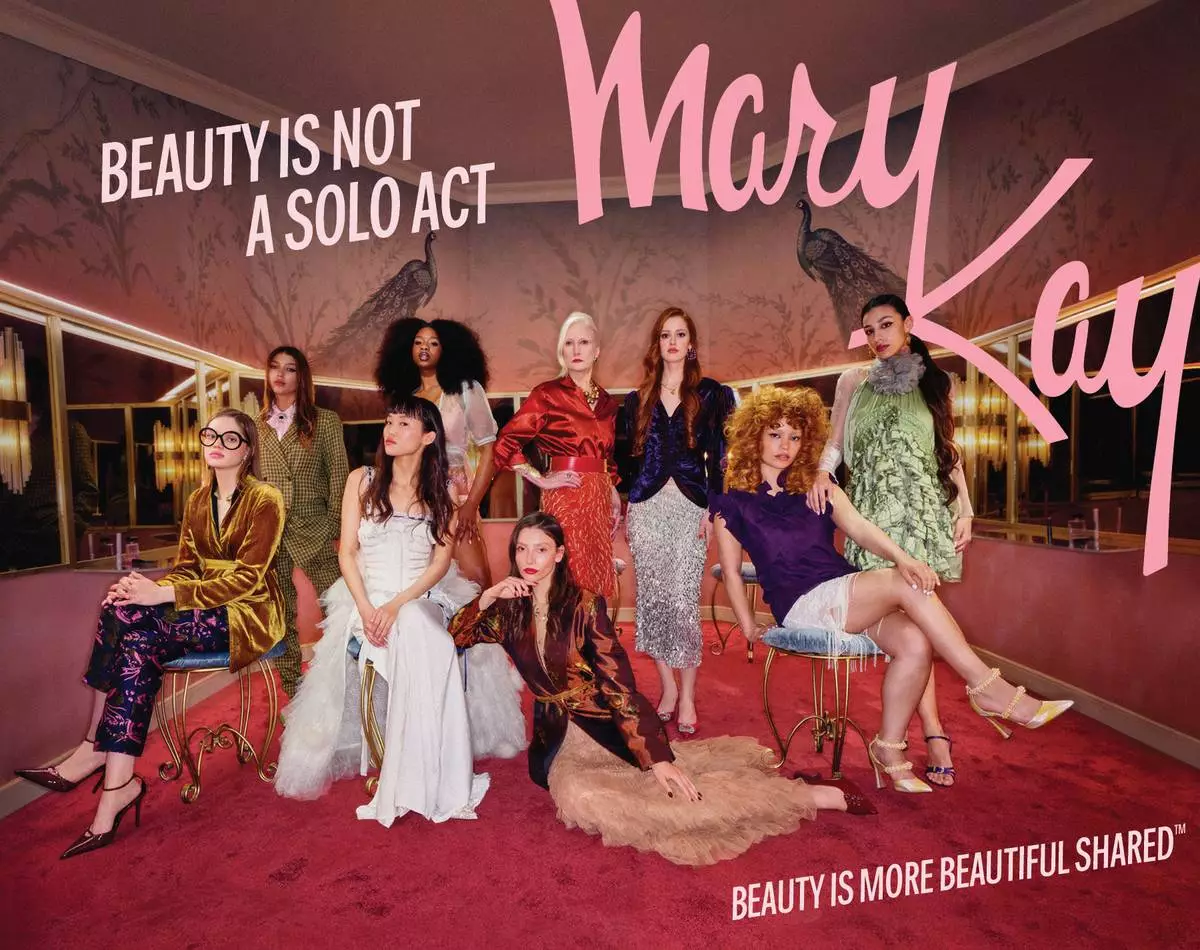
Building on more than 60 years of legacy, Mary Kay is accelerating its business transformation through tech investments, innovations such as the award-winning AI-powered Foundation Finder, and the global launch of My Shop allowing Independent Beauty Consultants to run their business digitally and meet customers where they are. Mary Kay also recently announced its largest-ever consumer-facing campaign Beauty Is More Beautiful Shared™, bridging the love of Mary Kay across generations. (Photo Credit: Mary Kay Inc.)

“Beauty isn’t just what we create. It is how we work. This new office is another exciting milestone in Mary Kay’s transformation and modernization. It was always the Mary Kay vision to keep growing and evolving – and we are honoring that with this move,” said Ryan Rogers, Chief Executive Officer at Mary Kay. (Photo Credit: Mary Kay Inc.)
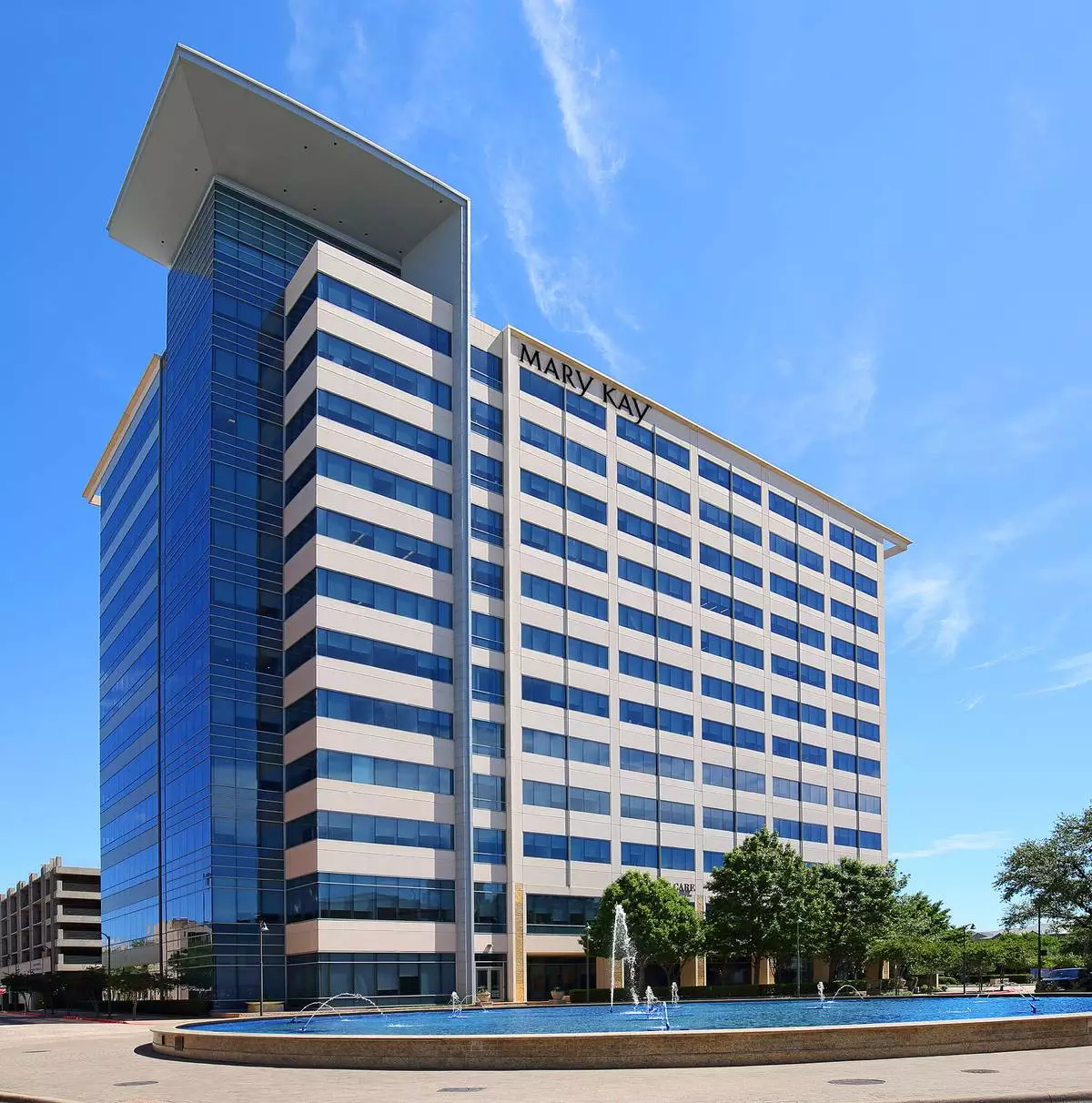
Reinforcing its long-standing commitment to North Texas, Mary Kay Inc. announced plans to relocate its global headquarters to Legacy Union One at Legacy North in Plano, Texas. Expected to open in late 2027, the new headquarters will span nearly 160,000 square feet across six floors, providing a modern, collaborative workspace for the company's next chapter of growth. (Photo Credit: JLL)
NEW YORK (AP) — Islam is expected to surpass Christianity as the world’s largest religion by 2035, according to detailed projections released Wednesday by the Pew Research Center.
Pew, which has been issuing authoritative reports on religious demography for 25 years, said both Islam and Christianity are growing, but Islam is growing much faster. A key reason, Pew said, is that Muslims tend to have more children than other major religious groups.
“It's the babies,” said Pew senior demographer Conrad Hackett, explaining that conversion and other ways of changing religious identity are much smaller factors than fertility rates.
During 2020-2025, the fertility rate for Muslims was 3.1 children per woman, followed by the rate for Christians at 2.5, according to Pew. The average fertility rate for all other women was 1.6, below the level of 2.1 that's considered necessary for each generation to replace itself.
According to Pew's latest estimates, there were 2.27 billion Christians and 2.02 billion Muslims worldwide in 2020. Pew's new projections forecast that there will be 2.57 billion Muslims and 2.52 billion Christians by 2035. By 2070, if recent trends continue, there will be more than 3.6 billion Muslims and just under 3 billion Christians worldwide.
The estimates are part of a broader Pew project examining how the size of major religious groups could change between 2020 and 2070. The projections take into account recent differences between religious groups’ age profiles, fertility rates, and patterns of religious switching and migration.
Among the many notable findings: Pew projects that the United States, within 40 years, will no longer have a Christian majority. Christians now account for 62% of U.S. adults, according to Pew, and will fall below 50% by 2065.
In neighboring Canada, Christians are expected to drop below 50% by 2030, Pew said.
In both countries, a significant reason for the drop is the concurrent increase in the number of people with no religious affiliation. By 2070, they are projected to account for 41% of the U.S. population and to outnumber Christians in Canada.
The world’s population is projected to increase by 29% between 2020 and 2070, Pew said. Of the religious groups it analyzed, Muslims and Christians are the only ones expected to keep pace, with Christians growing by 30% and Muslims by 80%.
Although Hindus and Jews are growing in absolute numbers, they are projected to decline as a percentage of the global population, Pew said. It forecasts that Buddhists would shrink both in number and as a portion of the world’s population, in part due to expected declines in the overall populations of China, South Korea and Japan.
Over the coming decades, Pew said, most of the world’s population growth is expected to occur in Africa, particularly south of the Sahara Desert, where most people are Christians or Muslims. The region’s high fertility and rising life expectancy will boost the global numbers of both faiths, Pew predicted.
By 2070, Pew said, more than half of the world’s Christians will live in sub-Saharan Africa, and Congo will surpass the United States as the country with the most Christians, with their ranks increasing more than threefold to 299 million.
The populations of other major regions are expected to grow more modestly, or even decline.
For example, the number of people living in Europe will shrink by 17% by 2070, Pew said, and the number of Christians there will drop by a third, from 505 million to 324 million. Over the same period, the percentage of Europe's population that is Muslim is expected to increase from 6% to 13%.
In the U.S., Pew projects that the number of Christians will decline from about 217 million in 2020 to about 174 million in 2070.
Several mainline Protestant denominations in the U.S. have faced declining membership over many years. However, Jeffrey Brodd, a religious studies professor at California State-Sacramento, suggested a rebound was possible following congressional election victories this month by several Democrats active in these moderate-to-liberal denominations.
By Pew’s estimates, Muslim women gave birth to more babies than women in any other religion during 2020-2025. About 252 million babies were born to Muslim mothers, compared with 208 million born to Christian mothers.
Muslims are the only major religious group expected to have growing numbers of births in the decades ahead. The other groups are projected either to have steady numbers of births or to experience gradual decline.
If recent trends continue, according to Pew, Pakistan will have the largest Muslim population by 2070, followed by India, Nigeria and Indonesia — which currently has the most Muslims.
Gina Zurlo, a senior researcher at Harvard Divinity School specializing in religious demographics, said Christian-Muslim relations are “extremely important” in light of the evolving trends.
“The ‘clash of civilization’ theory still looms large in some religious communities and there is a lot of misunderstanding of both religions from both sides,” she said via email. “Many Christians are not happy to see that Islam will be the world’s largest religion and it’s causing even more angst.”
“I hope people seek opportunities for greater interreligious education,” she added. “Personal contact is important — when people have personal relationships across religious differences, it ‘humanizes’ the ‘other’ in fruitful ways.”
Alan Cooperman, Pew's director of religion research, noted that most of the projected proliferation of Muslims and Christians was occurring in countries where they already are the majority — with conversion playing only a minor role.
“I don’t think this is a situation in which the growth of Muslims is coming at the expense of Christians,” he added. “I do worry about mischief being made with headlines or narratives that take this finding and portray it as sort of a clash where Christians are losing to Muslims.”
Many countries have seen a steady proliferation of the “nones” — people who are atheist, agnostic or religiously unaffiliated.
Excluding China, which has a high proportion of “nones” but faces a sharp decline in overall population, the ranks of “nones” elsewhere will grow by more than 180 million by 2070, Pew said.
The “nones” already account for a majority of the population in 10 countries, including the Czech Republic, Japan, the Netherlands, New Zealand, Uruguay and Vietnam, according to Pew. South Korea, France and the United Kingdom are forecast to join this group by 2070.
This version corrects the number of projected Christians in Congo by 2070 to 299 million, instead of 270 million.
Associated Press religion coverage receives support through the AP’s collaboration with The Conversation US, with funding from Lilly Endowment Inc. The AP is solely responsible for this content.

Rabbis gather for a group photo in front of Chabad-Lubavitch world headquarters in the Brooklyn borough of New York, Sunday, Nov. 8, 2026, as part of a meeting of rabbis and Jewish leaders from over 100 countries. (AP Photo/Andres Kudacki)

FILE - Buddhist monks walk on the National Mall near the Washington Monument, during the Walk For Peace, Feb. 11, 2026, in Washington. (AP Photo/Rahmat Gul, File)
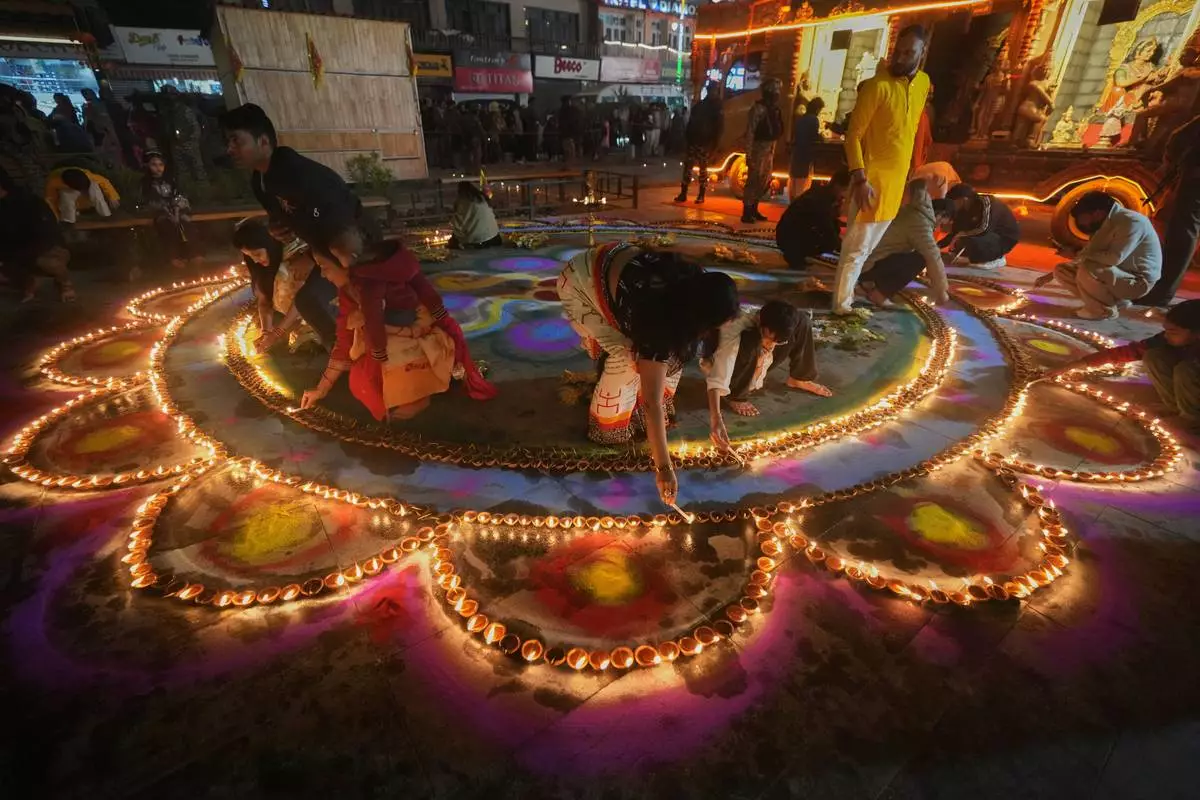
FILE - Hindus light oil lamps as they celebrate Diwali, the Hindu festival of lights, in Srinagar, Indian controlled Kashmir, Nov. 8, 2026. (AP Photo/Mukhtar Khan, File)
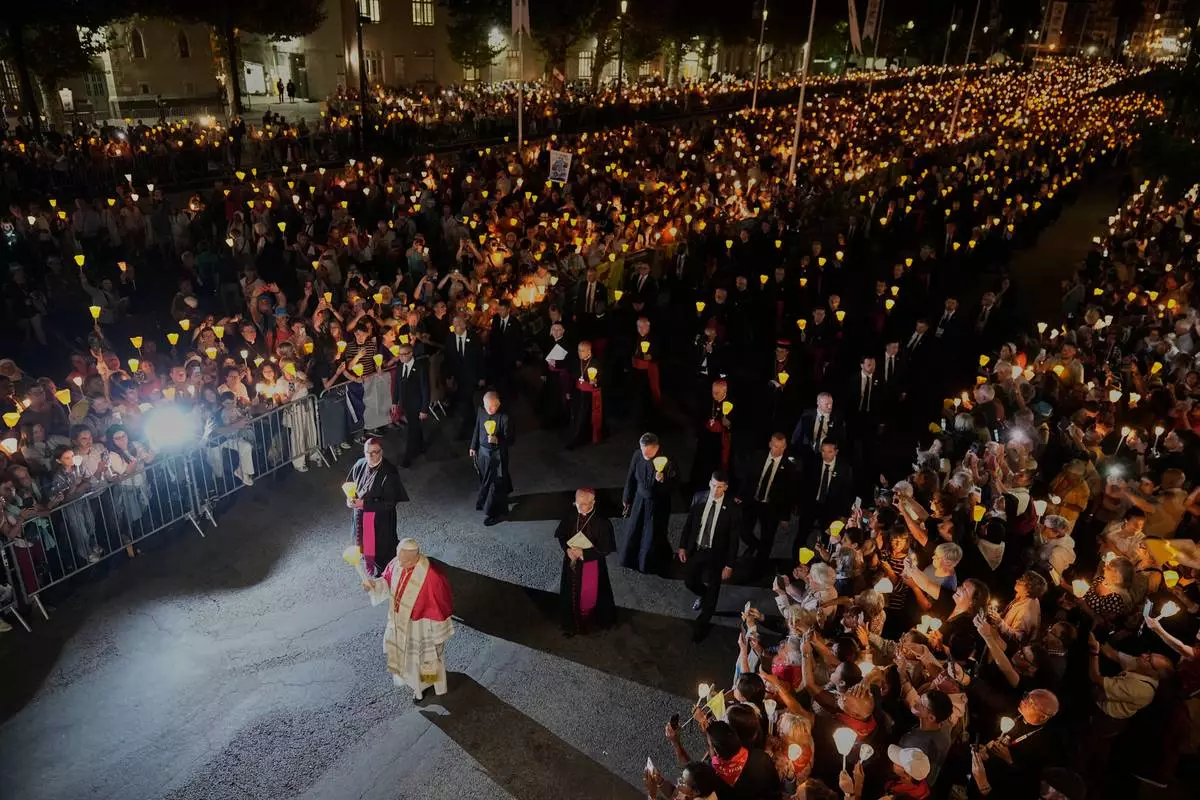
FILE - Pope Leo XIV, left, holds a candle during a prayer of Holy Rosary and torchlight procession at the Sanctuary of Our Lady of Lourdes, France, Sept. 27, 2026. ((AP Photo/Laurent Cipriani, File)
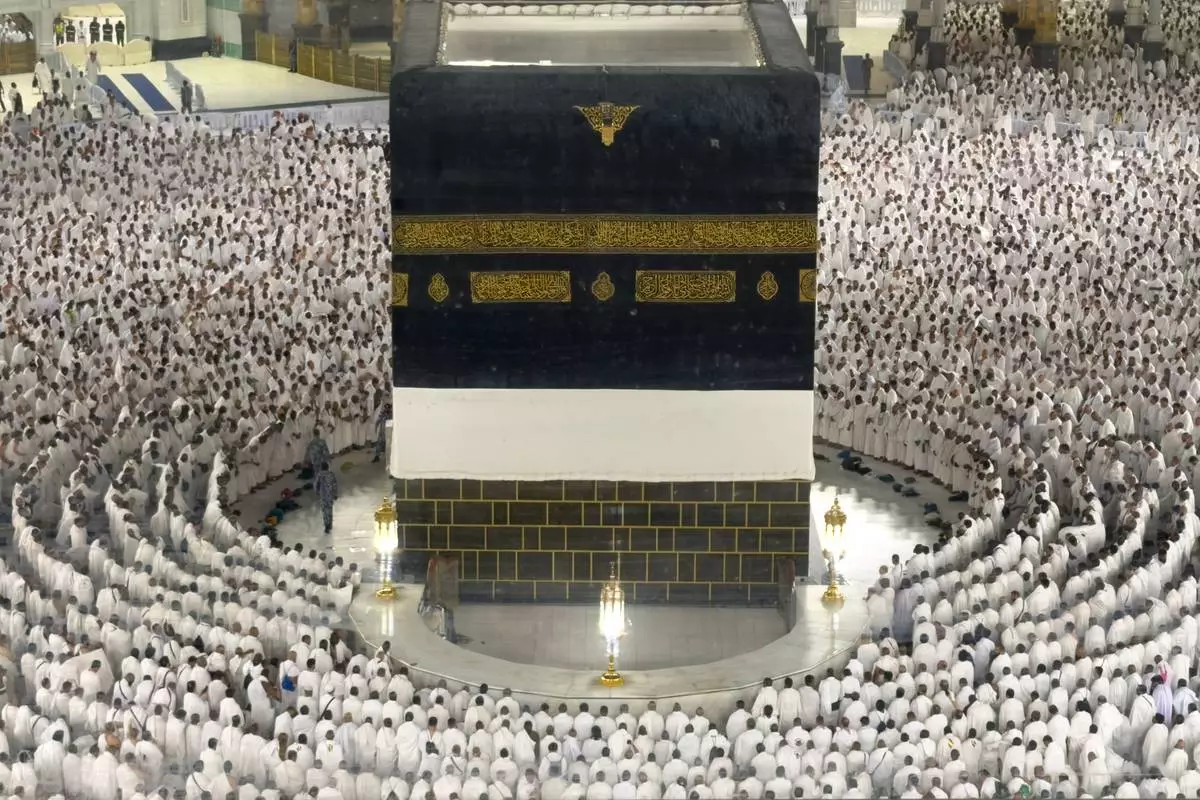
FILE - In this photograph taken through a glass fence, Muslim pilgrims are seen praying around the Kaaba, Islam's holiest site at the Grand Mosque during the annual Hajj pilgrimage, in Mecca, Saudi Arabia, May 22, 2026. (AP Photo/Altaf Qadri, File)