LONDON (AP) — Britain and the European Union went through a bitter divorce, then slowly tried to be friends again.
Now they are starting to consider maybe, one day, getting back together.
Prime Minister Andy Burnham will meet the EU’s top officials in Brussels on Friday for a summit that the British leader has called a step toward undoing a decade of damage triggered by the U.K.'s 2016 vote to leave the bloc.
“The Brexit we were given has not worked. We have lost more than we gained,” Burnham said this week. He has said that all options should be on the table for future relations, including rejoining the now-27-nation bloc.
Burnham has stressed that reversing Brexit is just one possible outcome, and is far from imminent. It would need the backing not just of British voters, but of a mistrustful EU.
Still, Burnham has broken British governments’ decade-long code of silence on the option of rejoining.
Most economists agree that Brexit has hurt the British economy by erecting barriers to trade with the country's neighbors, but U.K. politicians have been wary of reopening a painful debate. Both sides of the argument remember the anger and divisiveness of the referendum campaign and the acrimonious divorce negotiations that followed before the final split in 2020.
Friday’s EU-U.K. summit is only the second since Britain became the first country ever to leave the world’s biggest trading bloc. European Commission President Ursula von der Leyen said on social media that she wanted it to be “a summit of ambition and concrete results. More opportunities for young people. Easier agrifood trade. And a stronger cooperation on economic security.”
The two sides are expected to sign a trade deal for food and drink, an agreement on emissions trading and a plan to let young people work for limited periods across Britain and the EU. Burnham says that the deals could add a modest 0.4% to Britain’s economy.
Even closer ties, and a bigger economic boost, would require Burnham to break the pledge made by Keir Starmer, his predecessor as Labour Party leader and prime minister, not to rejoin the bloc’s tariff-free customs union or frictionless single market, or to restore free movement for EU nationals to the U.K.
Burnham says he will set out options for the long-term U.K.-EU relationship later this year, but won’t go beyond Starmer’s boundaries before the next national election, which must be held by 2029.
“There’s no rush,” Burnham told Sky News on Tuesday. “The red lines in the Labour manifesto will stand. And the British public will be in charge of whatever comes next.”
But some in the Labour Party are pushing to go further. Lawmaker David Lammy, who served as foreign secretary and deputy prime minister under Starmer, said the government should make rejoining the EU part of its platform for the next election.
Lammy said “the position of the United Kingdom was diminished” when it cut ties with its European neighbors.
“This is the age where middle powers come together to effect change,” he told a meeting at the Chatham House think tank on Wednesday.
“It just doesn’t make sense" for the U.K. to go it alone, he said. “It never did.”
Others worry that the chances of a calm and reasoned national debate about the emotionally loaded topic are slim.
New pro- and anti-EU campaign groups have already sprung up, backed by veterans of the 2016 battles. Former Conservative Cabinet minister Michael Gove, a backer of the “Stay Out” group, said rejoining “would mean handing back control of our laws, borders, money and trade, and paying a good deal more for membership than we did before.”
Pro-Brexit campaigners are cranking out warnings about Brussels meddling, including a claim the new food trade deal will mean a ban on Brits’ beloved smoky bacon flavor potato chips.
In response, the Burnham government assured people that “smoky flavors in crisps, sauces, and soups will remain on U.K. supermarket shelves.”
The EU has welcomed Britain’s warmer tone, and some national leaders, including French President Emmanuel Macron, have said they would welcome it back into the fold.
The war in Ukraine, and the U.K.’s undoubted military strength, are drawing the two sides back together, and for the EU the summit provides an opportunity to discuss stronger cooperation on security and defense and the fight against irregular migration.
But feelings remain raw, and EU officials have been reluctant to encourage talk of the U.K. rejoining. They are weary after dealing with the shifting demands of seven British prime ministers during the last decade.
Sonja Hyland, Ireland’s ambassador in London, said that when Britain voted for Brexit, “there was a lack of clarity as to exactly what that meant.” She said that if Britain wants to reopen negotiations, it must “make a clear decision as to what it wants.”
Simon Usherwood, a professor of politics and international studies at the Open University, doubts British politics is ready to have a grown-up discussion about the “slow and painful process” of refashioning the country’s relationship with the EU.
“All of this requires an informed and educated debate about what is involved, what the EU might want and accept, what the costs and benefits will be of any option,” he said. “And I’m not yet sure that we’re at that point. Actually, I’m pretty sure we’re not at that point.”
Associated Press writer Lorne Cook in Brussels contributed to this story.
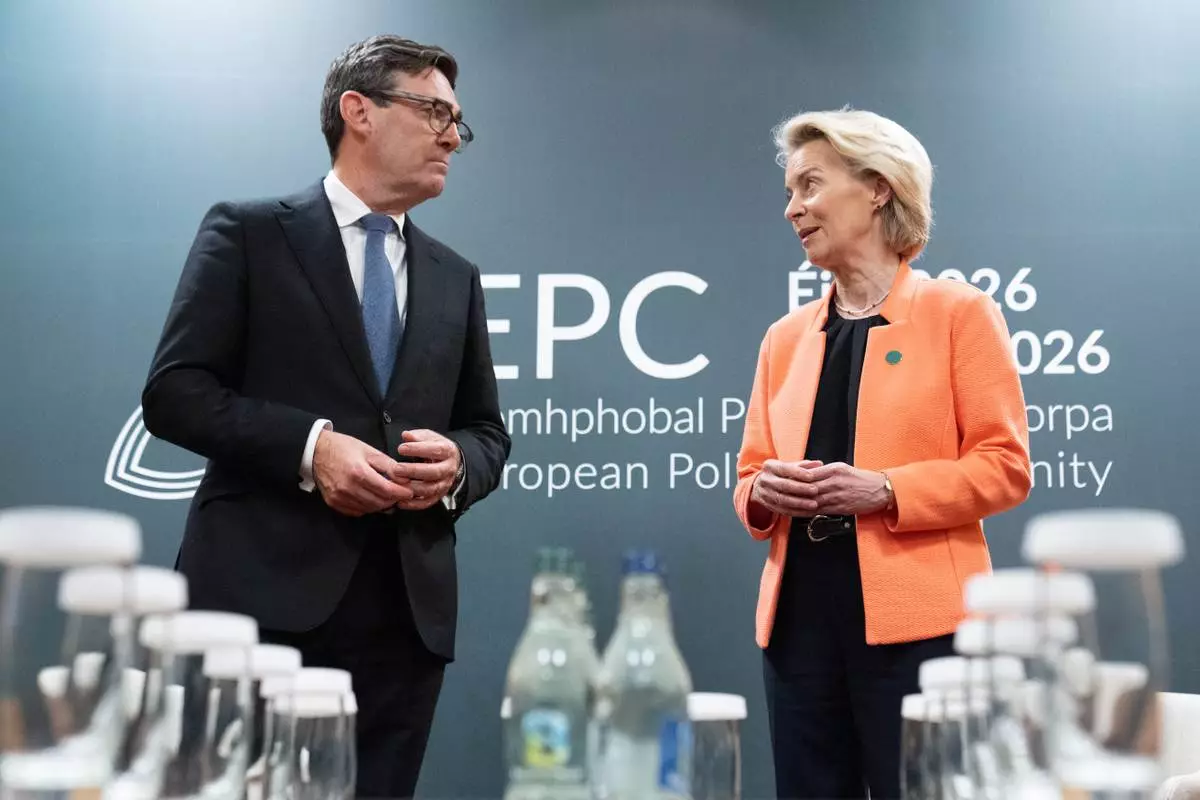
Britain's Prime Minister Andy Burnham, left, and the President of the European Commission Ursula von der Leyen, right, attend a bilateral meeting during the European Political Community (EPC) summit in Dublin, Ireland, Thursday, Nov. 12, 2026. (Stefan Rousseau/PA via AP, Pool)
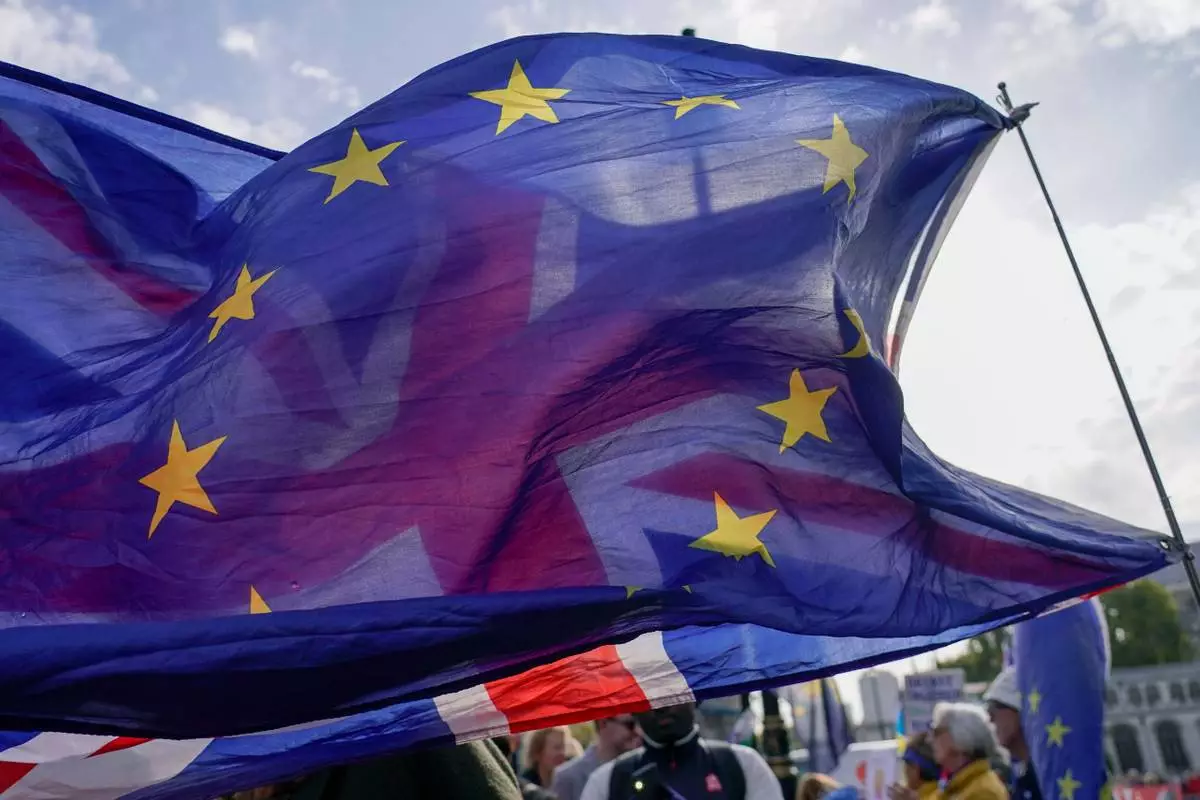
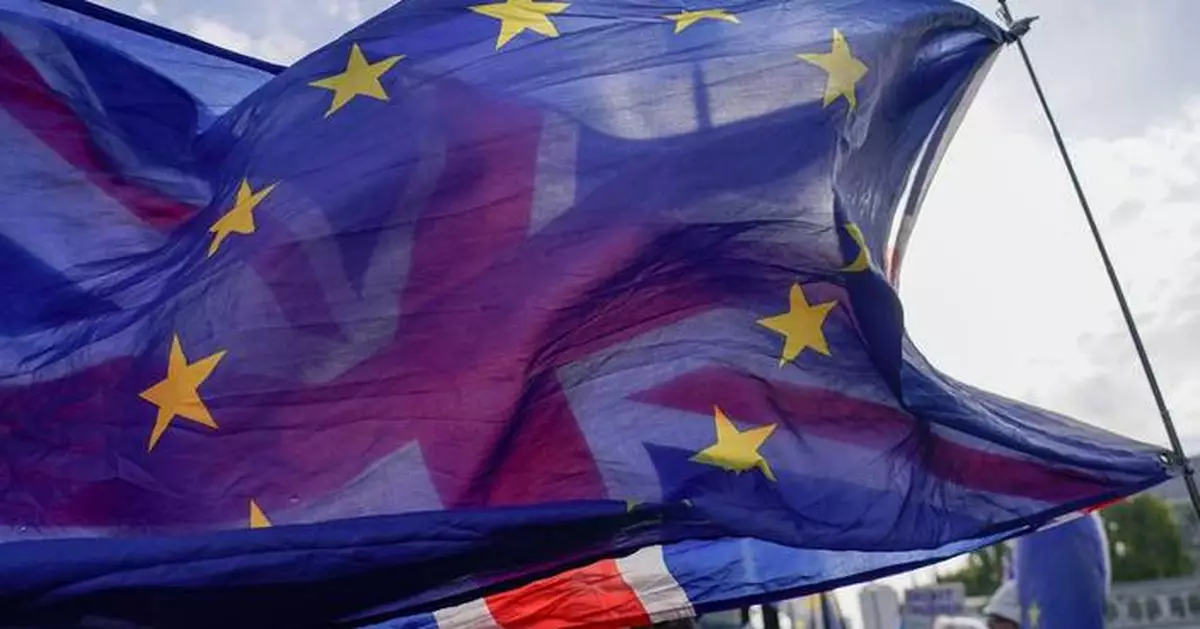
FILE - A Union flag waves behind a European Union flag, outside the Houses of Parliament, in London, Wednesday, Oct. 19, 2022. (AP Photo/Alberto Pezzali, File)