SACRAMENTO, Calif. (AP) — Dillon Brooks and Devin Booker scored 29 points apiece as the Phoenix Suns defeated Sacramento 128-107 Wednesday night, sending the Kings to their seventh straight loss.
Phoenix has won the first two games of its five-game trip. The Suns have won six of their last eight games to reach .500 at 7-7 after a 1-5 start.
Click to Gallery
Sacramento Kings guard Darius Acuff Jr. (5) defends Phoenix Suns guard Jalen Green (4) during the first half of an NBA basketball game Wednesday, Nov. 18, 2026, in Sacramento, Calif. (AP Photo/Jose Luis Villegas)
Phoenix Suns guard Jalen Green (4)defends Sacramento Kings guard Darius Acuff Jr. (5) during the first half of an NBA basketball game Wednesday, Nov. 18, 2026, in Sacramento, Calif. (AP Photo/Jose Luis Villegas)
Sacramento Kings forward Domantas Sabonis (11) grabs a rebound during the first half of an NBA basketball game against the Phoenix Suns Wednesday, Nov. 18, 2026, in Sacramento, Calif. (AP Photo/Jose Luis Villegas)
Phoenix Suns forward Dillon Brooks (3) dribbles toward the basket during the first half of an NBA basketball game against the Sacramento Kings Wednesday, Nov. 18, 2026, in Sacramento, Calif. (AP Photo/Jose Luis Villegas)
Phoenix Suns guard Devin Booker (15) shoots over Sacramento Kings forward Domantas Sabonis (11) and forward De'andre Hunter (15) during the first half of an NBA basketball game Wednesday, Nov. 18, 2026, in Sacramento, Calif. (AP Photo/Jose Luis Villegas)
Sacramento, which has lost all nine of its home games this season, tied the 1990-91 team for the worst start in franchise history at 1-13. That season, the Kings finished 25-57. Sacramento's only win came on Nov. 2 at Dallas.
Brooks scored 20 of his points in the second and third quarters to help the Suns pull away for the win against a Sacramento defense that ranks 28th in the NBA in opponent points per game at 121.2.
Booker has scored 20 or more points in 11 games this season. He added six assists.
Sacramento's rookie Darius Acuff Jr. scored 36 points on 11-for-22 shooting. Acuff leads the rookie class in total points and points per game with 367 and 28.2, respectively. He added six assists.
Domantas Sabonis contributed eight points, eight assists and 11 rebounds for Sacramento.
Phoenix outscored the Kings 34-24 in the third quarter to extend their lead to 14 points heading into the fourth quarter. The Suns outscored the Kings 60-42 in points in the paint and were helped by 15 3-pointers. Brooks hit five shots from distance and Jalen Green added four on the way to 18 points.
Suns: Visit Utah Jazz on Friday.
Kings: Visit the Los Angeles Lakers on Friday.
See AP’s full NBA coverage here

Sacramento Kings guard Darius Acuff Jr. (5) defends Phoenix Suns guard Jalen Green (4) during the first half of an NBA basketball game Wednesday, Nov. 18, 2026, in Sacramento, Calif. (AP Photo/Jose Luis Villegas)

Phoenix Suns guard Jalen Green (4)defends Sacramento Kings guard Darius Acuff Jr. (5) during the first half of an NBA basketball game Wednesday, Nov. 18, 2026, in Sacramento, Calif. (AP Photo/Jose Luis Villegas)

Sacramento Kings forward Domantas Sabonis (11) grabs a rebound during the first half of an NBA basketball game against the Phoenix Suns Wednesday, Nov. 18, 2026, in Sacramento, Calif. (AP Photo/Jose Luis Villegas)

Phoenix Suns forward Dillon Brooks (3) dribbles toward the basket during the first half of an NBA basketball game against the Sacramento Kings Wednesday, Nov. 18, 2026, in Sacramento, Calif. (AP Photo/Jose Luis Villegas)

Phoenix Suns guard Devin Booker (15) shoots over Sacramento Kings forward Domantas Sabonis (11) and forward De'andre Hunter (15) during the first half of an NBA basketball game Wednesday, Nov. 18, 2026, in Sacramento, Calif. (AP Photo/Jose Luis Villegas)
ANTIBES, France (AP) — They flicker on a small screen — grainy, almost ghostly images of lives and times that Romain Gimenes has heard about from family for years but is too young to have known himself.
Slowly hand-winding reels of decades-old Super 8 film through a viewing machine — lent to him by archiving activists who have made it their mission to save home movies like these from being tossed out as trash — Gimenes marvels as loved ones and places that his grandfather filmed in the 1970s dance back to life in sepia tones.
“Oh! That’s my grandfather,” the 30-year-old French Riviera school teacher exclaims. He inherited his middle name, Gabriel, from the man whose bearded face appeared fleetingly and whom he never met.
Interspersed among more images — of his mother, his 94-year-old grandmother, even a great-grandmother and others — pops up a prized find: Footage of a service station the family used to own, since demolished and replaced by a bakery, in the Riviera town of Antibes.
Gimenes whips out his phone and snaps a photo, a digital copy of an analog image to show and remind his mother of halcyon days.
“A photograph of a photograph,” he says, reflecting on his Instagram-era reflex gesture. “Today, we film everything and photograph everything. But who takes the time to look at it all? Who takes the time really to see things, really to look?”
“It’s that gesture of our time — the swipe.”
Just 200 years ago, only one human being — also a Frenchman — had the power to freeze time and our world into a photographic image. The father of photography, Nicéphore Niépce, knew back in 1824 that he'd invented something special, writing to his brother that the image he'd taken of the view from a window was “vraiment quelque chose de magique” — really something magical.
The world's fastest cameras today capture trillions of frames per second. Never have so many people been armed with the ability to immortalize children's first steps, to unmask abuses by filming them, to distort truths by altering or inventing images, to edit instances into reels and stories, to sear joys and horrors, beauty and ugliness onto our retinas and our brains.
And never have humans been so addicted — but also, perhaps, so inured — to that power.
On the clouds of Google Photos alone, users have stored more than 9 trillion photos and videos. Images take up so much digital space that it has to be measured in zettabytes, which are mind-blowingly gigantic. Just one zettabyte is equivalent to 250 billion DVDs and if each of its 1,000,000,000,000,000,000,000 bytes of data were a liter of water, a zettabyte would fill more than 7,000 Pacific Oceans, according to U.S. technology company Cisco Systems, Inc.
Boston-based data research company IDC estimates that photos and moving images will have generated about 144 zettabytes of data worldwide in 2026.
“That includes captured, streamed, broadcast and replicated copies. By 2030, that figure is forecast to reach about 234 zettabytes as higher-resolution smartphone cameras and video-first social platforms put more content in more hands, and as AI-generated images and video add a new source of data on top of what people capture,” says Adam Wright, an IDC senior research manager. He answered questions via email.
But then there are images that make up no zettabytes — yet — and that are, those archiving them say, crying out for rescue.
For Stephanie Ange, Pierre Bouchut and Margot Lestien, who roam from town to town in France, collecting home movies and digitizing them for archives, image preservation is a battle waged reel by reel.
The name that the trio chose for their group, Ofnibus, plays off the French word for UFO. They can never be sure what they might find on the films and video cassettes that people bring them, often without much of a clue of what they show. Rummaged from garages, attics, cupboards and drawers, and often filmed by people who have since died, they are, quite literally, noninventoried cinematic objects until Bouchut runs them through his film-scanner or pops them into his VHS machines.
In their 23 residencies over five years, Bouchut has seen “everything there is to see in life”: Marriages, baptisms and birthdays galore but also an A-to-Z from farmers butchering prized pigs to the forcible shaving of women's heads during World War II to punish and shame them for suspected relations with German soldiers.
He’s had plenty of surprises, not all of them pleasant, including what today might be called sex tapes — or as he more delicately puts it: “Births, and the stage before births.”
“I love picnics,” he says. “And the Tour de France — everyone filmed that.”
The more he watches, the more he's struck by how “everything changes, but nothing changes.”
“Children apparently weren’t better behaved in the past. People enjoyed themselves just as much as they do today,” he says. “There’s a universality that comes through, something that gives you a little faith in humanity.”
But as time passes, so do the people who know what the images show.
“Finding the material, being able to watch it again and digitize it is one thing, but you still need to be able to interpret and understand it,” Lestien says. “That’s where the urgency lies: the people who still remember the events and what’s on the films are dying.”
The introduction in 1965 of Kodak's Super 8 mm format democratized moviemaking with hand-held cameras that whirred through cartridges containing 50 feet (15 meters) of film. But ever-fewer families still have the functioning projectors (followed later by VCRs) that would be fired up occasionally to watch their home movies together. Films that were treasured can, for the generations that inherit them, become unwatchable clutter.
“Eventually they throw it away because it takes up space, it’s starting to smell bad, and they can’t really see what they could do with it,” Lestien says.
The projectors and video-viewing machines that the Ofnibus team carts around France are making forgotten home movies great again.
In Antibes, they digitized 22 hours of images for archiving and reconnected their donors with memories and family histories. They also commissioned an editor who boiled down selected images into a 30-minute movie for a public viewing that 50 townspeople attended. It included rediscovered footage of Brigitte Bardot, the cinema icon who lived on the French Riviera and was filmed with a basket of roses.
Retired 65-year-old travel agent Sophie Roux-Nantas brought 16 reels of film from the 1930s to the '60s that were languishing in her garage. She saw herself as a 3-year-old on a beach “playing just as children play, just as the new generation does. We made sandcastles. That hasn’t changed, and we swam in the same way.”
On one of his 28 videocassettes “that were all sleeping in a box,” 41-year-old physiotherapist Yohan Chabert was transported back to the 1990s and a family game of Monopoly.
He snapped a photo of the screen.
“It’s moving,” he said. “And, I think, it’s something to share. Because having reels at home and leaving them in a cupboard is a bit of a shame.”
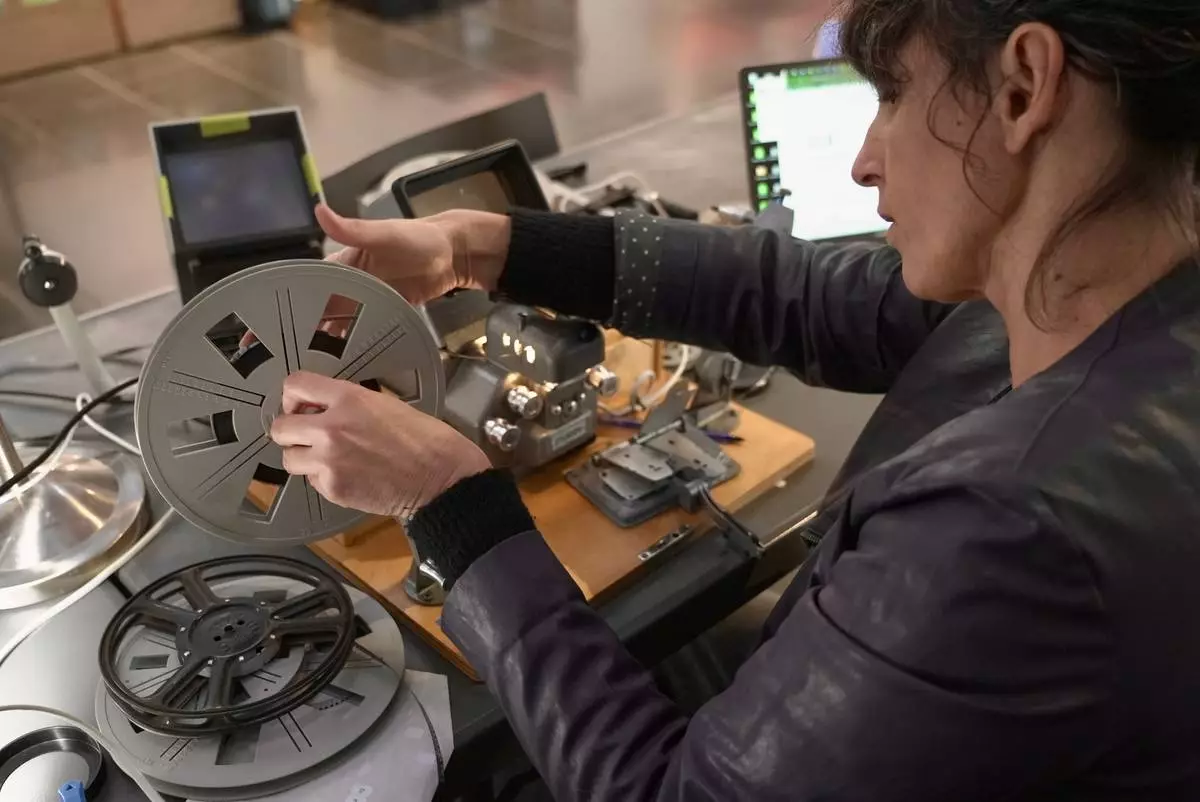
Archivist Margot Lestien loads a reel of film onto a viewing machine she uses to view amateur films brought in by members of the public who want them to be preserved for the future as digital files, during a residency by the Ofnibus home-movie archiving group in Antibes on the French Riviera on Friday, Nov. 6, 2026. (AP Photo/John Leicester)
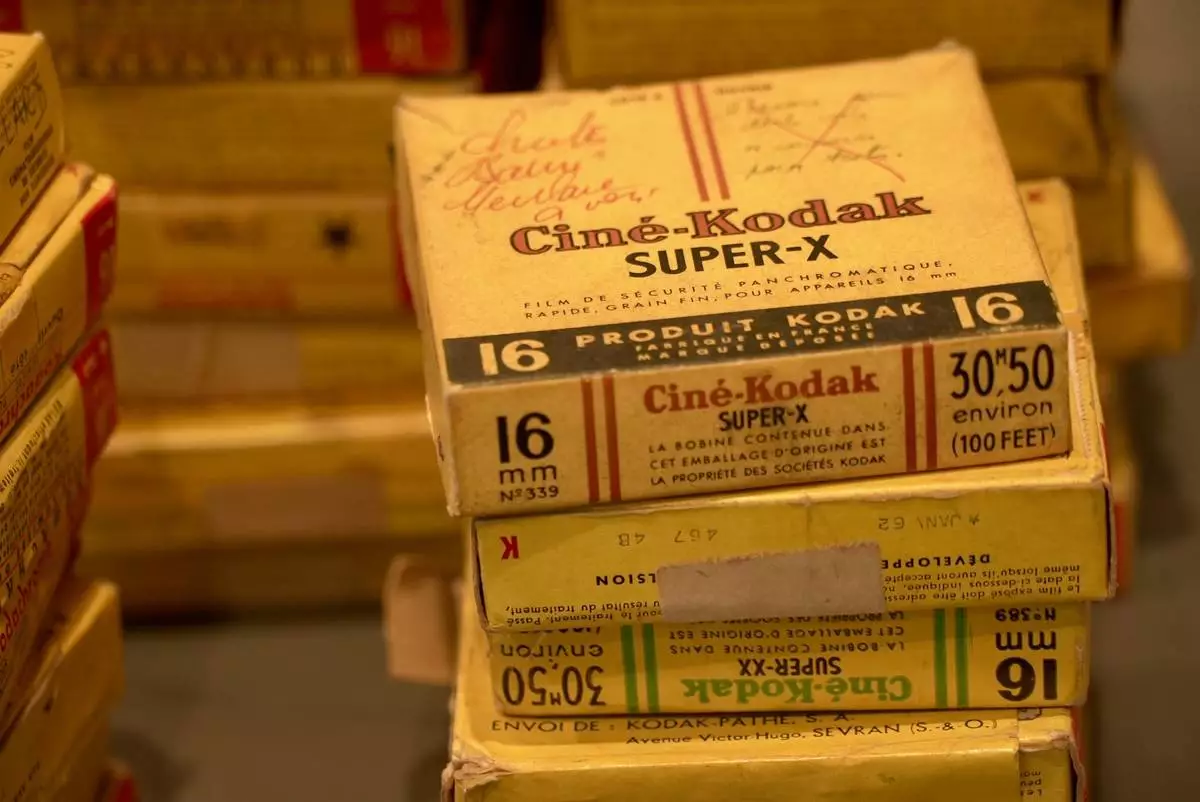
Boxes containing rolls of old film are stacked up on Friday, Nov. 6, 2026, during a residency in Antibes on the French Riviera by Ofnibus, a French group that archives home movies that members of the public bring in to be preserved for the future as digital files. (AP Photo/John Leicester)
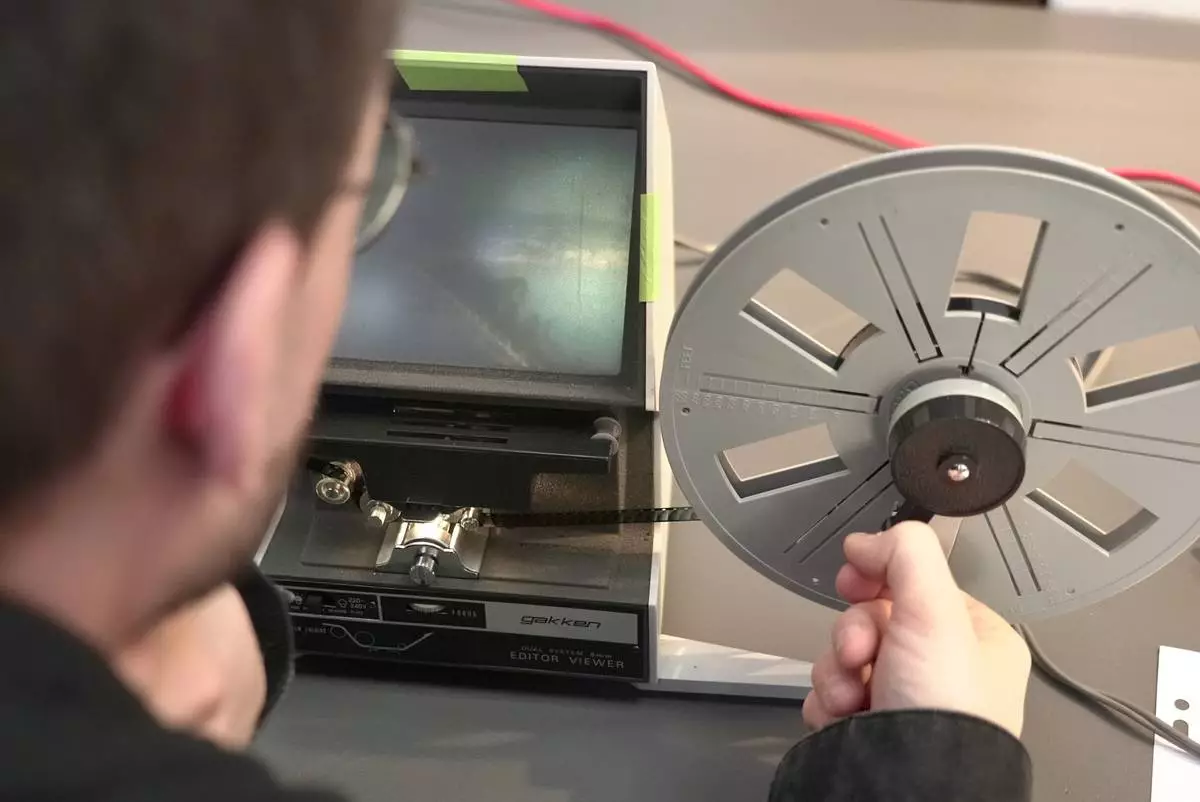
Romain Gimenes, a 30-year-old teacher, views a home movie shot on film decades ago by his family, during a residency by the Ofnibus home-movie archiving group in Antibes on the French Riviera on Saturday, Nov. 7, 2026. (AP Photo/John Leicester)
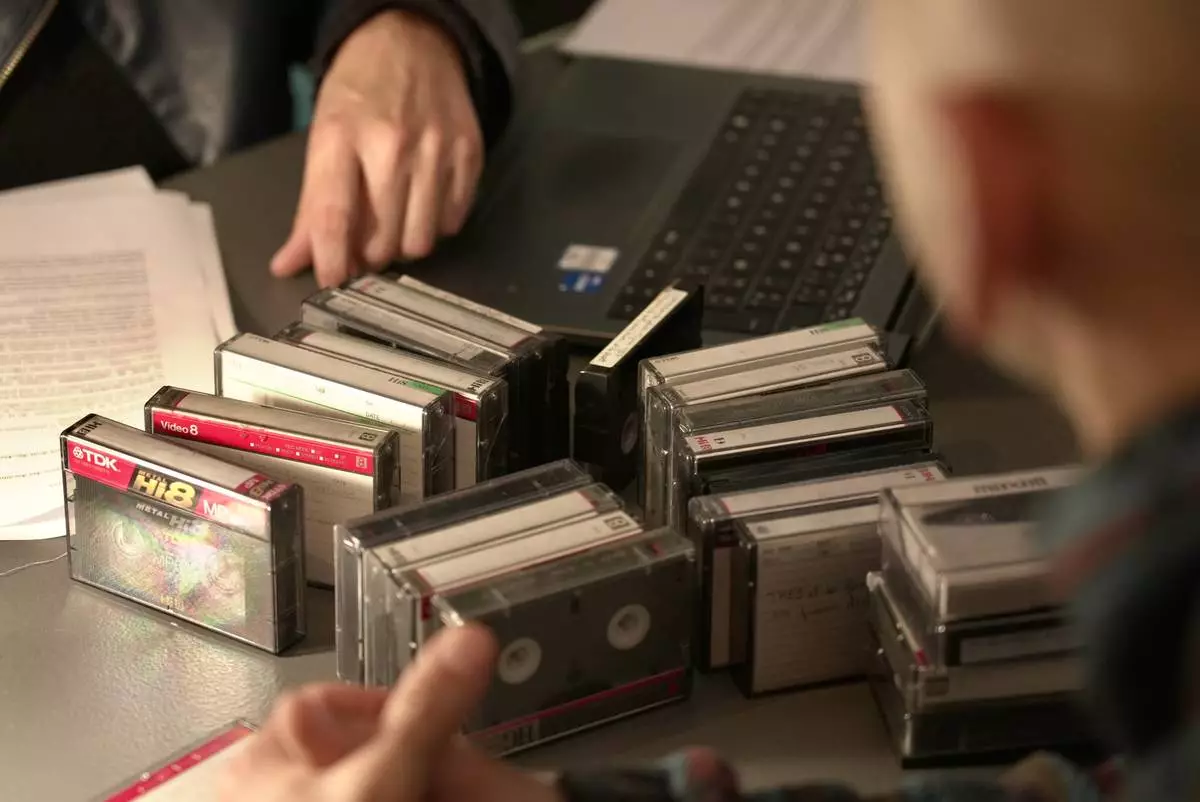
Video cassettes that Yohan Chabert, a 41-year-old physiotherapist, brought to the Ofnibus home-movie archiving group in hopes of having some of the recorded images from the 1990s preserved for the future as digital files, during an Ofnibus residency in Antibes on the French Riviera on Friday, Nov. 6, 2026. (AP Photo/John Leicester)
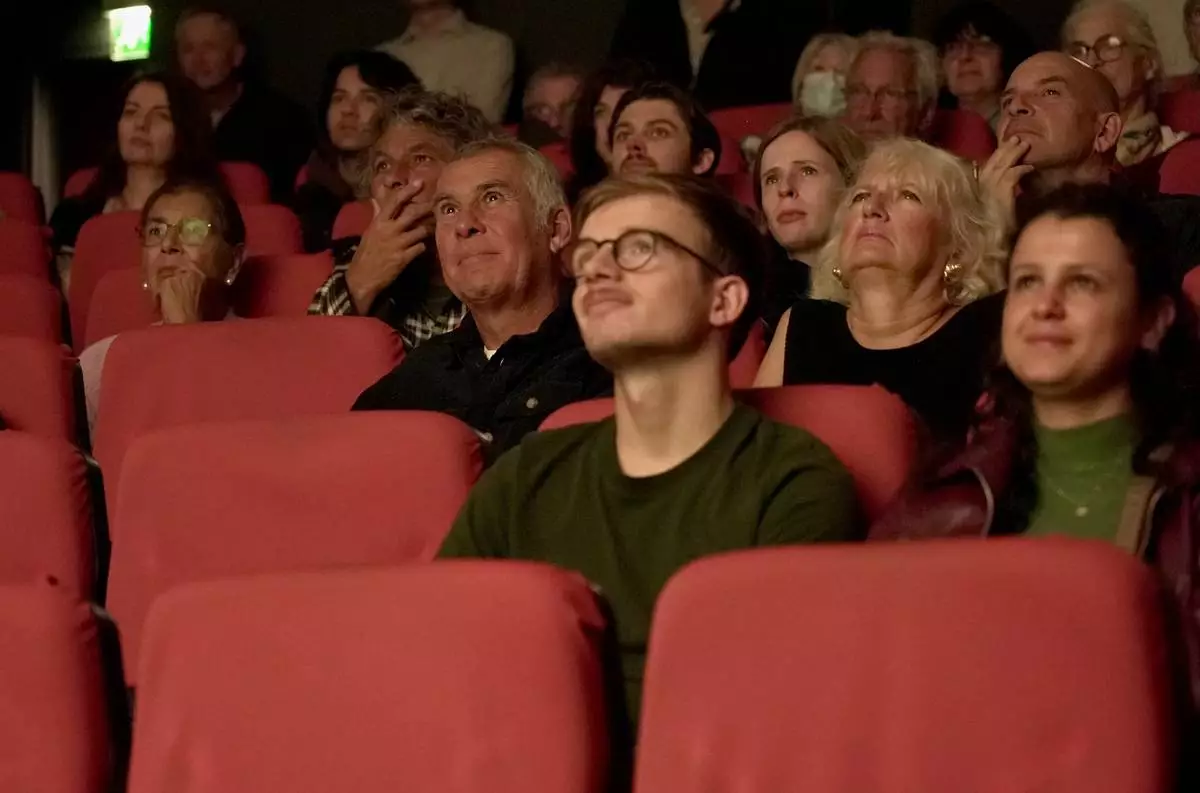
Audience members watch the screening Saturday, Nov. 7, 2026, of a movie put together using images from amateur home movies shot on film and video cassette that members of the public brought in to be preserved for the future as digital files, during a residency by the Ofnibus home-movie archiving group in Antibes on the French Riviera. (AP Photo/John Leicester)