Skip to Content Facebook Feature Image

Putin's visit encourages students at China-Russia cooperative university in Shenzhen

China

China

China

Putin's visit encourages students at China-Russia cooperative university in Shenzhen

2026-11-19 14:22 Last Updated At:15:31

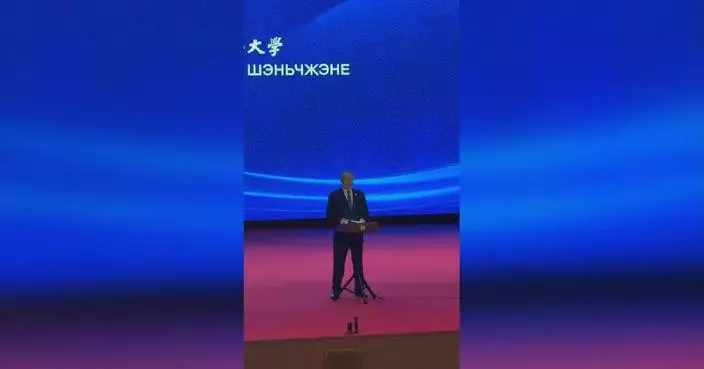
After Russian President Vladimir Putin arrived in Shenzhen for the 33rd APEC Economic Leaders' Meeting on Wednesday, he visited Shenzhen MSU-BIT University that afternoon and delivered a speech to students and faculty.

The university, jointly established by China and Russia, currently has more than 5,200 students, 15 percent of whom are international. Over the past decade, it has grown into the largest university in China using Russian as the primary language of instruction.

Putin encouraged students to keep learning and to strive for greater achievements. Chinese and Russian students expressed their excitement over the visit and said they hope for closer ties between the two countries.

For some Russian visitors, the university's surroundings carry a familiar feel.

"Looks like in Moscow. The same building [style]," said a Russian photographer on campus.

Students at the university are pursuing a wide range of disciplines — from materials science and engineering to biology and optoelectronic information science.

For many, the experience of studying here begins with a steep learning curve.

"When I first arrived, I couldn't speak Chinese at all — I hadn't studied a single word. At the beginning, I really found it very, very difficult. But all my classmates worked incredibly hard, so when I saw them keep on studying with perseverance, I felt that I had to see it through to the end as well," said a Russian student.

"I think Shenzhen is one of the fastest-developing cities in the world. I feel inspired to learn new things," he said.

Students also spoke of the opportunities the campus offers and the cross-cultural exchange it fosters.

"I think all of us students here have so many opportunities. I want to become a scientist," a Russian student said.

"I can clearly feel in lab classes that, when it comes to the same task, my Russian classmates can show us a different way of thinking, which gives me a new kind of inspiration," said a Chinese student.

A Russian student described the university as a meeting point between the two nations.

"This university is the best example of how two countries give me the opportunities for my studies. This is the place where this communication takes place," the student said.

Elena Samareva, a teacher at the university who has been teaching for about eight years, said her message to students is simple: choose cooperation over competition.

"[People need] cooperation, not just competition. To be friendly, be open for everything which is new. This is the idea I try to teach here and to spread here," she said.
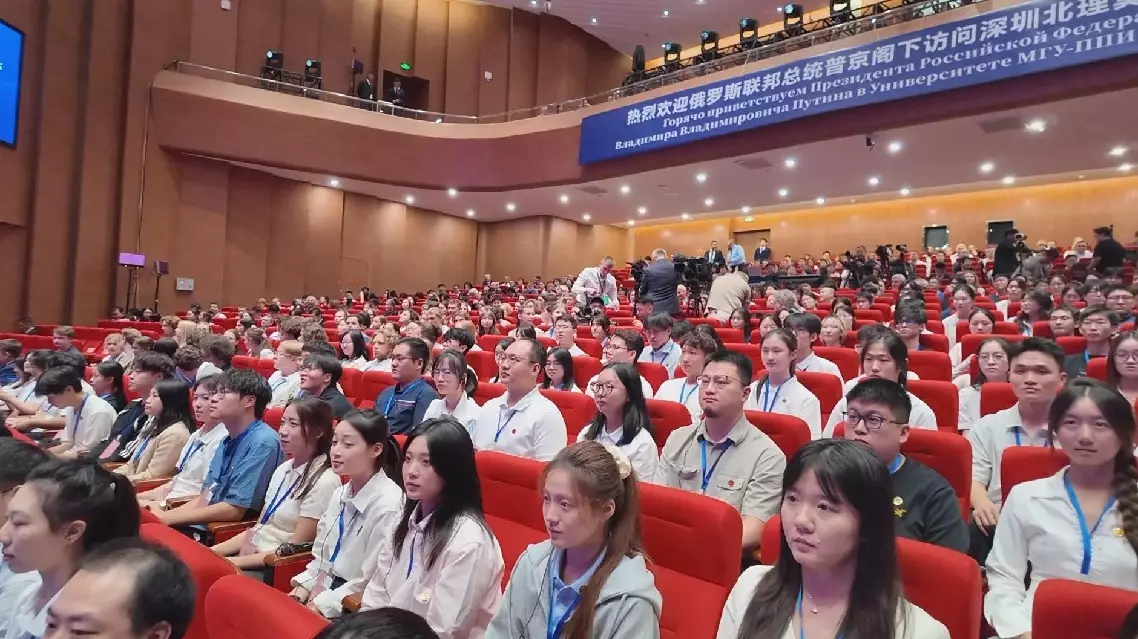
Putin's visit encourages students at China-Russia cooperative university in Shenzhen

Putin's visit encourages students at China-Russia cooperative university in Shenzhen

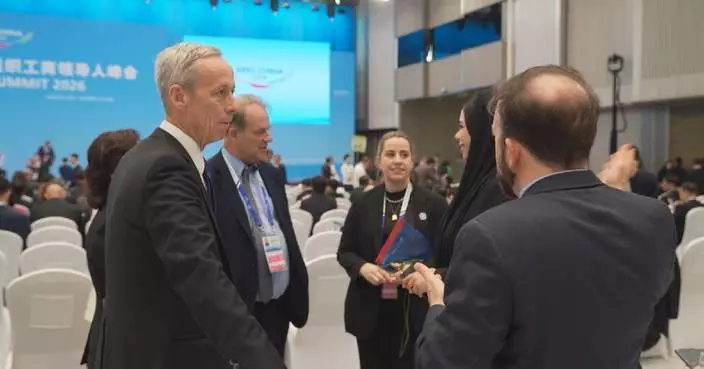
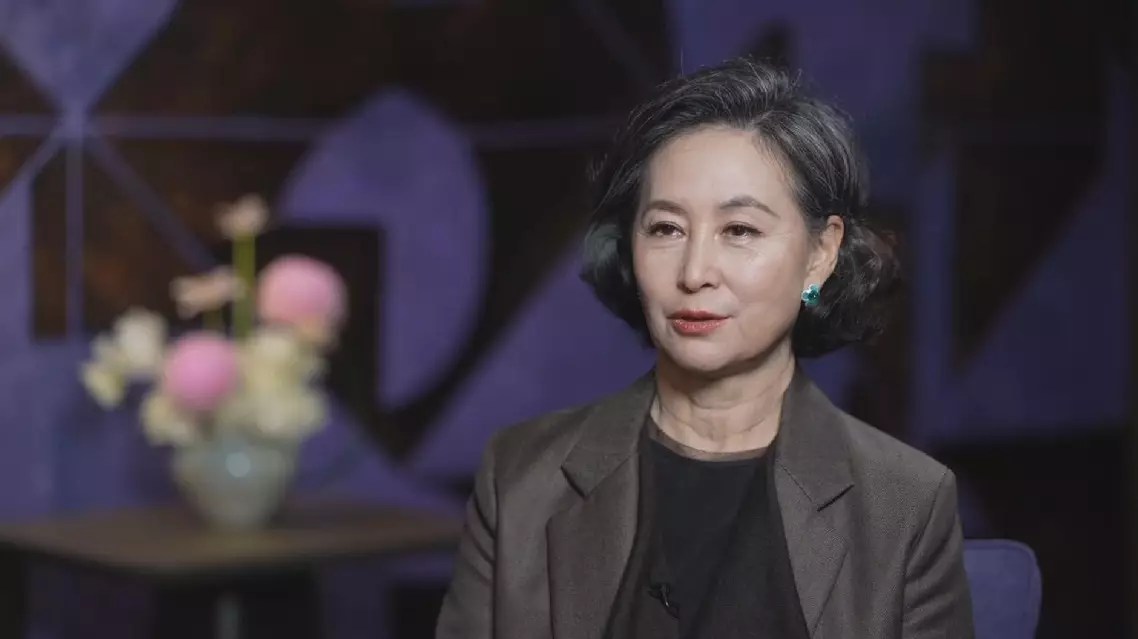
China's Guangdong-Hong Kong-Macao Greater Bay Area (GBA) has demonstrated its potential as a testbed for further cooperation among Asia-Pacific Economic Cooperation (APEC) economies, said celebrated Hong Kong businesswoman Pansy Ho, speaking on the sidelines of the APEC CEO Summit 2026.

The CEO Summit took place in Shenzhen, south China's Guangdong Province from Tuesday to Wednesday. The event attracted more than 2,000 representatives from 21 APEC economies and 13 non-APEC economies, including Britain, France, Germany and Switzerland.

In an interview with China Global Television Network (CGTN), Ho highlighted the GBA's role in linking mainland cities with the Hong Kong and Macao Special Administrative Regions (SARs).

"I always wanted to emphasize what the Greater Bay Area really means and I'm so grateful and I think this is brilliant that our country has chosen to organize APEC this year at Shenzhen, of course also already having put the ministerial meetings for tourism in Macao earlier in the year and for finance in Hong Kong, therefore, greatly signifying the importance of the Greater Bay Area and the connecting aspects of the respective cities and SARs," she said.

With its large population and strong economic performance, the GBA can serve as a testbed for cooperation among APEC economies, Ho said.

"This is why today we need to tell our potential partners in the future if we do this. This is the pilot; this is the testbed that we have demonstrated. It's not a small test. The result is what? The result is Greater Bay Area now binds together through nine cities in the Guangdong Province with the two SARs, Hong Kong and Macao. And we have 87 million in population, which represents 14 trillion renminbi in terms of our GDP," she said.

The businesswoman stressed that in her view, it is time to break down unnecessary barriers, build shared rules and ecosystems, and showcase the GBA's model of cooperation to the world.

"We can do business with all of the APEC economies. So if we could do this within only just the 30 years, but mind you the 30 years was through a lot of learning curve which we have now already helped to mitigate. We are going to set our own rules. We are going to cut across all the unnecessary boundaries and barriers, be that hard or soft. We are going to create together our own ecosystem with the kind of standards and the kind of capabilities that all of us can subscribe to," she said.

Greater Bay Area proves vital testbed for further APEC cooperation: Pansy Ho

Greater Bay Area proves vital testbed for further APEC cooperation: Pansy Ho

Recommended Articles