Deepening financial cooperation between China and Indonesia has provided greater convenience for bilateral trade and travel, with cross-border QR payments and a new RMB clearing bank rapidly expanding financial connectivity.
As China hosts APEC events this year, opening up and cooperation in the service sector are emerging as key drivers of Asia-Pacific economic growth. Over the years, China and Indonesia have continued to deepen financial services cooperation.
RMB clearing in Indonesia officially began on Nov 12, with the Bank of China serving as the designated RMB clearing bank. Around 100 representatives from government institutions of both China and Indonesia attended the opening ceremony held at Bank Indonesia, the country's central bank.
With the improvement of the local currency transaction mechanism, businesses can now settle trade with China directly in RMB. This is expected to help reduce reliance on third-party currencies, safeguard exchange rate stability, and strengthen the regional economy's resilience against external shocks.
For Indonesian enterprises doing business with Chinese suppliers, the new transaction mechanism will significantly reduce frustrations. Previously, these enterprises would have to convert Indonesian rupiah into U.S. dollars and then into RMB to complete cross-border payments. With the RMB clearing bank in place, companies can conduct relevant business through a more direct RMB settlement channel, helping reduce intermediate steps and exchange costs and offering businesses in both countries more options for managing exchange-rate risk.
Currently, 12 local and foreign banks, including Bank of China, Industrial and Commercial Bank of China, China Construction Bank, Bank Mandiri and Bank Negara Indonesia, have become participating banks of the RMB clearing bank as appointed cross-currency dealers, with all relevant trading infrastructure fully in place.
The establishment of the RMB clearing bank is not only a further improvement of financial infrastructure but also a symbol of the deepening China-Indonesia economic and trade ties and growing market demand for cross-border use of the RMB.
The growing financial cooperation has extended into daily life. The cross-border QR payment linkage between China and Indonesia was officially launched at the second governors' meeting of the joint working mechanism held in Shanghai this June, with Bank Mandiri becoming a direct participant in the cross-border RMB payment system.
With the linkage system, Chinese tourists visiting Indonesia and Indonesian visitors to China do not need to download a new payment application on their mobile phones, nor do merchants need to install an additional set of receiving equipment. Cross-border payments can be completed through existing payment applications and QR code acceptance networks.
Chinese payment applications can be used to scan and pay at Indonesian shopping malls as well as roadside stalls and markets, among other places. As the mechanism uses direct rupiah-RMB quotation, customers can enjoy the most favorable exchange rate.
From the launch of the RMB clearing bank to the start of cross-border QR payments, China-Indonesia financial services cooperation is extending from corporate trade to individual consumption and from financial infrastructure development to more practical application scenarios.
The spirit of openness, innovation and cooperation that brought these accomplishments forward is also being highlighted at the series of APEC events hosted by China this year. The continued deepening of China-Indonesia financial cooperation is a concrete practice of these principles in regional economic cooperation.
As financial services become more open and interconnected, businesses and people in both countries are expected to gain more convenience, creating new opportunities for trade and economic growth in the Asia-Pacific region.
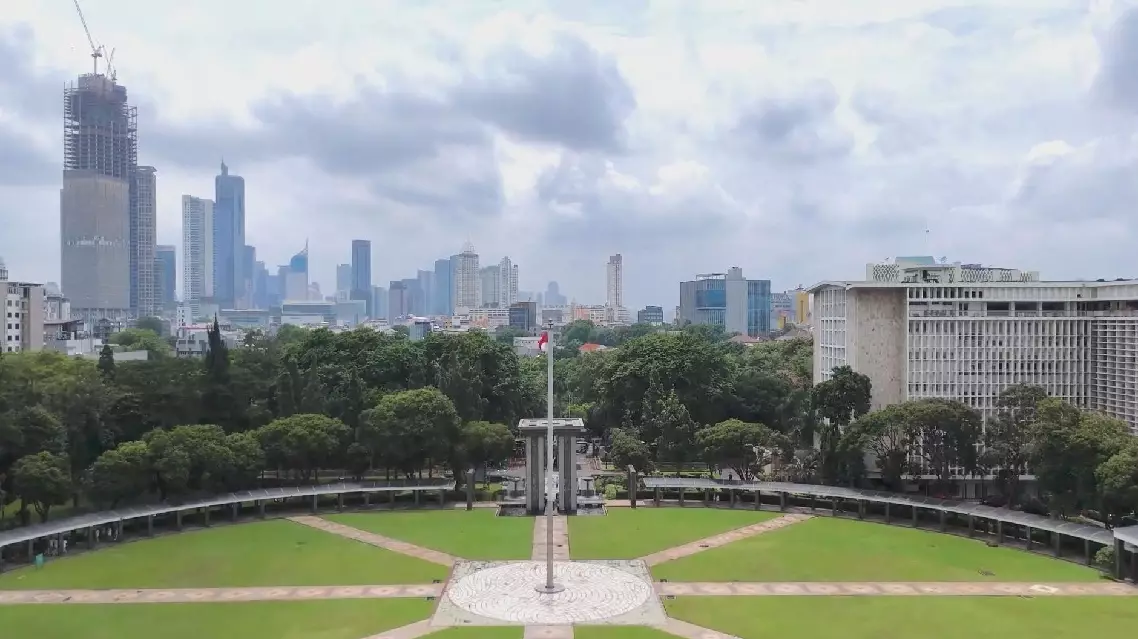
China-Indonesia financial cooperation eases trade, people-to-people exchanges