ZURICH (AP) — FIFA president Gianni Infantino is officially facing two election opponents trying to end his 11 years in office.
Philippe Diallo of France and Kohzo Tashima of Japan met the midnight deadline in Zurich to file entry papers with nomination letters from five member federations, FIFA confirmed on Thursday.
The vote by FIFA's 211 member federations is on March 18 in Rabat, Morocco.
Infantino's critics led by UEFA have been trying to replace him since his secretive plan to sell stakes in World Cup profits to private investors was revealed in July. He dropped the project amid a fierce backlash.
“(T)he candidatures have been forwarded to the electoral committee for examination and for passing a decision on the admission of the candidate,” FIFA said in a statement.
FIFA has set a Feb. 18 deadline for its three-member election panel to tell the 211 members which candidates are approved to go on the ballot paper.
Candidates must pass an eligibility and integrity check by the panel, whose rulings can later be challenged at the Court of Arbitration for Sport in Lausanne, Switzerland.
See AP’s full soccer coverage here
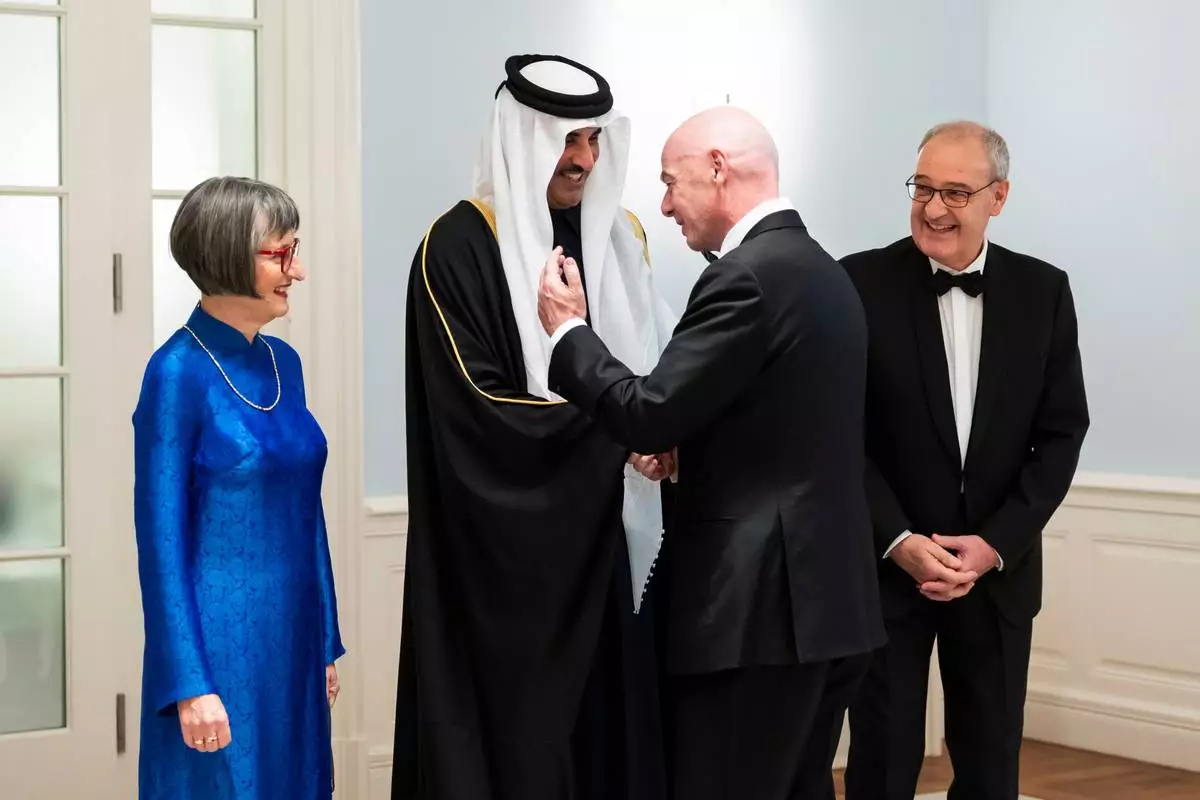
Qatar's Emir Sheikh Tamim bin Hamad Al Thani, center left, welcomes Gianni Infantino, FIFA President, beside Swiss Federal President Guy Parmelin, right, and Caroline Parmelin, left, prior to a gala dinner as part of a state visit in Bern, Switzerland, Wednesday, Nov. 18, 2026. (Peter Klaunzer/Keystone via AP)
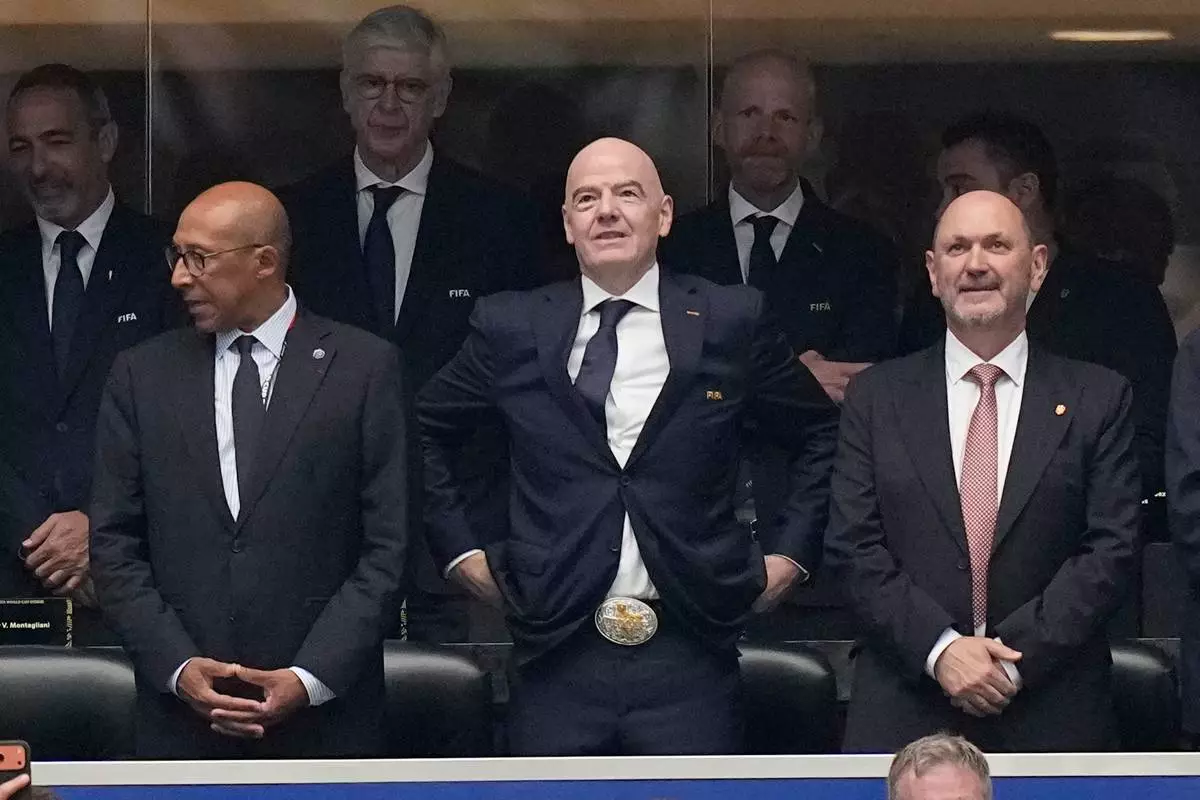
FILE - FIFA President Gianni Infantino, center, wearing a Texas belt buckle, adjusts his pants as France Football Federation president, Philippe Diallo, left, looks on during the World Cup semifinal soccer match between France and Spain in Arlington, Texas, near Dallas, Tuesday, July 14, 2026. (AP Photo/Ashley Landis, File)

FILE - FIFA President Gianni Infantino, left, greets Japan soccer association President Kohzo Tashima prior to the World Cup group E soccer match between Germany and Japan, at a stadium in Doha, Qatar, on Nov. 23, 2022. (AP Photo/Eugene Hoshiko, File)
The Saudi-led coalition said Yemen's Iran-backed Houthi rebels targeted the Saudi capital, Riyadh, and debris from a missile caused damage.
The latest attack in the ongoing exchange of fire between the two forces came after Saudi officials told allies that the conflict could last another six months. It followed Iran widening its attacks on its neighbors Wednesday.
Here is the latest news from the Middle East on Thursday. Read our full coverage here.
The Saudi-led coalition fighting the Houthi rebels said that falling debris from a “missile threat” caused damage.
In Riyadh’s financial district, damage was visible to one of the tallest buildings, the Public Investment Fund Tower, said a witness, who spoke on the condition of anonymity because of security concerns.
Residents in Riyadh heard a loud explosion after receiving warnings, the witness said.
The Houthis did not immediately claim responsibility for the attack, but the rebel group has repeatedly said it targeted Riyadh and its financial district over the past few weeks, including on Wednesday. Meanwhile, the Houthi-run media office reported strikes on Yemen’s rebel-held capital of Sanaa early Thursday.
The Saudi-led coalition also said it intercepted and destroyed missiles in the southern region overnight into Thursday. Alerts were issued in several areas warning of a potential threat.
Riyadh’s financial district came under attack earlier this month, with falling debris damaging a building belonging to the state-owned oil giant Aramco. The attacks on Riyadh came after the kingdom launched major airstrikes this week across the Houthi-held territory in Yemen.
The amount of crude oil being shipped through the Strait of Hormuz appears to have fallen since the start of November as Iran has increased its attacks on shipping. But substantial amounts of Mideast crude are still reaching a global economy that is increasingly well supplied with oil.
Crude flows through the strait alone are down to 8.5 million barrels a day, or half the prewar levels reached at the start of November, according to preliminary figures through Monday from marine data firm Kpler. Those numbers, however, could rise in coming days, Kpler said in a media briefing Wednesday.
Oil shipments out of the Mideast by all available routes — including both a U.S.-protected tanker route through the strait near the coast of Oman and pipelines that skirt the strait — amounted to 15 million barrels a day in the same period, according to Kpler. That represents about 64% of prewar flows, down from 97% in October.
Despite uncertainty over Middle East flows, oil prices have fallen in the wake of a report Friday from the International Energy Agency, which expects the global oil market to be oversupplied in the current quarter for the first time since the start of the Iran war. It cited continuing Mideast supplies and falling demand.
Tanker operators and crews willing to risk using the U.S. route transit the strait at night with radio location systems and mobile phones turned off to avoid Iranian attacks. They then transfer oil to other tankers waiting in the Gulf of Oman, which ship it to customers in Asia and return into the Persian Gulf to repeat the process.
That has kept oil flowing, but at enormous cost because of skyrocketing rates for chartering tankers. And shipments of other key energy products such as liquefied natural gas and diesel remain well below prewar levels.
Eastwood reported from Cairo and McHugh reported from Frankfurt, Germany.
This report will be updated throughout the day as new developments emerge.
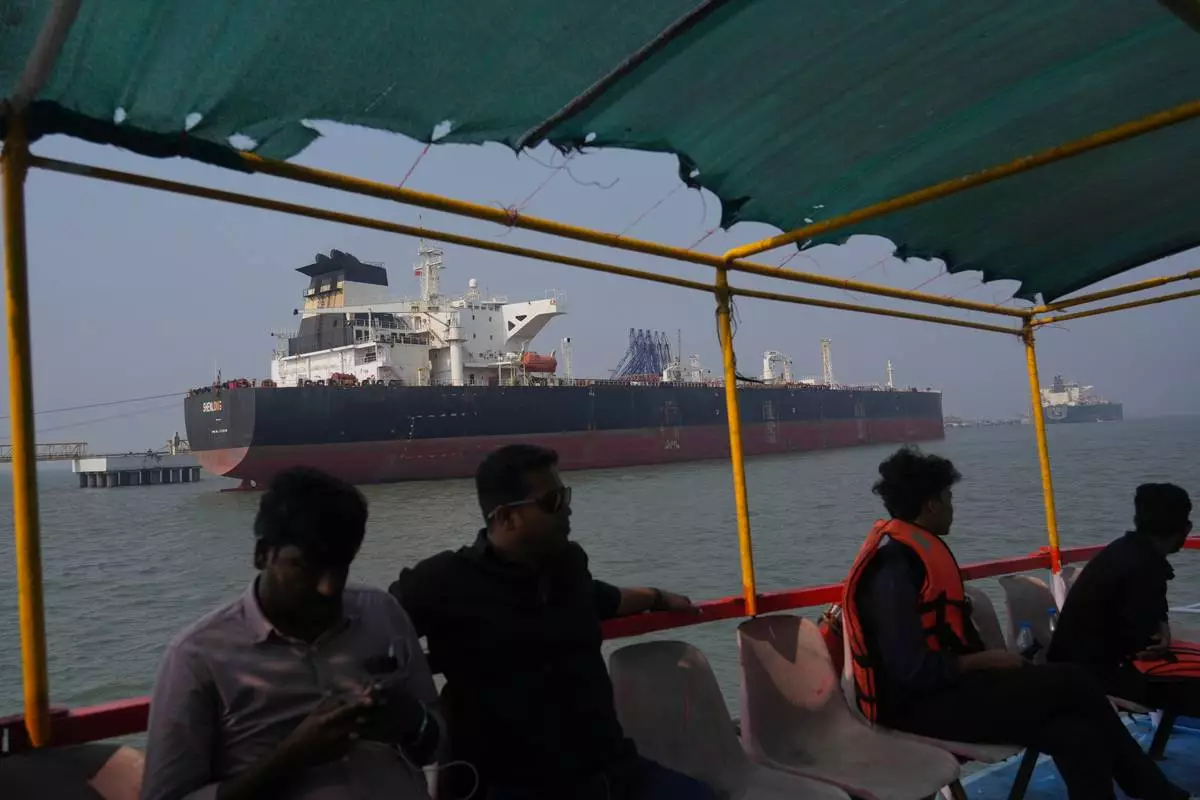
FILE - Liberia-flagged tanker Shenlong Suezmax, carrying crude oil from Saudi Arabia, that arrived clearing the Strait of Hormuz, is visible at the Mumbai Port in Mumbai, India, Thursday, March 12, 2026. (AP Photo/Rafiq Maqbool, File)
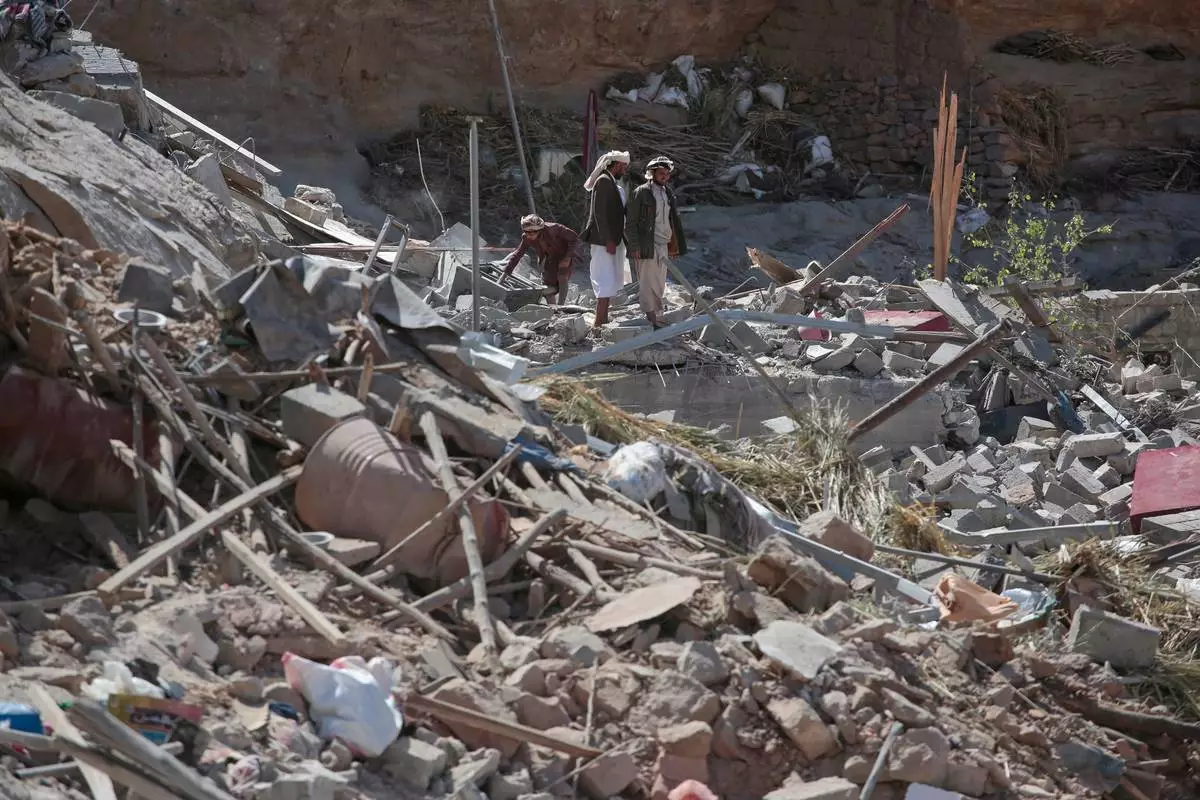
People search through debris at the site of an airstrike by Saudi-backed government forces in Al-Shariya village, east of Sanaa, Yemen, Monday, Nov. 9, 2026. (AP Photo/Osamah Abdulrahman)
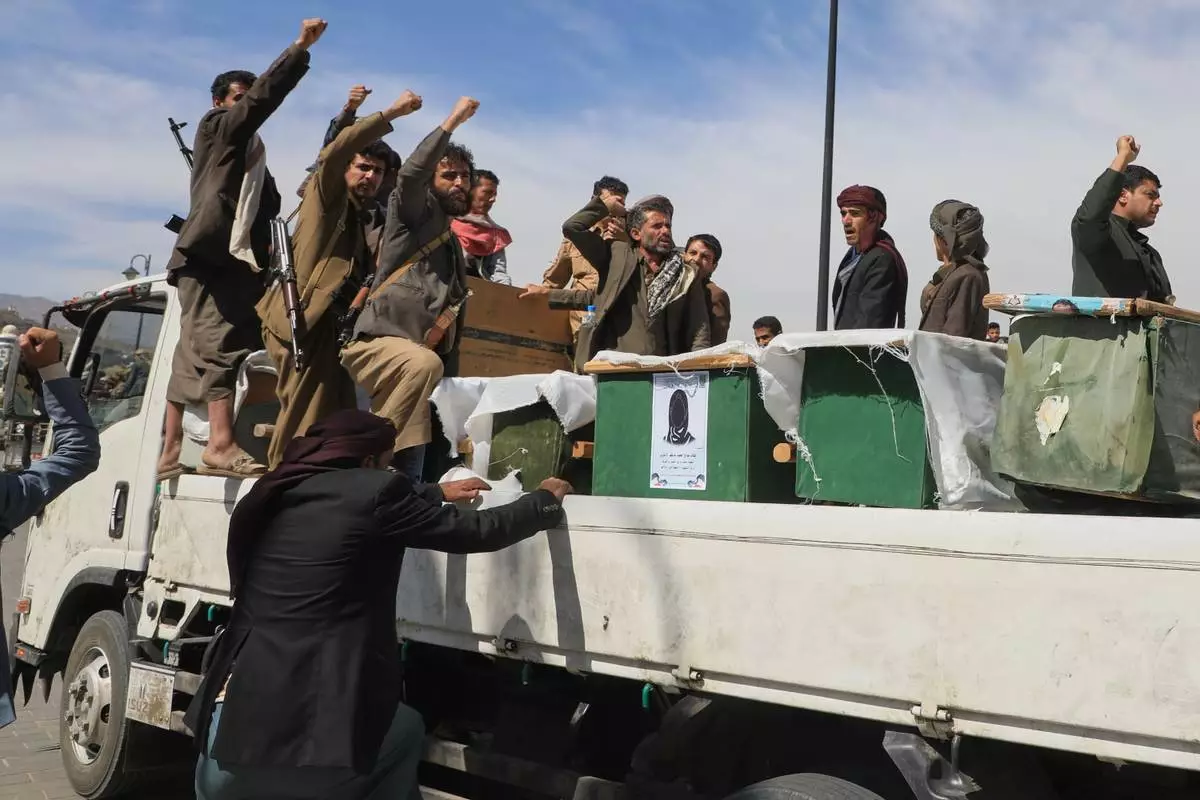
Mourners ride on a truck carrying coffins during the funeral of people killed in recent airstrikes on al-Shariya village, northeast of Sanaa, which Houthi authorities blamed on Saudi Arabia, in Houthi-controlled Sanaa, Yemen, Wednesday, Nov. 11, 2026. (AP Photo/Osamah Abdulrahman)