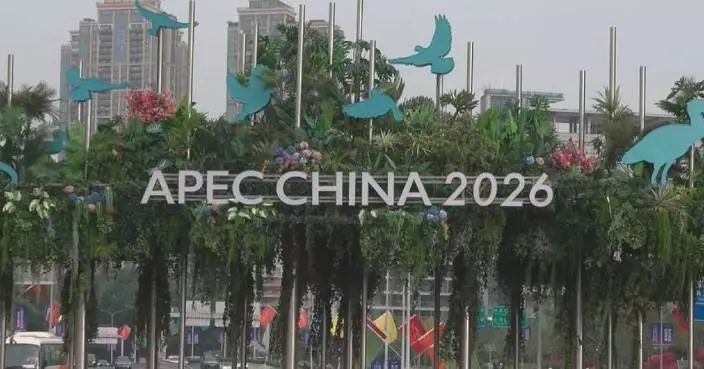
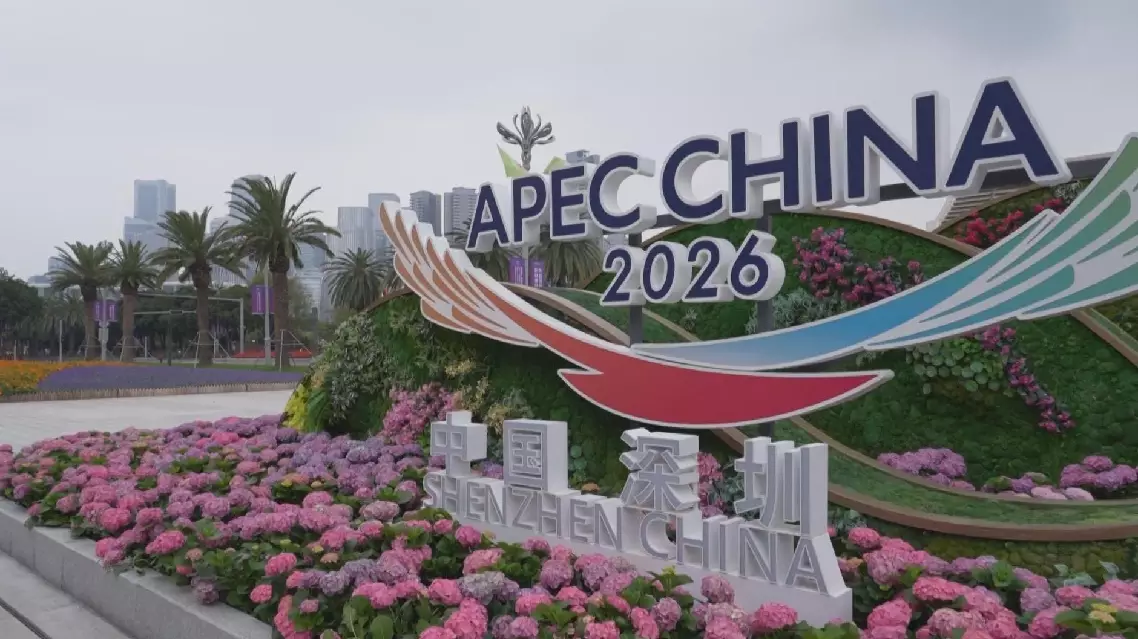
The 2026 Asia-Pacific Economic Cooperation (APEC) CEO Summit in south China's Shenzhen has put supply chain cooperation and new market opportunities at the center of the regional business agenda, drawing more than 2,000 political and business representatives and 115 Fortune Global 500 companies intent on turning consensus into concrete collaboration.
Under the theme "To Prosper and Win the Future Together," the two-day summit, which wrapped up on Wednesday, provided the business community with a platform to deepen supply chain coordination and explore international market opportunities across the Asia-Pacific.
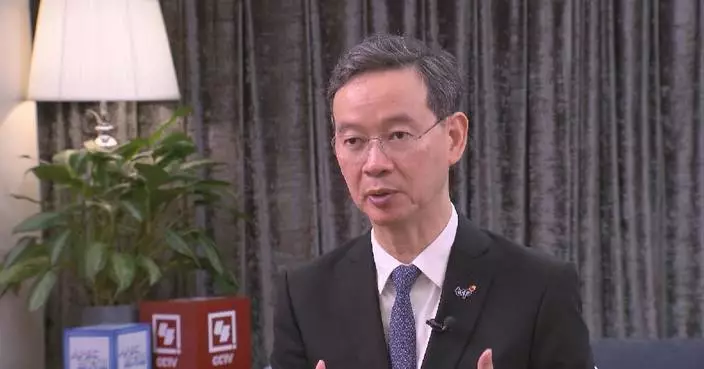
Shenzhen made the case on its own, having risen from a quiet border town to a global technology and manufacturing hub in barely a generation, a record that Annette Gregg, CEO of the World Trade Centers Association, regards as the clearest argument for the city's importance to international business.
"I mean, to look at the growth that's happened here in just a little over 30 years is really quite extraordinary. And it's due because the government and the government leaders and the trade leaders have all had a long-term vision. They have made favorable trade policies. They've created a supply chain infrastructure for businesses to thrive here. For us and our members, it's a very, very important market and both the source market for consumers and also a place to develop their product and export out of here," she said.
From the Canadian side, the optimism rests on hard numbers and a widening agenda for clean-energy collaboration, according to Bijan Ahmadi, executive director of the Canada China Business Council.
"Over the first three quarters of this year, we know that Canadian exports to China have increased by 40 percent. So we'll see great partnerships that can be formed between Chinese automakers, EV automakers and Canadian companies, but not just in that sector. That's just an example of one area in the clean tech space that our companies can cooperate together in the battery technology, solar, wind, hydrogen, carbon capture. That's an area that actually Canadian companies are very strong at," he said.
Among Chinese manufacturers, the conviction runs just as deep, with Shi Zhengbing, chairman of Guangdong Taili Technology Group, arguing that global economic integration remains the prevailing trend.
"The world is not shrinking; in fact, it is opening up more. Everyone is looking for ways to complement supply chains and cooperate. No single economy can do everything independently. We need deep integration of supply chains and industrial chains," he said.
APEC CEO Summit highlights supply chain cooperation
Corporate leaders have held in-depth discussions on the digital economy, artificial intelligence and other core issues at the Asia-Pacific Economic Cooperation (APEC) CEO Summit 2026, which opened Tuesday in Shenzhen, south China's Guangdong Province.
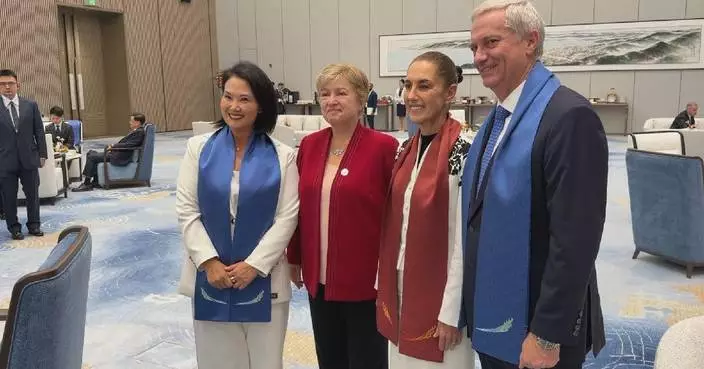
As an important part of the 2026 APEC Economic Leaders' Week, the two-day summit has brought together more than 2,000 political and business delegates from 21 APEC member economies and 13 non-member regions.
Participants include representatives from 115 Fortune Global 500 companies, as well as heads of several international organizations and business associations from Russia, the United States and other economies.
On the sidelines of the summit, corporate leaders said all parties should deepen cooperation in the digital economy and artificial intelligence, promote green and low-carbon transformation, and continuously turn innovation advantages into growth momentum for the Asia-Pacific economy.
"In fact, China is very determined to invest in AI, and the investment period is also very long. So we have realized AI applications in many scenarios. For example, in unmanned driving, there are already more than 20 Chinese cities with unmanned operations. Most other APEC economies have not allowed unmanned vehicles on the road, and I think there is a lot of room for cooperation in this area. We are looking forward to more cooperation at the application level," said Li Yanhong, chairman and CEO of Baidu.
Deeper in the technology stack, APEC delegates turned their attention to computing power, the heavy lifting behind the region's AI ambitions.
"Computing power is the most important infrastructure for the future development of artificial intelligence. It must be jointly promoted and completed by the government and industry. This time, we talked with several APEC economies about how to cooperate on future computing power. China's computing power may support the development of the AI industry and applications in the Asia-Pacific region and other countries," said Li Jun, president of Sugon, a leading Chinese server and high-performance computing company.
Beyond the digital frontier, participants called for a comprehensive connectivity network, greater cooperation in trade digitalization, cross-border e-commerce and smart customs, and deeper international collaboration in industrial and supply chains.
"In the APEC economies, I think both the industrial chain and the supply chain in China are very stable and strong, so the manufacturing industry in China is also very flexible, allowing consumers of APEC economies to enjoy a stronger experience," said Lei Jun, CEO of Xiaomi Group.

Corporate leaders gather in Shenzhen for APEC CEO Summit, eyeing digital economy, AI