Business leaders from across the Asia-Pacific have found fresh openings in the speech Chinese President Xi Jinping delivered at the Asia-Pacific Economic Cooperation (APEC) CEO Summit in Shenzhen on Wednesday, from closer ties between bay areas to smoother cross-border trade.
The first of those openings centers on Xi's announcement that China supports establishing a World Association for Bay Areas Economic Cooperation to bring such regions closer together.
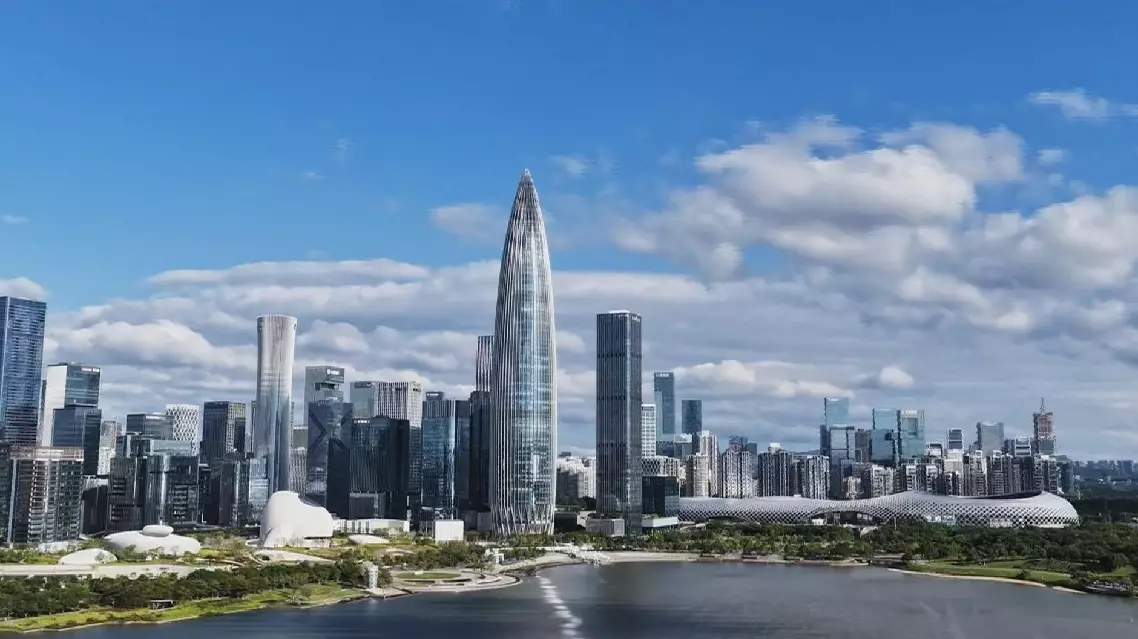
For companies already doing business in the Guangdong-Hong Kong-Macao Greater Bay Area, a cluster comprised of Hong Kong, Macao and nine mainland cities that ranks among the world's largest urban economies, the question is how the new body could improve access to its manufacturing and financial resources.
"Think of the entrepreneurs from all over the world who have been using the Greater Bay Area for production, for finance and for a lot of things. What we hope that this initiative is going to be able to do is actually further enhance our ability to access this area," said Jacob Cooke, co-founder and CEO of WPIC Marketing + Technologies, an e-commerce and digital marketing firm.
Some of the most direct gains, though, lie closest to the factory floor, as Dong Mingzhu, chairperson of Gree Electric Appliances, a major Chinese home appliance maker headquartered in the bay area, knows from experience.
"The Greater Bay Area's development could offer a path for the wider Asia-Pacific. I think manufacturers could find more opportunities there," Dong said.
Seen from Hong Kong, deeper integration carries the appeal of reinforcing advantages that the city's businesses have long counted on.
"Hong Kong can play an increasingly important role. Drawing on the rest of China and reaching out to the world, it can act as a super-connector -- a hub for capital, talent, innovation and professional services," said Carl Wu, co-founder and CEO of New Frontier Group.
Xi also called for free and open trade and investment, including progress toward a Free Trade Area of the Asia-Pacific, a message that resonated with participants still contending with trade barriers.
"[It's] just because China opened its economy to the outside world and has been thriving in the growth, the economic growth all over the world," said Sergio Ley, an APEC Business Advisory Council member for Mexico and a former Mexican ambassador to China.
George Monize, managing director and head of Indo-Pacific at Export Development Canada, the country's export credit agency, saw ample room to expand business ties between the two countries.
"There's a lot more that we could be doing together as countries. And I'm referring to -- I'm on the Canadian side, and I think about the Chinese side. So joint prosperity, collaboration, cooperation, openness to do business," Monize said.
The most practical route, in the view of Brett O'Riley, an APEC Business Advisory Council member for New Zealand, ran through the mechanics of trade itself.
"Paperless trade is really important. And non-tariff barriers are still a big issue for us in the region. That's an area that we can focus on where we can lower those costs," O'Riley said.
As China's ties with the Asia-Pacific deepen, Xi said the country's 15th Five-Year Plan (2026-2030), the national blueprint charting its economic and social priorities, opens up opportunities for growth across the region and beyond.
"In his keynote speech, President Xi described the 15th Five-Year Plan as an invitation from China to businesses around the world to cooperate. That brought home to us how closely China's development is tied to opportunities for the rest of the world," said Miao Hangen, chairman of Shenghong Holding Group.
The conversation turned next to artificial intelligence, where delegates weighed the promise of closer innovation ties against the political and practical limits that still apply.
"Australia and Australian business want to cooperate with China on artificial intelligence, or AI, within the constraints and confines of what Australian government rules allow," said Rhys Roberts, national president and chair of the Australia China Business Council.
"[We're] preparing Canadians for a future economy that's gonna be more intertwined in the supply chain by energy. And that's also intertwined with minerals, intertwined with technology, for AI data centers or other provisioning in terms of technology improvement," said Joseph Fung, an APEC Business Advisory Council member for Canada and vice-chair of its Sustainability Working Group.
As the summit drew to a close, delegates said they hoped more open markets would draw the region's economies closer together, deeper innovation-driven cooperation would unlock new space for growth, and the commitments made in Shenzhen would mature into concrete projects, investment and fresh development opportunities.
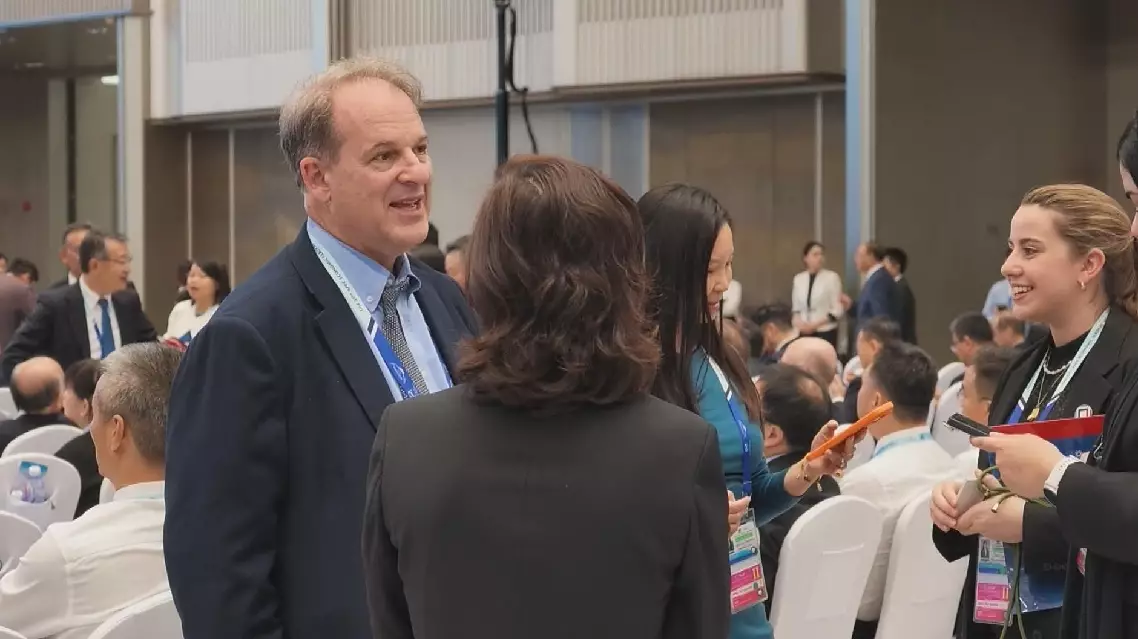
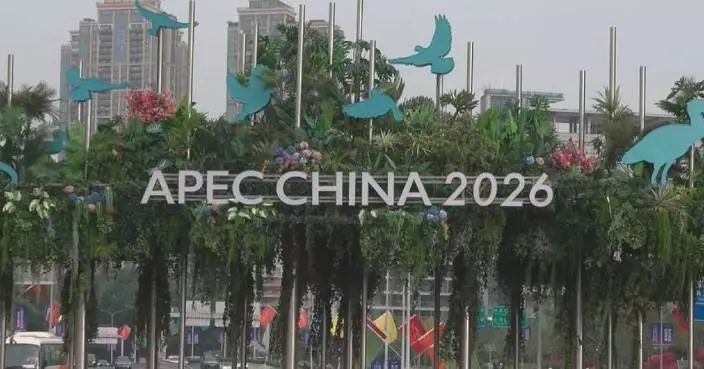
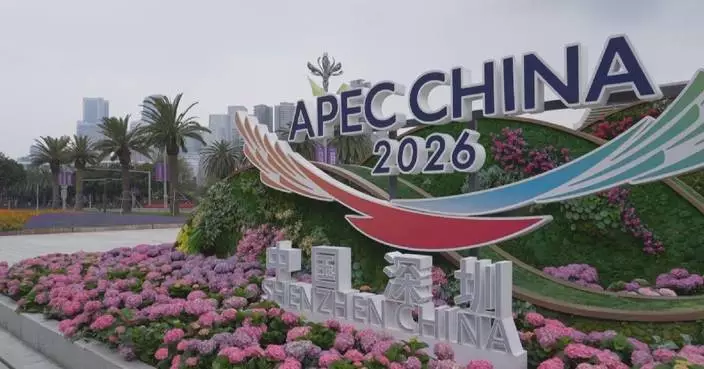
The APEC CEO Summit 2026, a two-day gathering in Shenzhen in south China's Guangdong Province, attracted more than 2,000 representatives from 21 APEC economies and 13 non-APEC economies, including Britain, France, Germany and Switzerland.
Held annually since 1996, the event serves as the highest-level platform for leaders of APEC economies and business representatives to discuss cooperation and advance regional economic development.
APEC business leaders eye bay area links and easier trade after Xi speech