PARIS (AP) — Matthieu Jalibert will make his return from two months out with a thigh injury after being selected by France on Thursday for the Nations Championshiprugby match against Argentina.
Jalibert has made a quicker-than-expected recovery from a right thigh tear he sustained while playing for Bordeaux-Begles in the French Top 14 on Sept. 20, and that is a huge boost for France coach Fabien Galthié.
So depleted were France's resources at flyhalf — with Romain Ntamack, Antoine Hastoy and the versatile Thomas Ramos also injured — that Galthié opted to give captain Antoine Dupont the No. 10 jersey for last Friday's match against South Africa, which the French won 21-19 in thrilling style.
Galthié described Dupont and scrumhalf Maxime Lucu, who alternated with his captain at No. 10 during the match, as “icons” before the game but will be happy to see Jalibert back in the team on Saturday for his 43rd cap.
Lucu has been demoted to the bench as Dupont’s scrumhalf backup at the Stade de France.
At hooker, Peato Mauvaka replaces Julien Marchand, who was a late withdrawal against South Africa after hurting himself in the warmup.
France leads the northern hemisphere standings in the inaugural tournament and is guaranteed to reach the Nov. 29 final with a bonus-point win against Argentina.
See AP’s full rugby coverage here

FILE - France's Antoine Dupont carries the ball during the Autumn Nations Series rugby international between France and Argentina at the Stade de France stadium at Saint-Denis on the outskirts of Paris, Friday, Nov. 22, 2024. (AP Photo/Thibault Camus, File)

FILE - In this file photo dated Monday, Jan. 29, 2018, French rugby player Matthieu Jalibert during a training session at the National Rugby Center in Marcoussis, south of Paris, France. Matthieu Jalibert replaces the injured Romain Ntamack at flyhalf after France coach Fabien Galthie made eight changes to his team Friday Nov. 20, 2020, for the Autumn Nations Cup match against Scotland on upcoming Sunday Nov. 22. (AP Photo/Michel Euler, FILE)
The Iran-backed Houthi rebels said airstrikes in Yemen killed at least 15 people Thursday while the Saudi-led coalition battling the rebels reported that debris from a Houthi-fired missile fell on the Saudi capital, where a witness reported damage in the financial district.
Meanwhile, Iran said two supertankers carrying over 4 million barrels of crude oil caught fire after striking mines in the Strait of Hormuz. In Israel, opponents accused Israeli Prime Minister Benjamin Netanyahu of fomenting hate that led to a fire being set at a mosque there.
Saudi officials told allies that the conflict with the Houthis could last another six months after Iran widened its attacks on its Gulf Arab neighbors on Wednesday.
Here is the latest news from the Middle East on Thursday. Read our full coverage here.
The Saudi-led coalition accused the Houthis in Yemen of carrying out an attack on the Saudi capital of Riyadh, saying debris from a “missile threat” had fallen on the city.
In Riyadh’s financial district, damage was visible to one of the tallest buildings, the Public Investment Fund Tower, according to a witness, who spoke on condition of anonymity because of safety concerns.
Residents in Riyadh heard a loud explosion after receiving a warning of incoming fire.
The Houthis did not immediately claim responsibility for the attack, but the rebel group has repeatedly said it targeted Riyadh and its financial district in recent weeks, including on Wednesday.
The attacks on Riyadh follow a campaign of major airstrikes by the kingdom this week on Houthi-held territory in Yemen. The Saudi-led coalition also said Thursday it intercepted and destroyed missiles in the southern region overnight.
— By Victoria Eastwood
Airstrikes killed a total of 15 people in Yemen’s port city of Mokha and in Taiz province Thursday, Houthi-run Health Ministry spokesperson Anees al-Asbahi said.
He said that an airstrike on a rest stop in Mokha killed 10 people and wounded nine others, while another strike in Taiz province targeted workers repairing a road, killing five and wounding five others.
Al-Asbahi said the attacks were carried out by the Saudi-backed forces. This claim could not be independently verified.
The Houthi-run media office also reported strikes on Yemen’s rebel-held capital, Sanaa, early Thursday.
The amount of crude being shipped through the Strait of Hormuz appears to have fallen since the start of November as Iran has increased its attacks on shipping.
However, substantial amounts of Mideast crude are still reaching a global economy that is increasingly well supplied with oil.
Crude shipments through the strait alone are down to 8.5 million barrels a day, or half the prewar levels reached at the start of November, according to preliminary figures through Monday from marine data firm Kpler. Those numbers, however, could rise in coming days, Kpler said in a media briefing Wednesday.
Oil shipments out of the Mideast by all available routes — including both a U.S.-protected tanker route that goes through the Strait of Hormuz along the coast of Oman and pipelines that skirt the strait — amounted to 15 million barrels a day in the same period, according to Kpler. That represents about 64% of prewar flows, down from 97% in October.
Tanker operators and crews willing to risk using the U.S. route transit the strait at night with radio location systems and mobile phones turned off to avoid Iranian attacks. They then transfer oil to other tankers waiting in the Gulf of Oman, which ship it to customers in Asia and return to the Persian Gulf to repeat the process.
That has kept oil flowing, but at enormous cost because of skyrocketing rates for chartering tankers. And shipments of other key energy products such as liquefied natural gas and diesel remain well below prewar levels.
Iran’s Revolutionary Guard said two supertankers caught fire after hitting the mines on an “unauthorized route” in the strait, according to a statement on Iran's state broadcaster.
It said the tankers were carrying over 4 million barrels of crude and were transiting through the southern side of the strait under the protection of U.S. “fighter jets and surveillance drones."
The Iranian claims could not be independently verified. U.S. Central Command, which oversees U.S. forces in the Middle East, did not immediately comment.
Iran continues to warn ships not to pass through the strategic shipping lane without approval from Tehran. It reiterated that warning on Thursday, saying that tankers cooperating with the U.S. military will be “dealt with decisively.”
In Israel, members of the opposition bloc that ran to unseat Netanyahu accused him of fomenting hate against Palestinian citizens that they said was the reason for a fire set at a mosque in the north of Israel early Thursday.
No group claimed responsibility for the attack in the village of Dahi, which also included phrases that were graffitied on a nearby wall expressing support for Israel’s settler movement. Israeli police said they were investigating.
“The rampant incitement against Israeli Arabs must stop,” Yair Lapid, a member of the opposition bloc, said in a statement.
The leaders of Arab-led parties linked the attack to Netanyahu’s unsubstantiated claims that Palestinian citizens had “stolen” the recent election.
“This is not an isolated incident, but a direct result of the far right’s incitement campaign against Arab citizens,” Mansour Abbas, the head of the Ra’am party, said in a statement.
Eastwood and Ezzidin reported from Cairo and McHugh reported from Frankfurt, Germany.
This report will be updated throughout the day as new developments emerge.
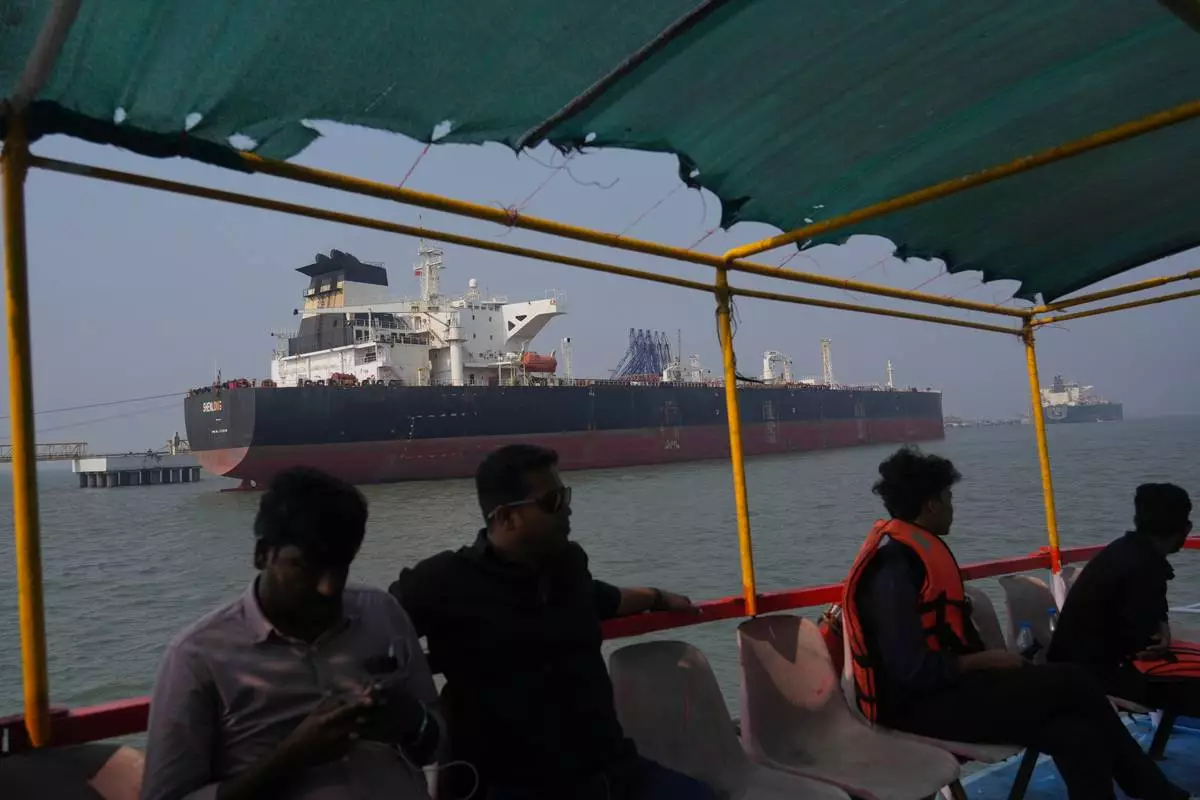
FILE - Liberia-flagged tanker Shenlong Suezmax, carrying crude oil from Saudi Arabia, that arrived clearing the Strait of Hormuz, is visible at the Mumbai Port in Mumbai, India, Thursday, March 12, 2026. (AP Photo/Rafiq Maqbool, File)
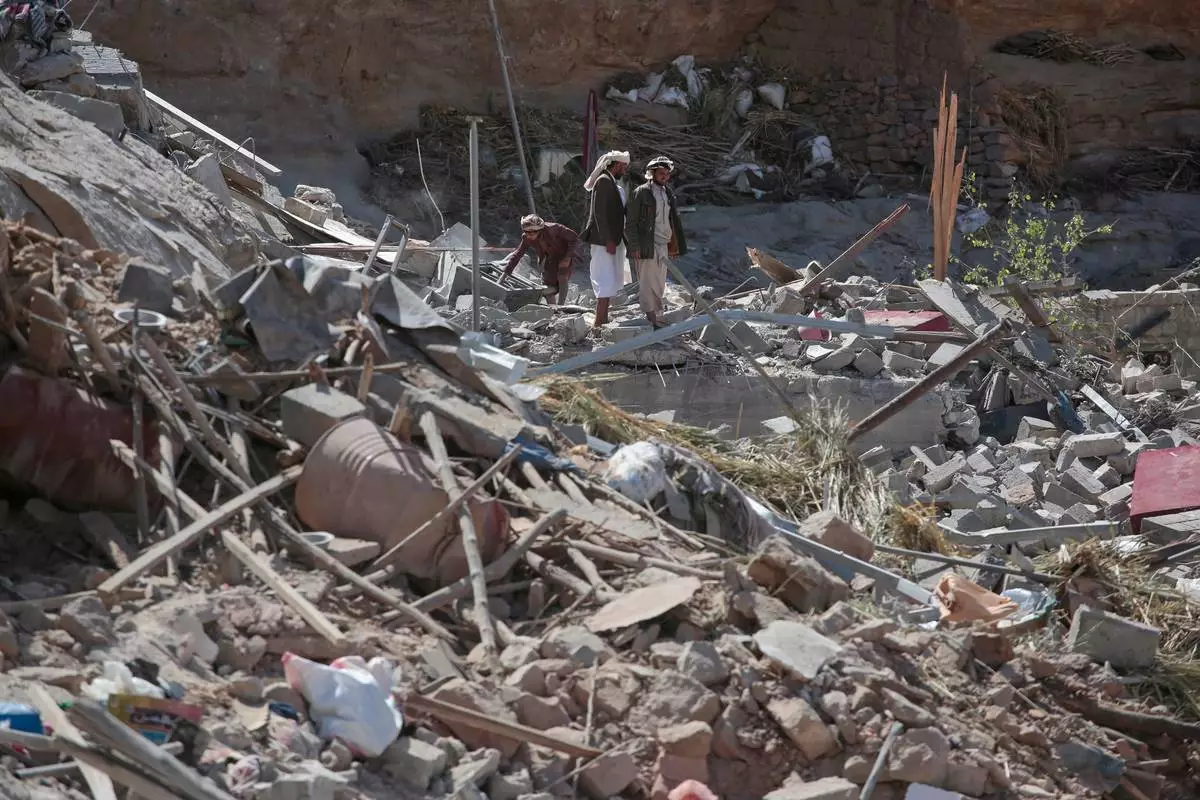
People search through debris at the site of an airstrike by Saudi-backed government forces in Al-Shariya village, east of Sanaa, Yemen, Monday, Nov. 9, 2026. (AP Photo/Osamah Abdulrahman)
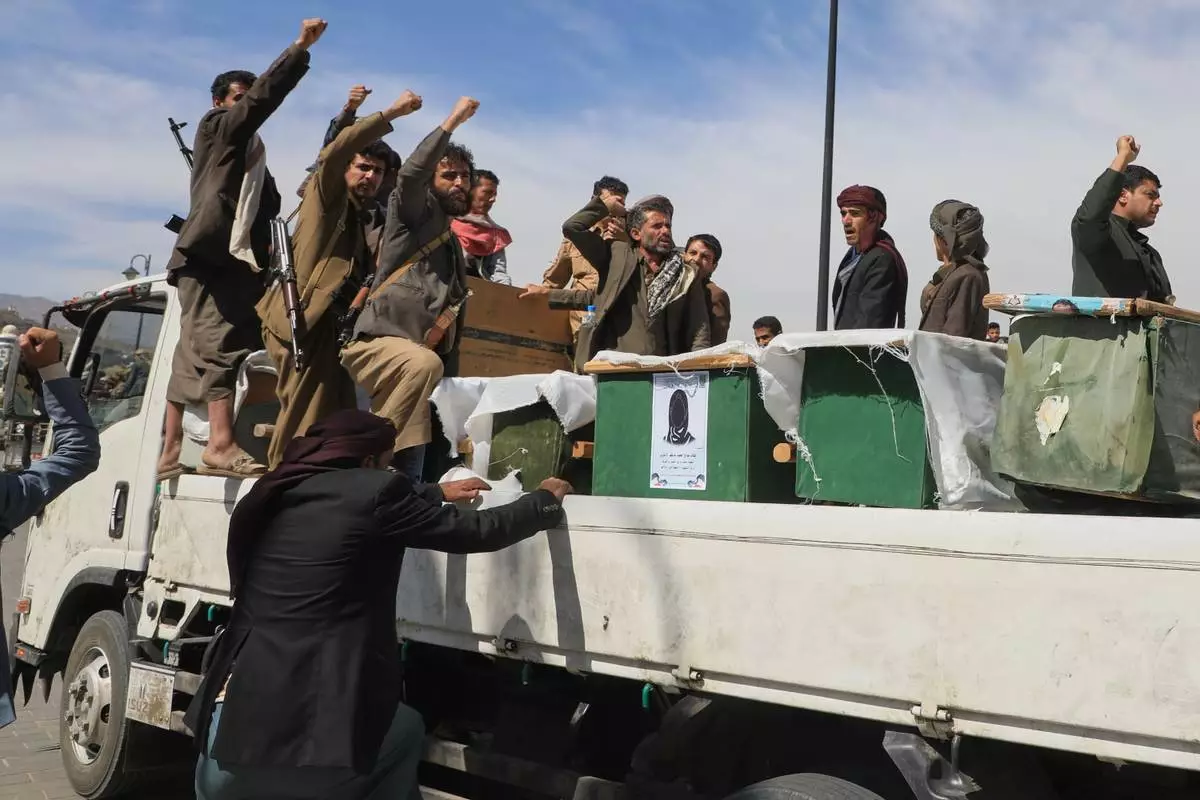
Mourners ride on a truck carrying coffins during the funeral of people killed in recent airstrikes on al-Shariya village, northeast of Sanaa, which Houthi authorities blamed on Saudi Arabia, in Houthi-controlled Sanaa, Yemen, Wednesday, Nov. 11, 2026. (AP Photo/Osamah Abdulrahman)