Skip to Content Facebook Feature Image

Trump wants the Supreme Court to let his EPA cancel billions in Biden-era climate grants

News

Trump wants the Supreme Court to let his EPA cancel billions in Biden-era climate grants
News

News

Trump wants the Supreme Court to let his EPA cancel billions in Biden-era climate grants

2026-11-19 22:24 Last Updated At:22:30

WASHINGTON (AP) — The Trump administration is appealing to the Supreme Court in its push to cut $16 billion in grants for a climate program, the largest grant cancellation case ever and one that could affect Republican President Donald Trump's push to defund the priorities of prior administrations.

The justices have not said whether they will take the case.

If they do, it could resolve a fight over grants that the Environmental Protection Agency rescinded in 2025. Democratic President Joe Biden's administration awarded the money under a 2022 law to finance clean energy projects and accelerate the transition from fossil fuels. Trump has targeted other grants, such as those considered to be supporting diversity, equity and inclusion. A favorable outcome at the high court could help his administration defeat other grant lawsuits, according to the government's filing this month.

At issue is the Greenhouse Gas Reduction Fund, commonly referred to as a “green bank." Climate United Fund and other nonprofits were picked to operate the program authorized by the 2022 Inflation Reduction Act. If the justices decline to take the case, the groups could regain access to their money because a federal appeals court already ruled in their favor.

The EPA canceled the nonprofits' grants soon after the start of Trump’s second term in January 2025, with EPA Administrator Lee Zeldin accusing the groups of mismanagement and potential fraud.

The nonprofits' lawsuit argues that the EPA broke the law and violated the Constitution. It demands access to their grant money so they can run the program. The administration says it is immune from legal and constitutional claims and contends the groups filed their case in the wrong court.

If the justices eventually side with the EPA, it could "have far-reaching implications for the government’s ability to reshape grant programs and to terminate grants that do not advance a particular administration’s policy priorities,” said Romany Webb, deputy director of the Sabin Center for Climate Change Law at Columbia University who has supported Climate United’s arguments.

The EPA says the $16 billion at stake is the largest grant cancellation case ever and is another reason it warrants Supreme Court review.

The courts have so far tried to thwart the administration's priorities, the EPA wrote in its petition to the Supreme Court.

The EPA and Climate United declined to comment.

In August, a divided federal appeals court in Washington sided with the nonprofits and said the administration improperly terminated the grants. The release of any money was paused to give the Supreme Court a chance to weigh in.

The justices ruled for the administration recently in decisions over canceled National Institutes of Health grants and teacher training grants.

The administration has built its arguments around the Tucker Act, which gives the Court of Federal Claims exclusive authority over contract disputes. The claims court can award money, but not direct the government to take certain actions in the way federal courts can.

The nonprofits argued the way the EPA canceled the grants did not upend a contract with the federal government, but was done illegally and undercut spending on entire programs Congress had required, a constitutional violation. The government argues the matter is a contract dispute.

The administration’s broad use of contract cancellations to enact policies is a novel approach, according to Bob Wagman, president of the Court of Federal Claims Bar Association and a partner at the firm White & Case.

“I would hate to think that the only programs that could be supported have a four-year life,” he said, mentioning cancer research as an example of a grant program that would need longer than a single administration to pay off. “It is just not good for the country.”

Zeldin last year told Fox News that he suspected the green bank “was a clear-cut case of waste and abuse.”

U.S. District Judge Tanya Chutkan said that when the government was asked for evidence of fraud, the EPA did not provide it and shifted its position to more general concerns about the level of oversight over the program. Chutkan said the government cannot terminate the contracts in violation of the law and that the groups should have access to some of their frozen money, which is held in an account at Citibank.

The administration has been adamant that nothing requires them to make these grants to these groups.

Passage of the Inflation Reduction Act created the green bank. Trump’s tax and spending bill passed last year rescinded part of the law that established the bank and the money that had not already been obligated to its recipients. The EPA has said that those changes mean it should not have to release any money to the groups.

Associated Press writer Jennifer McDermott in Providence, R.I., contributed to this report.

The Associated Press receives support from the Walton Family Foundation for coverage of water and environmental policy. The AP is solely responsible for all content. For all of AP’s environmental coverage, visit https://apnews.com/hub/climate-and-environment
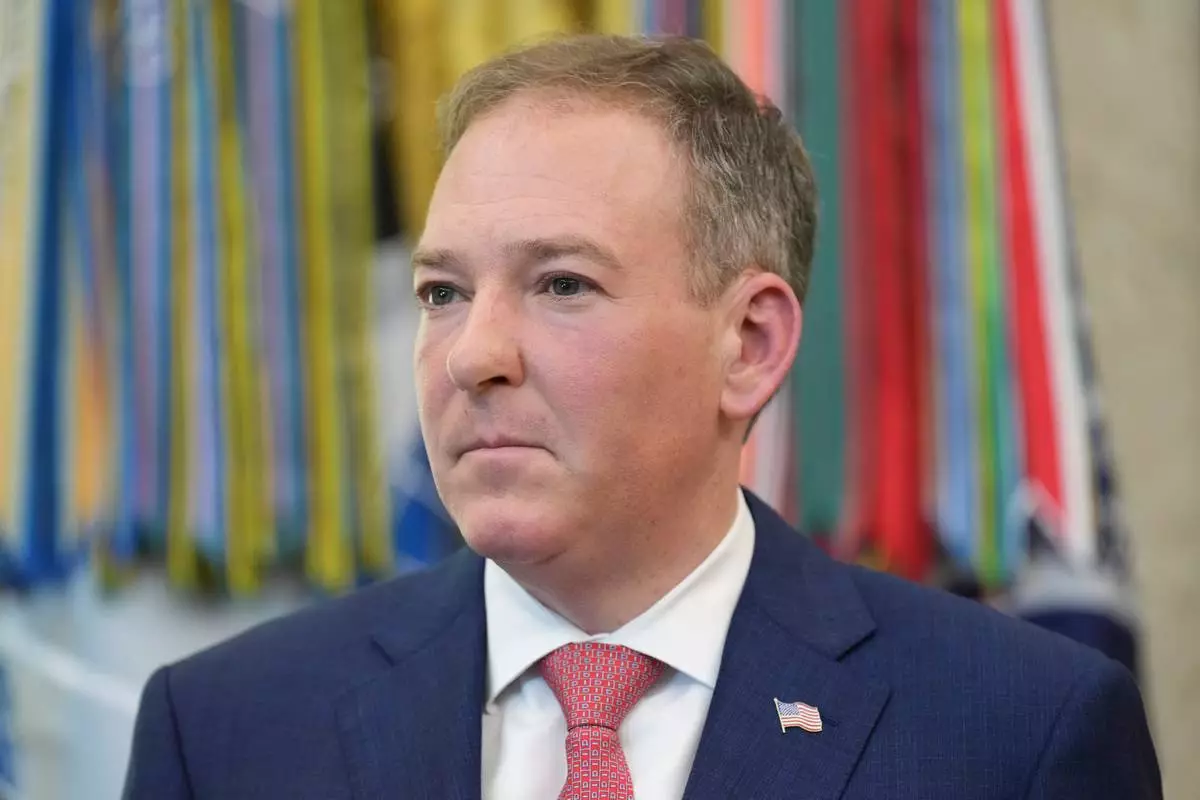
FILE - Environmental Protection Agency administrator Lee Zeldin listens as President Donald Trump speaks in the Oval Office of the White House, June 29, 2026, in Washington. (AP Photo/Jacquelyn Martin, File)
FILE - Environmental Protection Agency administrator Lee Zeldin listens as President Donald Trump speaks in the Oval Office of the White House, June 29, 2026, in Washington. (AP Photo/Jacquelyn Martin, File)

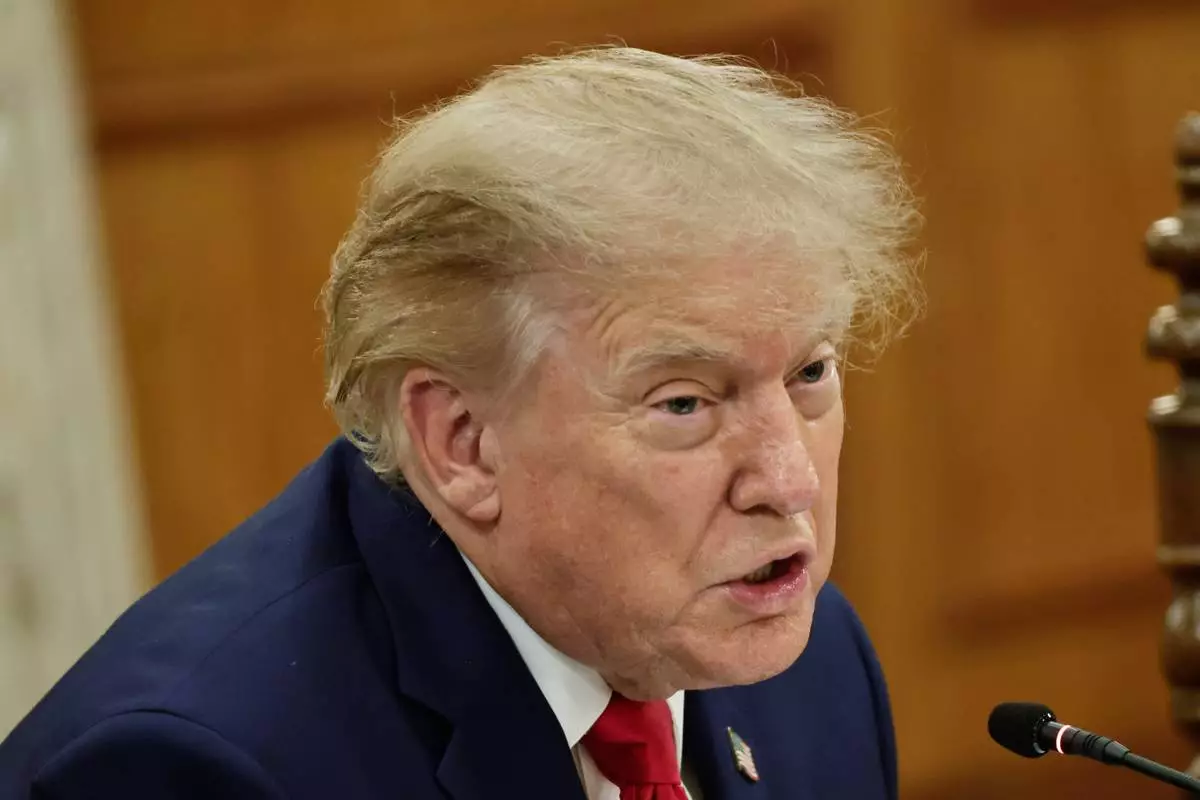
President Donald Trump speaks during a bilateral meeting with Philippine President Ferdinand Marcos Jr. at the Malacanang Presidential Palace in Manila, Philippines, Wednesday, Nov. 18, 2026. (Rolex Dela Pena/Pool Photo via AP)
President Donald Trump speaks during a bilateral meeting with Philippine President Ferdinand Marcos Jr. at the Malacanang Presidential Palace in Manila, Philippines, Wednesday, Nov. 18, 2026. (Rolex Dela Pena/Pool Photo via AP)

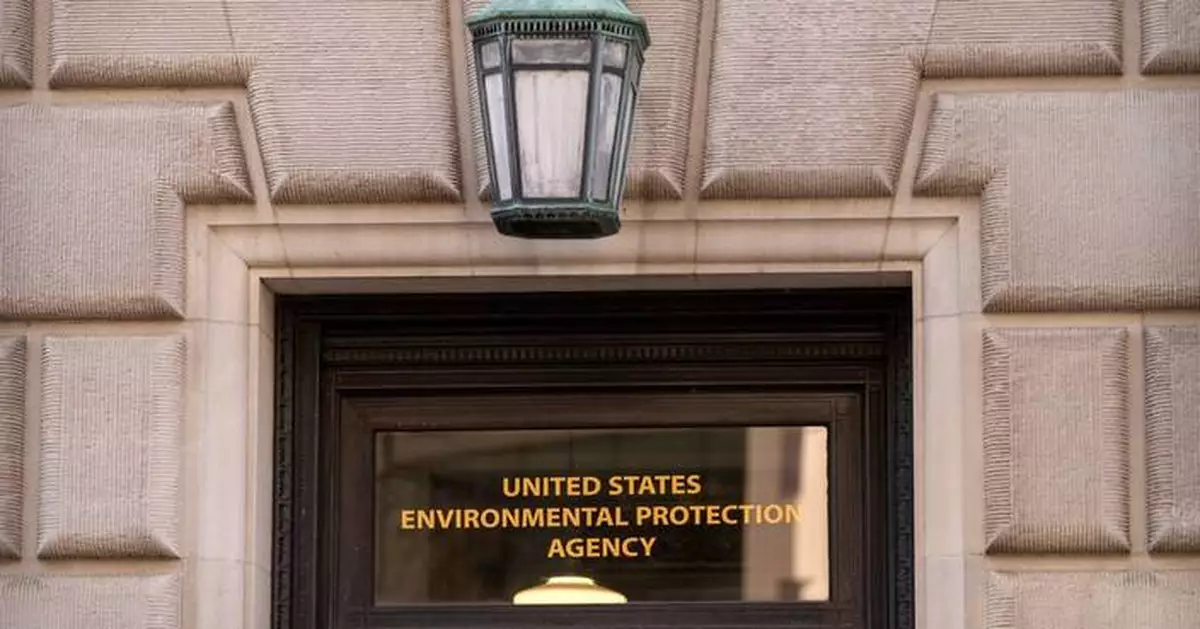
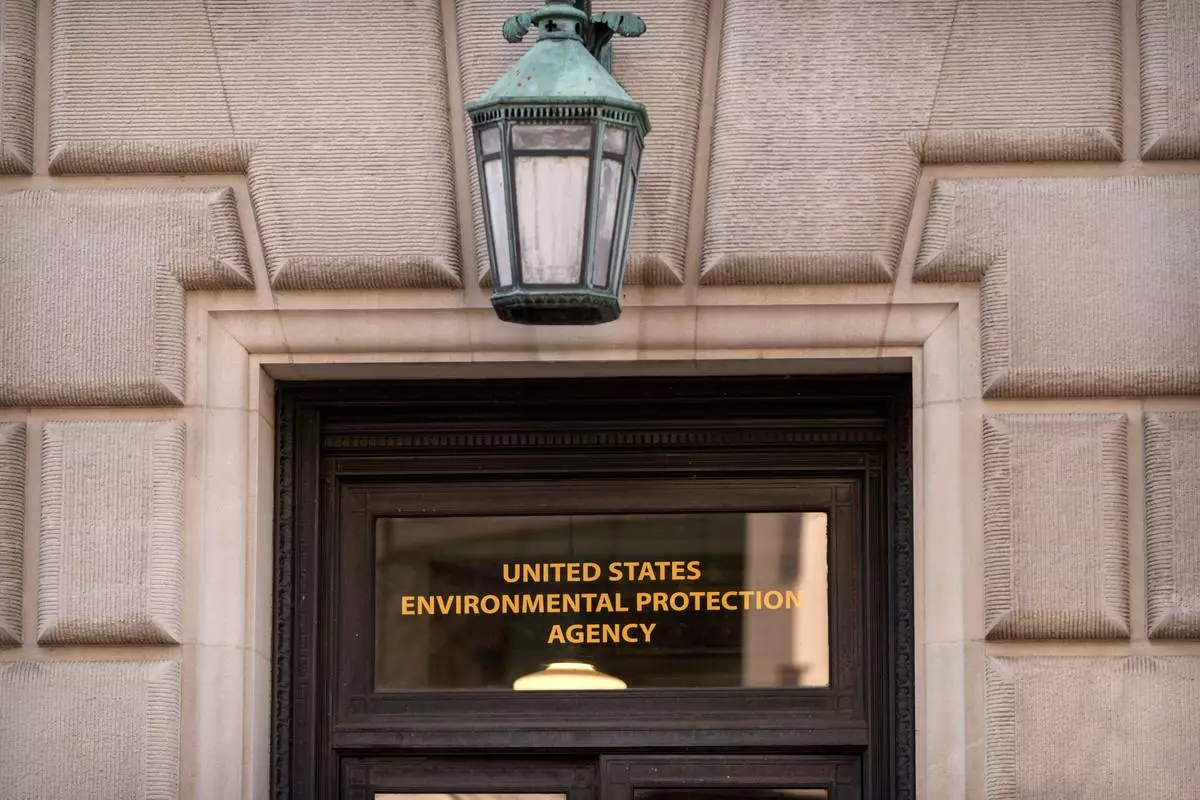
FILE - A sign on the headquarters of the Environmental Protection Agency is displayed March 12, 2025, in Washington. (AP Photo/Mark Schiefelbein, File)

FILE - A sign on the headquarters of the Environmental Protection Agency is displayed March 12, 2025, in Washington. (AP Photo/Mark Schiefelbein, File)
TOKYO (AP) — Japan and India agreed to enhance their military and arms industry cooperation, including allowing Japanese troops to conduct live-fire missile training at Indian firing ranges in future joint drills, as their defense and foreign ministers met Thursday in Tokyo.

Japanese Defense Minister Shinjiro Koizumi and Foreign Minister Toshimitsu Motegi joined their Indian counterparts, Rajnath Singh and S. Jaishankar, at the “two-plus-two" meeting in Tokyo.

The two Asian powers have been rapidly deepening security, defense and economic ties in recent years amid growing tension and uncertainty in the region. India and Japan also are part of the Quad grouping with the United States and Australia that aims to counter China’s influence.

“Through our cooperation, we hope to serve as the anchor for the Indo-Pacific region,” Motegi told a joint news conference after the talks.

This defense industrial cooperation will proceed under the framework of “design with Japan, make in India,” Singh said.

As an island nation with limited space to safely conduct missile tests and training, Japan needs defense partners that can provide facilities for its military to practice live-fire drills essential to improving missile capability. Japan struck a similar arrangement with Australia this year.

Japan has been fortifying defenses in its southwestern region to deter China's growing military activity and started deploying long-range missiles this year, including Type-12 surface-to-ship missiles mobilized in Kumamoto on the southern main island.

Japan has also significantly relaxed its postwar pacifist principles in recent years and lifted a ban on lethal weapons exports as part of its security, defense and economic growth strategies.

On Thursday, the four ministers agreed to promote cooperation in defense equipment and technology and to accelerate negotiations toward achieving the transfer of Japanese naval radio antenna UNICORN to India.

They reaffirmed deepening cooperation in a range of areas including air and maritime security, information sharing, search and rescue operations, naval shipbuilding and artificial intelligence, according to a ministers' joint statement after the talks.

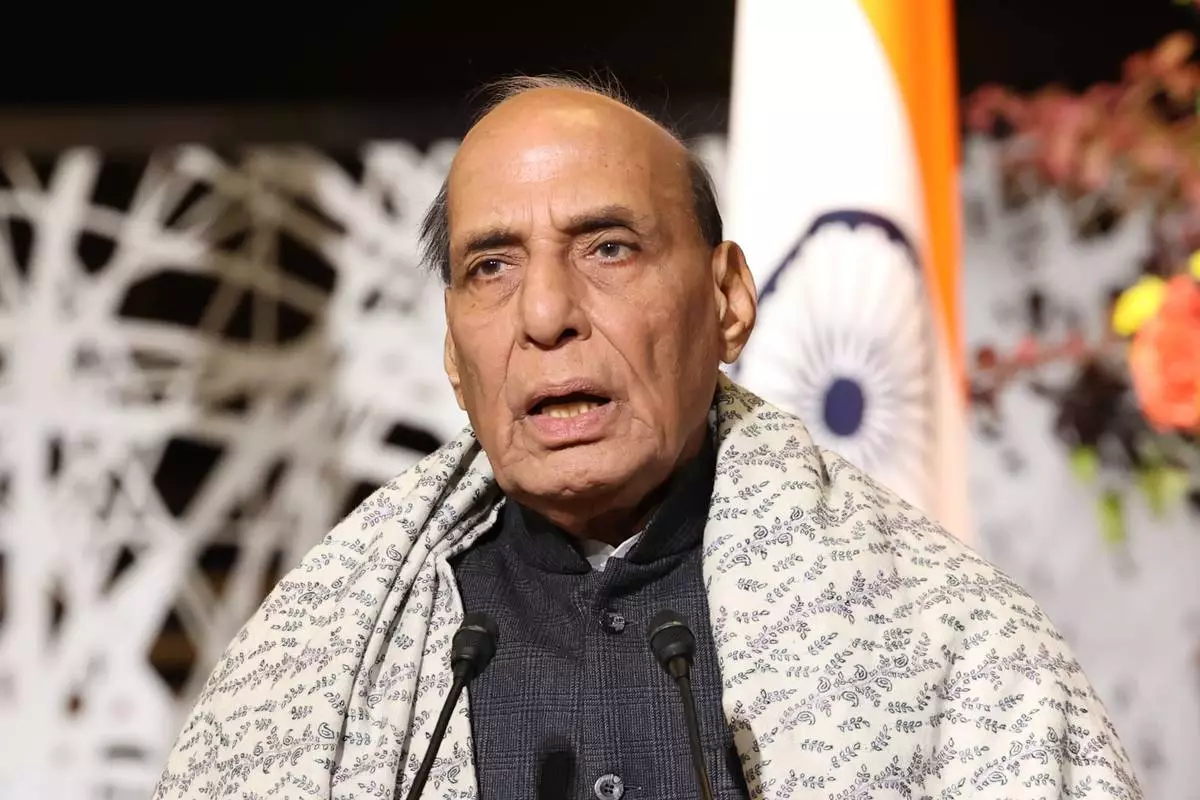
Rajnath Singh, Defence Minister of India, speaks during a joint press conference of the Japan-India 2+2 Foreign and Defense Ministerial Meeting at Iikura Guest House Thursday, Nov. 19, 2026 in Tokyo. (Rodrigo Reyes Marin/Pool Photo via AP)

Rajnath Singh, Defence Minister of India, speaks during a joint press conference of the Japan-India 2+2 Foreign and Defense Ministerial Meeting at Iikura Guest House Thursday, Nov. 19, 2026 in Tokyo. (Rodrigo Reyes Marin/Pool Photo via AP)

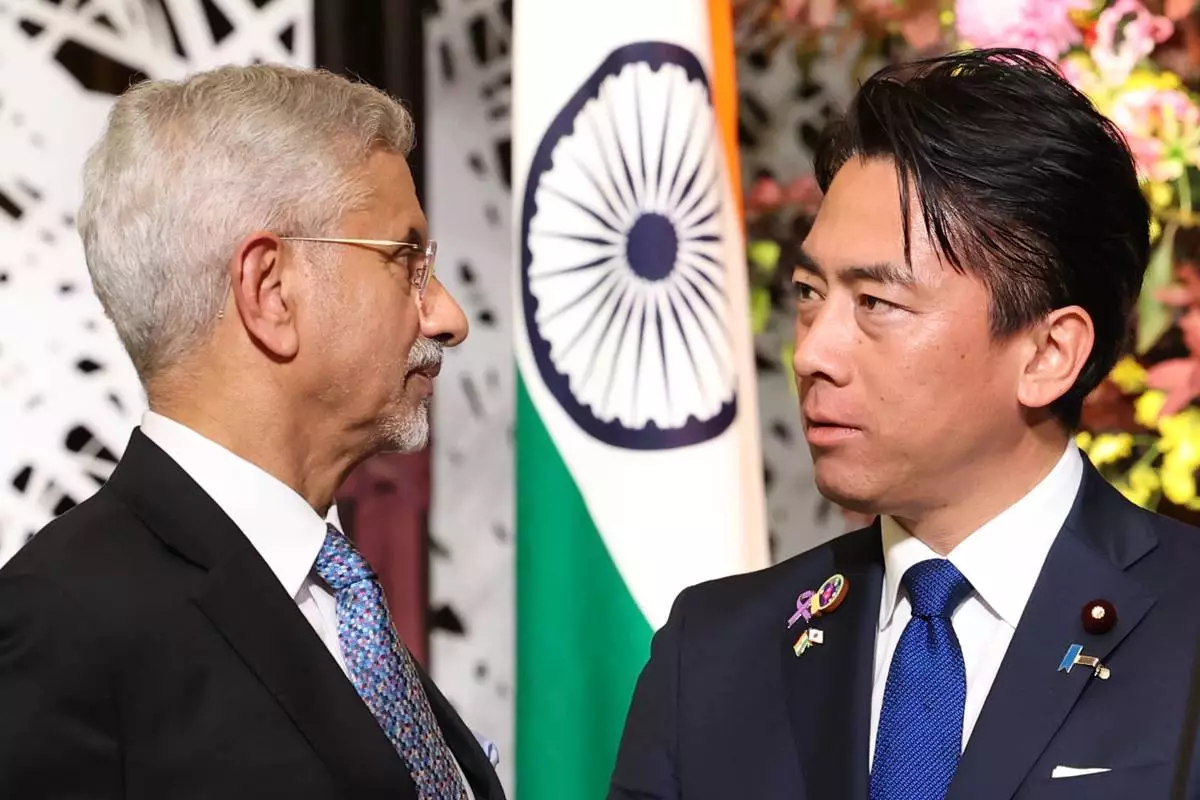
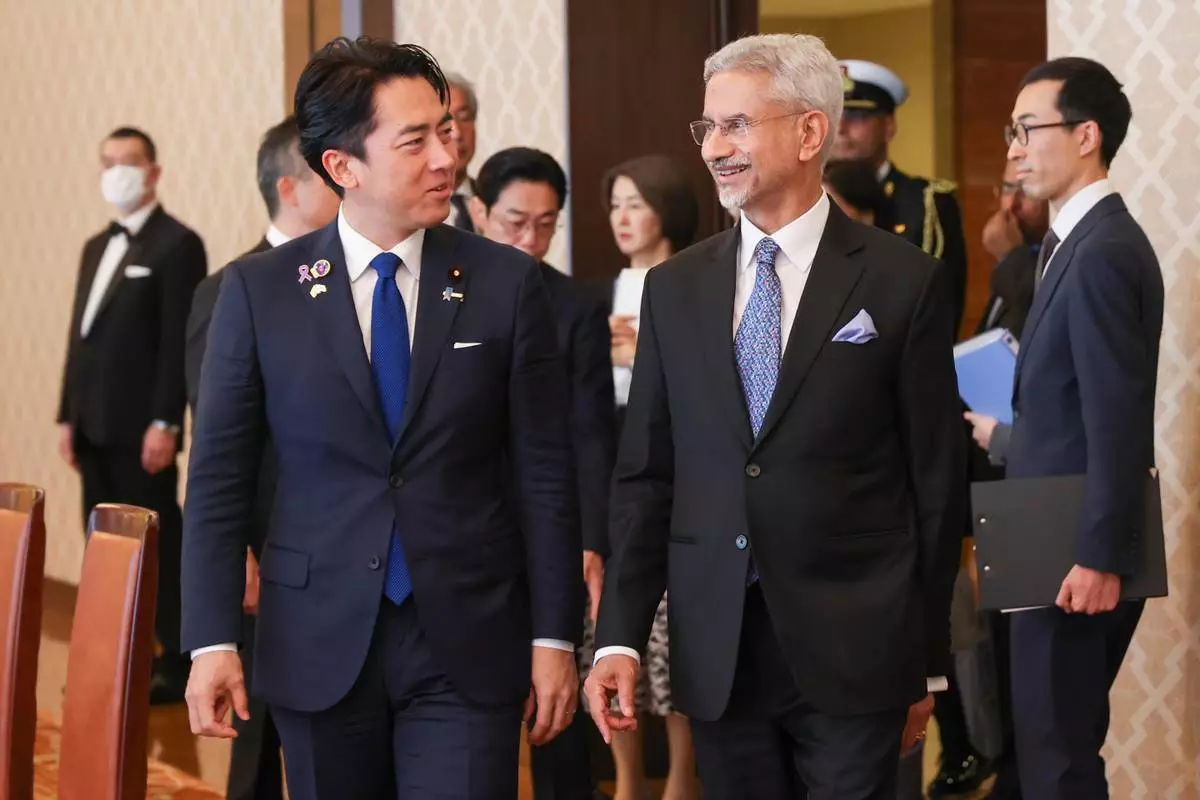
Shinjiro Koizumi, left, Minister of Defense of Japan talks with Subrahmanyam Jaishankar, right, External Affairs Minister of India upon their arrival for the Japan-India 2+2 Foreign and Defense Ministerial Meeting at Iikura Guest House Thursday, Nov. 19, 2026 in Tokyo. (Rodrigo Reyes Marin/Pool Photo via AP)

Shinjiro Koizumi, left, Minister of Defense of Japan talks with Subrahmanyam Jaishankar, right, External Affairs Minister of India upon their arrival for the Japan-India 2+2 Foreign and Defense Ministerial Meeting at Iikura Guest House Thursday, Nov. 19, 2026 in Tokyo. (Rodrigo Reyes Marin/Pool Photo via AP)

Subrahmanyam Jaishankar, left, External Affairs Minister of India talks with Shinjiro Koizumi, Minister of Defense of Japan at the end of a joint press conference of the Japan-India 2+2 Foreign and Defense Ministerial Meeting at Iikura Guest House Thursday, Nov. 19, 2026 in Tokyo. (Rodrigo Reyes Marin/Pool Photo via AP)

Subrahmanyam Jaishankar, left, External Affairs Minister of India talks with Shinjiro Koizumi, Minister of Defense of Japan at the end of a joint press conference of the Japan-India 2+2 Foreign and Defense Ministerial Meeting at Iikura Guest House Thursday, Nov. 19, 2026 in Tokyo. (Rodrigo Reyes Marin/Pool Photo via AP)

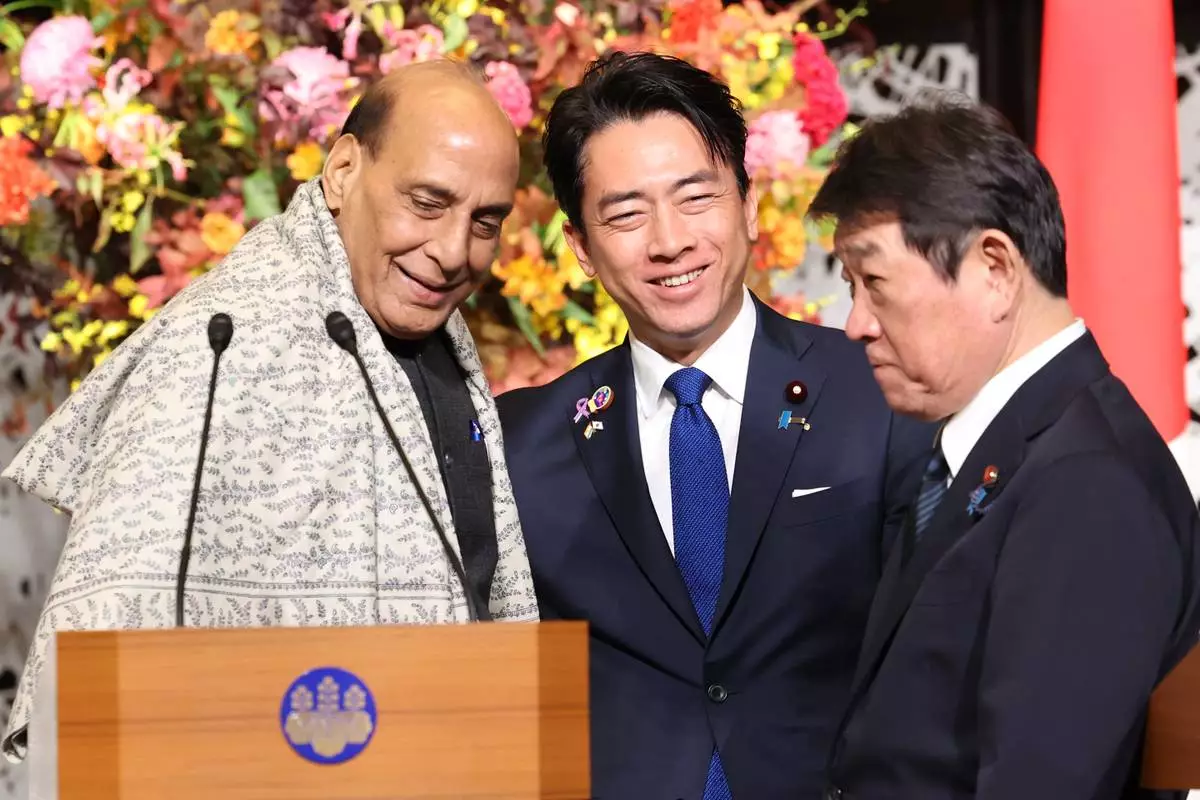
Rajnath Singh, left, Defence Minister of India, greet with Shinjiro Koizumi, center, Minister of Defense of Japan and Toshimitsu Motegi, right, Minister for Foreign Affairs of Japan after a joint press conference at the Japan-India 2+2 Foreign and Defense Ministerial Meeting at Iikura Guest House Thursday, Nov. 19, 2026 in Tokyo. (Rodrigo Reyes Marin/Pool Photo via AP)

Rajnath Singh, left, Defence Minister of India, greet with Shinjiro Koizumi, center, Minister of Defense of Japan and Toshimitsu Motegi, right, Minister for Foreign Affairs of Japan after a joint press conference at the Japan-India 2+2 Foreign and Defense Ministerial Meeting at Iikura Guest House Thursday, Nov. 19, 2026 in Tokyo. (Rodrigo Reyes Marin/Pool Photo via AP)

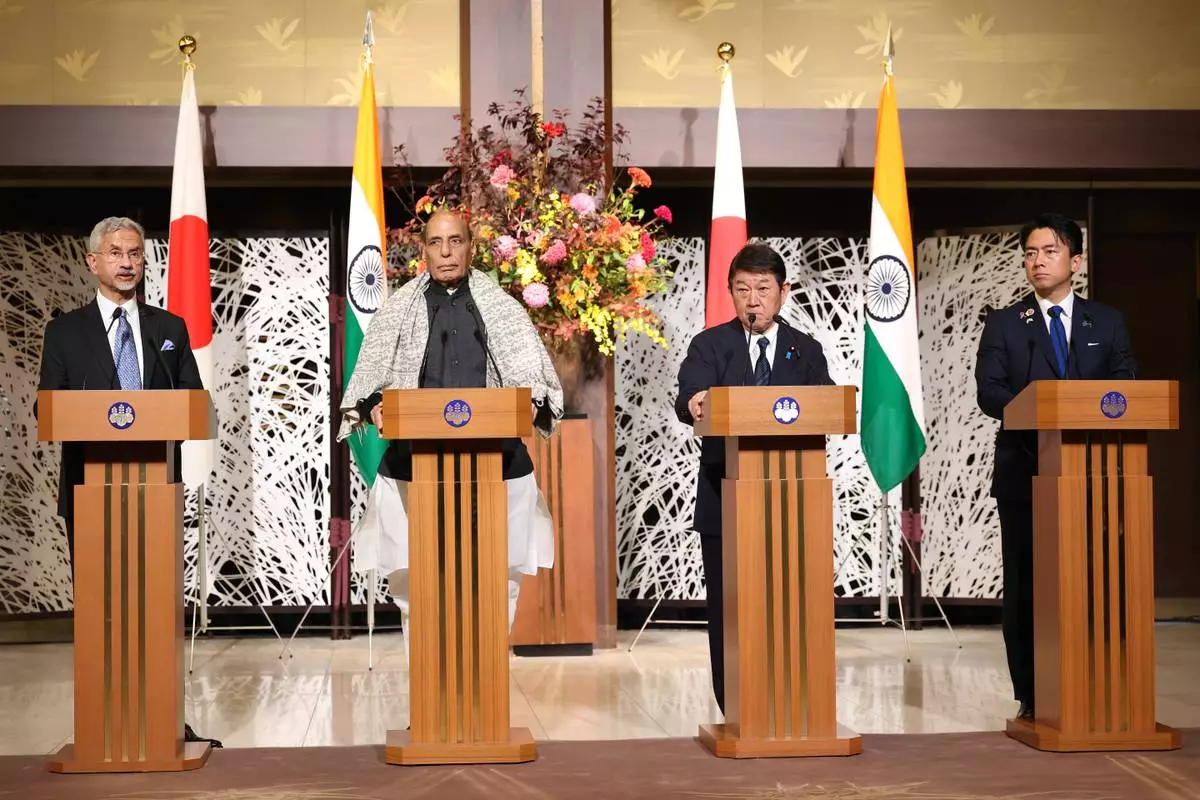
From left, Subrahmanyam Jaishankar, External Affairs Minister of India, Rajnath Singh, Defence Minister of India, Toshimitsu Motegi, Minister for Foreign Affairs of Japan and Shinjiro Koizumi, Minister of Defense of Japan, attend a joint press conference at Iikura Guest House Thursday, Nov. 19, 2026 in Tokyo, Japan. (Rodrigo Reyes Marin/Pool Photo via AP)

From left, Subrahmanyam Jaishankar, External Affairs Minister of India, Rajnath Singh, Defence Minister of India, Toshimitsu Motegi, Minister for Foreign Affairs of Japan and Shinjiro Koizumi, Minister of Defense of Japan, attend a joint press conference at Iikura Guest House Thursday, Nov. 19, 2026 in Tokyo, Japan. (Rodrigo Reyes Marin/Pool Photo via AP)

Recommended Articles