Skip to Content Facebook Feature Image

Prosecutor declines to charge a Madison, Wisconsin, police officer who fatally shot a Black man

News

Prosecutor declines to charge a Madison, Wisconsin, police officer who fatally shot a Black man
News

News

Prosecutor declines to charge a Madison, Wisconsin, police officer who fatally shot a Black man

2026-11-20 05:58 Last Updated At:06:00

MADISON, Wis. (AP) — The Wisconsin police officer who shot and killed a 38-year-old Black man in Madison in July will not face criminal charges, a prosecutor announced Thursday, sparking calls for justice from the victim's family members and community advocates.

The shooting of Corey Ruiz sparked racial justice protests, and city leaders were bracing for more protests in the wake of the decision not to charge the officer, who is white.

The victim’s brother, Adam Ruiz, told reporters the prosecutor has “mistreated” his family.

“We’re destroyed,” he said. “We won’t accept this.”

Kiel Baitinger-Peterson, an officer with more than a decade of experience in law enforcement, fired the shots that killed Ruiz on July 22. Baitinger-Peterson was one of four officers who responded to calls about someone checking out parked cars and an alleged burglary attempt, police said. They surrounded Ruiz, who was on a bicycle.

“I conclude it was reasonable for the officer to use deadly force when this person resisted officers, produced a knife, and was not affected by multiple attempts to use Tasers while officers attempted to take him into custody,” Dane County District Attorney Ismael Ozanne said in a statement announcing his decision.

The Wisconsin Department of Justice said immediately after the shooting that two officers attempted to use a Taser on Ruiz but weren’t successful. Ruiz “brandished a knife and injured” Baitinger-Peterson, the department said.

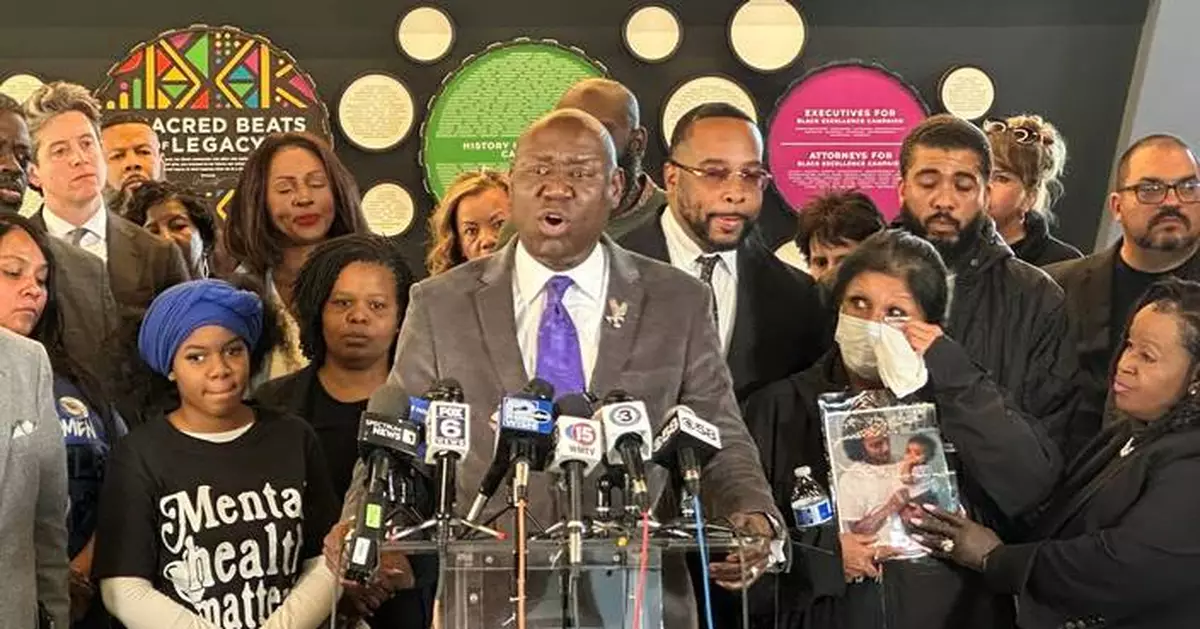
Civil rights attorney Ben Crump, who represents the Ruiz family and was surrounded by them at a news conference Thursday, said there was nothing in the videos that the district attorney showed them to justify the shooting.

“In the video you see they tackle him, they tase him, they kick him and then the police officer executes him,” Crump said. “The video is the objective unbiased witness here.”

Madison Police Chief John Patterson said he has trust in the city’s police officers, but he realizes the decision not to bring charges “will bring various emotions.” He urged protesters, however, to remain peaceful.

Patterson said the police will now conduct an internal review of the shooting, and all of the officers involved will remain on administrative leave.

Ozanne said he reached his decision after reviewing evidence that included police reports, diagrams, surveillance videos, police squad car videos and citizen videos. Madison police officers do not wear body cameras.

Crump said it is one of the worst cases of excessive force that he has worked on.

“When you are shooting a man who is on the ground, three (times). It hits him in his chest and the kill shot hits him in his head,” he said.

Crump said the medical examiner told the Ruiz family he would have survived had the third shot not been fired and hit him in the head.

When asked if the family would be filing a lawsuit, Crump said his team will “explore every possible avenue.”

Ozanne said his decision was a correct interpretation of the law.

“A person does not have to like and/or agree with the law, however I am sworn to apply the law to the facts at hand,” the prosecutor said. “The law applies equally to members of law enforcement and to those who are not.”

The Wisconsin Department of Justice released its investigative files concerning the shooting Thursday, including photo and video evidence.

One police dash-camera video captures the moment three officers tried to wrestle Ruiz into submission. They repeatedly yell, “He’s got a knife! He’s got a knife!” The weapon is visible in his right hand, the blade pointed downward, as a fourth officer arrives and deploys a Taser. Ruiz stumbles and falls onto his right side before Baitinger-Peterson fires three shots at close range.

Baitinger-Peterson has not replied to an email sent Thursday seeking comment.

Baitinger-Peterson told investigators during an interview days after the shooting that he got on his knees and grabbed Ruiz’s right arm before realizing Ruiz was holding a knife, according to records released Thursday. He said he was struggling to control the arm and feared that Ruiz would stab the officers. He said he fired a third time because he didn’t think the first two shots had struck Ruiz because Ruiz’s facial expression and body did not change.

Jim Palmer, executive director of the police union Wisconsin Professional Police Association, said in a statement the decision that the officer's use of deadly force was legally justified “is supported by the evidence and consistent with the legal standards governing the use of force by law enforcement officers.”

It was the third time since 2012 that Madison police had shot and killed someone in the same neighborhood. The killing sparked days of protests and forced the city to reckon with calls for police reform to address racial justice issues.

Baitinger-Peterson and the other three officers who interacted with Ruiz that day have been on paid administrative leave since the shooting.

While bystanders captured the confrontation on video, there is no body camera footage because Madison police officers don’t wear them. All Madison police officers could be equipped with body cameras by the end of 2027 thanks to a $350,000 donation from a local nonprofit that city officials announced in September.

The donation will help cover operational expenses, while other costs are being funded through grants and other means.

Associated Press journalists Claudia Lauer in Philadelphia and Sudhin Thanawala in Atlanta contributed.
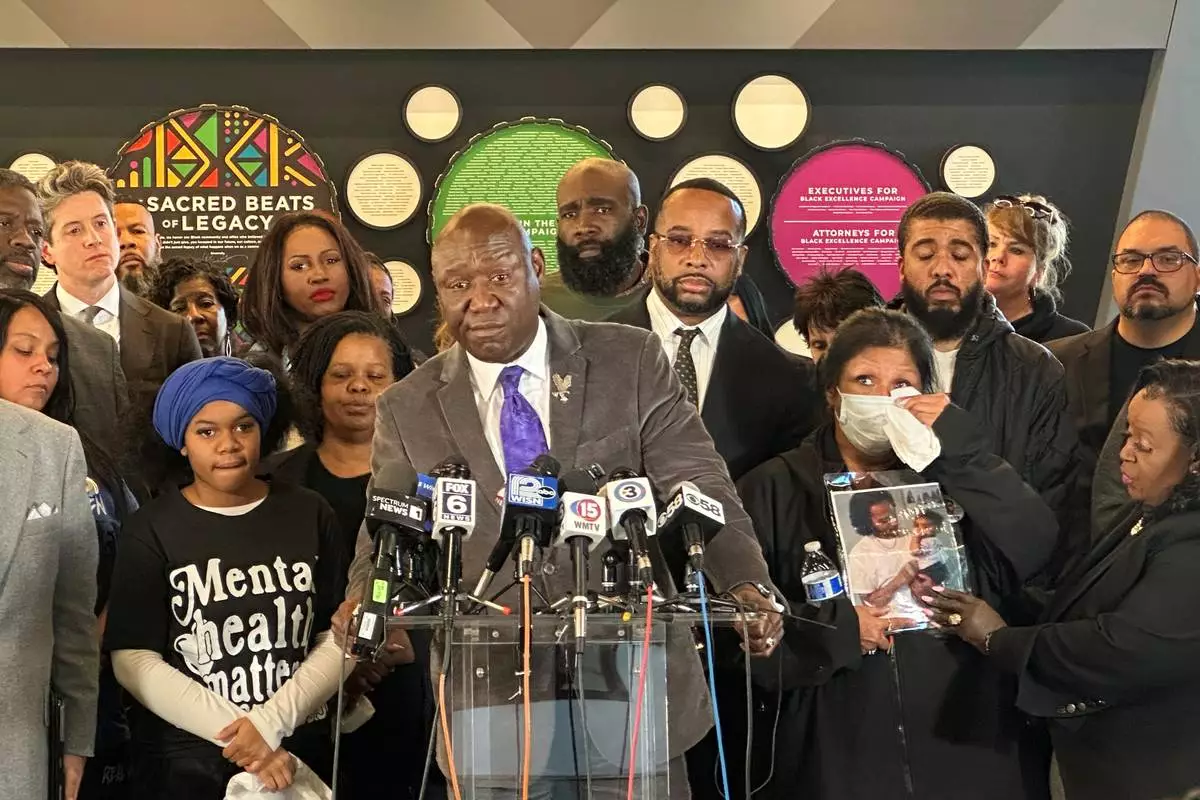
Civil rights attorney Ben Crump, center, speaks as Elsa Ruiz, right, the mother of Corey Ruiz who was killed by a Madison police officer, wipes away tears at a news conference on Thursday, Nov. 19, 2026, in Madison, Wis. (AP Photo/Scott Bauer) Photo taken with a mobile phone.
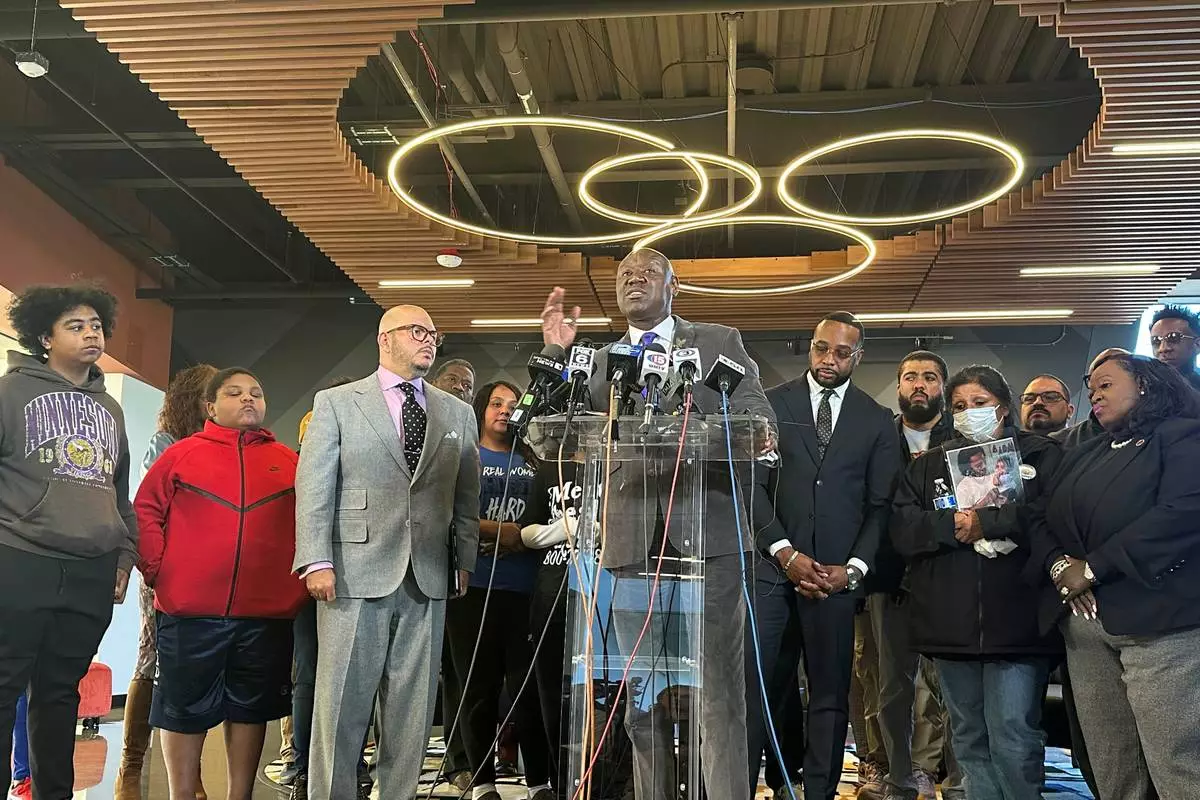
Civil rights attorney Ben Crump, center, speaks as Elsa Ruiz, right, the mother of Corey Ruiz who was killed by a Madison police officer, wipes away tears at a news conference on Thursday, Nov. 19, 2026, in Madison, Wis. (AP Photo/Scott Bauer) Photo taken with a mobile phone.
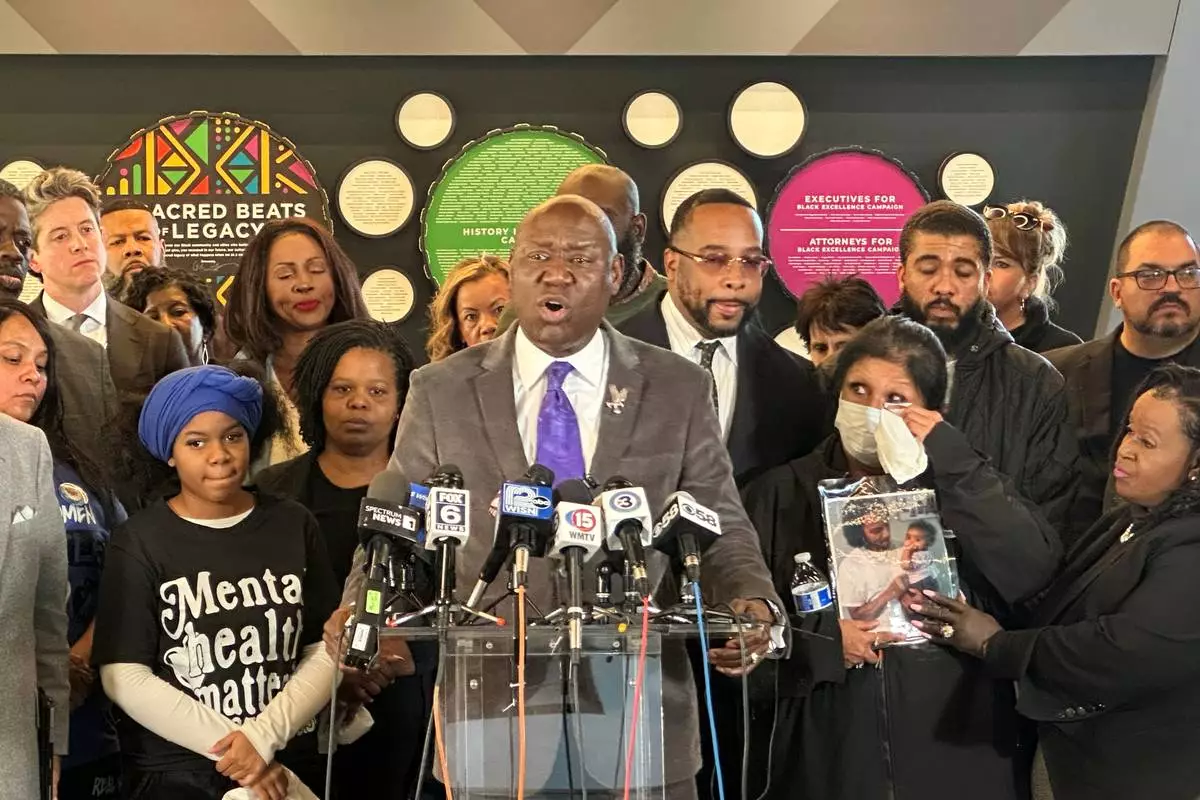
Civil rights attorney Ben Crump, center, speaks at a news conference surrounded by family members of Corey Ruiz, who was shot and killed by a Madison police officer in July, on Thursday, Nov. 19, 2026, in Madison, Wis. (AP Photo/Scott Bauer) Photo taken with a mobile phone.


Civil rights attorney Ben Crump, center, speaks at a news conference surrounded by family members of Corey Ruiz, who was shot and killed by a Madison police officer in July, on Thursday, Nov. 19, 2026, in Madison, Wis. (AP Photo/Scott Bauer) Photo taken with a mobile phone.

Civil rights attorney Ben Crump, center, speaks as Elsa Ruiz, right, the mother of Corey Ruiz who was killed by a Madison police officer, wipes away tears at a news conference on Thursday, Nov. 19, 2026, in Madison, Wis. (AP Photo/Scott Bauer) Photo taken with a mobile phone.

Civil rights attorney Ben Crump, center, speaks as Elsa Ruiz, right, the mother of Corey Ruiz who was killed by a Madison police officer, wipes away tears at a news conference on Thursday, Nov. 19, 2026, in Madison, Wis. (AP Photo/Scott Bauer) Photo taken with a mobile phone.
NEW YORK (AP) — The U.S. stock market tumbled again as beaten-down stocks tied to artificial intelligence kept falling Thursday on worries their breathtaking boom may be over. The losses came even though a leading AI lab, Anthropic, found a strong welcome for the debut of its own stock on Wall Street.

The S&P 500 dropped 2% for a sixth straight loss. That’s its longest losing streak in two and a half years, and the index at the heart of many 401(k) accounts is now down 8.2% from its all-time high set last month.

The Dow Jones Industrial Average dropped 1,101 points, or 2.2%, while the Nasdaq composite sank 2.3%.

The losses were widespread, and more than 90% of the stocks that make up the S&P 500 index fell.

Leading them downward was Williams-Sonoma, which dropped 15.2% after the company behind Pottery Barn and West Elm reported revenue for the latest quarter that was a bit weaker than Wall Street expected. It also stuck with its forecast for how much revenue it will make throughout 2026, and the midpoint of that range was below what analysts were expecting.

Walmart sank 1% even though it reported profit and revenue for the latest quarter that edged past analysts’ expectations.

For a while Thursday morning, gains for several AI-related stocks seemed to be enough to more than make up for such losses.

The S&P 500 jumped as much as 1.3% after Anthropic, the company behind the Claude AI chatbot, sold shares of its stock at $83 apiece in its initial public offering. That’s more than the $70 to $78 it earlier thought it would get, and its price quickly surged above $115 after it began trading on the Nasdaq shortly before noon.

Anthropic later pared its gain and finished the day at $97.17, still up 17.1%.

Even before its stock began trading, the strong demand for Anthropic’s IPO appeared to demonstrate faith remained among investors in the AI revolution. The industry needed a boost following sharp recent drops for AI-related stocks on worries their prices shot too high in the frenzy around the technology.

But AI stocks quickly returned to their jittery ways in what Dan Ives, an analyst at Yorkville Ives, called “a very turbulent, white-knuckle period.”

Micron Technology, whose sales of memory for computers have soared because of the AI boom, initially rallied 7.8% and then swung to a loss of 2.1%.

CoreWeave, a company that buys AI chips and rents out access to them to customers over the cloud, went from a 10.5% leap in the morning to a drop of 6.1%.

Nvidia erased its early gain of 4.7% and flipped to a loss of 3.3% amid the lengthening list of worries dogging the entire industry.

At first it was criticism that AI stocks had broadly gone into a bubble after shooting so high, along with doubts that AI could produce enough profit and productivity to make the massive investments in data centers worth it. Then it was worries that high interest rates would mean less borrowed money to fund the industry’s growth. Then came this month’s sweeping victories for Democrats in the U.S. midterm elections, which raised concerns about more regulation for AI.

Most recently, it was the sudden resignation of Jensen Huang as Nvidia’s CEO. He was one of AI’s biggest evangelists and helped build interest in the industry while using some of Nvidia’s massive profits to further fund its growth.

Other companies, meanwhile, offered more encouraging signals about AI.

Palo Alto Networks climbed 6.4% after the AI cybersecurity company topped analysts’ expectations for profit and revenue in the latest quarter. It also agreed to buy Applied Compute, a platform for post-training and inference of open-weight AI models, to help customers adopt AI securely. The all-stock deal is valued at $4.5 billion.

Everpure, a company that helps businesses manage and store their data, said its revenue jumped last quarter by more than analysts expected in part because of AI-related offerings. Everpure’s stock rose 4.7%.

All told, the S&P 500 fell 147.80 points to 7,175.83. The Dow Jones Industrial Average dropped 1,101.11 to 49,097.06, and the Nasdaq composite sank 550.69 to 23,879.20.

In the bond market, Treasury yields eased as the drops for stock prices sent investors toward investments seen as safer. When prices for Treasury bonds go up, their yields go down, and the yield on the 10-year Treasury fell to 5.04% from 5.07% Wednesday.

Also weighing on yields were a couple reports on the U.S. economy that came in weaker than economists expected. One said slightly more U.S. workers applied for unemployment benefits last week, though the number remains low compared with history. Another said manufacturing growth in the mid-Atlantic region is slowing by more than economists expected.

In stock markets abroad, Japan’s Nikkei 225 rose 0.7%. Helping to lead the way was SoftBank Group, which climbed 4.6%. It was an early investor in OpenAI, the maker of ChatGPT and competitor to Anthropic.

South Korea’s Kospi climbed 1.4% thanks to strength for its stocks tied to the AI boom, but stocks were weaker elsewhere in Asia and in Europe. Germany’s DAX lost 1.1%.

__

AP Business Writer Chan Ho-him contributed to this report.

The Anthropic logo is displayed on the Nasdaq MarketSite tower as part of the Anthropic IPO in New York, Thursday, Nov.19, 2026. (AP Photo/Andres Kudacki)

The Anthropic logo is displayed on the Nasdaq MarketSite tower as part of the Anthropic IPO in New York, Thursday, Nov.19, 2026. (AP Photo/Andres Kudacki)

The Anthropic logo is displayed on the Nasdaq MarketSite tower as part of the Anthropic IPO in New York, Thursday, Nov.19, 2026. (AP Photo/Andres Kudacki)

The Anthropic logo is displayed on the Nasdaq MarketSite tower as part of the Anthropic IPO in New York, Thursday, Nov.19, 2026. (AP Photo/Andres Kudacki)

The Anthropic logo is displayed on the Nasdaq MarketSite tower as part of the Anthropic IPO in New York, Thursday, Nov.19, 2026. (AP Photo/Andres Kudacki)

The Anthropic logo is displayed on the Nasdaq MarketSite tower as part of the Anthropic IPO in New York, Thursday, Nov.19, 2026. (AP Photo/Andres Kudacki)

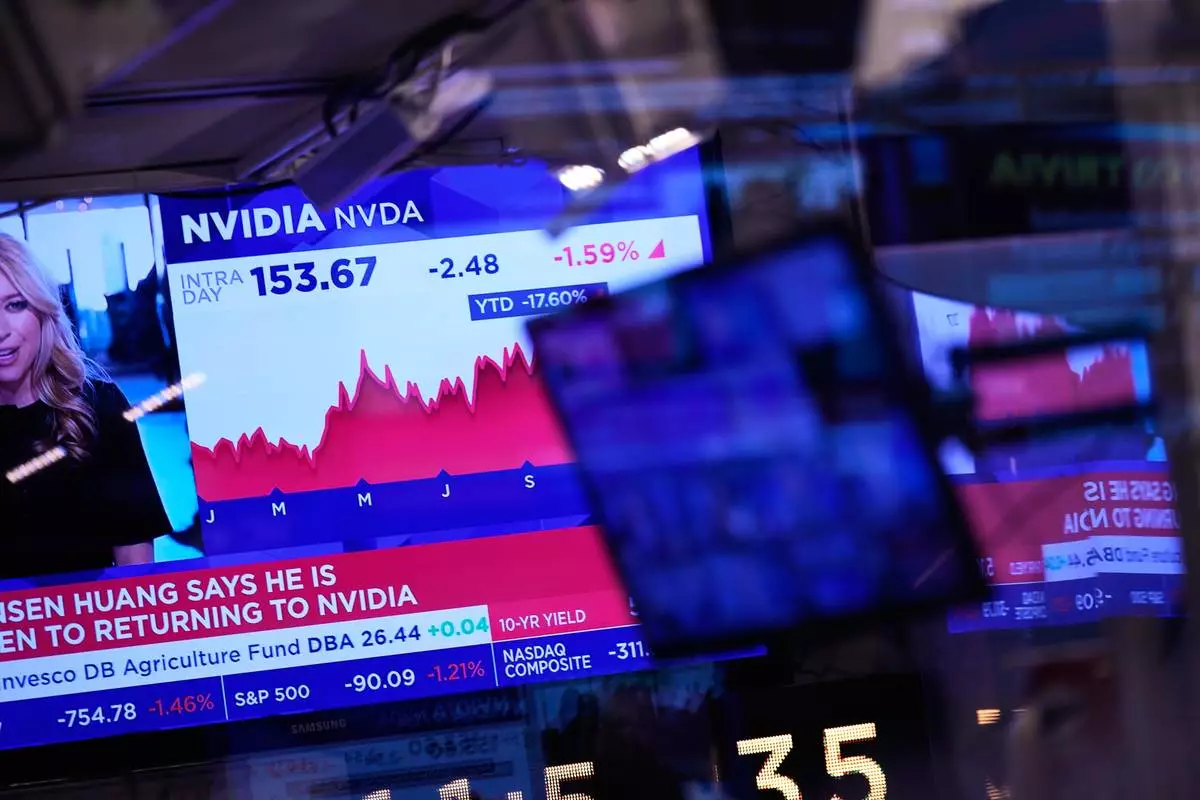
Screens display financial information and news on the floor of the New York Stock Exchange in New York, Tuesday, Nov. 17, 2026. (AP Photo/Seth Wenig)

Screens display financial information and news on the floor of the New York Stock Exchange in New York, Tuesday, Nov. 17, 2026. (AP Photo/Seth Wenig)

Recommended Articles