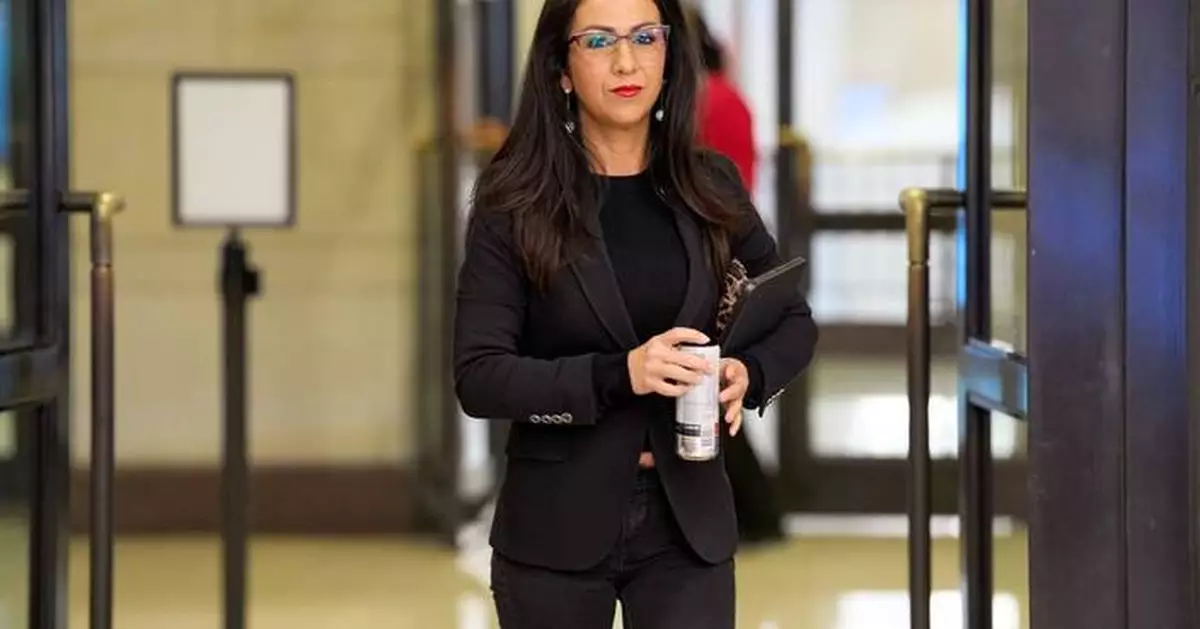
Rep. Lauren Boebert sat in a U-Haul van in the nation’s capital after packing up her congressional office and her “dungeon of an apartment" on Thursday, about six years after she became a MAGA star and one week after voters decided not to return her to Washington, D.C.
“I think about it every day," said Boebert, referring to the midterm elections where American voters sent Democrats to Congress en masse. Boebert spoke via Zoom from the van in one of her first interviews since her loss to Democrat Eileen Laubacher in a district Boebert had won by double digits two years ago.
“This could be a referendum on President Trump. It could be the referendum on Congress or the Republican Party,” the Colorado Republican said. Then, lowering her voice, she added, “I think it’s all of it.”
“I’m not mad at the president,” she said, but “the president did some things that hurt my voters.”
Boebert was one of the most vocal and visible members of the “Make America Great Again” movement, making headlines with her right-wing righteousness on television and the House floor from the time she was first elected, in 2020. Her time in D.C. roughly traced the arc of that movement — and its supporters' more tenuous relationship with Trump of late — through its apogee in 2024 and its more recent midterm losses.
As someone who described herself on Fox News as “ultra MAGA” four years ago, Boebert has become less inclined toward definitions.
"When Jesus comes back and I’m raptured up, like all these labels are just going to fly off anyway," she said. “I respect President Trump, I still work with him, I want to continue to work with him. Not for him, with him.”
Boebert says she hasn’t changed too much in her six years, besides a few more gray hairs and maybe some “personal growth” on bipartisanship. She said she wouldn’t have done anything differently — besides, she joked, “not gone to the theater.”
She was referring to an incident at a Denver theater where she was caught on camera vaping at 2023 performance of "Beetlejuice" and escorted out of the venue, a clip that was replayed in campaign ads against her that she partly credits for her loss.
She felt it was an unfair dredging up of a past she'd already “owned up to,” but said there could be “a great number of” unaffiliated or Republican voters who, when it came to the scandal, just said, “'I don't care if any of this is true or not, I'm tired of the drama.'”
At the time, she apologized for it up and down her former district, which covered western Colorado. She later moved to a more conservative House seat covering the state’s Great Plains, where she won in 2024 before losing two years later. Boebert's opponent raised far more campaign cash than she did.
“I didn’t raise millions of dollars and I kinda refused to,” she said. “Colorado voters know me, and, you know, if they know me enough to get rid of me, then I guess that’s my answer.”
Though Boebert has broken from Trump at times — typically on topics other Trump supporters also opposed, such as the war in Iran and the administration's treatment of the Jeffrey Epstein files — she didn't lay the blame for her defeat or other GOP losses squarely at Trump's feet.
“I think it’s more all of us. It’s all of the Republican Party,” she said, citing high gas prices, GOP infighting and unfulfilled promises. "We had solutions and we didn’t take action.”
Boebert said she doesn't take her loss as an “L,” and instead sees it as a “launching pad” for the future, one that she didn't specify but gave a hint toward.
“Too many people come to Congress and get rich,” she said. “I am not one of those, and I’m gonna go make some money now.”
“The U-Haul is getting started,” she said, her camera vibrating a bit as the nation's capital outside the van's window started to move by.

Rep. Lauren Boebert, R-Colo., leaves the U.S. Capitol following a vote, Tuesday, Nov. 10, 2026, in Washington. (AP Photo/Julia Demaree Nikhinson)
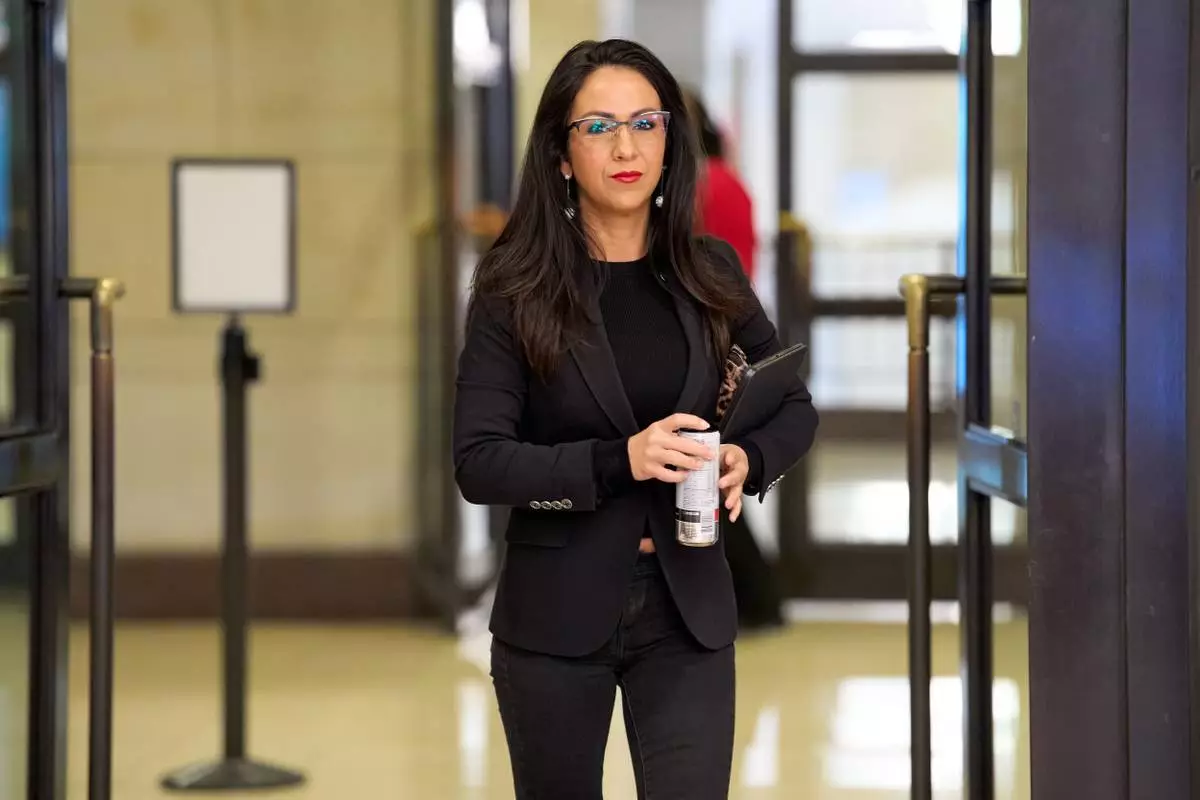
Rep. Lauren Boebert, R-Colo., arrives for a House GOP leadership candidate forum and elections for the 120th Congress, Tuesday, Nov. 10, 2026, on Capitol Hill in Washington. (AP Photo/Jacquelyn Martin)
RAIFORD, Fla. (AP) — Florida carried out a record 20th execution of the year on a man convicted of murdering a pregnant woman and her husband during a home invasion, and Texas was preparing to put a man to death later Thursday evening for the killing of a jeweler during a $3.6-million diamond heist.
Thomas Mitchell Overton, 71, was pronounced dead at 6:19 p.m. EST after a three-drug injection at Florida State Prison. In his final statement, he denied ever breaking into the couple's home and attacking them, saying “I never killed anyone."
Elsewhere, Reinaldo Dennes, 70, was scheduled to receive a lethal injection about an hour later. The planned executions of the two septuagenarians in a single day cast a spotlight on the aging of the U.S. death row population.
Overton was convicted of killing Michael and Susan MacIvor and their unborn child during an August 1991 break-in at their Florida Keys home. Dennes was convicted of capital murder in the death of Janos Szucs, a diamond dealer found shot multiple times in his Houston office in January 1996.
With Overton’s lethal injection concluded, Florida has carried out more than half of the nation’s 38 executions to date this year under Republican Gov. Ron DeSantis, who has made aggressive use of the death penalty like few other governors. The latest execution followed renewed scrutiny of capital punishment in the U.S. following Tennessee’s failed execution of Christa Pike in September.
DeSantis, who leaves office in January, has said he wants to bring justice to families who have waited decades for death sentences to be carried out. He signed the death warrants that led to a record of 19 executions in 2025, then the most in a single year in Florida since the death penalty’s reinstatement in 1976. With Thursday’s execution, Florida surpassed its 2025 total, with two more executions planned in December.
Texas set a record for executions there when 40 people were put to death in 2000.
In Florida, Overton was already strapped to a gurney with an IV in his arm when the death chamber curtain lifted at 6 p.m.
“I’ve never sexually assaulted anyone. I never killed anyone,” Overton said in his last words, denying ever having been in the MacIvors’ home or gated community. “I didn’t kill the MacIvors.”
The injection began immediately after he stopped speaking. Soon after, Overton began to pant and breathe heavily for about a minute, but then stopped. A warden then shook Overton and shouted his name without response and a medic called to the chamber declared him dead.
The MacIvors were found dead in their Tavernier, Florida, home on Aug. 22, 1991, court records show. Autopsies determined both were strangled and that Susan MacIvor, then eight months pregnant, had been raped. The medical examiner said her unborn male child likely survived for about half an hour after her death.
Investigators collected DNA evidence from the scene but initially found no match with the state's database. But Overton, who had worked at a gas station near the MacIvors' home, was arrested on an unrelated burglary charge in 1996 and a DNA sample taken from him then matched one collected at the MacIvors' home.
Charged with their killings, Overton was convicted in 1999 of two first-degree murder counts and received a death sentence for each. Defense attorneys had argued investigators planted the DNA evidence.
Dennes, a jewelry designer, had an office in the same building as Szucs, according to court documents. A cleaning woman testified at trial that Dennes arranged for her to open the building’s back door after hours. According to court records, her actions allowed Dennes and his brother to gain entry the night of the shooting, and she also distracted the security guard at Dennes’ request.
The guard was shot twice but recovered, later identifying Dennes as his assailant.
Police found the jeweler's body upon entering his office, according to court filings. The documents said officers found the jeweler's safe empty with no sign of the diamonds or the $200,000 in cash he supposedly kept there. The diamonds were never located.
Dennes’ attorneys later argued there was insufficient evidence to prove he killed Szucs.
Prosecutors said in a recent court filing that Dennes, who came to the U.S. from Cuba with his family as a child, admitted guilt during a Spanish-language interview with Telemundo in 2022.
“I did those things, so I am guilty,” Dennes told Telemundo, adding he regretted taking a man’s life, the prosecutor's filing said.
A year after Dennes was convicted, his brother, Jose Albert Dennes, pleaded guilty to murder in the case and was sentenced to 45 years in prison. He was released on parole in 2019.
Corrects that the failed Tennessee execution was in September, not October.
Stengle contributed to this report from Dallas and Graczyk contributed from Huntsville, Texas.
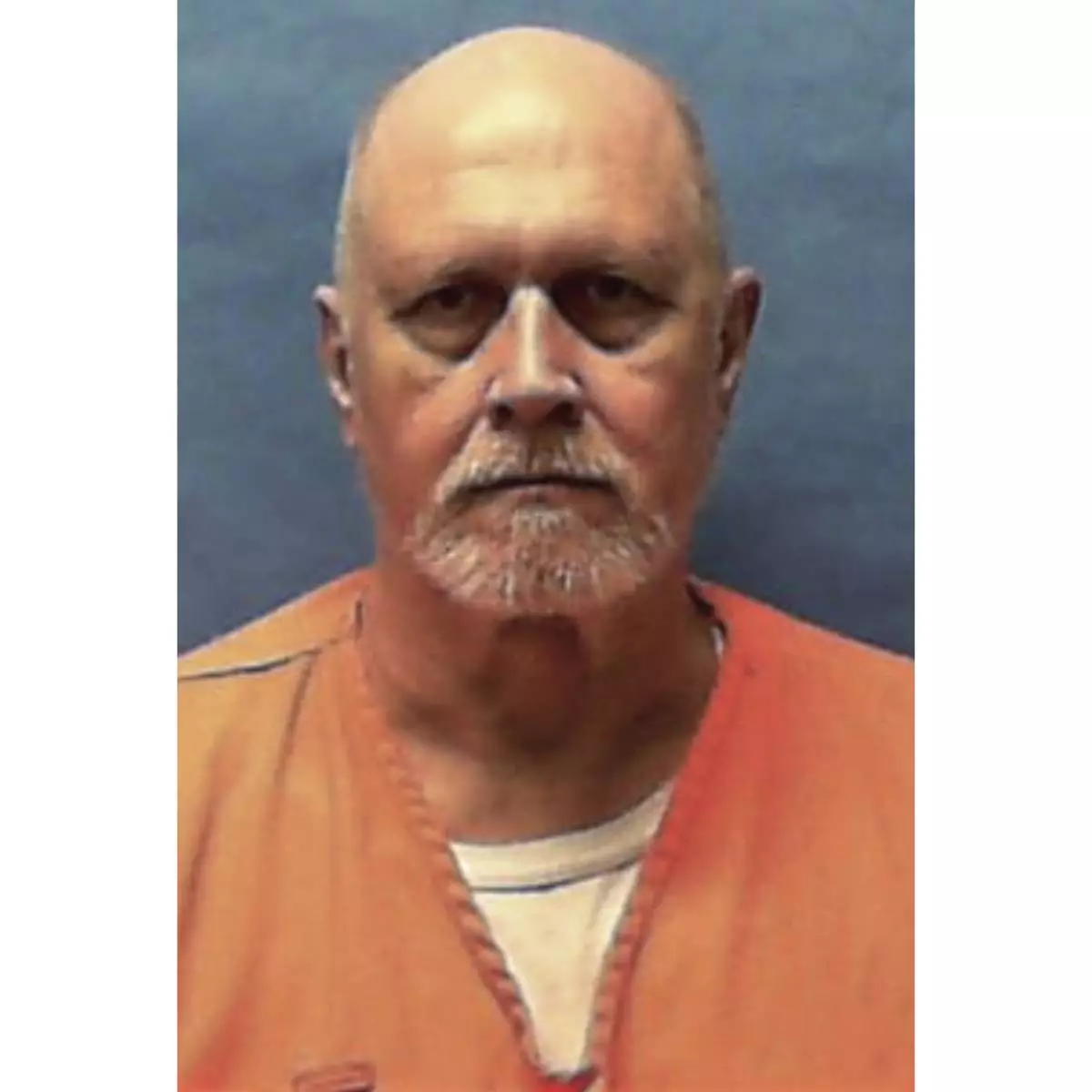
This image provided by the Florida Department of Corrections shows Thomas Mitchell Overton, scheduled to be executed Thursday, Nov. 19, 2026, at Florida State Prison in Raiford, Fla. (Florida Department of Corrections vi AP)
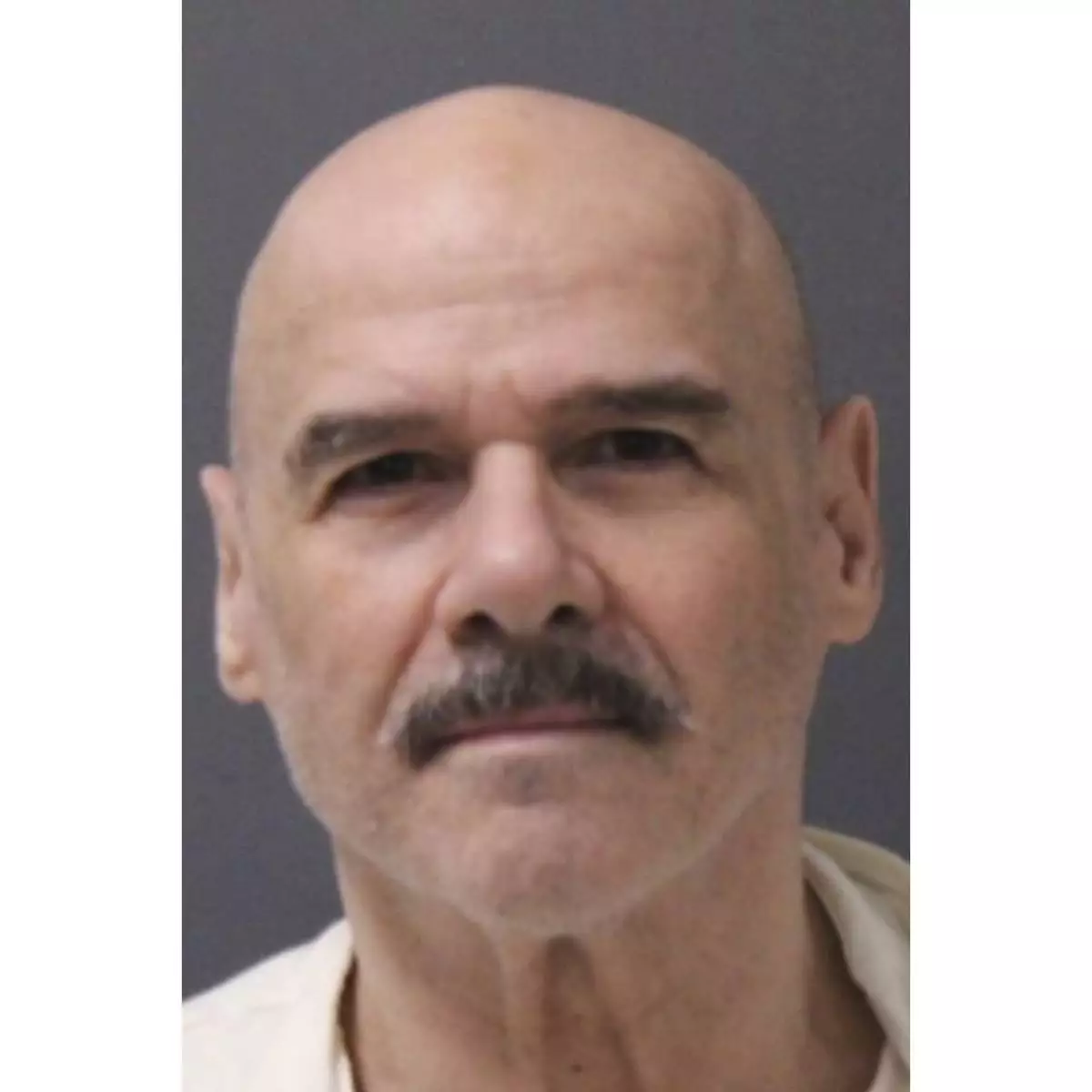
This image provided by the Texas Department of Criminal Justice shows Reinaldo Dennes on April 14, 2026. (Texas Department of Criminal Justice via AP)
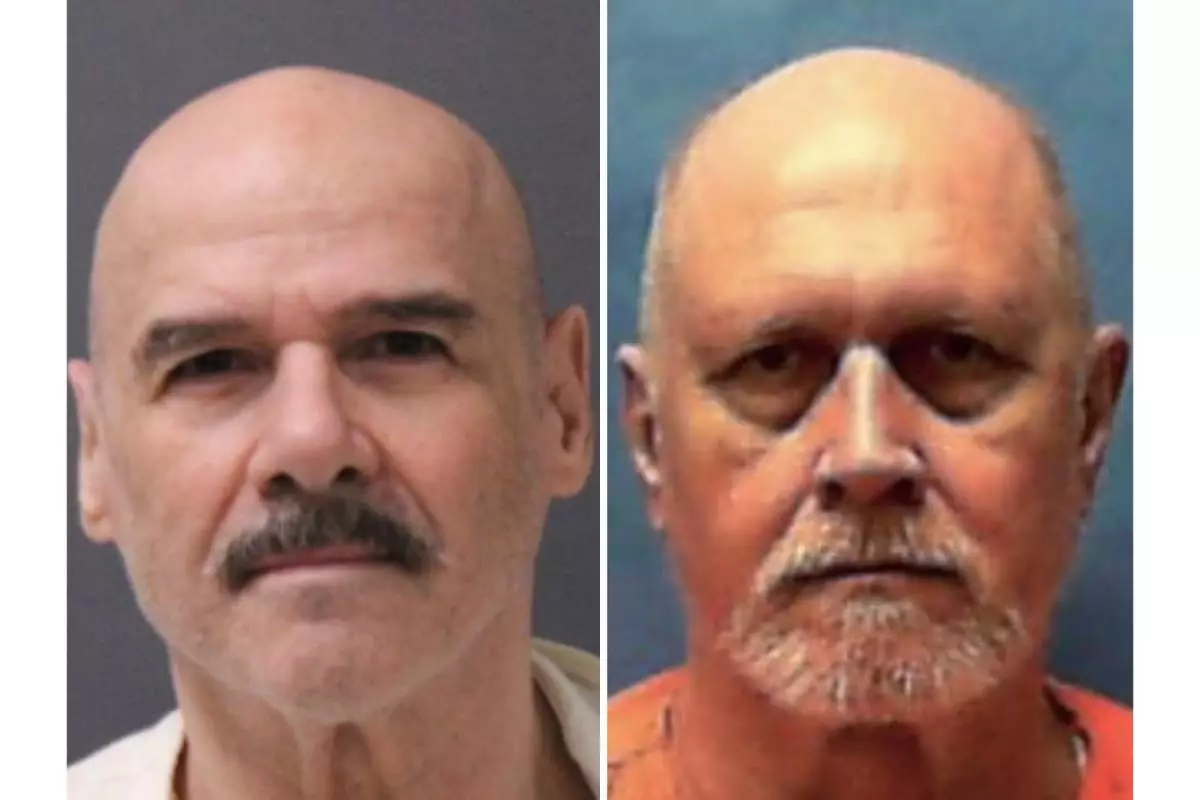
This photo combination shows Reinaldo Dennes, left, on April 14, 2026 and Thomas Mitchell Overton. (Texas Department of Criminal Justice/Florida Department of Corrections via AP)