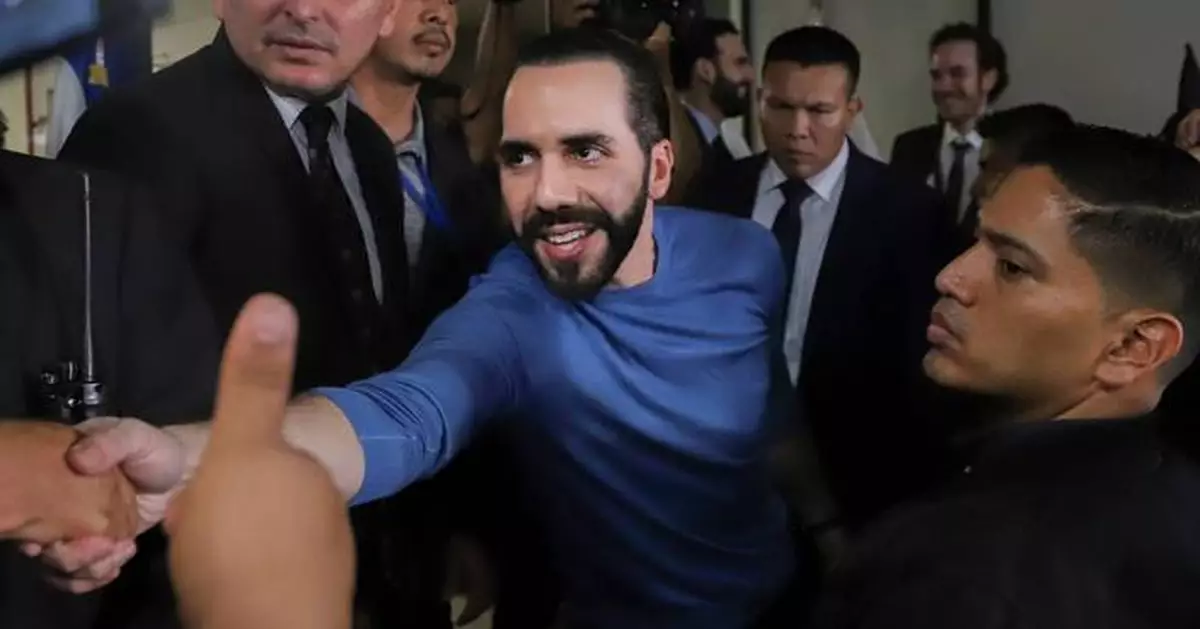
SAN SALVADOR (AP) — El Salvador President Nayib Bukele on Thursday night officially launched his candidacy for a third term in office after years of paving the way to stay in power indefinitely.
With virtually no political opposition, the highly popular leader is positioned to coast easily into a third term in office in the February elections. Recent polls put his approval ratings around 90%, largely due to his war on the country’s gangs. The crackdown, which began in 2022, has largely debilitated the criminal groups and sharply reduced violence but fueled accusations of mass human rights abuses.
The firebrand populist submitted his presidential candidate paperwork to the country’s Supreme Electoral Tribunal. His New Ideas party, which holds a supermajority in the country’s congress, cleared the way for him to be the party’s candidate in July and remain in power.
Crowds carrying “Bukele 2027” signs cheered his arrival in a fleet of police cars at the electoral tribunal building, where candidates for 60 congressional seats and 44 municipal council seats also submitted documentation ahead of the Thursday night deadline.
“In El Salvador there is total, complete open democracy,” an impassioned Bukele told roaring supporters. “We’re sending a message to the world that El Salvador will never return to the past.”
The reelection bid comes as Bukele has taken his crime offensive to Haiti. He deployed around 2,500 troops to fight gangs after the disappearance of four Salvadoran aviation technicians in an October gang attack.
Critics have described the offensive as a way to offset international scrutiny, rally domestic support ahead of elections and solidify Bukele’s long-term political project. But Bukele, a former communications strategist, often seems to relish political spectacles.
Democratic concerns hang over the February vote. El Salvador’s Constitution has long prohibited consecutive reelection, in part because of the Central American nation’s fragile democracy. But a ruling by the Supreme Court stacked with Bukele loyalists allowed him to seek a second term in 2024.
Bukele has spent years whittling away checks and balances and concentrating power. The country's congress, dominated by his party, pushed through a congressional reform in 2025 that eliminated presidential term limits and moved up national elections from 2029 and 2027.
His government also has gone after the opposition, watchdog groups and journalists, fueling the greatest exodus of civil society since the Salvadoran civil war decades before.
Political opposition figures and international observers have said Bukele's plan to continue in office is illegal, but don't deny the leader's popular support.
“Bukele is running for a third consecutive term after packing the court, rewriting the constitution to his liking and jailing or forcing into exile those who dare criticize him. The absolute concentration of power in his hands has been the defining feature of his administration,” said Juan Pappier, Human Rights Watch deputy director of the Americas.
The country's political opposition has been rendered virtually irrelevant, in part because of years of corruption and political failures by traditional parties, which helped catapult Bukele into office in 2019.
Many Salvadorans have said they prefer giving up democratic freedoms to suffocation by the gangs.
Janetsky reported from Mexico City.

A protester kisses a T-shirt featuring an image of El Salvador's President Nayib Bukele to show his support for the deployment of Salvadoran soldiers to fight armed gangs in Port-au-Prince, Haiti, Wednesday, Nov. 18, 2026. (AP Photo/Patrice Noel)
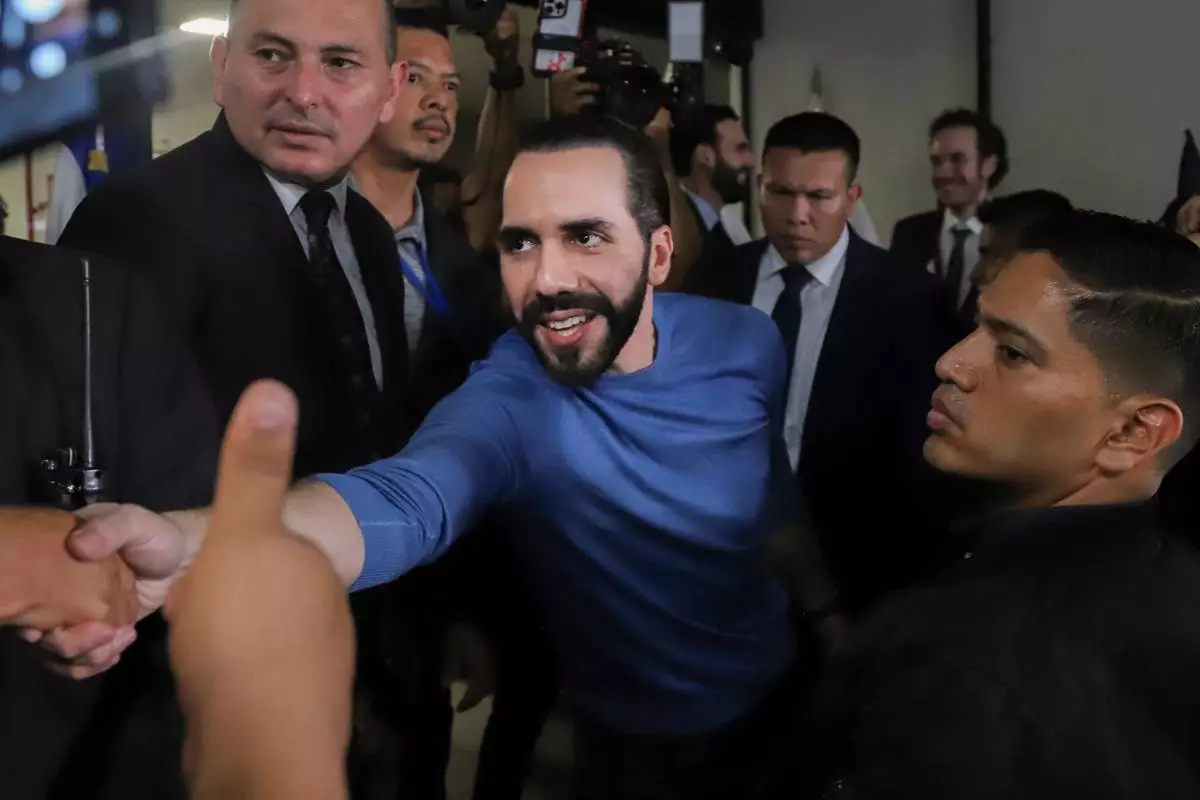
FILE - Supporters greet El Salvador's President Nayib Bukele after he presented himself as the presidential candidate for the New Ideas Party in San Salvador, El Salvador, Friday, Oct. 27, 2023. (AP Photo/Salvador Melendez, File)
HUNTSVILLE, Texas (AP) — Texas executed Reinaldo Dennes on Thursday in a procedure that took over an hour, as prison staffers struggled to find a suitable vein for the two intravenous needles carrying the lethal dose of the sedative pentobarbital.
And once it began, he moaned repeatedly about pain, groaned several times and asked God to take him away from the pain. A prison spokesperson said all procedures were followed appropriately and suggested that Dennes might have exaggerated or faked the pain.
The execution followed renewed scrutiny of capital punishment in the U.S. in the aftermath of Tennessee’s failed execution in September of Christa Pike, who survived two doses of pentobarbital that her lawyers say probably did not enter her bloodstream correctly and instead pooled in her arms, leaving them burned and blistered.
Dennes, who was found guilty of capital murder in the death of Janos Szucs, a diamond dealer found shot multiple times in his Houston office in January 1996, was the second person put to death in the country on the day, after Florida carried out a record-breaking 20th execution of the year, of Thomas Mitchell Overton.
Dennes gave a brief statement in which he said he wanted his loved ones to know he was blessed the past 30 years “knowing the love of the father.” Then he told the warden: “Go, warden!”
Almost immediately he exclaimed: “The pain! Go! Go!” He uttered an expletive and implored “the father” to “take this pain.” “Let me go, father,” he said again and again. “Let me go. … I’m here. I’ve been your son all these years.”
Then he shouted: “My right leg is killing me!” and described it as a cramp. After another profanity, he grunted, then said, “I don’t think this is normal. Take me, father. Don’t let me suffer like this. C’mon.”
After three loud groans, Dennes began snoring sounds — eight of them — that progressively got quieter before a final loud snore. Then he began breathing quietly, about a dozen breaths, also getting progressively less pronounced.
The procedure was completed at 7:07 p.m., 63 minutes after he was strapped to the gurney. A minute later, after being examined by a physician, Dennes was pronounced dead at 7:08 p.m. at the penitentiary in Huntsville.
Prison officials said all procedures were followed appropriately. Spokesperson Amanda Hernandez acknowledged a number of unsuccessful attempts to find a suitable vein before the execution team managed to insert the needles in Dennes’ left foot and on the left side of his neck.
She did not know how many attempts were unsuccessful but said the sites ultimately used were in accordance with the state’s procedures.
Hernandez also suggested that Dennes may have been exaggerating the pain, saying he began complaining before the drugs began to flow and also of pain in places where there was no IV.
Asked if he was faking, she replied, “I think, yeah, there were allegations. ... There was nothing abnormal on our part.”
“This isn’t the first time we had to insert IVs into other locations. It’s also not the first time we’ve had an inmate make allegations of pain immediately,” Hernandez said.
Witness Janice Copeland's husband, David, was a security guard shot during the robbery. He survived his wounds and died five years ago.
“David always felt Reinaldo would outlive him. Unfortunately he was right,” she said Thursday. “Finally after 30 years, justice has been served.”
Earlier in the day Florida carried out its execution of Overton, 71, who was convicted of murdering a pregnant woman and her husband, Susan and Michael MacIvor, during a home invasion.
Overton was pronounced dead at 6:19 p.m. following a three-drug injection at Florida State Prison. In a final statement, he denied ever breaking into the couple’s home and attacking them, saying, “I never killed anyone.”
Florida has now carried out more than half the nation’s 39 executions to date this year under Republican Gov. Ron DeSantis, who has made aggressive use of the death penalty like few other governors.
DeSantis, who leaves office in January, has said he wanted justice for families who wait decades for death sentences to be carried out. He signed the death warrants that led to a record of 19 executions in 2025, then the most in a single year in Florida since the death penalty was reinstated in 1976. Florida still plans two more executions, in December.
Texas set a record for executions there when 40 people were put to death in 2000.
The executions of two men in their 70s cast a renewed spotlight on the aging of the U.S. death row population.
In Florida, Overton was strapped to a gurney with an IV in his arm when the death chamber curtain lifted at 6 p.m.
“I’ve never sexually assaulted anyone. I never killed anyone,” Overton said, denying ever having been in the MacIvors’ home or gated community. “I didn’t kill the MacIvors.”
The injection began immediately afterward with Overton panting and breathing heavily before all movement ceased. A warden then shook Overton and shouted his name without answer before a medic declared him dead.
The MacIvors' bodies were found in their Tavernier, Florida, home on Aug. 22, 1991, court records show. Autopsies determined they were strangled and that Susan MacIvor, eight months pregnant, had been raped. The medical examiner said her unborn male child likely survived for about half an hour after her death.
Investigators collected DNA evidence but found no match with the state's database. But when Overton, who had worked at a gas station near the MacIvors' home, was arrested on an unrelated burglary charge in 1996, his DNA sample matched one from the MacIvors' home.
Overton was subsequently convicted in 1999 of two first-degree murder counts and received a death sentence for each.
Michael MacIvor’s sister, two brothers and cousin witnessed the execution. The man's sister, Sharon MacIvor, said watching Overton die gave her a sense of relief but not satisfaction.
“One of the hardest things I have ever had to hear was how my brother Michael fought to stay alive,” Sharon MacIvor said. “Michael was my little brother. He was loved, he had a family, and he had a lifetime ahead of him.”
Dennes, a jewelry designer, had an office in the same building as Szucs, according to court documents. A cleaning woman testified at trial that Dennes arranged for her to open the building’s back door after hours, allowing Dennes and his brother entry the night of the shooting.
Records showed she also distracted the security guard, David Copeland, at Dennes’ request. Copeland, who was shot twice, identified Dennes as his assailant.
Police found the jeweler's body in his office, but his safe was empty with no sign of the diamonds or some $200,000 in cash he supposedly kept there, court filings indicated. Authorities said the diamonds were never located.
Dennes’ attorneys later argued there was insufficient evidence to prove he killed Szucs.
A year after Dennes was convicted, his brother, Jose Albert Dennes, pleaded guilty to murder in the case and was sentenced to 45 years in prison. He was released on parole in 2019.
This story was updated to correct that the failed Tennessee execution was in September, not October.
Stengle reported from Dallas, and Fischer from Raiford, Florida.
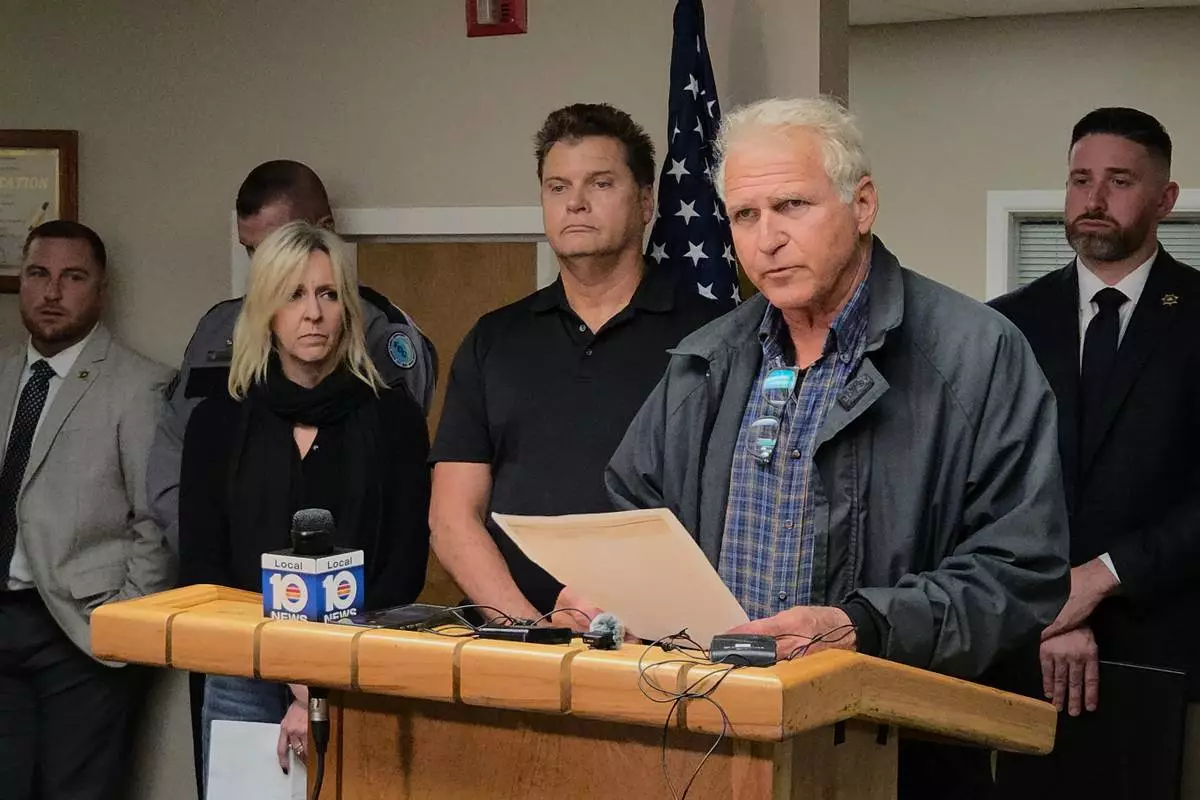
In this still image taken from video, James MacIvor, brother of Michael MacIvor, speaks at a news conference held shortly after the execution of Thomas Mitchell Overton across the street from Florida State Prison in Raiford, Fla., Thursday, Nov. 19, 2026. (AP Photo/David Fischer)
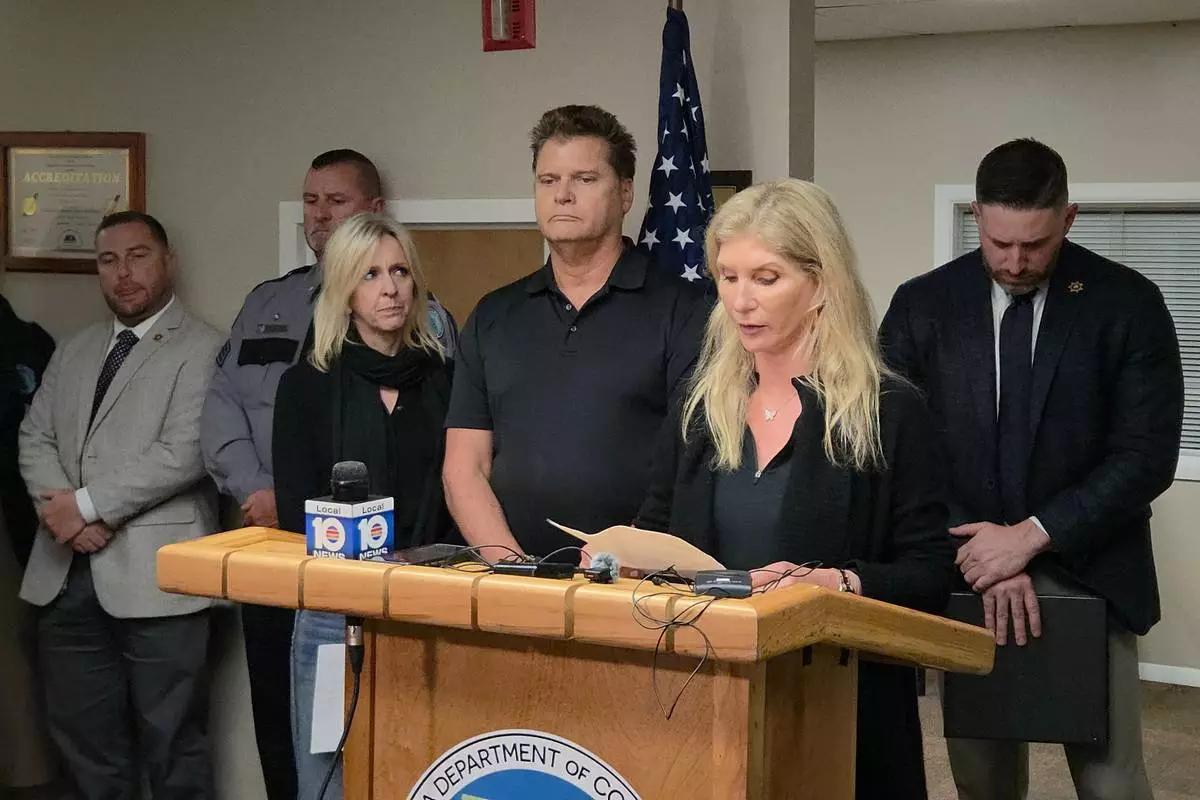
In this still image taken from video, Sharon MacIvor, sister of Michael MacIvor, speaks at a news conference held shortly after the execution of Thomas Mitchell Overton across the street from Florida State Prison, Raiford, Fla., Thursday, Nov. 19, 2026. (AP Photo/David Fischer)
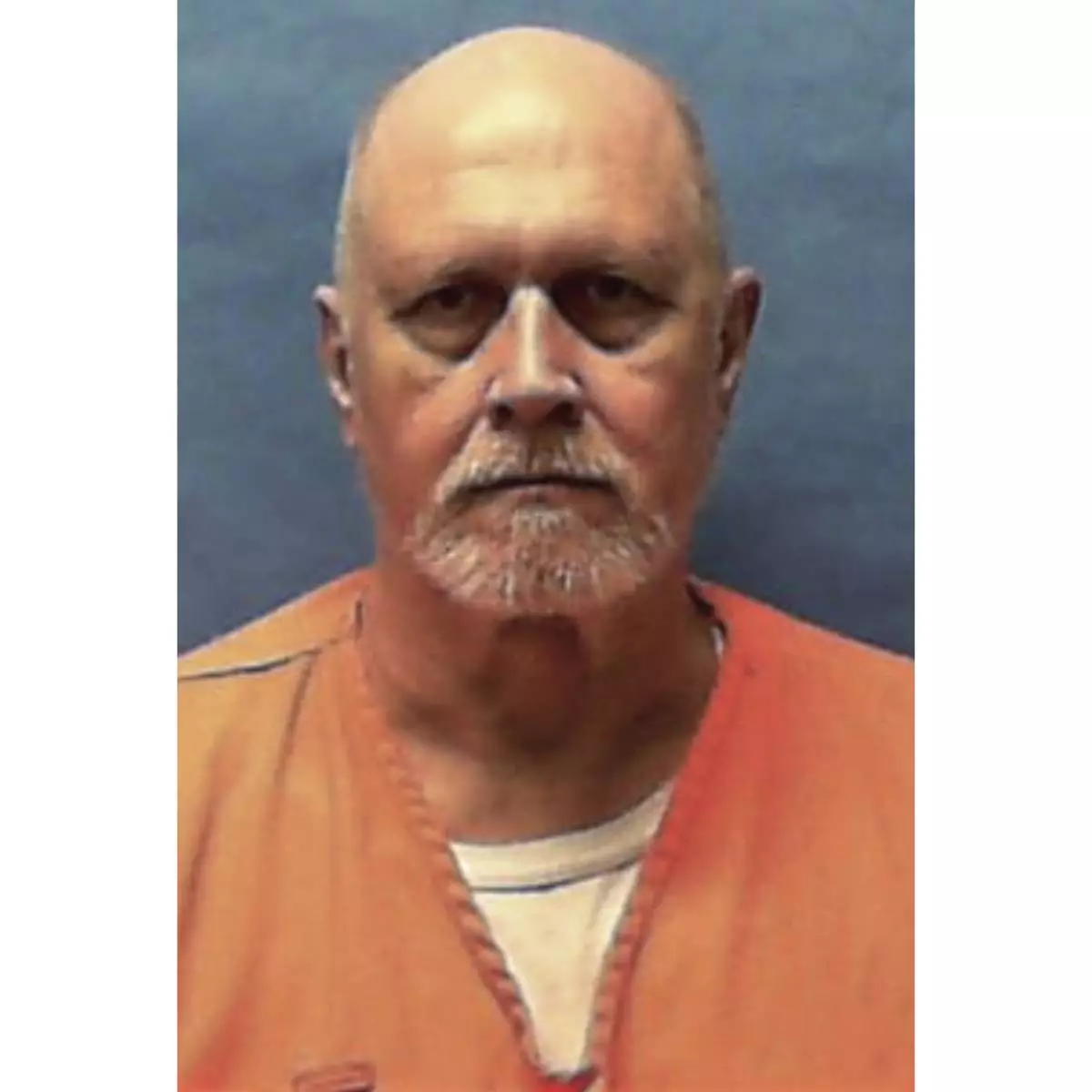
This image provided by the Florida Department of Corrections shows Thomas Mitchell Overton, scheduled to be executed Thursday, Nov. 19, 2026, at Florida State Prison in Raiford, Fla. (Florida Department of Corrections vi AP)
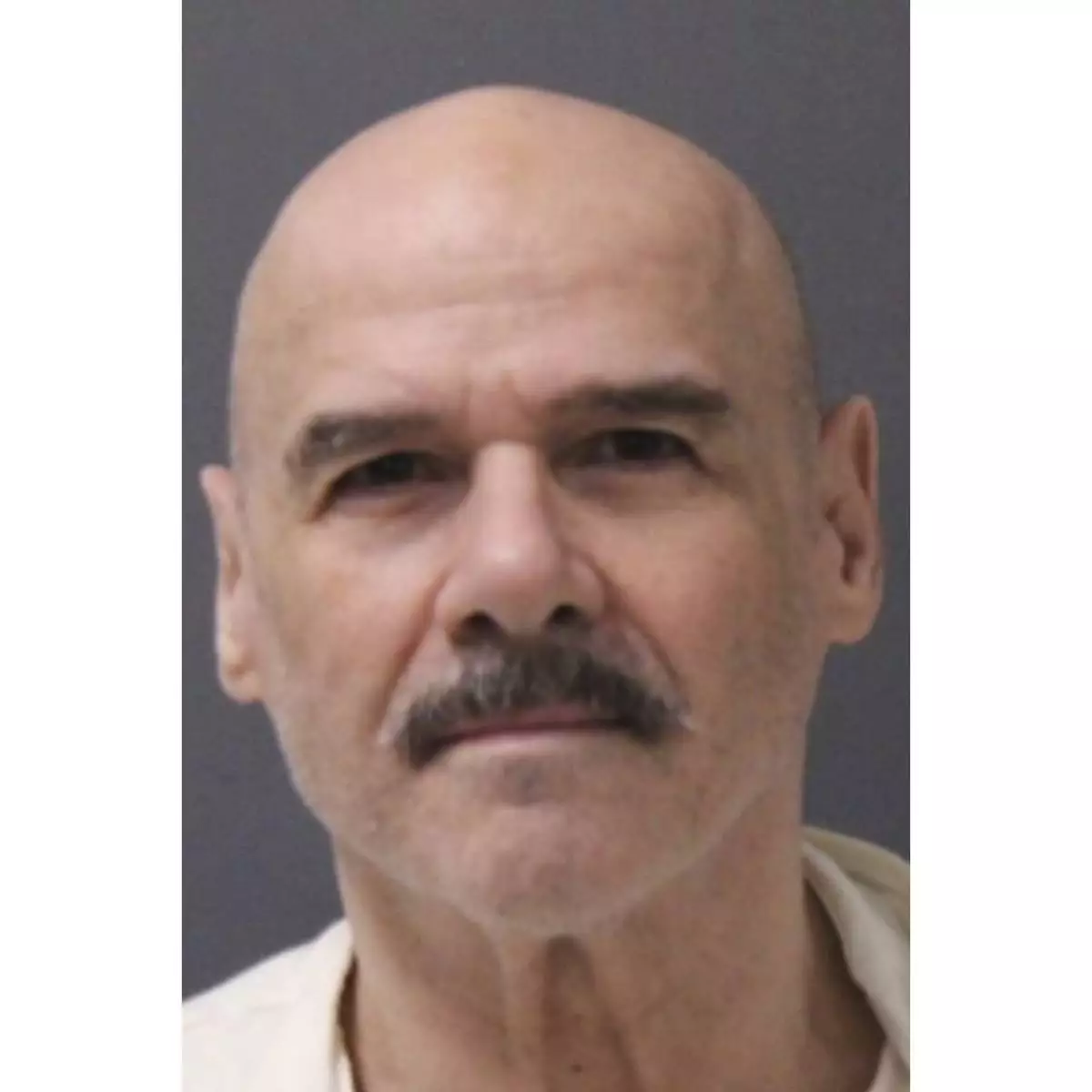
This image provided by the Texas Department of Criminal Justice shows Reinaldo Dennes on April 14, 2026. (Texas Department of Criminal Justice via AP)
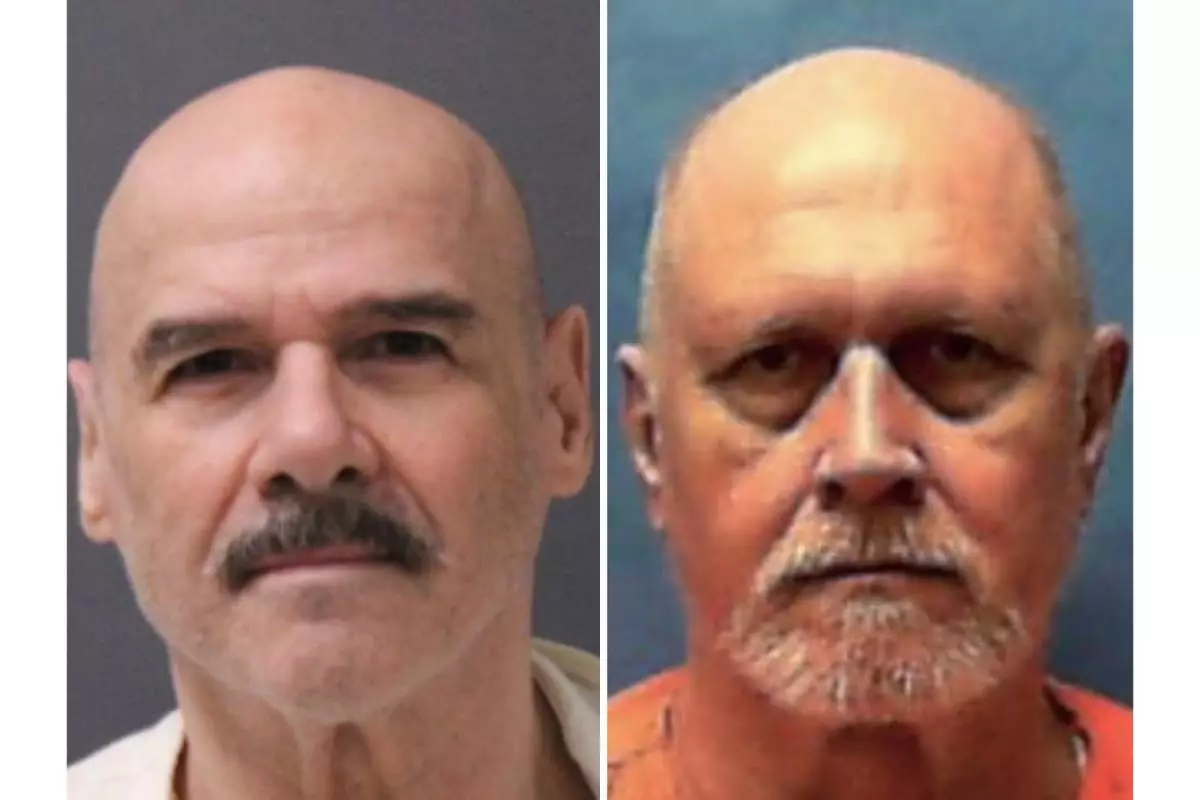
This photo combination shows Reinaldo Dennes, left, on April 14, 2026 and Thomas Mitchell Overton. (Texas Department of Criminal Justice/Florida Department of Corrections via AP)