Hong Kong, China as regulatory member of International Council for Harmonisation of Technical Requirements for Pharmaceuticals for Human Use marks key step towards developing into international health and medical innovation hub
The Health Bureau announced today (November 20) that Hong Kong, China has formally joined the International Council for Harmonisation of Technical Requirements for Pharmaceuticals for Human Use (ICH) as a regulatory member. The ICH is a key international platform for the harmonisation of technical standards for drug regulation. Hong Kong's formal accession to ICH membership signifies international recognition of its drug research and development (R&D) as well as regulatory standards. It will help further promote the development of the capabilities and mechanisms for the "primary evaluation" of innovative drugs, enable Hong Kong to participate deeply in the formulation of international rules on drug R&D and registration, and accelerate the development of Hong Kong into an international health and medical innovation hub.
At its assembly meeting held in Czech Republic on November 17, 2026, the ICH approved the admission of Hong Kong, China (represented by the Pharmacy and Poisons Board of Hong Kong) as its 20th regulatory member. Other ICH regulatory members include the National Medical Products Administration of China and the regulatory authorities of Europe, Switzerland, the United Kingdom and the United States.
The Secretary for Health, Professor Lo Chung-mau, said, "The Hong Kong Special Administrative Region (HKSAR) Government expresses its sincere gratitude to the country for its continued full support for Hong Kong's development into an international health and medical innovation hub. Hong Kong, China becoming an ICH regulatory member fully demonstrates the unique advantages of the 'one country, two systems' principle. Since becoming an ICH observer on October 31, 2023, Hong Kong has, with the country's strong support, devoted its full efforts to fulfilling all the requirements of the ICH, and was able to formally become an ICH regulatory member in just three years, significantly accelerating the process compared with the eight to 10 years estimated by the Government earlier with reference to international experience."
Professor Lo added, "Looking ahead, the HKSAR Government will, in accordance with the First Five-Year Plan for Economic and Social Development of the Hong Kong Special Administrative Region (2026-2030), actively dovetail with the National 15th Five-Year Plan to support clinical R&D in biomedicine and optimise the evaluation and approval mechanism for innovative drugs, and drugs with urgent clinical use. The HKSAR Government will establish the Centre for Medical Products Regulation (CMPR) next month to build up capacity for independent drug evaluation and approval, and actively participate in international co-operation, with a view to developing Hong Kong into an international health and medical innovation hub and better integrating into and serving the overall national development."
The Director of Health, Dr Ronald Lam, said, "Joining the ICH marks an important milestone in Hong Kong's drug evaluation, approval and regulatory reform, and is particularly significant to the CMPR to be established soon. The CMPR will, in accordance with the technical requirements of the ICH, build up a professional team for independent evaluation and approval, enhance the efficiency of evaluating innovative drugs, and deploy experts to participate in the formulation and revision of ICH guidelines, contributing to the scientific advancement of drug regulation worldwide. Hong Kong is now both an ICH regulatory member and a member of the Pharmaceutical Inspection Co-operation Scheme (PIC/S). The CMPR will adopt a science-based approach and strive to become an internationally renowned regulatory authority."
The ICH is an authoritative international body for pharmaceutical harmonisation. The mission of the ICH is to harmonise global technical requirements for drug registration and to promulgate various guidelines on safety, efficacy and quality that are recognised as the highest international standards for the protection of public health. The PIC/S is a renowned international organisation comprising pharmaceutical regulatory authorities from multiple countries and regions. Its mission is to lead the international development, formulate standards for implementation, and adherence to harmonised Good Manufacturing Practice standards and quality systems among pharmaceutical regulatory authorities. Having passed the relevant assessment in 2015, Hong Kong, China formally became a PIC/S member with effect from January 1, 2016.
Source: AI-found images
Latest Composite Waiting Time for Subsidised Rental Housing stands at 4.4 years, hitting 10-year low
The Housing Bureau (HB) released today (November 20) that the latest Composite Waiting Time for Subsidised Rental Housing (CWT) is 4.4 years, a significant decrease of 0.4 years compared with 4.8 years as at end-June this year. Compared with the highest level of 6.1 years before the current-term Government took office, this marks a reduction of 1.7 years, falling below 4.5 years for the first time and hitting a new low in the past decade.
The Housing Bureau. Photo source: reference image
The latest CWT is calculated based on the average waiting time of general applicants (i.e. family and elderly one-person applicants) who were housed to public rental housing (PRH) or Light Public Housing (LPH) in the past 12 months as at end-September 2026.
"With the continuous increase in overall public housing production and the progressive completion of various PRH and LPH projects, the long-standing backlogged applications have been gradually cleared, resulting in a downward trend in the CWT. We are confident that we can achieve the target of reducing the CWT to 4.5 years in 2026-27 as announced by the Chief Executive in the 2022 Policy Address," said a spokesman for the HB.
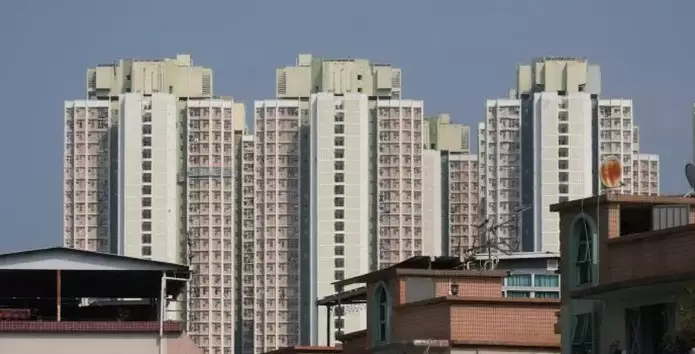
Photo source: reference image
Overall public housing production entering harvesting phase
Through the current-term Government's unremitting efforts for over four years to "enhance quantity, speed, efficiency and quality", a solid foundation for public housing production has been laid, which is now entering the harvesting phase. Looking ahead to the next five years (i.e. from 2027-28 to 2031-32), public housing, including PRH and subsidised sale flats, of more than 35 000 units per year on average will be provided, representing an increase of about 73 per cent compared with the five-year production since the current-term Government took office, the highest in the past 25 years. In respect of LPH, as of mid-November 2026, about 29 800 units have been completed. The remaining two new projects converted from school premises at Shun Lee Tsuen Road in Kwun Tong and Chuk Yuen Road in Wong Tai Sin (providing a total of about 210 units) are set to be completed in the first quarter of next year. All 13 projects providing about 30 000 LPH units will be completed in slightly over four years, ahead of the five-year target set out in the 2022 Policy Address. The huge housing supply has effectively shortened the PRH waiting time.
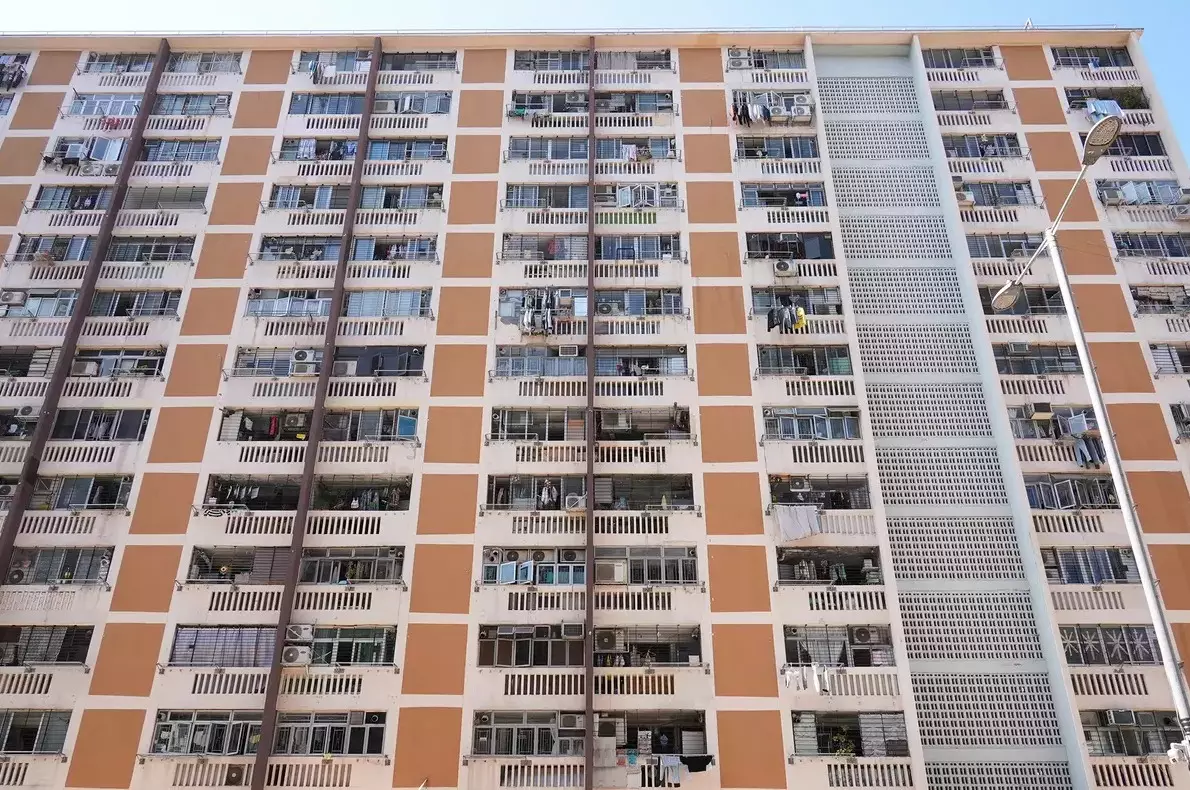
Photo source: reference image
As many as 11 200 general applicants housed
In the third quarter of 2026, a total of about 11 200 general applicants were housed to PRH or LPH, including about 3 100 newly completed PRH flats, about 2 700 recovered PRH flats, and about 5 450 LPH units. Of these, the number of applicants housed to LPH was more than four times that of the last quarter (about 1 300 units).
"Over the past 12 months, the supply of PRH and LPH has significantly increased to an average quarterly supply of about 8 200 units, which is double the average quarterly supply of about 4 100 units during the four years before the current-term Government took office (i.e. from the third quarter of 2018 to the second quarter of 2022). The LPH has also reached the peak intake from July to September this year. In fact, the waiting time for general applicants who were housed to PRH in the last 12 months was 5.3 years, whereas the waiting time for general applicants who were housed to LPH during the same period was only 2.8 years on average, which fully highlights that the LPH policy has played a key role in enabling faster fulfilment of the grassroots citizens' housing needs, thereby effectively shortening the overall CWT," said the spokesman.
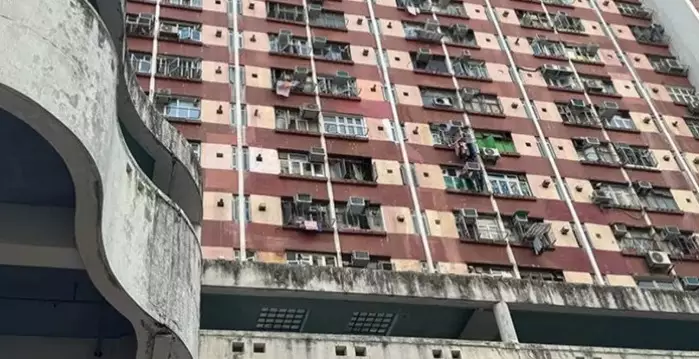
Photo source: reference image
PRH waiting queue hits 15-year low
"We are also making concerted efforts to adopt a multipronged approach to expedite the turnover of PRH flats. The number of PRH general applicants is on a downward trend, recording a further decrease of about 4 400 cases this time. We have also observed that many general applicants for the Urban district and Extended Urban district with a waiting time of six years or above were gradually housed to PRH, which tangibly reflects that our efforts over the past four-plus years are taking effect progressively," said the spokesman.
As at end-September 2026, there were about 96 100 general applications for PRH, representing a significant decrease of nearly 40 per cent compared with the highest level of 156 400 cases as of September 2020, a new low over the past 15 years and also the first time the figure has fallen below 100 000 since 2012. Meanwhile, there were about 80 600 non-elderly one-person applications under the Quota and Points System, representing an even sharper decrease of over 40 per cent compared with the highest level of 143 700 cases as of December 2015. Of these, the drop in non-elderly one-person applicants aged below 30 was even more pronounced, falling by about 60 per cent over the past decade from about 70 400 as at end-September 2016 to about 29 300 as at end-September 2026. These figures clearly demonstrate that the PRH waiting queue is being cleared.