The 8th China-ASEAN Legal Cooperation Forum opened in southwest China's Chongqing Municipality on Thursday, drawing over 200 legal experts from China and Southeast Asia countries to exchange views on deepening rule-of-law cooperation.
The theme for this year's forum is "deepening legal exchanges and cooperation to promote regional prosperity and stability."
As 2026 marks the 35th anniversary of China-ASEAN dialogue relations, participants to the forum say this milestone is an opportunity to further strengthen cooperation on legislation, judicial assistance, and legal education, and promote deeper mutual learning of different legal systems and civilizations.
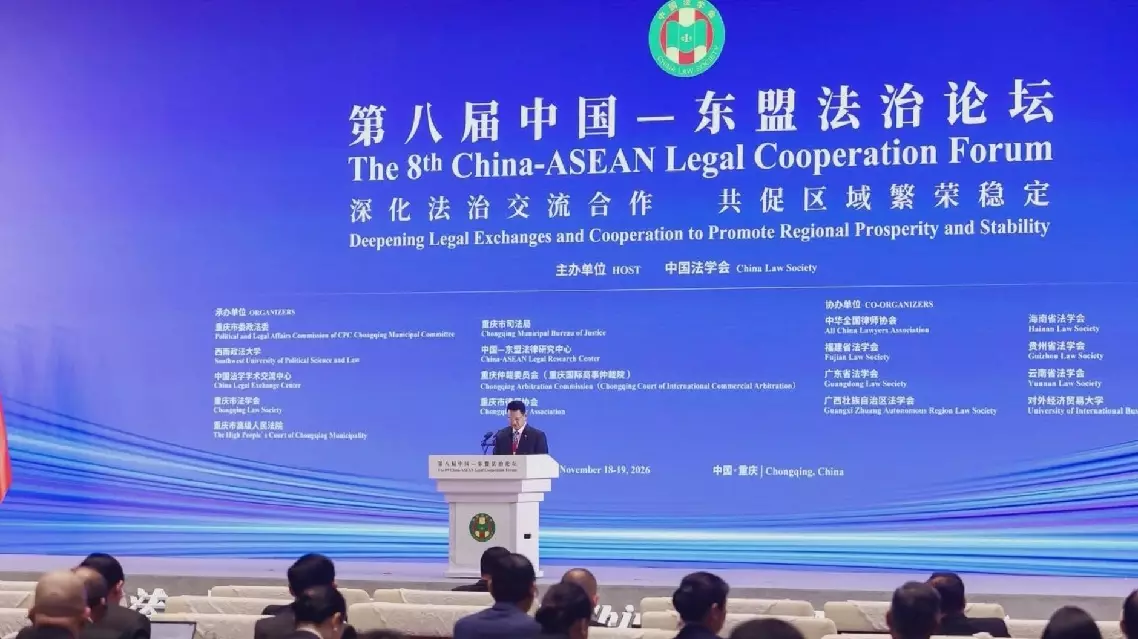
China-ASEAN Legal Cooperation Forum opens in SW China
China's commitment to green development has not only driven its own transformation but also made significant contributions to global climate governance and sustainable development, said international participants at the ongoing 31st Conference of the Parties (COP 31) to the United Nations Framework Convention on Climate Change (UNFCCC) in Antalya, Türkiye.
As the conference enters its second half, the China Pavilion is hosting four to five side events and special activities each day.
Representatives from governments, universities and non-profit organizations around the world have gathered at the China Pavilion to discuss topics such as desertification control and ecological restoration, green and low-carbon transition and international cooperation, while offering positive assessments of China’s policies and actions in addressing climate change.
How to use science to inform decision-making and advance the green transition through cooperation has been a key topic of recent exchanges at the pavilion.
International participants believe that the significant value of China's experience in ecological governance lies in its long-term commitment, scientific decision-making and the integrated consideration of ecological improvement and economic development.
"China's experience shows how transitions and energy security can reinforce each other. In 2025, China still accounted for the largest share of global energy demand growth. But a large share of this growth was met, thanks to the rapid expansion of renewables and efficiency gains. Coal demand was flat and energy related CO2 emissions fell, which is very encouraging in view of China's fuel carbon goals for 2030 and 2060," said Mary Burce Warlick, Deputy Executive Director of International Energy Agency.
"China was among the first countries in the world to realize that restoration is about people, it's about livelihoods, it's about jobs, it's about thriving economies. And China has perfected a landscape approach to restoration that looks at all of these together so that you end up with restoration that works, that stays, that actually has long term impact," said Barron Joseph Orr, chief scientist for the United Nations Convention to Combat Desertification.
How to enable more developing countries to benefit from the opportunities presented by the green transition was also a key topic of discussion at the China Pavilion.
"China initiatives are very important steps and it really points us to the direction of what we need to do in terms of renewable energy, clean technology and electrification that needs to happen in the rest of the world. Yes, we believe China is a very important energy transition, and transitioning away from fossil fuel partner for developing countries, because that's where the technology is. But that's where also the South-South cooperation needs to come from," said Jasper Inventor, interim executive director of Greenpeace International, an international non-governmental environmental organization.
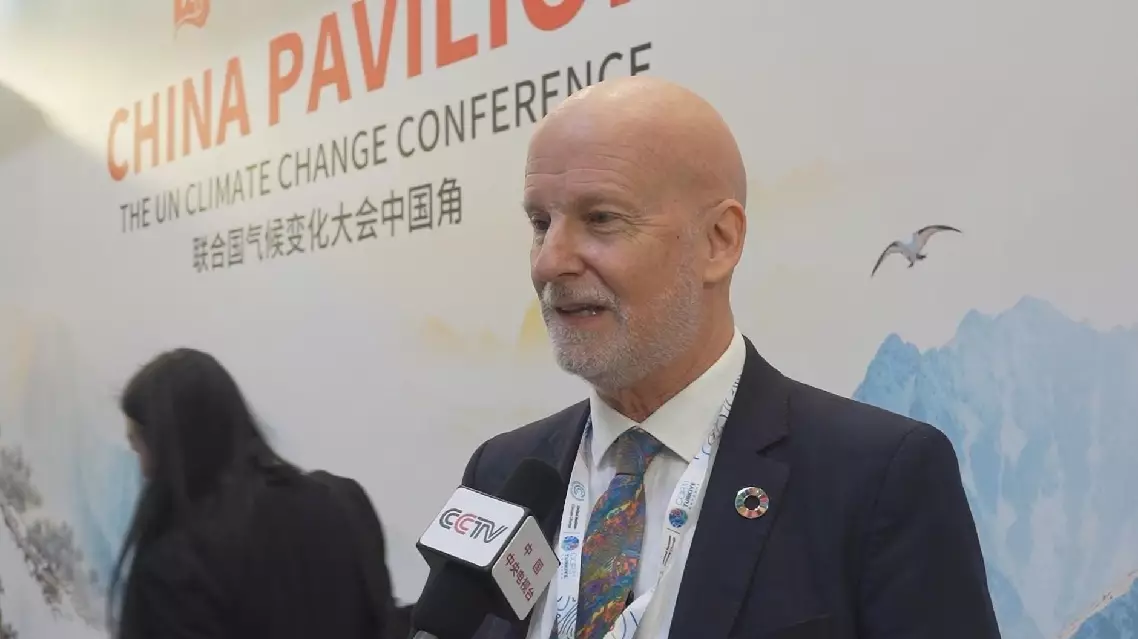
Int'l experts laud China's contribution to global green transition at COP31