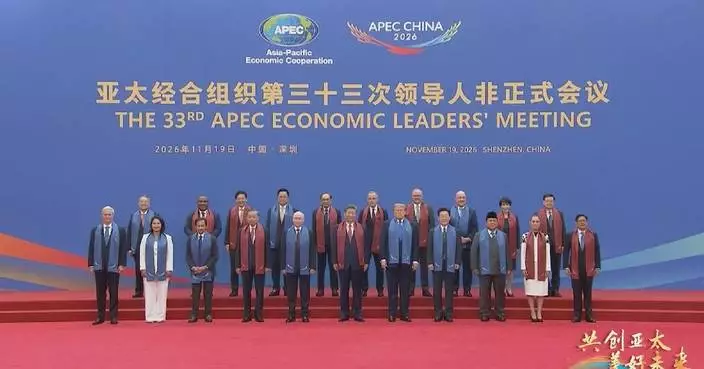
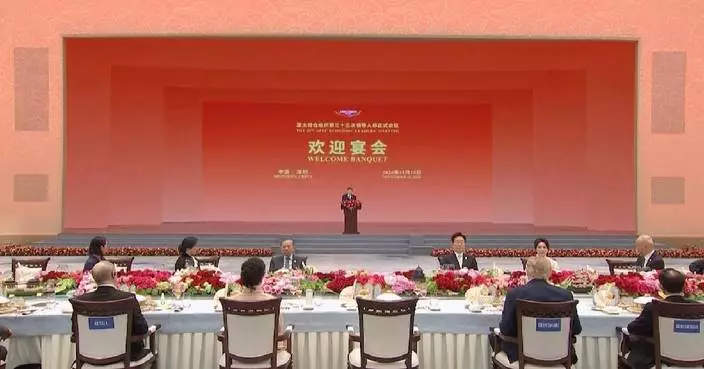
Multinational companies are giving their Asia-Pacific operations a bigger role in research and innovation alongside manufacturing and sales, rather than decoupling from the region, PwC China Vice Chair Zhou Xing told China Global Television Network (CGTN). Zhou spoke in south China's Shenzhen on the occasion of a week of Asia-Pacific Economic Cooperation (APEC) meetings that concluded on Thursday.
"We don't really see any decoupling from this region, but we do see the shift in their strategy--how they do their business in this region. If you look at Asia Pacific, very interesting: we have massive space to do any business here, because in this region you can find very high-quality natural resources, and you can find a high-quality production base--manufacturing capability. You can find high-technology innovation capability. You can find the talents, and you also can find very active capital markets in this Asia Pacific region. Other than trade, this region as a production base or just sales terminals, they treat this as a place to build the ecosystem, to do innovation. So they build a lot of R n D [research and development] centers in these regions. And they see the big opportunities for infrastructure development, including digital infrastructure development, and also physical infrastructure development," Zhou told CGTN.
China is part of that shift, with multinationals increasingly using their operations there to develop capabilities for global markets. A PwC survey of 103 senior executives found that 21 percent considered China their most important market globally, while a further 47 percent ranked it second or third.
"Actually, based on this year, we have done a survey of more than 100 multinational company executives in China, and 20 percent of them select the China market as the first top priority in their global market. And another 47 percent choose China market as the top three. Before, they see China as having low labor cost and very effective manufacturing capability. But now these days, you see China as one of their global capability hubs. We have the talents. We have the application scenarios. And we have this innovation capability. But more importantly, we still have the opening-up policy in China. This is very important [for] multinational companies to still stay here, and spend there, and also bring the knowledge here, bring the capability here, and [bring it] back to the global [market]," Zhou added.

PwC China executive sees no Asia-Pacific decoupling as firms expand research, innovation
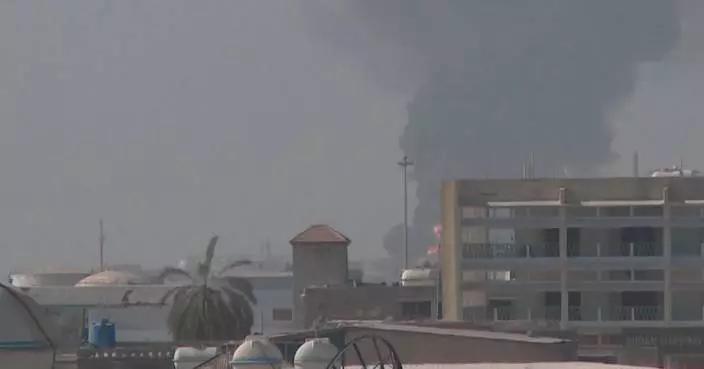
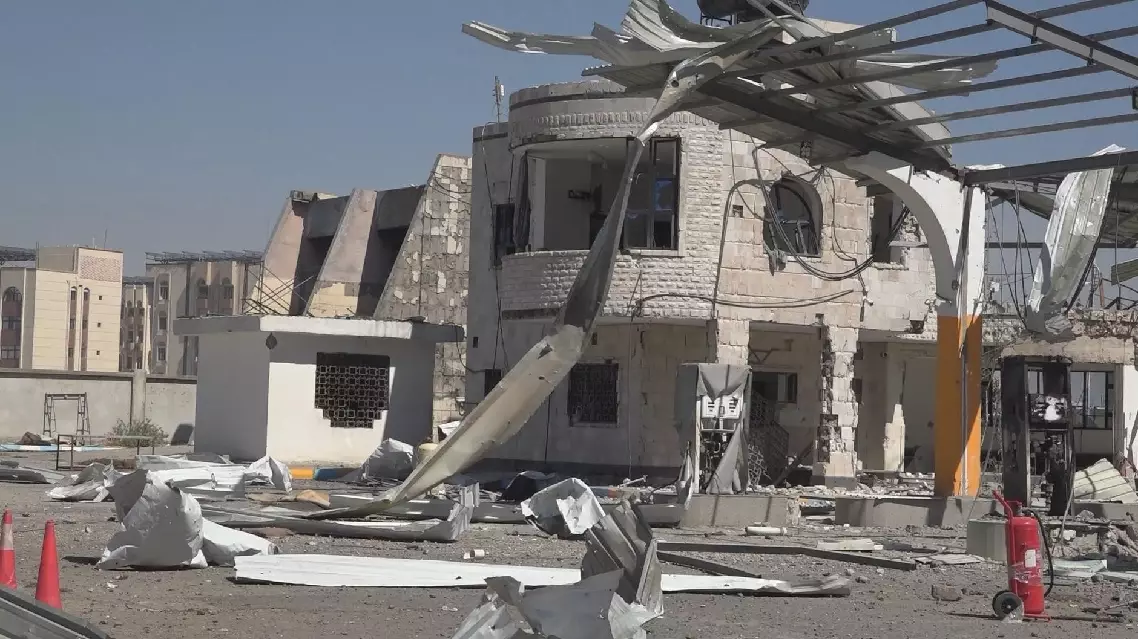
The airstrikes early Sunday, which local authorities attributed to Saudi aircraft, targeted a station and the headquarters of the Yemen Petroleum Company in the capital, Sanaa, injuring at least six employees and damaging facilities.
Anis Al-Asbahi, spokesman for the local health and environment authorities, confirmed in a statement that six people had been injured in the attacks, which he said were carried out by "Saudi enemy aircraft."
The attacks forced the oil company's station on 60th Street out of service, while its headquarters also sustained material damage.
Najib Qadi, an official at the company, condemned the strikes, saying that civilian infrastructure should not be targeted and that the attacks constituted a war crime.
"The Yemen Petroleum Company is a service provider and is considered civilian infrastructure that must not be targeted. Targeting it constitutes a war crime, as it has no military activities whatsoever and serves purely civilian purposes. Despite this, it continues to be repeatedly targeted," he said.
Ammar Al-Osaili, an eyewitness to the airstrikes, said local residents relied on the station for fuel and that the facility served purely civilian purposes, with no military activities.
"This morning, the facility was hit in an airstrike. This is a national facility from which we supply fuel to vehicles. All our activities are related to this fuel station, which serves the public. It has no military purpose and contains nothing that could harm the aggressor," he said.
Mohammed Al-Huzaizi, an employee of the Yemen Petroleum Company, said the attacks were launched to halt the company's operations.
"We can see the damage caused to the Yemen Petroleum Company's station. There are also civilian employees who have been injured at the station. But praise be to Allah in all circumstances. This happened at dawn, at around 5:00 or 5:30 a.m. The aggressor deliberately targeted it to bring the Yemen Petroleum Company's operations to a halt," he said.
Apart from the capital Sanaa, several other regions of Yemen also sustained varying degrees of damage from a series of attacks, including the southwestern province of Taiz and the southern port city of Aden.
At least five people were killed, and 18 others were injured in airstrikes attributed to the Saudi-led coalition and a Houthi drone attack across Yemen on Sunday, according to Houthi-run media and a security official.
Also on Sunday, the Saudi-led coalition in Yemen said in a statement that its air defenses had intercepted and destroyed a Houthi drone launched toward the Riyadh region.
The statement provided no further details on the intended target or whether the attack caused casualties or damage.
The developments come amid intensifying fighting between the Houthis and Yemen's government forces supported by the Saudi-led coalition. In recent days, the Houthis have claimed repeated missile and drone strikes on Saudi airports and oil facilities, while Houthi media have reported intensified Saudi airstrikes across Yemen.
Yemen has been mired in conflict since late 2014, when the Houthis seized Sanaa and much of northern Yemen, prompting Saudi-led military intervention in 2015 in support of the internationally recognized government.
Airstrikes severely damage oil facilities, injure at least six in Yemen's Sanaa