Chinese geologists have discovered rocks dating back 3.95 billion years, the oldest known in Asia, providing key evidence for understanding the early evolution of the Earth, the China Geological Survey announced Friday.
The discovery was made by a team led by Wan Yusheng, a researcher with the Chinese Academy of Geological Sciences.
Found in the eastern part of north China's Hebei Province, the rock is a granitic gneiss with an outcrop area of only about 15 square meters. Despite its small size, researchers confirmed that the rocks were dated at 3.95 billion years, by determining zircon minerals contained in the rock.
Earth formed about 4.5 billion years ago, but geological records from its first few hundred million years are extremely difficult to preserve, and samples from Earth's "childhood" period are very rare.
"We took a sample back to the laboratory and analyzed it. The age came out at 3.95 billion years. To be honest, I was quite excited. What does that mean? [It means that] we found the world's second-oldest rock," said Wan.
Previously, the world's oldest recognized rocks were the Acasta Gneiss in Canada, about four billion years old, meaning the new discovery narrows the gap with the world record to just 50 million years and is the first such discovery in Asia.
Researchers dated the rock using zircon, a tiny mineral that acts like a natural "time capsule."
"Zircon contains radioactive uranium and thorium, which decay into lead. By measuring the ratios of these elements, we can determine the rock's age," said Wan.
The discovery indicates that some form of subduction-related tectonic activity may have occurred on Earth 3.95 billion years ago, and provides direct evidence that the mantle had already become depleted during the Hadean Eon.
The findings have been published in the journal Nature.
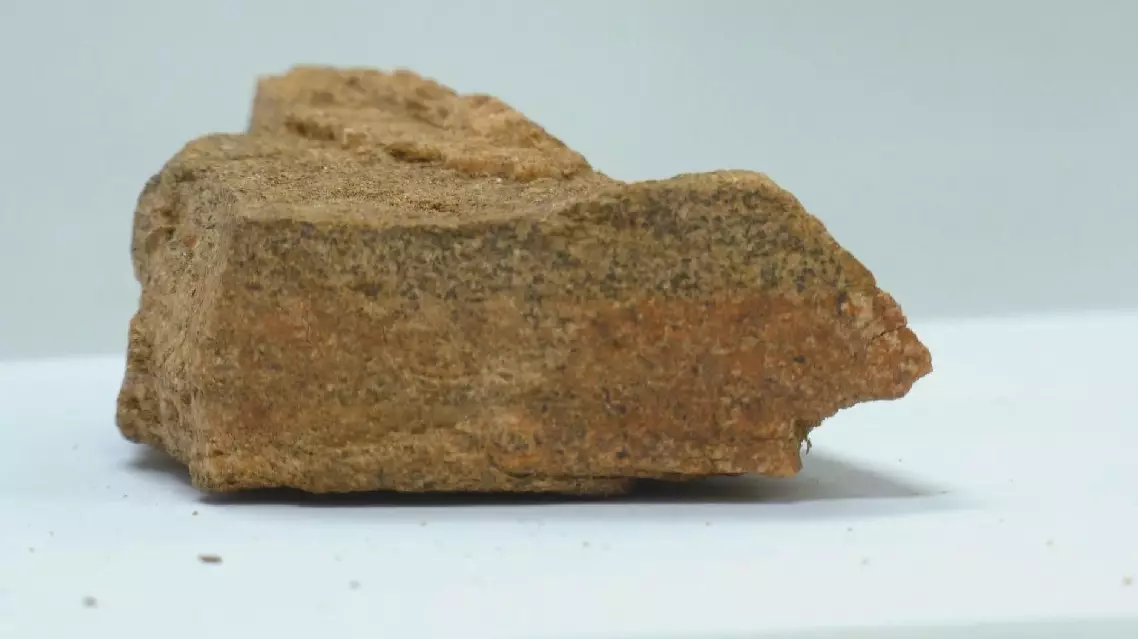
Chinese geologists discover oldest known rock in Asia, dating back 3.95 billion years
Chinese geologists discover oldest known rock in Asia, dating back 3.95 billion years
Eduardo Pedrosa, executive director of the Asia-Pacific Economic Cooperation (APEC) Secretariat, said that APEC has consistently advocated for open regionalism, bringing regional economies close together while staying open to the rest of the global economy.
In an interview ahead of the APEC Economic Leaders' Meeting, which was held on Nov 18-19 in Shenzhen, south China's Guangdong Province, Pedrosa emphasized that the Asia-Pacific region can benefit from more technology sharing and infrastructural cooperation in the region.
He said that physical infrastructure remains the foundation of connectivity, particularly for less developed economies.
"First, I want to say that we still need the physical infrastructure, especially for the less developed economies in the world. We still need to build out that infrastructure, especially with respect to the digital economy. AI is here. We have the ability to use it, but not everyone has access," he said.
But as the region places growing emphasis on institutional, regulatory, digital and people-to-people connectivity, Pedrosa said the regulatory dimension is where APEC can add the most value.
"On the regulatory side, what we do want to do is work with each other and benefit from all of the innovation that your economy is doing, my economy is doing. So it's the interoperability of them and that's the regulatory side. So APEC, again, it's not about telling people what to do, but it's sharing," he said.
APEC's long-standing principle of open regionalism holds that the Asia-Pacific region grows stronger by deepening ties among APEC members while remaining open to the rest of the global economy, the APEC secretariat chief said.
"One thing APEC used to describe and I think it's still there, it's what we used to call open regionalism. So we are regional economies. We are closer together maybe than other parts of the global economy, but we are open. This is not about closing ourselves in just to our region, but it's coming closer together by keeping ourselves open to the rest of the global economy. If you think about just APEC membership itself, of course, Northeast Asia, Southeast Asia, Oceania, North America, South America. It brings together a whole range of economies, advanced developing and so on, but we work with others as well," Pedrosa said.

APEC secretariat chief stresses importance of open regionalism, physical infrastructure development