Skip to Content Facebook Feature Image

China-Russia-US summit of groundbreaking importance: int'l observers

China

China

China

China-Russia-US summit of groundbreaking importance: int'l observers

2026-11-20 19:00 Last Updated At:20:41

The summit between Chinese President Xi Jinping, Russian President Vladimir Putin and U.S. President Donald Trump on Thursday is of great importance for the region and the world at large, said global observers.

The historic sit-down, chaired by Xi in Shenzhen of south China's Guangdong Province, marked the first-ever face-to-face meeting between the Chinese, Russian and U.S. heads of state.

It came after all three attended the 33rd Asia-Pacific Economic Cooperation (APEC) Economic Leaders' Meeting, which concluded in Shenzhen the same day.

The trilateral summit saw the three leaders share an in-depth exchange of views on the current international situation and commit to maintaining strategic stability and international security.

It has also drawn attention from observers worldwide, who welcomed the summit and praised the outcomes of the trilateral meeting.

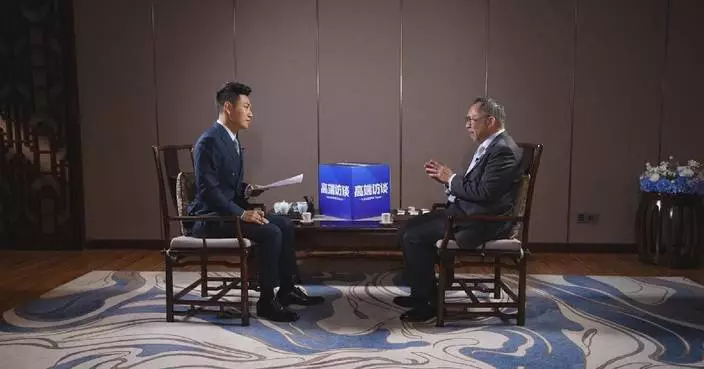
"I think this is a historic meeting, one of vital importance to international stability and security. Three of the world's major powers have come together, and their friendly relations are key to global peace," said Dmitry Suslov, deputy director of the Center for Comprehensive European and International Studies under the National Research University Higher School of Economics.

"We feel it is groundbreaking. And in fact, I think perhaps only China could have hosted in such a beautiful way the coming together of these three leaders and therefore it was clearly a great success. I think this tripartite meeting is the beginning of potential for a new kind of trust. The 4th element, which says that a nuclear war must never be fought and can never be won is absolutely crucial. So, I think the declaration was extremely important as a peace move," said Richard A. Black, a research fellow at the Schiller Institute, a German-based think tank.

"We saw the presidents of the United States, China and Russia meeting today. Who would have thought that a couple of decades ago? So this is an important development and I think we have to say that China plays an important role in this because it's being hosted (there),"said Arnold August, a Canadian journalist and political commentator.

China-Russia-US summit of groundbreaking importance: int'l observers

China-Russia-US summit of groundbreaking importance: int'l observers

China-Russia-US summit of groundbreaking importance: int'l observers

China-Russia-US summit of groundbreaking importance: int'l observers
China-Russia-US summit of groundbreaking importance: int'l observers
China-Russia-US summit of groundbreaking importance: int'l observers

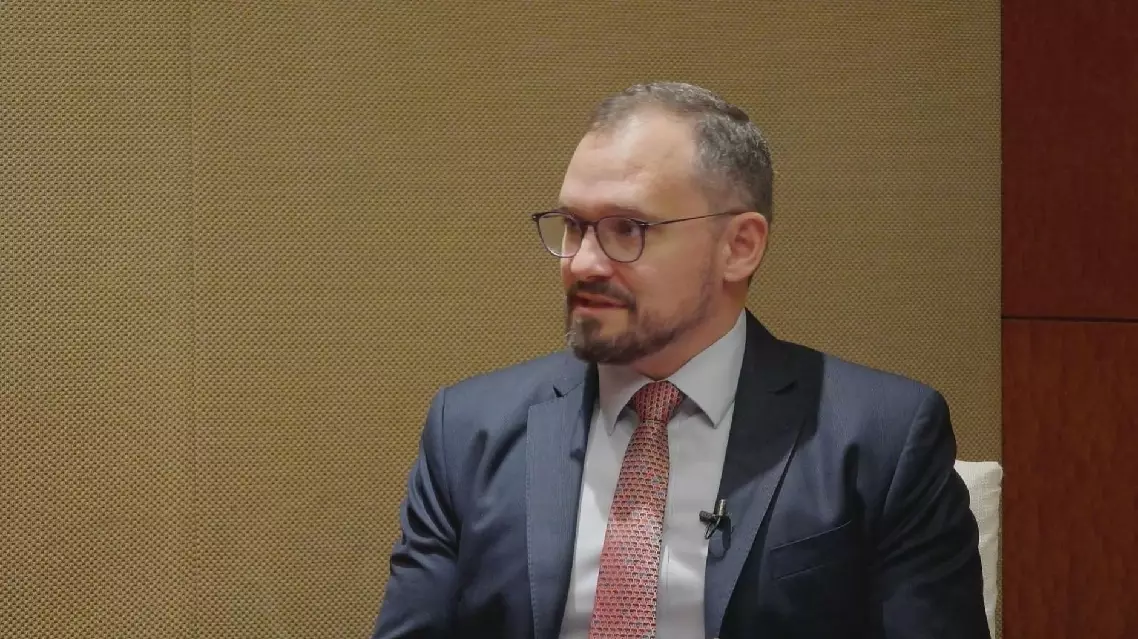
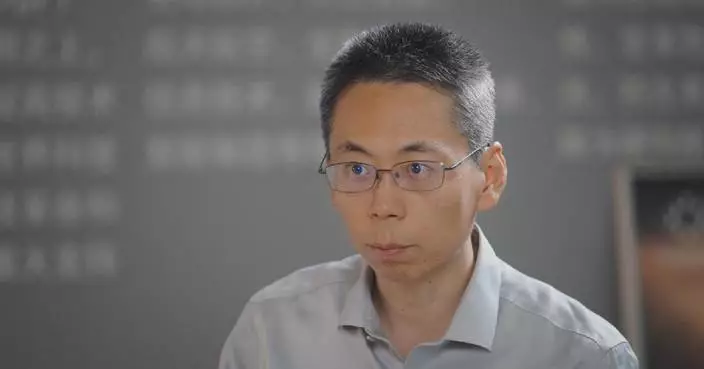
Asia's export-oriented and open economies remain broadly committed to free trade, and China still has ample room to advance openness, according to Jeremy Zook, lead analyst for China at Fitch Ratings.

"Asia itself is a very export-oriented, very open set of economies. So, I think there's still broad consensus in the region about the benefits of openness and and freer trade. So I think there is still a lot of opportunities for China to push in that area," Zook said at a recent interview with the China Global Television Network (CGTN) in Shanghai.

Despite recent headwinds, global trade has continued to grow rapidly across Asia — a trend driven in part by the ongoing AI investment boom, which has helped offset some of the impact of tariffs, Zook said.

"And if we actually think about what's happened over the past couple years in terms of global trade, global trade has continued to expand, it's expanded quite rapidly across Asia. Now a lot of this is maybe due to the AI investment boom and that's offsetting some of the impacts from tariffs, but I think generally there's still been this trend towards greater globalization and trade, and that should persist," he said.

Looking ahead, Zook said artificial intelligence (AI) is a profoundly productivity-enhancing tool, but its ultimate impact will hinge on how that productivity is deployed.

"I think there are a lot of uncertainties, of course, around what AI will bring for the future. It is a very productivity-enhancing tool. The question will be whether that productivity will be deployed to help workers be more productive or whether it will replace workers," he said.

If AI ends up replacing workers, Zook added, governments will face difficult trade-offs and need to roll out new policies.

"And if it replaces workers, that will involve a lot of trade-offs and and new policies that governments will have to implement. So I think it is positive to begin thinking about some of those challenges and how they will be addressed by governments around the world," he said.

Export-oriented Asian economies trend towards greater globalization: analyst

Export-oriented Asian economies trend towards greater globalization: analyst

Recommended Articles