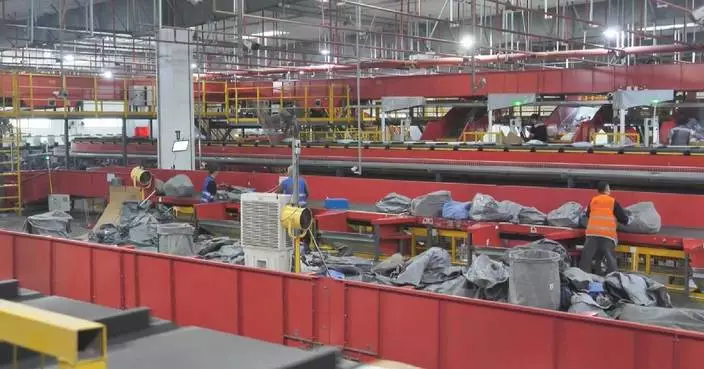
Asia's export-oriented and open economies remain broadly committed to free trade, and China still has ample room to advance openness, according to Jeremy Zook, lead analyst for China at Fitch Ratings.
"Asia itself is a very export-oriented, very open set of economies. So, I think there's still broad consensus in the region about the benefits of openness and and freer trade. So I think there is still a lot of opportunities for China to push in that area," Zook said at a recent interview with the China Global Television Network (CGTN) in Shanghai.
Despite recent headwinds, global trade has continued to grow rapidly across Asia — a trend driven in part by the ongoing AI investment boom, which has helped offset some of the impact of tariffs, Zook said.
"And if we actually think about what's happened over the past couple years in terms of global trade, global trade has continued to expand, it's expanded quite rapidly across Asia. Now a lot of this is maybe due to the AI investment boom and that's offsetting some of the impacts from tariffs, but I think generally there's still been this trend towards greater globalization and trade, and that should persist," he said.
Looking ahead, Zook said artificial intelligence (AI) is a profoundly productivity-enhancing tool, but its ultimate impact will hinge on how that productivity is deployed.
"I think there are a lot of uncertainties, of course, around what AI will bring for the future. It is a very productivity-enhancing tool. The question will be whether that productivity will be deployed to help workers be more productive or whether it will replace workers," he said.
If AI ends up replacing workers, Zook added, governments will face difficult trade-offs and need to roll out new policies.
"And if it replaces workers, that will involve a lot of trade-offs and and new policies that governments will have to implement. So I think it is positive to begin thinking about some of those challenges and how they will be addressed by governments around the world," he said.
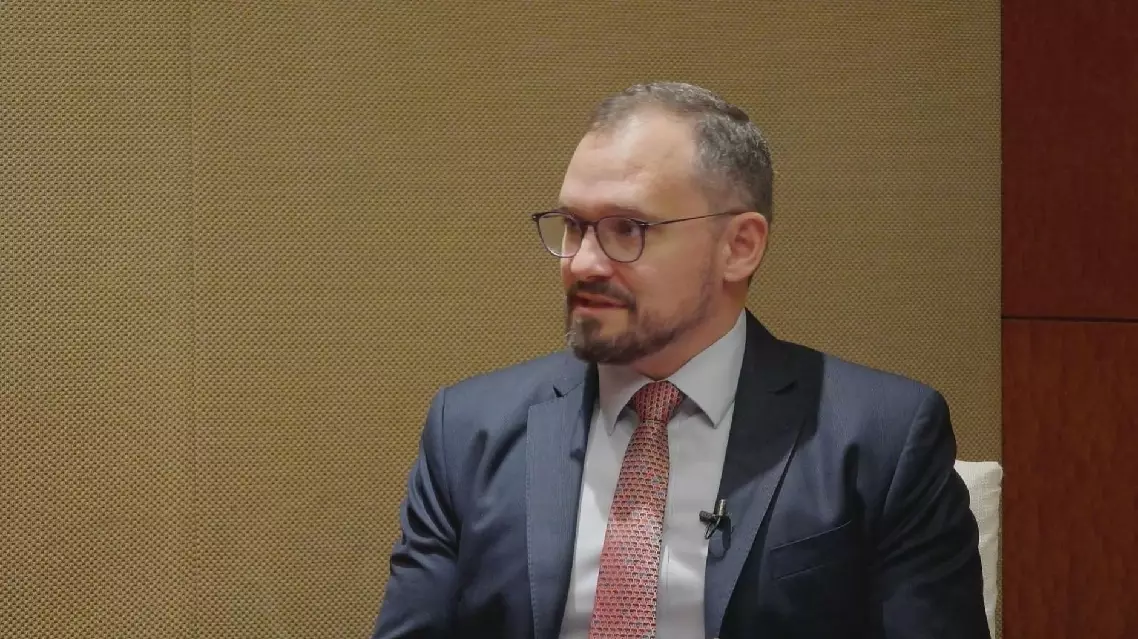
Export-oriented Asian economies trend towards greater globalization: analyst